
- Release Year: 2018
- Platforms: Nintendo Switch, Windows
- Publisher: Acttil LLC, Bandai Namco Entertainment Inc.
- Developer: B.B.STUDIO Co., Ltd., Matrix Software
- Genre: Strategy, Tactics
- Perspective: 1st-person
- Game Mode: Hotseat, Single-player
- Gameplay: Board game, Party game
- Setting: Japan
- Average Score: 74/100
Description
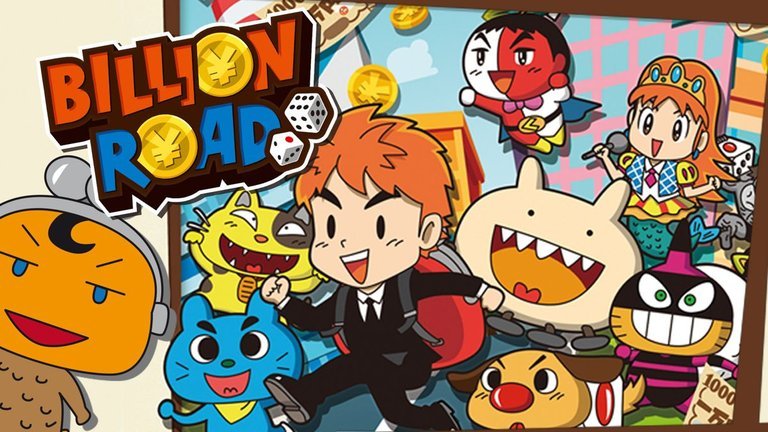
Billion Road is a turn-based strategy board game that blends party game elements with a Japanese-themed setting, where players compete to amass wealth and properties across a vibrant, stylized map. Developed by B.B.STUDIO and Matrix Software, the game offers a mix of tactical decision-making and lighthearted fun, ideal for local multiplayer sessions with up to four players. While it lacks minigames and deep interactivity, its charm lies in its colorful presentation and faithful adaptation of classic board game mechanics, appealing to fans of digital tabletop experiences.
Gameplay Videos
Billion Road Cracks & Fixes
Billion Road Guides & Walkthroughs
Billion Road Reviews & Reception
metacritic.com (70/100): Billion Road isn’t perfect. The interface makes it difficult to track some of the finer points of detail, particularly around property ownership, and a lack of minigames and other events of excitement mean there’s a draining level of downtime in the game where you’re just waiting for your next turn to roll around. However, for the board game enthusiast this is a true Japanese experience.
nintendoworldreport.com (75/100): Even with a handful of mild problems, Billion Road is a fun local multiplayer board game on Switch. The most notable potential drawback is that it is at its best when you have two-to-four players that are all down for some whimsical yet strategic tabletop nonsense.
steambase.io (77/100): Billion Road has earned a Player Score of 77 / 100. This score is calculated from 219 total reviews which give it a rating of Mostly Positive.
jpswitchmania.com : Billion Road can best be described as Monopoly crossed with a crazy Japanese game show/anime, and it is one heck of a good time.
higherplaingames.com : Billion Road is a fascinating and colourful digital board game styled game for PC and Switch that could best be described as ‘if Monopoly had Kaiju’s and it was a dice race’.
Billion Road: A Whimsical, Chaotic, and Uniquely Japanese Board Game Experience
Introduction
In the vast landscape of digital board games, Billion Road stands out as a vibrant, chaotic, and unapologetically Japanese experience. Released in 2018 for the Nintendo Switch and later for Windows in 2020, this game blends the familiar mechanics of classics like Monopoly and Fortune Street with a whimsical, fast-paced, and often unpredictable twist. Developed by B.B. Studio and Matrix Software, and published by Bandai Namco Entertainment and Acttil, Billion Road is a celebration of Japanese culture, local specialties, and the sheer joy of accumulation—both of wealth and quirky, colorful experiences.
At its core, Billion Road is a turn-based strategy game where players traverse a stylized map of Japan, buying properties, collecting monsters, and racing toward goals to amass the most money. However, its charm lies not just in its mechanics but in its presentation—a bright, cartoonish aesthetic that feels like a love letter to Japan’s regional diversity. From the bustling streets of Tokyo to the serene landscapes of Hokkaido, the game’s board is a visual feast, packed with references to local delicacies, landmarks, and cultural quirks.
Yet, Billion Road is not without its flaws. Critics and players alike have noted its reliance on luck, occasionally punishing mechanics, and a lack of strategic depth that can make longer sessions feel tedious. Despite these shortcomings, the game’s unique blend of chaos, charm, and cultural richness has earned it a dedicated following. This review will delve deep into Billion Road’s development, narrative, gameplay, and legacy, exploring why it remains a fascinating, if imperfect, entry in the digital board game genre.
Development History & Context
The Studio and Creators’ Vision
Billion Road was developed by B.B. Studio Co., Ltd. and Matrix Software, two Japanese studios with extensive experience in creating games that blend strategy, simulation, and whimsy. B.B. Studio, in particular, has worked on titles like Super Dragon Ball Heroes: World Mission and One Piece: World Seeker, showcasing a knack for vibrant, character-driven experiences. Matrix Software, meanwhile, is known for its work on Dragon Quest spin-offs and other RPG-adjacent titles, bringing a strong understanding of turn-based mechanics to the table.
The game’s director, Osamu Kunimasa, and assistant director, Atsushi Sato, aimed to create a board game that captured the essence of Japan’s regional diversity while offering a fast-paced, accessible experience. The result is a game that feels like a cross between a traditional board game and a Japanese game show—complete with over-the-top announcements, random events, and a sense of playful chaos.
Technological Constraints and Design Choices
Billion Road was initially released on the Nintendo Switch in 2018, a platform known for its hybrid capabilities and local multiplayer focus. The game’s design reflects this, with an emphasis on local multiplayer (up to four players) and touchscreen controls that make it easy to pick up and play. The Switch’s hardware limitations likely influenced the game’s bright, cartoonish art style, which is both visually appealing and performance-friendly.
The game’s Unity engine foundation allowed for a smooth transition to PC in 2020, though the Windows version introduced online multiplayer, a feature notably absent from the Switch release. This decision highlights the developers’ focus on couch co-op for the Switch, aligning with Nintendo’s traditional strengths in local multiplayer experiences.
The Gaming Landscape at Release
Billion Road entered a market already saturated with digital board games, from Mario Party to Fortune Street (known as Itadaki Street in Japan). However, its unique blend of Japanese cultural references, monster-collecting mechanics, and game show aesthetics set it apart. The game’s release in 2018 coincided with a resurgence of interest in Japanese-themed games, thanks in part to the global popularity of titles like Animal Crossing and Pokémon.
Critically, Billion Road was met with mixed but generally positive reception, with reviewers praising its charm and cultural richness while critiquing its reliance on luck and occasional tedium. Its MobyGames score of 7.2 and Metacritic score of 70 reflect this divide, positioning it as a niche but enjoyable experience for fans of digital board games.
Narrative & Thematic Deep Dive
Plot and Setting: A Journey Across Japan
Billion Road’s narrative is simple but effective: players compete to become Japan’s wealthiest tycoon by traveling across a stylized map of the country, buying properties, and outmaneuvering opponents. The game’s board is a lovingly detailed caricature of Japan, with cities and landmarks represented in a way that feels both familiar and exaggerated. From the neon-lit streets of Akihabara to the rural charm of Hokkaido, each location is packed with local specialties, such as sushi restaurants, anime shops, and traditional inns.
The game’s game show framing adds a layer of whimsy, with hosts announcing goals, random events, and bonuses in a style reminiscent of Japanese variety shows. This presentation reinforces the game’s lighthearted, chaotic tone, making it feel less like a cutthroat business simulation and more like a playful romp through Japan.
Characters and Dialogue
While Billion Road lacks a traditional narrative with deep character arcs, its cast of quirky hosts and monsters injects personality into the experience. The game’s monsters, of which there are over 50, serve as both allies and obstacles, each with unique abilities that can turn the tide of a match. Some monsters help players earn money, while others sabotage opponents or protect properties from giant kaiju attacks.
The dialogue and announcements are minimal but effective, often delivered in a cheerful, exaggerated style that fits the game’s aesthetic. However, some critics have noted that the lack of voice acting (outside of Japanese releases) detracts from the game show atmosphere, leaving the experience feeling slightly hollow in comparison to its inspirations.
Underlying Themes: Wealth, Luck, and Japanese Culture
At its heart, Billion Road is a celebration of Japanese regionalism and the country’s local specialties. The game’s properties are tied to real-world businesses and landmarks, encouraging players to engage with Japan’s cultural diversity. This theme is reinforced by the game’s visual design, which draws inspiration from ukiyo-e woodblock prints and other traditional Japanese art forms.
The game also explores themes of wealth accumulation and luck, with players relying on dice rolls, random events, and monster abilities to succeed. While this can lead to frustration (especially in longer sessions), it also reinforces the game’s playful, unpredictable nature. Unlike Monopoly, where landing on an opponent’s property can be punishing, Billion Road’s mechanics are designed to keep players in the game, even if they fall behind.
Gameplay Mechanics & Systems
Core Gameplay Loop
Billion Road’s gameplay revolves around a turn-based race across Japan, with players rolling dice to move across the board. Each turn represents a month, and the game is divided into years, with players receiving payouts from their properties at the end of each year (March). The core loop involves:
- Moving Across the Board: Players roll dice to determine movement, with options to travel by land, sea, or air.
- Landing on Spaces: Spaces can grant money, items, monsters, or property-buying opportunities.
- Buying Properties: Players can invest in businesses, which generate income at the end of each year.
- Collecting Monsters: Over 50 monsters can be recruited, each with unique abilities that aid or hinder players.
- Reaching Goals: A randomly selected goal city offers bonuses to the first player to reach it.
Combat and Monster Mechanics
One of Billion Road’s most unique features is its monster system. Players can recruit up to three monsters at a time, each with active and passive abilities that affect gameplay. For example:
- Rolly: Allows players to reroll dice.
- Takenado: Randomly grants properties from across the board.
- Defensive Monsters: Protect properties from giant kaiju attacks.
Giant kaiju monsters appear periodically, requiring players to team up to defeat them in turn-based RPG-style battles. Success grants rewards, while failure results in property damage and financial losses.
Character Progression and UI
Billion Road’s progression is tied to property ownership and monster collection, with players unlocking new avatars and customization options as they play. However, the game’s UI has been criticized for being cluttered and difficult to navigate, particularly when tracking property ownership and monster effects.
The game’s lack of minigames has also been noted as a missed opportunity, with some reviewers arguing that additional interactive elements could have broken up the monotony of dice rolls and property management.
Multiplayer and Modes
Billion Road offers two primary modes:
- Tournament Mode: A 30-year single-player or local multiplayer experience, with AI opponents increasing in difficulty over time.
- Skirmish Mode: A 3-year multiplayer mode designed for quicker sessions.
The Switch version lacks online multiplayer, a notable omission that limits its appeal for remote play. The PC version rectifies this, offering online multiplayer that expands the game’s accessibility.
World-Building, Art & Sound
Visual Design: A Cartoonish Japan
Billion Road’s art style is bright, colorful, and exaggerated, with a cel-shaded aesthetic that evokes Japanese animation. The game’s map is a stylized representation of Japan, with cities and landmarks rendered in a way that feels both familiar and fantastical. The character designs are equally whimsical, with players represented as chibi-style avatars that can be customized with unlockable outfits.
Sound Design and Music
The game’s soundtrack is upbeat and cheerful, fitting its game show aesthetic. However, the lack of voice acting (outside of Japanese releases) has been criticized, as it detracts from the game’s potential for over-the-top announcements and commentary.
Reception & Legacy
Critical Reception
Billion Road received mixed but generally positive reviews, with critics praising its charm, cultural richness, and chaotic fun while critiquing its reliance on luck and occasional tedium. Notable reviews include:
- Digitally Downloaded (90%): “A true Japanese experience… created by people who love the unique micro-cultures within Japan.”
- NintendoWorldReport (75%): “A fun local multiplayer board game… best with friends.”
- Nintendo Life (50%): “Lacks strategic substance… robs the game of emotional extremes.”
Commercial Performance and Legacy
While Billion Road did not achieve mainstream success, it has developed a cult following among fans of digital board games and Japanese culture. Its unique blend of chaos, charm, and cultural references has influenced subsequent titles, particularly those seeking to blend traditional board game mechanics with modern, whimsical presentation.
Conclusion: A Flawed but Fascinating Experience
Billion Road is a game of contradictions: it is both chaotic and charming, strategic and luck-dependent, visually rich and mechanically shallow. Its greatest strength lies in its celebration of Japanese culture and its playful, unpredictable nature, which makes each session feel fresh and exciting. However, its reliance on luck, occasional tedium, and lack of strategic depth prevent it from reaching the heights of classics like Fortune Street or Mario Party.
For fans of digital board games, Japanese culture, and chaotic multiplayer experiences, Billion Road is a must-play. For those seeking deep strategy or polished mechanics, it may fall short. Ultimately, Billion Road is a unique, flawed, and fascinating entry in the genre—one that deserves recognition for its ambition and charm, even if it doesn’t quite stick the landing.
Final Verdict: 7.5/10 – A chaotic, culturally rich, and imperfectly delightful board game experience.