
- Release Year: 2008
- Platforms: Macintosh, Windows
- Genre: Action
- Perspective: Side view
- Game Mode: Single-player
- Gameplay: Collecting, Procedural generation
- Average Score: 70/100
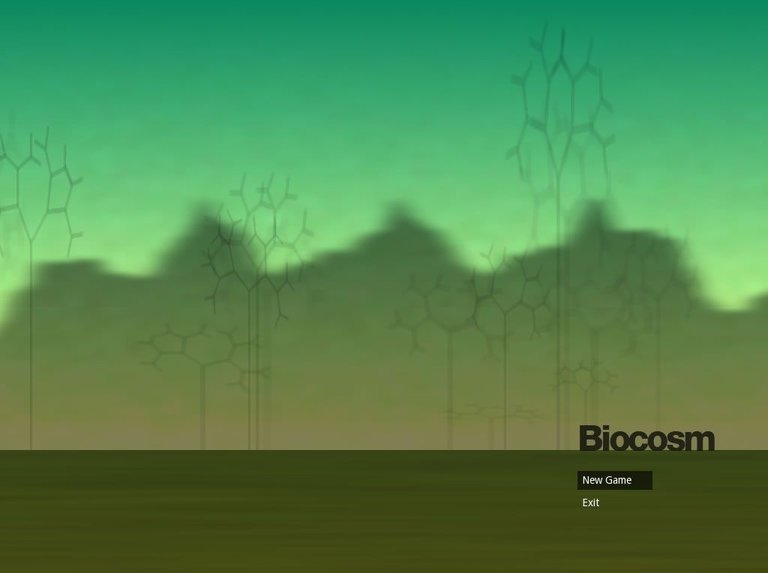
Description
In Biocosm, players take control of a specimen collection unit on an alien planet, navigating a side-scrolling 2D environment. The unit, resembling a forklift truck, must capture procedurally generated creatures and transport them into a beam of light to be collected. The game features dynamic colors and background music that change with each session, adding to the unique and challenging experience of collecting nine specimens to win.
Biocosm Reviews & Reception
mobygames.com (76/100): players control a specimen collection unit on the surface of a planet… shaped like a forklift truck… to grab creatures and drag them back to the right, into the light, where they are beamed up.
vgtimes.com (55/100): Biocosm is an action game with a third-person view.
myabandonware.com (80/100): Biocosm is a video game published in 2008 on Windows. It’s an action game, and was also released on Mac.
Biocosm: Review
Introduction
In the vast cosmos of video game history, Biocosm (2008) is a curious artifact—a minimalist indie experiment that quietly orbits the periphery of gaming’s mainstream consciousness. Developed by Ivan Safrin, this side-scrolling action game tasks players with extraterrestrial specimen collection using a forklift-like machine, blending procedural chaos with meticulous precision. While it lacks the bombast of AAA titles, Biocosm’s stripped-down mechanics and surreal atmosphere offer a meditative glimpse into the creative potential of indie development. This review argues that Biocosm exemplifies the charm of experimental design, even if its legacy remains obscured by time.
Development History & Context
Biocosm emerged in 2008, a pivotal era for indie games as digital distribution began democratizing game development. Created solo by Ivan Safrin—a developer whose portfolio leans into abstract, systems-driven experiences—the game was born from the TIGSource Procedural Generation Competition, a hub for indie innovation. The late 2000s saw a surge in browser-based and freeware titles, and Biocosm’s modest scope (releasing on Mac and Windows) reflects the technological constraints of the time: 2D sprite-based graphics, keyboard controls, and a focus on replayability through procedural systems rather than narrative depth.
In contrast to the cinematic ambitions of contemporaries like Bioshock or Mass Effect, Biocosm revels in simplicity. Its design philosophy echoes early arcade games, prioritizing “easy to learn, hard to master” mechanics. Yet it also nods to the rising fascination with procedural generation, a trend later popularized by games like Spelunky and No Man’s Sky.
Narrative & Thematic Deep Dive
Biocosm dispenses with explicit storytelling, opting instead for environmental implication. Players assume the role of an unnamed operator piloting a “specimen collection unit” on an alien world. The absence of overt narrative invites interpretation: Is this a scientific mission gone rogue? A metaphor for humanity’s exploitative relationship with nature? The game’s title itself—“Biocosm”—suggests a self-contained ecosystem, a microcosm of life governed by unknowable rules.
The creatures you collect—twitching, procedurally generated entities—refuse to conform. They writhe and destabilize your machine, resisting capture without outright hostility. This passive defiance evokes themes of futility and control, positioning the player as both observer and disruptor. The act of dragging specimens into the “light” for extraction feels eerily ceremonial, as if the game critiques the commodification of life itself.
Gameplay Mechanics & Systems
At its core, Biocosm is a game of tension and balance:
– Controls: Players maneuver left/right with arrow keys and use the spacebar to clamp a pincer. The forklift’s physics demand careful navigation; reckless acceleration risks tipping the unit.
– Objective: Collect nine creatures per session, dragging them to a beam on the right.
– Creature Behavior: Specimens squirm procedurally, their erratic movements complicating capture. Some flail violently enough to overturn your unit—a clever risk/reward dynamic.
– Procedural Generation: Each session randomizes creature patterns and color palettes, ensuring no two playthroughs feel identical.
While mechanically sparse, Biocosm’s challenge lies in mastering its tactile feedback. The pincer’s fragility and the forklift’s sluggish inertia demand patience, rewarding deliberate play over brute force. However, the lack of progression systems or difficulty scaling limits long-term engagement.
World-Building, Art & Sound
Biocosm’s aesthetic is stark yet hypnotic:
– Visuals: The 2D side-scrolling perspective emphasizes isolation, with a monochromatic backdrop punctuated by neon-hued creatures. Each session’s palette shift—from murky greens to lurid purples—subtly alters the mood.
– Creature Design: The specimens resemble mutated deep-sea life, all tendrils and pulsating membranes. Their procedural animation lends an uncanny vitality.
– Sound: The ambient soundtrack—a loop of minimalist synths—enhances the game’s eerie serenity. Sound effects are sparse but impactful, with the pincer’s metallic clank underscoring each capture attempt.
While visually rudimentary, these elements coalesce into a cohesive, almost therapeutic atmosphere. Biocosm feels like interacting with a digital terrarium—a living diorama meant to be observed as much as “won.”
Reception & Legacy
Biocosm garnered little mainstream attention upon release. Its MobyGames entry shows a single user rating (3.8/5) and no critic reviews, reflecting its niche status. Yet within indie circles, it remains a cult curiosity—a precursor to the “vibe-based” experimental games later popularized by titles like Mountain or Everything.
Its legacy lies in its embrace of procedural systems as both mechanic and metaphor. While not revolutionary, Biocosm’s focus on repetition and asymmetry foreshadowed indie trends favoring emergent storytelling over scripted narratives. It also exemplifies the DIY ethos of late-2000s freeware, where developers like Safrin treated games as playgrounds for philosophical and mechanical experimentation.
Conclusion
Biocosm is neither a masterpiece nor a forgotten gem—it’s a quiet testament to the creativity flourishing at gaming’s fringes. Its minimalist design and procedural quirks won’t satisfy players craving complexity, but as a meditative toy, it captivates. In an industry increasingly dominated by colossal budgets and franchised universes, Biocosm reminds us that games can be profound in their simplicity. For historians, it’s a fascinating footnote; for players willing to meet its alien rhythms, it’s a brief, haunting escape into the unknown.