
- Release Year: 2012
- Platforms: Windows
- Publisher: 2K Games, Inc., ak tronic Software & Services GmbH
- Genre: Compilation
- Game Mode: Single-player
- Average Score: 83/100
- Adult Content: Yes
Description
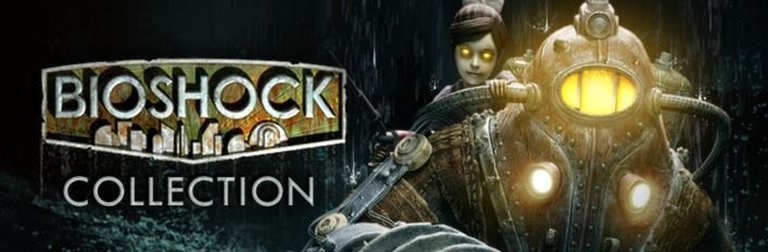
BioShock: Collection is a compilation of the critically acclaimed BioShock series, featuring the original BioShock, BioShock 2, and BioShock Infinite. Set in the dystopian underwater city of Rapture and the floating city of Columbia, players navigate through immersive environments filled with genetic enhancements, political intrigue, and moral dilemmas. The collection offers enhanced graphics, all DLC content, and a rich narrative that explores themes of individualism, freedom, and the consequences of unchecked ambition.
Gameplay Videos
BioShock: Collection Cracks & Fixes
BioShock: Collection Patches & Updates
BioShock: Collection Guides & Walkthroughs
BioShock: Collection Reviews & Reception
metacritic.com (84/100): The story telling, unique environments, gameplay and amount of content included makes Bioshock The Collection a must buy.
opencritic.com (84/100): If you intend to play one of these fascinating and fun adventures for the first time or the tenth, the BioShock Collection is the best way to go about it.
sea.ign.com : Bringing together the trilogy of games and all of their respective DLC, The Collection offers the best opportunity for newcomers to dive into some of the most memorable first-person shooters of the last generation.
gamepressure.com : The BioShock Collection released for PS4, PC and XONE is a bundle of remastered editions of the first three installments in the BioShock FPS series and their DLCs.
opencritic.com (82/100): As a veteran returning to play through the three games of BioShock: The Collection is a pleasure, but it’s a bit disappointing to watch the updates and behind-the-scenes content to each entry gradually decline.
BioShock: Collection Cheats & Codes
BioShock (PC)
Edit the “DefUser.ini” or “User.ini” file in the game directory. Set a key binding to the following codes (e.g., “F10=fly”). Press the corresponding key while playing to activate the cheat. Active codes are disabled when a new area loads or intermission plays.
| Code | Effect |
|---|---|
| god | God mode |
| givehealth | Full health |
| givebioammo | Full Eve |
| igbigbucks | $500 |
| ghost | Disable clipping |
| fly | Flight mode |
| walk | Disable ‘fly’ and ‘ghost’ codes |
| killpawns | Kill all enemies on level |
| slomo | Slow motion |
| teleport | Teleport to pointer |
| exec Plasmid.txt | Obtain indicated Plasmid or Tonic (requires Plasmid.txt file) |
| suicide | Commit suicide |
| setjumpz [number] | Set jump height |
| setgravity [number] | Set gravity; ‘0.0’ is no gravity |
BioShock: The Collection: Review
Introduction
Few game franchises have left as indelible a mark on gaming’s DNA as BioShock. A series that dared to marry philosophical depth with visceral first-person combat, it redefined narrative ambition in the medium. BioShock: The Collection bundles the trilogy—BioShock (2007), BioShock 2 (2010), and BioShock Infinite (2013)—into a remastered package, promising refined visuals and a seamless entry point for newcomers. Yet, while this collection crystallizes three masterpieces of storytelling and world-building, its technical execution reveals uneven effort. This review dissects how the collection honors—and occasionally stumbles in preserving—the legacy of Rapture and Columbia.
Development History & Context
The original BioShock emerged from Irrational Games, helmed by visionary director Ken Levine, as a spiritual successor to System Shock. Released in 2007, it arrived amid a sea of linear shooters, offering a subversive critique of Randian objectivism within an Art Deco dystopia. The sequel, developed by 2K Marin without Levine’s direct involvement, expanded Rapture’s lore while refining combat. BioShock Infinite (2013) pivoted to the skybound city of Columbia, grappling with American exceptionalism and determinism.
The 2016 Collection, handled by Blind Squirrel Games, aimed to modernize the trilogy for eighth-gen consoles and PC, targeting 1080p/60fps performance. However, the remaster’s ambition was tempered by its scope: while BioShock 1 received significant visual upgrades, Infinite—already a technical showcase—saw minimal changes. The omission of BioShock 2’s multiplayer mode, though hardly essential, underscored the package’s focus on preservation over innovation.
Narrative & Thematic Deep Dive
At its core, BioShock interrogates the collapse of utopian ideals. The underwater city of Rapture, conceived as a libertarian paradise, fractures under the weight of unchecked ambition and ADAM-fueled genetic modification. Players confront Andrew Ryan’s objectivist dogma and the tragic figures it ensnares, from the spliced addicts to the tortured Big Daddies and Little Sisters.
BioShock 2, often maligned as a narrative retread, shifts perspective to Subject Delta, a prototype Big Daddy, and introduces Sophia Lamb, a collectivist antagonist. Its strength lies in humanizing Rapture’s horrors, particularly through the bond between Delta and Eleanor Lamb.
Infinite transcends the ocean depths for Columbia, a floating city steeped in jingoism and racial strife. Booker DeWitt and Elizabeth’s interdimensional journey culminates in a meta-commentary on choice and consequence, with the Burial at Sea DLC bridging Rapture and Columbia’s fates. The trilogy’s thematic throughline—free will vs. control—remains unparalleled in gaming, even as Infinite’s convoluted ending sparks debate.
Gameplay Mechanics & Systems
The BioShock formula blends FPS combat with RPG-like customization. Plasmids (and later, Vigors) grant elemental powers, enabling creative combat synergies—electrifying water, then blasting foes with a shotgun. BioShock 2 refines this with dual-wielding plasmids and weapons, while Infinite introduces skyhook traversal and Elizabeth’s reality-tearing abilities.
However, the series’ age shows. Inventory management feels clunky compared to modern shooters, and Infinite’s shield system simplifies survival tactics. The Collection smooths minor annoyances—quicker load times, tightened UI—but combat’s mechanical quirks remain intact. Notably, the remaster strips BioShock 2’s multiplayer, a curious exclusion given its cult following.
World-Building, Art & Sound
Rapture and Columbia are protagonists in their own right. Rapture’s waterlogged hallways, dripping with Art Deco grandeur and decay, evoke a haunting beauty. Columbia’s sun-drenched Americana masks its rot, with propaganda posters and barbershop quartets underscoring its hypocrisy.
The remaster sharpens textures and lighting, particularly in BioShock 1, where neon signs and water effects gleam anew. Yet critics note trade-offs: compressed audio, flattened ambiance, and absent visual effects (per Digital Foundry’s analysis). Garry Schyman’s melancholic score and the period-licensed tracks (e.g., “God Only Knows” in Infinite) retain their emotional punch, though voice logs occasionally drown in ambient noise.
Reception & Legacy
Upon release, the Collection earned an 84 Metascore, praised for its value and polish but critiqued for uneven upgrades. IGN’s Jonathon Dornbush called it “the best way to experience these fascinating adventures,” though lamented declining extras across sequels. Nintendo Life lauded the Switch port’s stability, while purists derided compromised aesthetics.
The trilogy’s influence reverberates through immersive sims (Prey, Dishonored) and narrative-driven shooters. Its “Would You Kindly?” twist remains a benchmark for player agency, while Elizabeth’s AI companion design set new standards. Yet the Collection itself is less a definitive edition than a convenient—if imperfect—time capsule.
Conclusion
BioShock: The Collection is a paradox: a celebration of gaming’s most philosophically rich series, hampered by inconsistent remastering. For newcomers, it’s an essential portal to Rapture and Columbia, offering three landmark titles at a bargain. Veterans, however, may find the upgrades superficial, missing opportunities to fully modernize combat or restore cut content.
Ultimately, the Collection reaffirms BioShock’s place in gaming’s pantheon. Its stories of broken utopias and the cost of ideology resonate sharper than ever, even if the package around them isn’t flawless. As Ken Levine himself mused in the included retrospective: “Great art asks questions.” This collection ensures those questions—and their haunting, messy answers—endure.