
- Release Year: 2020
- Platforms: Windows
- Publisher: Rabotiagi Games
- Developer: Rabotiagi Games
- Genre: Simulation
- Perspective: Behind view
- Game Mode: Single-player
- Gameplay: Aviation, Direct control, Flight
- Setting: Vehicular
- Average Score: 87/100
Description
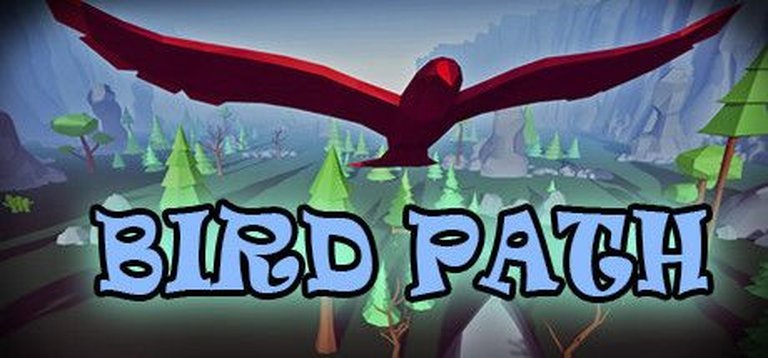
Bird Path is a flight simulation game developed by Rabotiagi Games, released in 2020 for Windows. Players take on a behind-view perspective, directly controlling a bird’s movements to navigate its aerial environment. The game emphasizes aviation mechanics and immersive flight experiences, blending simple controls with a focus on avian exploration.
Where to Buy Bird Path
PC
Bird Path: Review
A Minimalist Flight Simulation’s Quiet Ascent in the Indie Landscape
Introduction
In an era dominated by blockbuster bombast and live-service monoliths, Bird Path (Rabotiagi Games, 2020) carves out a niche as an unassuming avian meditation. Released amid the COVID-19 pandemic’s isolation zeitgeist, this micro-budget Windows title ($0.59–$1.99) offers a distilled experience: no combat, no narrative grandeur, just the purity of flight. Yet beneath its featherlight premise lies a thesis on accessibility and kinetic serenity. This review argues that Bird Path exemplifies how constraints—both technical and creative—can forge a uniquely tranquil gameplay loop that resonates with a specific audience, even as it stumbles in ambition.
Development History & Context
Studio Vision:
Rabotiagi Games, an obscuro indie developer with a catalog of similarly eccentric titles (BEAR, VODKA, STALINGRAD!; Zombie Camping), positioned Bird Path as a counterpoint to the era’s trend toward maximalism. The studio’s design ethos—evident in Steam bundle pairings—favors absurdist humor and minimalist mechanics. Bird Path emerged as a rare serious entry, likely developed under tight constraints (60MB install size, DirectX 9.0 compatibility) targeting low-spec PCs.
Technological Landscape:
Built for Windows 7–10 on a dual-core 2.4 GHz baseline, Bird Path sidestepped 2020’s GPU arms race. Its lightweight architecture prioritized accessibility over innovation, leveraging Unity’s 3D physics for basic collision and momentum. The absence of invert-Y controls at launch—a glaring omission critiqued in Steam forums—revealed a developer paradox: attentive to niche appeal (flight sim fans) yet overlooking genre staples.
Market Positioning:
Launching during Microsoft Flight Simulator’s photorealistic resurgence and Spiritfarer’s emotional heft, Bird Path occupied a vacuum: the “coffee break game.” Its $0.59 price (later raised to $1.99) and 60MB footprint catered to casual players seeking frictionless engagement, a strategy mirroring Flappy Bird’s virality but without the punitive difficulty.
Narrative & Thematic Deep Dive
The Illusion of Story:
Bird Path rejects traditional narrative infrastructure. There are no characters, dialogue, or lore entries. Instead, its “story” emerges through implied environmental stakes: a nameless bird navigating abstract obstacles (trees, stones) toward floating checkpoints. Thematic weight is minimal but deliberate—peace (“no enemies, no combat”) and perseverance (increasing speed/difficulty).
Player as Mythmaker:
Rabotiagi hands players a blank canvas. Is this a migration saga? A rehabilitation metaphor? By refusing exposition, Bird Path invites projection, akin to Journey’s wordless odyssey but stripped of visual symbolism. The absence of fail states beyond “lost life” (Steam description) further abstracts tension into pure flow-state challenge.
Thematic Execution:
The game’s sole emotional anchor—“relax music”—underscores its intent as a digital balm. Yet the lack of tonal variety (no dynamic score shifts, no peril cues) flattens emotional range. Unlike Celeste’s marriage of mechanics and mental health themes, Bird Path’s “perseverance” loop feels mechanical, not transformative.
Gameplay Mechanics & Systems
Core Loop:
Players guide a bird through successive ring-shaped checkpoints in a third-person perspective. Each checkpoint boosts speed and narrows collision margins, escalating difficulty organically. Obstacles (static trees/stones) penalize mistimed maneuvers but lack environmental cleverness—no wind currents, predatory AI, or time-sensitive hazards.
Controls & Feedback:
Direct keyboard/controller input governs pitch/yaw with rudimentary inertia. The initial omission of invert-Y (later patched via community configs) alienated flight-sim veterans. Haptics and visual feedback are sparse: checkpoint chimes lack punch, and crash animations resemble rudimentary physics demos.
Progression & Legacy Systems:
– Leaderboards: Global score rankings incentivize mastery, though lack regional/temporal filters.
– Achievements (9 total): Basic milestones (“First Checkpoint,” “Speed Runner”) with no hidden challenges.
– Pacing: Early checkpoints feel sluggish, risking player attrition before the satisfying velocity curve kicks in.
Flaws:
– Repetition: Identical obstacle patterns recycle across runs.
– Depth Vacuum: No unlockables, skill trees, or alternate birds.
– UI Sparsity: Menus are functional but lack aesthetic cohesion.
World-Building, Art & Sound
Visual Design:
Stark geometric landscapes—floating islands, polygonal forests—evoke PS1-era abstraction. The bird model, a stylized silhouette with minimal animation, avoids realism in favor of symbolic clarity. Color palettes shift subtly between zones (azure skies to amber dusk), but environmental diversity is superficial.
Atmosphere vs. Immersion:
Rabotiagi opts for “peaceful” over “lived-in.” The world feels engineered, not inhabited: no NPCs, no ecosystems, no weather. This austerity amplifies focus on mechanics but sacrifices wonder. Contrast SkateBird’s diorama charm or Aer: Memories of Old’s mythic ruins—Bird Path’s world exists solely as an obstacle course.
Sound Design:
– Music: Lo-fi ambient tracks, devoid of progression or leitmotifs, blend into white noise.
– SFX: Checkpoint “dings” and collision thuds service basic feedback but lack spatial depth.
– Silence: Unexploited. The absence of wind rustles or avian calls diminishes verisimilitude.
Reception & Legacy
Launch Reception:
– Player Reviews (Steam): 86% positive (37 reviews) praise its “chill vibe” and affordability, while critics cite “shallow longevity.”
– Curator Attention: 8 curators reviewed it (Steam), noting its “competent simplicity” but “missed potential.”
– Commercial Impact: Estimated low thousands sold (SteamDB data)—a footnote in 2020’s indie deluge.
Evolution:
Post-launch patches added invert-Y support (via community pressure) but no content expansions. Rabotiagi’s focus shifted to campier titles (GIRLS BATTLEGROUNDS), leaving Bird Path as a curious anomaly in their catalog.
Industry Influence:
While not revolutionary, Bird Path exemplifies a micro-genre: the “ambient challenge” game. Its DNA threads through later titles like Luna’s Fishing Garden (relaxation + light mechanics) and Superflight (momentum-based flying). Yet its legacy is cautionary—underscoring how minimalism, without thematic depth or dynamic systems, risks evaporating from cultural memory.
Conclusion
Bird Path is less a game than a digital sigh—a brief, competent exhale in a medium prone to sensory overload. Its strengths (accessibility, focus, price) are inseparable from its weaknesses (repetition, narrative vacancy). For players seeking 30-minute meditative sessions, it delivers a functional, if forgettable, arc. As a historical artifact, it encapsulates indie gaming’s democratization: a solo developer’s vision executed within strict technical bounds. Yet unlike Flappy Bird or Journey, it lacks the spark of accidental genius or artistic cohesion.
Final Verdict:
A minor, intriguing fossile in the indie strata—worth examining for students of minimalist design, but unlikely to soar into classic status. For $0.59, it’s a curio; for full price, a harder sell. Rabotiagi’s bird remains airborne but never truly migrates beyond its cage.