
- Release Year: 2005
- Platforms: Windows
- Publisher: Alawar Entertainment, Inc.
- Developer: Green Hill Games
- Genre: Puzzle, Tile matching puzzle
- Perspective: Side view
- Game Mode: Single-player
- Gameplay: Combo system, Match-three, Swapping, Tile matching
- Setting: Restaurant
- Average Score: 60/100
Description
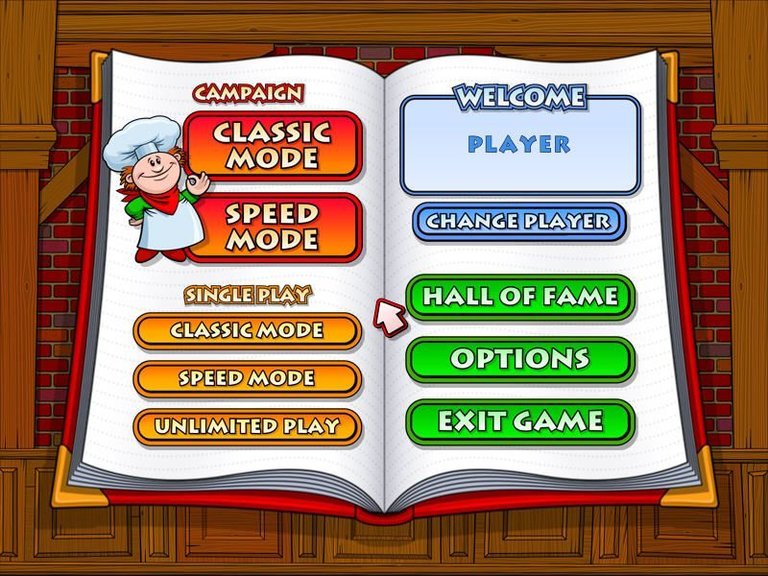
Bistro Stars is a restaurant-themed match-three puzzle game where players serve customers by strategically swapping food items on a board. Using a drag-and-drop mechanic, players must align three or more identical items horizontally or vertically to clear them, triggering combos as new elements fall into place. The game introduces challenges like locked tiles that resist movement and offers five distinct modes: a campaign with classic and speed variants, and single-player options including classic, speed, and endless gameplay.
Bistro Stars Reviews & Reception
mobygames.com (60/100): Average score: 3.0 out of 5
arcadegamers.org : No scores have been submitted for Bistro Stars
gamefools.com : “I love Bistro Stars and could play for hours. Simple game concepts with nothing too involved. The game gets more challenging as you progress.”
Bistro Stars: Review
In the pantheon of match-three puzzle games, few titles have managed to carve out a niche as uniquely charming and engaging as Bistro Stars. Released in 2005 by Green Hill Games and published by Alawar Entertainment, Bistro Stars stands as a testament to the enduring appeal of simple yet addictive gameplay mechanics. Set against the backdrop of a bustling restaurant, the game tasks players with serving a parade of hungry customers by matching food items on a grid. Despite its humble origins and modest reception, Bistro Stars deserves a closer look for its innovative twists on a familiar genre and its enduring influence on subsequent games.
Development History & Context
The Studio and Creators’ Vision
Green Hill Games, the developer behind Bistro Stars, was a relatively unknown entity in the gaming industry at the time of the game’s release. The studio’s vision for Bistro Stars was to create a match-three puzzle game that stood out from the crowd by incorporating a unique theme and engaging gameplay mechanics. The restaurant setting was chosen to add a layer of narrative depth and immersion, making the game more than just a mindless puzzle solver.
Technological Constraints of the Era
Bistro Stars was released in an era when downloadable casual games were gaining traction, but the technology was still in its infancy. The game was designed to run on Windows, with a fixed/flip-screen visual style and a point-and-select interface. The developers had to work within the constraints of the available hardware, ensuring that the game was accessible to a wide audience without requiring high-end specifications.
The Gaming Landscape
The early 2000s saw a surge in the popularity of match-three puzzle games, with titles like Bejeweled leading the charge. Bistro Stars entered this crowded market with a fresh perspective, leveraging the restaurant theme to create a more immersive and engaging experience. The game’s release coincided with a shift towards downloadable content, making it an early example of a game that could be easily distributed and played on personal computers.
Narrative & Thematic Deep Dive
Plot and Characters
Bistro Stars’ narrative is relatively simple, focusing on the player’s role as a chef in a bustling restaurant. The game’s story is told through cutscenes and in-game dialogue, with customers placing orders that the player must fulfill by matching food items on the grid. The characters in Bistro Stars are archetypal, representing the various patrons of the restaurant. Each customer has a unique order, adding a layer of variety to the gameplay.
Dialogue and Themes
The dialogue in Bistro Stars is straightforward and serves to advance the game’s narrative. The themes explored in the game revolve around the challenges of running a successful restaurant, with the player facing increasing levels of difficulty as they progress. The game’s themes of perseverance and adaptability are reflected in the gameplay mechanics, as players must continually adjust their strategies to meet the demands of their customers.
Gameplay Mechanics & Systems
Core Gameplay Loops
Bistro Stars’ core gameplay loop revolves around matching three or more identical food items on a grid. The player uses a drag-and-drop mechanic to swap items, creating matches that clear the board and fill orders. The game introduces new types of items as the player progresses, such as locked items that cannot be swapped and must be cleared through strategic matching.
Game Modes
Bistro Stars offers five game modes: a campaign with classic and speed modes, and single-play with classic, speed, and unlimited modes. The campaign modes provide a structured progression, with each level introducing new challenges and objectives. The single-play modes offer more flexibility, allowing players to enjoy the game at their own pace.
UI and Innovative Systems
The user interface in Bistro Stars is intuitive and easy to navigate, with clear visual indicators for matches and orders. The game’s innovative systems include the introduction of locked items and special bonuses, such as extra time or points, which add depth to the gameplay. The UI also features a Hall of Fame board, in-game hints, and automatic game saves, enhancing the overall player experience.
World-Building, Art & Sound
Setting and Atmosphere
Bistro Stars’ setting is a bustling restaurant, complete with a variety of customers and food items. The game’s art style is colorful and inviting, with detailed animations and sound effects that bring the restaurant to life. The atmosphere is one of controlled chaos, as the player races against the clock to fulfill orders and keep their customers happy.
Visual Direction
The visual direction in Bistro Stars is characterized by its fixed/flip-screen style, which allows for detailed and immersive environments. The game’s graphics are vibrant and appealing, with a focus on the food items and customer animations. The visual design contributes to the game’s overall charm and appeal, making it a standout title in the match-three genre.
Sound Design
The sound design in Bistro Stars is equally impressive, with a mix of background music and sound effects that enhance the gameplay experience. The music is upbeat and energetic, reflecting the fast-paced nature of the game. The sound effects are crisp and clear, providing immediate feedback for matches and actions.
Reception & Legacy
Critical and Commercial Reception
Bistro Stars received a modest reception upon its release, with critics praising its innovative gameplay mechanics and charming art style. The game’s average score of 3.0 out of 5 on MobyGames reflects its strengths and weaknesses, with some reviewers noting its simplicity and lack of depth. Despite its modest reception, Bistro Stars has maintained a dedicated following, with players appreciating its unique theme and engaging gameplay.
Influence on Subsequent Games
Bistro Stars’ influence can be seen in subsequent match-three puzzle games, particularly those that incorporate unique themes and settings. The game’s use of a restaurant theme and the introduction of locked items and special bonuses have been emulated by other developers, highlighting its enduring impact on the genre. Bistro Stars also paved the way for downloadable casual games, demonstrating the potential of this distribution model.
Conclusion
Bistro Stars is a hidden gem in the match-three puzzle genre, offering a unique and engaging experience that stands the test of time. Its innovative gameplay mechanics, charming art style, and immersive setting make it a standout title in a crowded market. Despite its modest reception, Bistro Stars has left an indelible mark on the genre, influencing subsequent games and paving the way for downloadable casual games. For those seeking a fresh take on the match-three formula, Bistro Stars is a must-play title that deserves a place in the pantheon of classic puzzle games.