
- Release Year: 2015
- Platforms: Windows
- Publisher: Clickteam SARL
- Developer: Gamesare Studios
- Genre: Action
- Perspective: Side view
- Game Mode: Single-player
- Gameplay: RPG elements
- Setting: Futuristic, Sci-fi
- Average Score: 36/100
Description
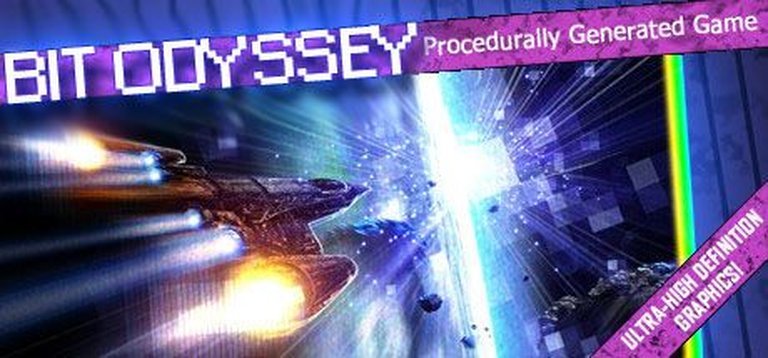
Bit Odyssey is a sci-fi action-adventure game set in a procedurally generated galaxy, where players explore exotic planets, encounter alien races, and engage in randomly generated episodes involving combat, diplomacy, and discovery. With RPG elements and a top-down/side-view perspective, the game offers a unique, ever-changing experience where no two playthroughs are the same, blending exploration, strategy, and storytelling in a futuristic setting.
Where to Buy Bit Odyssey
PC
Bit Odyssey Patches & Updates
Bit Odyssey Guides & Walkthroughs
Bit Odyssey Reviews & Reception
steambase.io (43/100): Bit Odyssey has earned a Player Score of 43 / 100.
store.steampowered.com (30/100): Mostly Negative (30% of 20).
Bit Odyssey: A Procedural Space Odyssey of Unfulfilled Potential
Introduction
Bit Odyssey (2014) is a game that dares to dream big—a procedurally generated universe of endless exploration, where every star system, alien race, and mission is unique. Developed by the obscure studio Gamesare and published by Clickteam, it promised a Star Trek-inspired sandbox where players could captain their own ship, forge alliances, and uncover the mysteries of an infinite cosmos. Yet, despite its ambitious vision, Bit Odyssey remains a cautionary tale of how even the most promising concepts can falter under the weight of execution.
This review dissects Bit Odyssey in its entirety: its development history, its narrative and thematic aspirations, its gameplay mechanics, and its troubled legacy. Was it a bold experiment ahead of its time, or a half-baked Early Access project that never reached its full potential? Let’s embark on this odyssey and find out.
Development History & Context
The Studio Behind the Stars
Gamesare Studios, the developer of Bit Odyssey, is a relatively unknown entity in the gaming industry. Little is documented about the team’s prior work, though the game’s Steam page mentions Vincere Totus Astrum as a predecessor—a title so obscure that it leaves no digital footprint beyond this reference. This lack of a proven track record may explain why Bit Odyssey entered Steam’s Early Access program in December 2014, a decision that would ultimately shape its reception.
Clickteam, the publisher, is better known for its game creation software (e.g., The Games Factory, Fusion) than for publishing original titles. Their involvement suggests Bit Odyssey was likely built using Clickteam’s proprietary tools, which could explain both its rapid development and some of its technical limitations.
The Vision: A Universe Without Limits
The developers envisioned Bit Odyssey as a “robust sci-fi experience” where procedural generation would create a galaxy so vast that players could, in theory, fly in one direction forever. The game’s Steam description boasts:
“No two games are the same. As you explore, randomly generated ‘Episodes’ will have you fighting hostile ships, helping aliens, and exploring the surface of new planets.”
This ambition was not merely about scale but about player agency. The game’s “Mission Matrix” was designed to generate over 100 unique episode types, stitching together dynamic narratives on the fly. Players could influence their reputation with alien races, customize their ship and crew, and engage in a mix of combat, diplomacy, and exploration.
The Early Access Gamble
Bit Odyssey launched in Early Access on December 15, 2014, with a planned full release in 2015. The developers cited the need for community feedback to balance the game’s systems, particularly its procedural content. Key promises included:
– Seasonal episodic content (a “First Season” of missions).
– Online sharing of player-created ships and captain’s logs.
– Steam Workshop integration for user-generated content.
However, the Early Access period was plagued by radio silence. The last developer update on Steam is dated from the initial launch, and by 2016, it was clear that Bit Odyssey had been abandoned. The game’s Steam page still bears the ominous note:
“The developers have not communicated any updates for over a year.”
This abandonment left Bit Odyssey in a liminal state—neither a finished product nor a true “early access” experiment. It was, and remains, a snapshot of an unfinished dream.
The Gaming Landscape of 2014-2015
Bit Odyssey arrived during a golden age of procedural generation and space exploration games. Titles like:
– Elite: Dangerous (2014) – A hardcore space sim with a 1:1 scale Milky Way.
– No Man’s Sky (2016) – The infamous “procedural universe” game that faced its own backlash.
– FTL: Faster Than Light (2012) – A roguelike space strategy game that set a high bar for emergent storytelling.
Compared to these, Bit Odyssey was a niche experiment. It lacked the polish of FTL or the scope of Elite, but it carved out a unique identity by focusing on short, episodic adventures rather than long-term progression. Unfortunately, its technical rough edges and abandoned development made it easy to overlook.
Narrative & Thematic Deep Dive
The Illusion of a Living Galaxy
Bit Odyssey’s narrative is not a linear story but a framework for player-driven tales. The game begins with a meta-narrative: you are a captain selecting a home star, a planet, and a species, each choice subtly influencing your starting stats. A “low gravity, cool, wet world” might produce a docile, scientific race, while a harsh environment breeds warriors. This is a clever touch, echoing the “environmental determinism” of classic sci-fi like Dune or Foundation.
However, the game’s procedural storytelling is its greatest strength and weakness.
The Mission Matrix: A Double-Edged Sword
The “Mission Matrix” generates “Episodes”—short, 3-8 minute vignettes that can chain together. Examples include:
– Distress Signals: Investigating a plasma trail leads to a ship under attack. Do you help or exploit them?
– Diplomatic Encounters: Trading with aliens can turn them into allies or enemies.
– Exploration: Landing on planets to scan flora, mine resources, or uncover relics.
On paper, this system is brilliant. It evokes the unpredictability of Star Trek’s away missions or Firefly’s smuggler escapades. In practice, the writing is painfully barebones. Dialogue is functional at best, with lines like:
“Captain, we’ve detected a plasma trail. Investigate?”
There are no named characters, no faction politics, and no overarching plot. The “narrative” is purely emergent, relying on the player’s imagination to fill in the gaps. For some, this is liberating. For others, it feels hollow.
Themes: Isolation and Discovery
Bit Odyssey’s themes are classic space opera fare:
1. The Unknown: The galaxy is vast, indifferent, and full of wonders.
2. Moral Choices: Helping or betraying aliens has consequences (though mechanically shallow).
3. Survival: Resources are finite; poor decisions lead to death.
Yet, the game’s procedural nature undermines its thematic depth. Without a persistent world or memorable characters, the universe feels disposable. Each “Episode” is a fleeting moment, quickly forgotten.
The Missing Soul of Sci-Fi
Great space games—Mass Effect, The Outer Wilds, Star Control—succeed because they balance procedural elements with handcrafted moments. Bit Odyssey has no such moments. Its alien races are randomly generated blobs with no culture, its planets are color-swapped spheres, and its “relics” are generic loot.
This is the game’s tragic flaw: it mistakes quantity for quality. A thousand procedurally generated missions cannot replace a single well-written story beat.
Gameplay Mechanics & Systems
The Core Loop: Explore, Encounter, Survive
Bit Odyssey’s gameplay is a mix of:
1. Space Travel: Navigating a top-down galaxy map.
2. Episodic Missions: Randomly triggered events.
3. Ship Management: Fuel, repairs, and upgrades.
4. Combat: Turn-based (or real-time?) space battles.
Let’s break it down.
1. Exploration: The Joy of the Unknown
The galaxy is truly endless. Players can fly in any direction, discovering stars, nebulae, and planets. The procedural generation is impressive for a small indie title, though the visuals are rudimentary (think Starflight meets Spore’s creature creator).
- Planets can be mined for resources or explored for “unique” items (though most are reskinned).
- Stars provide fuel, a critical resource.
- Alien Ships appear as random encounters, offering trade, combat, or dialogue.
The thrill of discovery is real—at first. But without meaningful landmarks or goals, the galaxy becomes a monotonous void.
2. Episodic Missions: Hit or Miss
The “Episode” system is the game’s marquee feature. Each mission is a mini-adventure with branching paths. For example:
– Scenario: You find a derelict ship.
– Option 1: Salvage it (gain resources, but risk angering its owners).
– Option 2: Repair it (gain an ally).
– Option 3: Ignore it (nothing happens).
The variety is impressive, but the execution is flawed:
– Repetition: After 10 hours, you’ve seen most “Episode” types.
– Lack of Depth: Choices rarely have long-term consequences.
– Bugs: Some missions softlock or fail to trigger.
3. Ship Management: A Shallow Simulation
Players can:
– Upgrade weapons, shields, and engines.
– Repair damage (via mining or trading).
– Customize their ship’s appearance (a fun but superficial feature).
However, the economy is simplistic. Resources are easy to obtain, and there’s little incentive to specialize your ship. Combat is similarly shallow—a mix of auto-aimed weapons and dodging, with no tactical depth.
4. Combat: A Missed Opportunity
Battles play out in a top-down arena, with players facing 1-3 enemy ships. The controls are clunky, and the AI is predictable. Worse, combat lacks weight—ships feel like floating hitboxes rather than hulking starships.
The game’s Steam description promises:
“Engage in battles of one on up to three enemy vessels. Cool thing is with the Mission Matrix, a ship might jump out of battle and you may get the option to chase them…”
In reality, combat is a chore. The “chase” mechanic is underutilized, and most fights devolve into circling and spamming weapons.
UI and UX: A Cluttered Bridge
The user interface is a mess. Menus are unintuitive, text is small, and critical information (e.g., fuel levels) is buried. The game’s Early Access roots show—this feels like a prototype, not a polished product.
Innovation vs. Flaws
Bit Odyssey’s greatest innovation is its procedural episodic system. Few games attempt dynamic storytelling on this scale. However, its flaws are equally glaring:
– Lack of Progression: No “endgame” or overarching goals.
– Technical Issues: Bugs, crashes, and unoptimized performance.
– Shallow Systems: Combat, trading, and diplomacy lack depth.
World-Building, Art & Sound
A Universe of Pixelated Promise
Visually, Bit Odyssey is a mixed bag. The procedural generation is impressive in scope but lacking in detail:
– Planets are colorful but generic (no biomes, weather, or landmarks).
– Ships are customizable but blocky, with limited animation.
– Aliens are amorphous blobs with no distinct cultures.
The art style is functional, evoking early 2000s indie games like Escape Velocity. It’s not ugly, but it’s not memorable.
Sound Design: The Silence of Space
The audio is minimalist to a fault. There’s no voice acting, and the soundtrack is a loop of ambient space noises. Combat lacks punch—lasers sound like weak pew-pews, and explosions are muted.
This aural emptiness reinforces the game’s isolation but also its loneliness. A stronger soundtrack (à la FTL’s tense beats) could have elevated the experience.
Atmosphere: The Void Stares Back
Bit Odyssey nails the feeling of being a lone captain in an endless void. The procedural galaxy, the random encounters, the quiet hum of your ship—it all contributes to a sense of cosmic smallness.
But atmosphere alone isn’t enough. Without compelling characters or a living world, the game feels like a ghost ship drifting through the stars.
Reception & Legacy
Critical and Commercial Reception: A Mostly Negative Voyage
Bit Odyssey’s Steam reviews are Mostly Negative (30% positive), with common complaints including:
– “Abandoned Early Access” – Players felt misled by the lack of updates.
– “Repetitive and Shallow” – The procedural content couldn’t sustain long-term play.
– “Buggy and Unfinished” – Crashes, softlocks, and missing features.
Metacritic has no critic reviews, and the game remains a footnote in gaming history. It sold poorly, with PlayTracker estimating ~111K players—a drop in the ocean compared to No Man’s Sky’s millions.
Influence: A Cautionary Tale
Bit Odyssey’s legacy is one of what could have been. It predated No Man’s Sky’s procedural universe by two years but lacked Hello Games’ polish and marketing. Its episodic mission system foreshadowed later games like Star Traders: Frontiers, but its abandonment ensured it would never be remembered.
Today, it serves as a warning to indie developers:
– Procedural generation ≠ depth.
– Early Access requires commitment.
– A great concept needs great execution.
The Cult Following
Despite its flaws, Bit Odyssey has a small but dedicated fanbase. Some players praise its:
– Freedom: The ability to explore without constraints.
– Creativity: The ship and alien customization tools.
– Potential: What it could have been with more development.
On Reddit and Steam forums, modders have attempted to revive the game, but without source code access, their efforts are limited.
Conclusion: A Star That Burned Too Briefly
Bit Odyssey is a game of tremendous ambition and crushing execution. It dared to create an infinite universe of dynamic stories, but its procedural systems lacked the depth to sustain them. Its Early Access abandonment left it as a relic—a snapshot of a dream that never fully materialized.
The Final Verdict
Score: 5/10 – A Flawed Gem
– Pros:
– Truly endless exploration.
– Innovative procedural episodic system.
– Unique ship/alien customization.
– Cons:
– Abandoned in Early Access.
– Shallow combat and progression.
– Repetitive, buggy, and unfinished.
Bit Odyssey is not a bad game—it’s an incomplete one. For patients who enjoy emergent storytelling and don’t mind rough edges, it offers fleeting moments of magic. But for most, it’s a reminder that even the most infinite universes need a human touch.
Its Place in History
Bit Odyssey will not be remembered alongside Elite or No Man’s Sky. It’s a footnote, a “what if,” a game that could have been great but wasn’t given the chance. Yet, in its failure, it teaches a valuable lesson: procedural generation is a tool, not a substitute for design.
For the brave captains who still dare to set sail into its void, Bit Odyssey remains a curious artifact—a universe waiting to be explored, if only it had been given the stars it deserved.
Final Thought:
“The universe is infinite, but so is the gap between ambition and reality.”
Would I recommend Bit Odyssey? Only to the most hardcore space exploration enthusiasts—and even then, with a warning: this odyssey is as likely to strand you as it is to inspire you.