
- Release Year: 2016
- Platforms: PlayStation 4, Windows
- Publisher: Team Future LLC
- Developer: Team Future LLC
- Genre: Adventure
- Perspective: 1st-person
- Game Mode: Co-op
- Gameplay: Puzzle elements
- Average Score: 75/100
Description
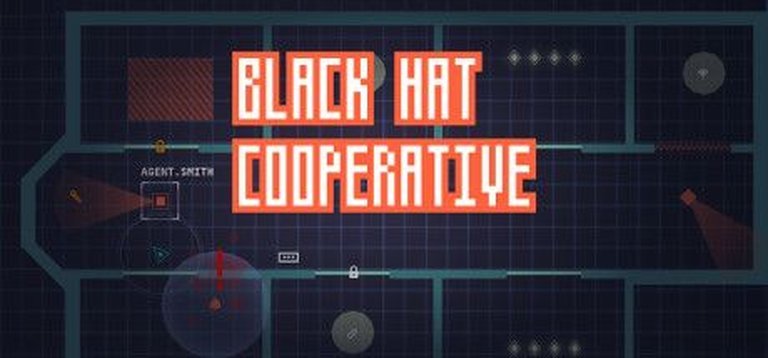
Black Hat Cooperative is an award-winning stealth puzzle game where two players must work together to navigate complex levels filled with robot agents and environmental hazards. One player, Hammer, explores the world in first-person (optionally in VR), sneaking past enemies and collecting resources, while the other, Spice, provides a top-down strategic view and hacks systems to aid their partner. The game emphasizes teamwork, communication, and quick thinking, with 12 challenging levels featuring different enemy types and traps. Originally a game jam project, it was later expanded and funded via Kickstarter, offering a unique blend of local co-op gameplay and asymmetric perspectives.
Gameplay Videos
Where to Buy Black Hat Cooperative
PC
Black Hat Cooperative Patches & Updates
Black Hat Cooperative Guides & Walkthroughs
Black Hat Cooperative Reviews & Reception
steambase.io (75/100): Black Hat Cooperative has earned a Player Score of 75 / 100.
store.steampowered.com (72/100): An absolute blast to play, a fantastic multiplayer experience, and one of the most enjoyable instances of a very underrepresented VR gaming genre
metacritic.com (80/100): Black Hat Cooperative is great for players who have another person handy who would be willing to switch in and out of VR, though the many, many deaths and failures you will experience can cause frustration, there is nonetheless a sense of camaraderie and joy to be found in Black Hat Cooperative that is well worth exploring.
mobygames.com (75/100): Black Hat Cooperative is an award-winning stealth game that pits you and an ally against robot agents that seek to remove you from the system.
Black Hat Cooperative: A Masterclass in Asymmetrical Cooperative Design
Introduction: The Unlikely Triumph of a Game Jam Experiment
Black Hat Cooperative (2016) is a rare gem in the landscape of cooperative gaming—a title that not only embraces asymmetry but makes it the cornerstone of its identity. Born from a 2014 Global Game Jam project and later refined through a successful Kickstarter campaign, this indie stealth game defies conventional multiplayer norms by splitting its players into two radically different roles: one immersed in virtual reality (VR) as the “Hammer,” and the other stationed at a computer as the “Spice,” a hacker with god-like oversight. The result is a tense, communication-driven experience that transforms the act of sneaking past robotic agents into a high-stakes ballet of trust and coordination.
At its core, Black Hat Cooperative is a testament to the power of collaborative gameplay. It strips away the competitive edge that dominates so much of modern gaming and replaces it with a pure, unfiltered need for teamwork. The game’s legacy, though modest in commercial scope, is significant in its influence on asymmetrical multiplayer design, particularly in VR. It stands as a pioneering effort in a niche that has since seen limited exploration, making its achievements all the more remarkable.
This review will dissect Black Hat Cooperative from every angle—its development journey, narrative and thematic underpinnings, gameplay mechanics, artistic and auditory design, critical reception, and lasting impact. By the end, it will be clear why this game, despite its flaws, remains a vital case study in how innovation can thrive outside the AAA spotlight.
Development History & Context: From Game Jam to Commercial Reality
The Birth of an Idea
Black Hat Cooperative began its life during the 2014 Global Game Jam, a 48-hour event where developers are challenged to create a game from scratch based on a central theme. The team behind the project, which would later formalize as Team Future LLC, was inspired by the potential of asymmetrical gameplay—a concept that had seen limited exploration in VR at the time. The initial prototype featured a simple but compelling dynamic: one player in VR, navigating a dangerous environment, and another player acting as a guide with access to a top-down map.
The game’s premise was immediately striking. VR was (and still is) a medium often criticized for its isolating nature. By introducing a second player outside the headset, Black Hat Cooperative transformed VR into a shared experience, leveraging its immersive strengths while mitigating its social limitations. This dual-role structure was not entirely unprecedented—games like Keep Talking and Nobody Explodes (2015) had explored similar ideas—but Black Hat Cooperative distinguished itself by integrating VR as a core component rather than an optional add-on.
Kickstarter and the Road to Release
Following the Game Jam, the team launched a Kickstarter campaign to fund further development. The campaign was successful, allowing Team Future to expand the game’s scope from a simple prototype to a full-fledged title with 12 levels, refined mechanics, and support for multiple VR platforms, including the Oculus Rift and HTC Vive. The game’s development was also bolstered by its presence at major industry events such as PAX East, GDC, and Engadget Live, where it garnered attention for its innovative approach to cooperative play.
Technologically, Black Hat Cooperative was built using the Unity engine, a choice that allowed for rapid prototyping and cross-platform compatibility. The game’s VR implementation was designed to be accessible, supporting both room-scale and seated playstyles, though it notably lacked teleportation-based movement—a decision that would later contribute to motion sickness issues for some players.
The Gaming Landscape in 2016
The year 2016 was a pivotal one for VR gaming. The Oculus Rift and HTC Vive had just launched, bringing high-end VR to consumers for the first time. However, the market was still in its infancy, with developers grappling with how to create compelling experiences that justified the technology’s high cost and technical demands. Multiplayer VR games were particularly rare, as networking and synchronization challenges made them difficult to implement.
Black Hat Cooperative arrived at a time when the industry was hungry for fresh ideas. Its focus on local multiplayer (rather than online) was a deliberate choice, reflecting both technical constraints and a desire to foster in-person social interaction. This decision, while limiting the game’s potential audience, reinforced its identity as a couch co-op experience—something increasingly rare in an era dominated by online play.
Narrative & Thematic Deep Dive: A Minimalist Story with Maximum Tension
Plot and Setting
Black Hat Cooperative does not rely on a complex narrative to drive its experience. Instead, it opts for a minimalist, atmospheric approach that prioritizes gameplay and tension over exposition. The game is set in a cyberpunk-inspired digital world, where players take on the roles of hackers infiltrating a system guarded by robotic agents. The premise is simple: steal treasure, avoid detection, and escape.
The game’s opening line—“Listen carefully to my directions. Look to your right. There are two agents behind that door and they will reach you in 5 seconds. They just heard you. RUN!”—sets the tone perfectly. It’s a high-stakes, high-pressure scenario where every second counts, and communication is the difference between success and failure.
Characters and Roles
The game’s two playable characters, Hammer and Spice, are defined entirely by their roles rather than traditional character development.
-
Hammer (VR Player): The “boots on the ground” operative, Hammer is tasked with physically navigating the environment, collecting treasure, keys, and “bits” (the in-game currency used for hacking), and avoiding or evading robotic enemies. Hammer’s perspective is first-person and immersive, with the VR headset placing them directly into the danger zone. The role requires quick reflexes, spatial awareness, and, most importantly, trust in their partner’s guidance.
-
Spice (PC Player): The strategist and hacker, Spice has access to a top-down map of the entire level, allowing them to see enemy patrol routes, traps, and hidden pathways. Spice’s primary tools are their hacking terminal, which can freeze enemies, blind them, or unlock special doors, and their voice, which becomes the Hammer’s lifeline. Spice must translate the chaos of the map into clear, actionable instructions, often under extreme time pressure.
The dynamic between Hammer and Spice is where Black Hat Cooperative shines. The game does not allow for solo play—both roles are essential, and neither can succeed without the other. This interdependence creates a unique social contract between players, where miscommunication or hesitation can lead to catastrophic failure.
Themes: Trust, Communication, and the Illusion of Control
At its heart, Black Hat Cooperative is a game about trust and communication. The Hammer, despite being the one in immediate danger, must relinquish a degree of control to the Spice, who sees the bigger picture but lacks the Hammer’s ground-level perspective. This creates a delicate balance of power—Spice has the knowledge, but Hammer has the agency.
The game also explores the illusion of control in digital spaces. The robotic agents, with their predictable but relentless patrol patterns, embody the cold, unfeeling nature of automated security systems. The players, as hackers, are intruders in a world not designed for them, forced to exploit glitches and weaknesses to survive. This theme resonates strongly in an era where cybersecurity and digital privacy are increasingly relevant topics.
Dialogue and Atmosphere
Black Hat Cooperative is light on traditional dialogue, but the emergent storytelling that arises from player interactions is where its narrative strength lies. The game encourages—no, demands—constant verbal communication, turning every session into a high-stakes conversation filled with urgency, frustration, and occasional triumph.
The sound design reinforces this atmosphere. The hum of robotic agents, the beeping of alarms, and the distinct audio cues for different enemy types create a tense, immersive soundscape that keeps players on edge. The lack of a traditional soundtrack ensures that every sound is meaningful, heightening the sense of danger.
Gameplay Mechanics & Systems: The Art of Asymmetrical Stealth
Core Gameplay Loop
Black Hat Cooperative’s gameplay revolves around a simple but brilliant loop:
- Spice surveys the level, identifying enemy patrol routes, traps, and objectives.
- Hammer navigates the environment, collecting treasure, keys, and bits while avoiding detection.
- Spice uses hacking abilities (enabled by Hammer’s collection of bits) to freeze enemies, disable traps, or unlock doors.
- Players communicate constantly, adjusting their strategy in real-time as the situation evolves.
This loop is repeated across 12 increasingly complex levels, each introducing new enemy types, environmental hazards, and puzzles.
Enemy Types and AI Behavior
The game features four primary enemy types, each with distinct behaviors:
- Grunts: Basic patrol units that follow set routes. They are the most common and easiest to avoid.
- Captains: More aggressive than Grunts, Captains will investigate suspicious noises and can call for reinforcements if they spot the player.
- Kings: Stationary but highly alert, Kings act as sentries and will sound alarms if they detect the player.
- Hunters: The most dangerous enemy, Hunters actively track the player’s scent trail, forcing Hammer to double back or find alternative routes.
The AI is predictable but punishing. Enemies follow strict patrol patterns, which Spice can memorize and exploit. However, one mistake—a misplaced step, a poorly timed hack—can cascade into disaster, as enemies converge on Hammer’s position.
Hacking and Resource Management
Hacking is the linchpin of the game’s strategy. Spice’s abilities are powered by “bits”, which Hammer must collect by scanning enemies or finding them in the environment. This creates a risk-reward dynamic: Hammer must get close to enemies to scan them, increasing the chance of detection.
The hacking terminal allows Spice to:
– Freeze enemies temporarily, halting their movement.
– Blind enemies, causing them to lose track of Hammer.
– Unlock special doors, providing shortcuts or access to hidden areas.
These abilities are not unlimited—they require bits and cooldowns, forcing players to use them judiciously. A poorly timed freeze can leave Hammer vulnerable, while hoarding bits can result in missed opportunities.
Level Design and Environmental Challenges
The game’s 12 levels are meticulously designed to escalate tension and complexity. Early levels introduce basic patrol routes and simple traps, while later levels incorporate:
– Laser grids that must be disabled or navigated carefully.
– Sound-detecting alarms that trigger if Hammer moves too quickly.
– Multi-tiered environments with elevators, vents, and hidden passages.
– Dynamic enemy spawns that force players to adapt on the fly.
Each level is a puzzle in motion, requiring players to memorize patterns, time their movements, and communicate effectively. The lack of a pause feature ensures that the pressure never lets up—once a level begins, players must commit to their strategy or face the consequences.
Controls and VR Implementation
Black Hat Cooperative supports multiple control schemes, depending on the player’s role:
-
Hammer (VR Player):
- Movement: Gamepad or Vive controllers (no teleportation).
- Interaction: Trigger-based picking up of objects, scanning enemies.
- View: First-person, with head tracking for immersion.
-
Spice (PC Player):
- Movement: Mouse and keyboard for map navigation.
- Hacking: Click-based interface for selecting abilities.
- View: Top-down, with zoom and pan capabilities.
The lack of teleportation in VR was a deliberate choice to enhance immersion, but it also contributed to motion sickness for some players. The game’s recommended use of speakers over headphones was intended to facilitate shared audio cues, ensuring both players could hear enemy movements and alarms.
Difficulty and Learning Curve
Black Hat Cooperative is unforgiving by design. The game does not hold the player’s hand—there are no tutorials beyond a brief explanation of controls, and the trial-and-error nature of the levels means that failure is frequent and expected.
The difficulty curve is steep but fair. Early levels ease players into the mechanics, but by Level 5 or 6, the game demands near-perfect execution. The Hunter enemy, in particular, raises the stakes dramatically, as its ability to track Hammer’s path forces players to rethink their strategies entirely.
This high difficulty is both a strength and a weakness. On one hand, it creates intense, memorable moments when players finally overcome a challenging section. On the other, it can frustrate less patient players, especially when miscommunication leads to repeated failures.
World-Building, Art & Sound: Crafting a Digital Playground
Visual Design and Aesthetic
Black Hat Cooperative adopts a clean, cyberpunk-inspired aesthetic that emphasizes readability and immersion. The environments are geometric and futuristic, with neon accents, glowing pathways, and sleek robotic designs. The art style is minimalist but effective, ensuring that players can quickly identify enemies, traps, and objectives without visual clutter.
The VR perspective is particularly striking. The scale and depth of the environments make navigation feel tactile and real, while the top-down map provides Spice with a strategic overview that contrasts sharply with Hammer’s ground-level chaos.
Sound Design: The Language of Danger
Sound is arguably the game’s most critical sensory element. The absence of a traditional soundtrack ensures that every footstep, alarm, and enemy vocalization carries weight. Key audio cues include:
- Enemy detection sounds: A distinct beep when an enemy spots Hammer.
- Alarm triggers: A loud, pulsing siren that signals increased enemy activity.
- Hacking feedback: Audio confirmation when Spice successfully freezes or blinds an enemy.
The shared audio experience (recommended via speakers) ensures that both players hear the same cues, fostering a unified sense of tension. This design choice is brilliant in its simplicity—it forces players to rely on sound as much as sight, heightening the immersive experience.
Atmosphere and Immersion
The game’s atmosphere is one of constant tension. The cold, sterile environments, combined with the relentless patrol of robotic agents, create a sense of being an intruder in a hostile system. The lack of narrative exposition reinforces this feeling—players are dropped into the action with no backstory, forced to learn through trial and error.
The asymmetrical perspectives further enhance immersion:
– Hammer feels vulnerable and exposed, with limited visibility and constant threats.
– Spice feels omniscient but powerless, able to see everything but unable to act without Hammer’s cooperation.
This duality of experience makes Black Hat Cooperative more than just a game—it’s a shared psychological challenge.
Reception & Legacy: A Cult Classic in the Making
Critical Reception
Black Hat Cooperative received generally positive reviews, with critics praising its innovative asymmetrical gameplay and tense cooperative dynamics. The game holds a 75% critic score on MobyGames and a “Mostly Positive” rating on Steam (72% positive from 69 reviews).
Positive Aspects Highlighted by Critics:
– Unique Asymmetrical Design: The VR + PC dynamic was widely praised as fresh and engaging.
– Strong Local Multiplayer: The game’s couch co-op focus was seen as a refreshing change in an era dominated by online play.
– High Tension and Communication: The constant need for verbal coordination created memorable, high-stakes moments.
Common Criticisms:
– Motion Sickness Issues: The lack of teleportation and first-person movement caused discomfort for some VR players.
– Steep Learning Curve: The punishing difficulty and trial-and-error gameplay frustrated less patient players.
– Limited Replayability: With only 12 levels, some critics felt the game lacked longevity.
Player Reception and Community Feedback
Steam reviews reveal a divided but passionate player base:
– Fans of the game highlight its unique cooperative experience, calling it “one of the best VR multiplayer games” and praising its communication-driven gameplay.
– Detractors cite motion sickness, control issues, and repetitive level design as major drawbacks.
A recurring theme in player feedback is the desire for more content, with many suggesting a level editor or workshop support to extend the game’s lifespan.
Awards and Recognition
Despite its niche appeal, Black Hat Cooperative earned several accolades:
– Mass DiGi 2015: People’s Choice Award
– Boston FIG 2014: Best Technical Quality and Best Multiplayer Awards
– Featured at PAX East, GDC, and Engadget Live
These awards underscore the game’s innovative approach and its impact on the indie VR scene.
Legacy and Influence
Black Hat Cooperative’s legacy lies in its proof of concept—it demonstrated that asymmetrical VR multiplayer could work, and work well. While it did not spawn a wave of direct imitators, its design philosophy has influenced later titles that explore shared VR experiences, such as:
– Keep Talking and Nobody Explodes (2015) – A non-VR asymmetrical puzzle game with similar communication mechanics.
– Acron: Attack of the Squirrels! (2019) – A VR + mobile asymmetrical multiplayer game.
– The Nightmare Cooperative (2014) – A non-VR predecessor that shares the game’s top-down + ground-level dynamic.
The game’s biggest limitation—its local-only multiplayer—also became a defining feature. In an age where online play dominates, Black Hat Cooperative stands as a rare example of a game that prioritizes in-person interaction, making it a valuable artifact of cooperative gaming history.
Conclusion: A Flawed but Brilliant Experiment in Cooperative Play
Black Hat Cooperative is not a perfect game. Its steep difficulty, motion sickness issues, and limited content prevent it from being a mainstream hit. However, its innovative asymmetrical design, tense cooperative gameplay, and immersive atmosphere make it a standout title in the VR and indie gaming landscapes.
The game’s greatest strength is its ability to turn communication into gameplay. Few titles demand such constant, high-stakes interaction between players, and even fewer do so with the precision and tension of Black Hat Cooperative. It is a game that rewards patience, trust, and quick thinking, and it punishes hesitation and miscommunication with ruthless efficiency.
In the grand tapestry of video game history, Black Hat Cooperative occupies a unique niche. It is neither a blockbuster nor a forgotten relic—it is a cult classic, beloved by those who appreciate its bold experimentation and uncompromising vision. For fans of cooperative gaming, VR innovation, or asymmetrical multiplayer, it remains an essential experience.
Final Verdict: 8.5/10 – A Masterful but Niche Cooperative Experience
Black Hat Cooperative is not for everyone, but for those who embrace its challenges, it offers one of the most intense and rewarding cooperative experiences in gaming. Its legacy as a pioneer of asymmetrical VR gameplay ensures that it will be remembered as a bold, innovative title that pushed the boundaries of what cooperative gaming could achieve.