
- Release Year: 2005
- Platforms: Windows
- Publisher: dtp entertainment AG
- Perspective: First-person
- Game Mode: Single-player
- Gameplay: Exploration, Puzzle-solving
- Setting: Castle
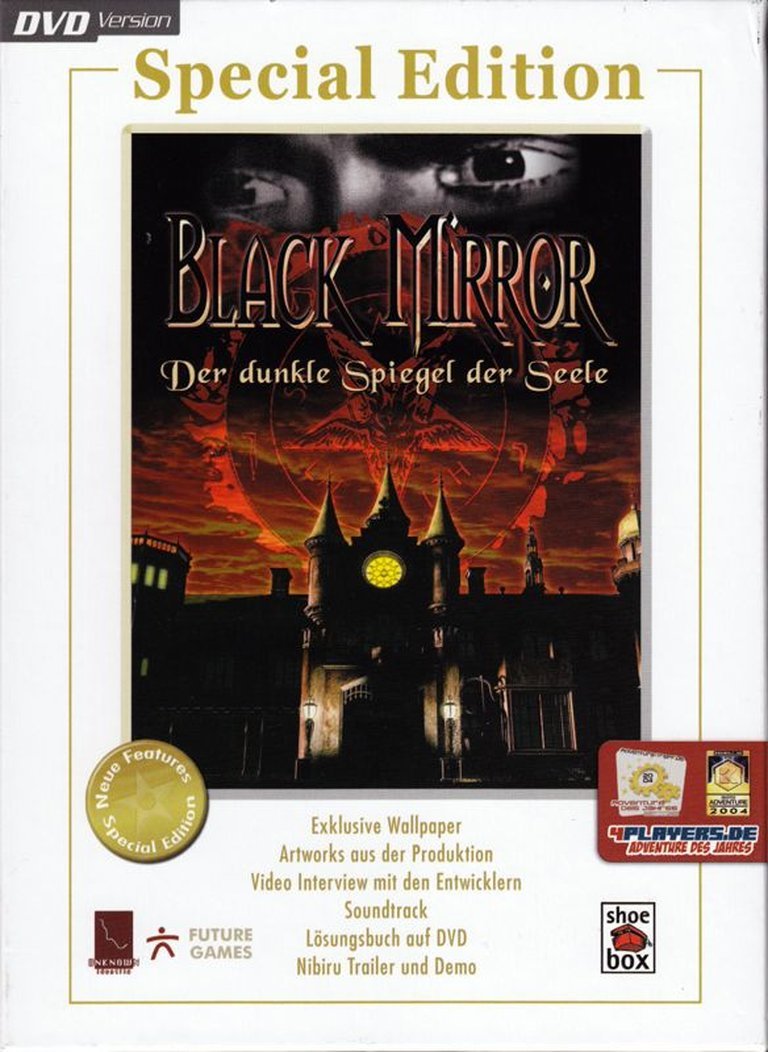
Description
Black Mirror: Der dunkle Spiegel der Seele (Special Edition) is an enhanced version of the original Black Mirror game, offering a chilling atmosphere and immersive storytelling. Set in a mysterious castle, players unravel a dark narrative while enjoying improved graphics and additional content such as a video interview with the development team, a demo of the upcoming game Nibiru, the game’s soundtrack, and exclusive wallpapers. The game is praised for its eerie ambiance and engaging gameplay, making it a must-have for fans of mystery and horror genres.
Gameplay Videos
Black Mirror: Der dunkle Spiegel der Seele (Special Edition): Review
Introduction
In the shadowy corners of early 2000s gothic horror gaming, Black Mirror: Der dunkle Spiegel der Seele (Special Edition) stands as a haunting relic—a re-release that seeks to polish the atmospheric brilliance of its 2003 predecessor while confronting the limitations of its era. This definitive edition, released in 2005 by dtp entertainment AG, bundles the original’s brooding narrative with behind-the-scenes extras, offering a deeper dive into its macabre world. But does it transcend its niche status to earn a place among horror-adventure classics? This review dissects its legacy, mechanics, and artistry to deliver a verdict on its enduring resonance.
Development History & Context
A Gothic Vision Amid Technical Constraints
Developed during a transitional period for PC adventure games, Black Mirror arrived when the genre was grappling with declining commercial viability. The original 2003 release, crafted by Czech studio Future Games, leaned heavily on its gothic aesthetic and puzzle-driven storytelling—a stark contrast to the rising popularity of action-oriented titles. The 2005 Special Edition, published by German distributor dtp entertainment AG, aimed to reinvigorate the game’s appeal with added content, including developer interviews, a demo for Nibiru (a spiritual successor), and patched graphics card compatibility.
This re-release capitalized on the early 2000s nostalgia for classic point-and-click adventures, albeit with concessions to the era’s technical limitations. Fixed driver issues and enhanced stability addressed initial complaints, but the game’s pre-rendered backgrounds and pixel-hunting puzzles remained artifacts of its time.
Narrative & Thematic Deep Dive
A Descent into Hereditary Madness
Black Mirror weaves a tale of ancestral curses and psychological unraveling. Players assume the role of Samuel Gordon, who returns to his family’s foreboding English estate, Black Mirror Castle, following his grandfather’s mysterious death. The narrative pivots on themes of guilt, madness, and the cyclical nature of violence, framed by a richly gothic sensibility.
The German title—Der dunkle Spiegel der Seele (“The Dark Mirror of the Soul”)—aptly encapsulates its exploration of duality and hidden trauma. Dialogue oscillates between melodrama and introspection, with voice acting (in German) lending gravitas to its tormented cast. While the plot occasionally succumbs to clichés, its oppressive atmosphere and labyrinthine secrets elevate it above mere genre pastiche.
Gameplay Mechanics & Systems
Frustration and Fascination in Equal Measure
As a traditional point-and-click adventure, Black Mirror emphasizes inventory puzzles, environmental interaction, and dialogue trees. Its core loop involves scouring pre-rendered scenes for clues—a design choice that draws criticism for its “pixelgenaues Absuchen” (pixel-precise searching), as noted by PC Action. Tiny, context-sensitive hotspots test patience, particularly in dimly lit areas where crucial items blend into the scenery.
Combat is absent, replaced by tense sequences requiring quick thinking, such as evading spectral entities. The UI, while functional, feels dated by modern standards, with clunky menus slowing pacing. Yet, these flaws coexist with moments of brilliance: clever multi-step puzzles, such as deciphering alchemical codes, reward perseverance with visceral satisfaction.
World-Building, Art & Sound
A Masterclass in Gothic Atmosphere
The game’s pre-rendered backdrops—a mix of decaying manor halls, mist-shrouded cemeteries, and occult laboratories—immerse players in its dread-soaked world. The Special Edition enhances this with a gallery of concept art and wallpapers, showcasing the artists’ meticulous attention to grotesque detail. Lighting plays a pivotal role, with flickering candles and moonlight filtering through stained glass amplifying the unease.
Sound design is equally instrumental. The included orchestral soundtrack melds haunting strings with discordant piano motifs, while ambient noises—distant whispers, creaking floorboards—keep players perpetually on edge. Voice acting, though occasionally stilted, amplifies the narrative’s emotional weight, particularly in Samuel’s fraught exchanges with the castle’s troubled inhabitants.
Reception & Legacy
Cult Adoration Amid Genre Decline
Upon release, Black Mirror garnered modest praise. German critics lauded its atmosphere, with PC Action awarding 83% and PC Games 81%, though both flagged its archaic puzzle design. The Special Edition’s bundled extras—like the Nibiru demo—were seen as a boon for newcomers.
Despite its niche appeal, the game’s influence reverberates in later narrative-driven horror titles, such as Amnesia: The Dark Descent and The Room series, which borrow its emphasis on environmental storytelling. Its legacy is further cemented by the Black Mirror franchise, which spawned sequels (though none replicated the original’s cult charm).
Conclusion
A Flawed Gem Worth Revisiting
Black Mirror: Der dunkle Spiegel der Seele (Special Edition) is a paradoxical creation—a game whose strengths (atmosphere, narrative depth) and weaknesses (dated mechanics) are inextricably linked. For modern players, its pixel-hunting and sluggish pacing may prove alienating, yet its gothic grandeur and psychological intrigue remain compelling.
As a time capsule of early 2000s horror-adventures, it earns its place in gaming history. The Special Edition serves as the definitive version, enriching the experience with archival insights. While not for everyone, it is essential for aficionados of the macabre—a dark mirror reflecting both the triumphs and limitations of its era.
Final Verdict: A haunting, uneven masterpiece that rewards patience with unparalleled atmosphere.