
- Release Year: 1999
- Platforms: Windows
- Publisher: Anuman Interactive SA, Cryo Interactive Entertainment
- Developer: Cryo Interactive Entertainment
- Genre: Strategy, Tactics
- Perspective: Diagonal-down
- Game Mode: Single-player
- Gameplay: Level editor, Map, Real-time strategy, Turn-based strategy
- Setting: Fantasy
- Average Score: 76/100
Description
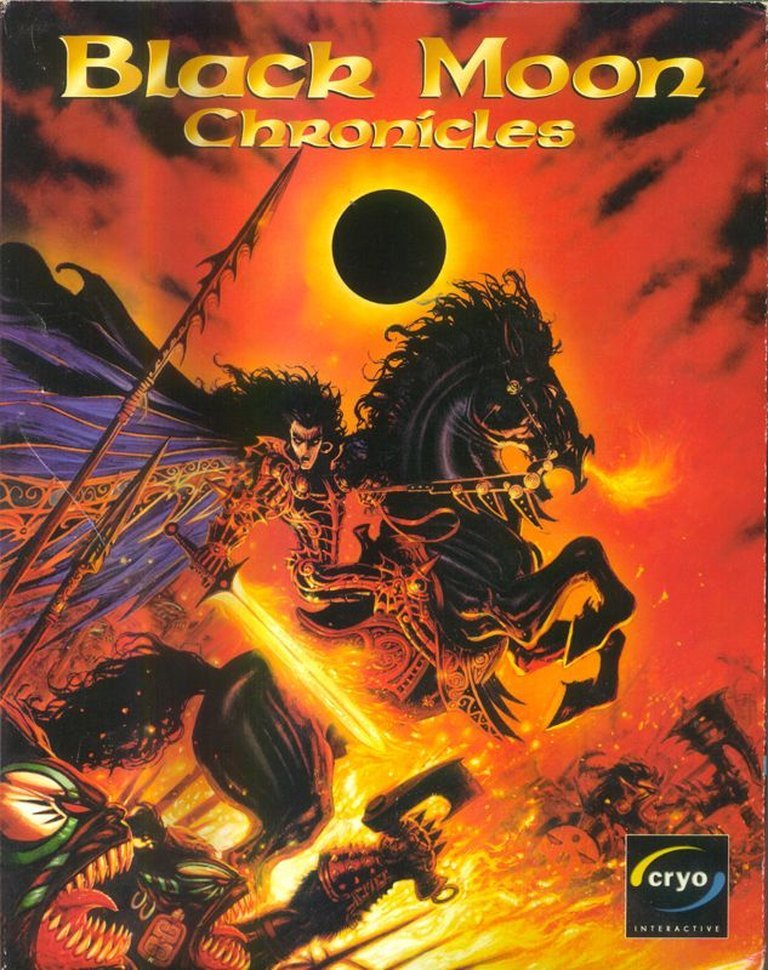
Black Moon Chronicles is a fantasy strategy game based on the popular French comic book series of the same name. Players assume the role of Wismerhill, a Half-Elf, navigating a world divided among four factions: The Empire, The Order of Justice, The Knights of Light, and The Army of the Black Moon. The gameplay blends elements of real-time strategy and turn-based tactics, reminiscent of titles like Warcraft and Heroes of Might and Magic, while incorporating artwork and lore from the original comics.
Gameplay Videos
Where to Buy Black Moon Chronicles
Black Moon Chronicles Patches & Updates
Black Moon Chronicles Mods
Black Moon Chronicles Reviews & Reception
homeoftheunderdogs.net (78.5/100): Black Moon Chronicles could have been a great game; it certainly came close.
steambase.io (84/100): Black Moon Chronicles has earned a Player Score of 84 / 100.
mobygames.com (62/100): Average score: 62% (based on 11 ratings)
metacritic.com (80/100): User Score: Generally Favorable Based on 6 User Ratings 8.0
Black Moon Chronicles: A Flawed but Fascinating Fusion of Fantasy and Strategy
Introduction
In the late 1990s, the real-time strategy (RTS) genre was dominated by titans like Warcraft, Command & Conquer, and Age of Empires. Amidst this competitive landscape, Black Moon Chronicles (1999) emerged as a bold, if imperfect, attempt to blend deep fantasy lore with tactical gameplay. Developed by Cryo Interactive and based on the eponymous French comic series by François Marcela-Froideval and Olivier Ledroit, the game offered a unique narrative-driven experience that set it apart from its contemporaries. While it struggled with technical limitations and mixed critical reception, Black Moon Chronicles remains a cult classic—a testament to ambition, atmospheric world-building, and the enduring appeal of dark fantasy.
This review will dissect the game’s development, narrative depth, gameplay mechanics, artistic vision, and legacy, arguing that despite its flaws, Black Moon Chronicles deserves recognition as a pioneering title that dared to prioritize story and setting in a genre often obsessed with mechanics alone.
Development History & Context
The Studio and the Vision
Cryo Interactive, founded in 1992 by Philippe Ulrich and Jean-Martial Lefranc, was primarily known for adventure games like Dune (1992) and Atlantis: The Lost Tales (1997). The studio’s foray into strategy with Black Moon Chronicles was an unusual pivot, driven by the desire to adapt François Marcela-Froideval’s acclaimed comic series. Froideval, a former TSR employee who had worked on Advanced Dungeons & Dragons, infused the game’s lore with his deep knowledge of fantasy tropes and tabletop RPG mechanics.
The game’s development was led by a team of 94 people, including main programmer Cyrille Linard and AI specialists Maurice Pourny and Michel Minic. The engine, later reused for Persian Wars (2001), was designed to support large-scale battles and a free-roaming camera, though technical constraints of the era limited its potential.
The Gaming Landscape of 1999
1999 was a pivotal year for RTS games. StarCraft (1998) had set a new standard for competitive play, while Age of Empires II (1999) refined historical strategy. Black Moon Chronicles arrived in this crowded field, competing not just with established franchises but also with Warhammer: Dark Omen (1998), another fantasy RTS with a strong narrative focus.
Cryo’s challenge was to differentiate Black Moon Chronicles through its comic-book roots and moral ambiguity. Unlike the clear-cut good-vs.-evil narratives of Warcraft or Warhammer, the game presented players with four factions—each with distinct ideologies and flaws—forcing them to grapple with shades of gray.
Technological Constraints
The game’s engine struggled with the scale of its ambitions. Critics frequently cited poor pathfinding, clunky unit controls, and an underwhelming interface. The lack of fog of war—a staple of RTS games—was a notable omission, as was the absence of multiplayer support. These limitations were compounded by the game’s reliance on CD-ROM media, which restricted the size and complexity of its assets.
Despite these issues, Black Moon Chronicles sold over 100,000 copies by September 1999, proving that its narrative and aesthetic appeal could outweigh its mechanical shortcomings.
Narrative & Thematic Deep Dive
Plot Overview
Players assume the role of Wismerhill, a half-elf warrior-mage caught in a brutal war between four factions:
1. The Empire: A corrupt but orderly regime led by Emperor Hagendorf.
2. The Order of Justice: A fanatical religious group led by the treacherous Frater Sinister.
3. The Knights of Light: Noble but rigid paladins devoted to divine justice.
4. The Army of the Black Moon: A chaotic force of orcs, undead, and dark mages led by the archmage Haazel Thorn.
The story begins with Wismerhill’s rise from obscurity to power, mirroring his comic-book counterpart’s journey. The narrative is non-linear, with branching paths determined by faction allegiance and key decisions. For example, siding with the Black Moon grants access to necromantic spells and undead units, while aligning with the Knights of Light emphasizes holy magic and elite warriors.
Characters and Dialogue
Wismerhill is a compelling protagonist—a morally ambiguous figure whose actions shape the world around him. Supporting characters like the succubus Hellaynnea (his lover and eventual wife) and the ogre Ghorghor Bey add depth, though their development is often constrained by the game’s linear mission structure.
The dialogue, while occasionally stilted due to translation issues, retains the comic’s dark humor and irreverence. Froideval’s writing shines in moments of betrayal and political intrigue, such as Frater Sinister’s attempted coup or Haazel Thorn’s manipulation of Wismerhill’s destiny.
Themes
Black Moon Chronicles explores several mature themes:
– Power and Corruption: Every faction, including the “heroic” Knights of Light, is flawed. The Empire’s tyranny is mirrored by the Order of Justice’s fanaticism, while the Black Moon’s chaos offers freedom at the cost of morality.
– Destiny vs. Free Will: Wismerhill’s journey is framed as a struggle against prophecy. The game’s multiple endings reflect his choices, though the linear campaign structure somewhat undermines this illusion.
– War and Sacrifice: Battles are brutal, with units routinely slaughtered. The game’s lack of resource-gathering (a staple of RTS games) forces players to value each soldier, reinforcing the weight of loss.
Comparison to the Comic
The game faithfully adapts key elements from the comic, including:
– The Black Moon’s Influence: The celestial body is both a literal and metaphorical force, representing chaos and rebellion.
– Wismerhill’s Relationships: His bond with Hellaynnea and his rivalry with Frater Sinister are central to both mediums.
– The World’s Aesthetic: The game’s gothic architecture and grotesque creature designs mirror Ledroit’s artwork.
However, the game’s narrative is condensed, with many comic subplots (e.g., Wismerhill’s marriage to nine women) reduced to background lore. This streamlining was necessary for gameplay but left some fans of the source material disappointed.
Gameplay Mechanics & Systems
Core Gameplay Loop
Black Moon Chronicles blends two distinct modes:
1. Strategic Map: A turn-based overview where players move armies, recruit units, and research upgrades. This layer resembles Heroes of Might and Magic, with Wismerhill acting as a hero unit who gains experience and abilities.
2. Tactical Battles: Real-time combat on a 3D battlefield, where regiments clash in large-scale engagements. Unlike Warcraft, there is no base-building; battles are pre-determined by the strategic map.
Combat and Unit Diversity
The game’s unit roster is one of its strengths, featuring:
– Standard Units: Swordsmen, archers, and cavalry, each with faction-specific variants.
– Special Units: Giants, dragons, and undead creatures that can turn the tide of battle.
– Heroes: Wismerhill and other named characters with unique abilities (e.g., Hellaynnea’s seduction spells or Ghorghor Bey’s brute strength).
Combat emphasizes formation tactics. Units fight in regiments, each with a standard-bearer who affects morale. If morale breaks, regiments may rout, adding a layer of realism rarely seen in RTS games of the era.
Character Progression
Wismerhill’s growth is tied to experience points earned in battle. Players can allocate points to:
– Strength: Increases melee damage.
– Magic: Unlocks spells like fireballs or necromantic curses.
– Leadership: Boosts unit morale and regiment size.
This RPG-like progression system was innovative for an RTS, though its impact is limited by the game’s linear mission design.
UI and Controls
The interface is the game’s weakest aspect. Critics universally panned its:
– Clunky Unit Selection: Selecting regiments in the heat of battle is cumbersome, with no hotkeys or group controls.
– Poor Pathfinding: Units often get stuck on terrain or fail to navigate obstacles.
– Lack of Feedback: Damage indicators and unit statuses are unclear, making it difficult to assess battles in real-time.
A patch (v1.3c) attempted to address some of these issues, adding a battle debrief screen and minor UI tweaks, but the core problems remained.
Innovative Features
Despite its flaws, Black Moon Chronicles introduced several novel mechanics:
– Active Pause: Players can pause battles to issue orders, a feature later popularized by Dragon Age.
– Regiment-Based Combat: Units fight in formations, with morale and positioning playing key roles.
– Faction-Specific Research: Each faction has unique upgrades, encouraging replayability.
Flawed Systems
The game’s most glaring weaknesses include:
– No Fog of War: The absence of this RTS staple removes tactical depth, as players can always see enemy movements.
– Weak AI: Enemy units often behave predictably, relying on overwhelming numbers rather than strategy.
– Buggy Experience System: Some players reported units gaining experience without participating in battles, breaking immersion.
World-Building, Art & Sound
Setting and Atmosphere
The game’s world is a dark fantasy realm inspired by the comic’s gothic aesthetic. Key locations include:
– The Empire’s Capital: A sprawling city of spires and cathedrals, reflecting its oppressive grandeur.
– The Black Moon’s Fortress: A jagged citadel wreathed in shadow, home to orcs and necromancers.
– The Order of Justice’s Monasteries: Austere structures where fanatics plot their crusades.
The diagonal-down perspective and free-roaming camera allow players to appreciate the environment, though the graphics—while stylish—were not cutting-edge for 1999.
Visual Design
The art direction is the game’s strongest suit. Cryo collaborated with the comic’s artists to ensure fidelity to the source material:
– Character Models: Wismerhill, Hellaynnea, and other key figures are instantly recognizable, with exaggerated proportions that evoke the comic’s style.
– Creature Designs: Orcs, demons, and dragons are grotesque and detailed, standing out against the game’s muted color palette.
– Spell Effects: Magic is visually striking, with fireballs, lightning bolts, and necromantic auras adding spectacle to battles.
Sound and Music
The soundtrack, composed by Cryo’s in-house team, is a standout feature. Gothic choral pieces and orchestral scores enhance the game’s epic tone, while ambient tracks (e.g., howling winds in the Black Moon’s territory) reinforce the setting’s atmosphere.
Voice acting is sparse but effective, with key characters delivering lines in a mix of English and French accents. The lack of full voiceovers is a missed opportunity, but the music compensates admirably.
Reception & Legacy
Critical Reception
Black Moon Chronicles received mixed reviews, with critics praising its ambition but criticizing its execution. A summary of key evaluations:
| Publication | Score | Key Praise | Key Criticism |
|---|---|---|---|
| Jeuxvideo.com | 75% | Original narrative, strong atmosphere | Simplistic interface, no multiplayer |
| PC Zone | 70% | Diverse quests, level editor | Weak graphics engine, repetitive combat |
| PC Player (Germany) | 70% | Unique ideas, dense atmosphere | Poor translation, clunky controls |
| Gry OnLine | 65% | Fun battles, strong music | Buggy AI, lack of polish |
| GameStar (Germany) | 59% | Good story, interesting factions | No save during battles, bad pathfinding |
| Player One | 45% | Rich bestiary | Outdated mechanics, weak gameplay |
The game’s MobyGames score of 6.6 (based on 11 critic reviews) and player score of 3.6/5 reflect this divide. Modern retrospectives (e.g., Home of the Underdogs) are more forgiving, highlighting its narrative strengths and cult appeal.
Commercial Performance
Despite its flaws, Black Moon Chronicles was a commercial success, selling over 100,000 copies within months of release. Its niche appeal—particularly among fans of the comic—ensured steady sales, though it never achieved mainstream popularity.
Influence and Legacy
While Black Moon Chronicles did not spawn direct sequels, its legacy endures in several ways:
1. Narrative-Driven RTS Games: Titles like Warlords Battlecry (2000) and Kohan: Immortal Sovereigns (2001) adopted its focus on story and faction diversity.
2. Dark Fantasy Aesthetics: The game’s gothic tone influenced later strategy games, including Warhammer 40,000: Dawn of War (2004).
3. Cult Following: The game remains beloved by fans of the comic and retro RTS enthusiasts, with active communities on platforms like GOG and Steam.
The game’s engine was reused for Persian Wars (2001), though that title failed to capture the same magic. A planned MMORPG, Black Moon Chronicles: Winds of War, was canceled after a troubled development cycle, further cementing the original’s status as a one-of-a-kind experience.
Conclusion: A Flawed Gem Worth Rediscovering
Black Moon Chronicles is a game of contradictions—a title with a rich narrative and stunning art direction hamstrung by technical limitations and design oversights. It is neither the best RTS of its era nor the most polished adaptation of a comic book, but it is one of the most interesting.
For modern players, the game’s appeal lies in its:
– Atmospheric World: The dark fantasy setting, brought to life by the comic’s artists, remains compelling.
– Moral Complexity: The factions’ shades of gray offer a depth rarely seen in RTS games.
– Innovative Mechanics: The regiment system and active pause feature were ahead of their time.
Yet, its flaws are undeniable. The clunky controls, weak AI, and lack of multiplayer make it a tough sell for those accustomed to modern RTS standards. It is a game best appreciated by:
– Fans of the Black Moon Chronicles comic.
– Retro gamers willing to overlook technical rough edges.
– Strategy enthusiasts who value narrative over mechanics.
Final Verdict: Black Moon Chronicles is a flawed but fascinating experiment—a game that dared to prioritize story and atmosphere in a genre often dominated by gameplay alone. While it may not be a masterpiece, it is a cult classic that deserves preservation and reconsideration. 7.5/10 – A bold, if imperfect, fusion of fantasy and strategy.
For those intrigued, the game is readily available on GOG and Steam, often at a bargain price. Approach it not as a competitor to StarCraft or Age of Empires, but as a unique artifact of late-90s gaming ambition.