
- Release Year: 2019
- Platforms: Linux, Macintosh, Windows
- Publisher: Echelon Software, Inc.
- Developer: Echelon Software, Inc.
- Genre: Strategy, Tactics
- Perspective: Diagonal-down
- Game Mode: Single-player
- Gameplay: Point and select, Turn-based
- Setting: Middle East
- Average Score: 80/100
Description
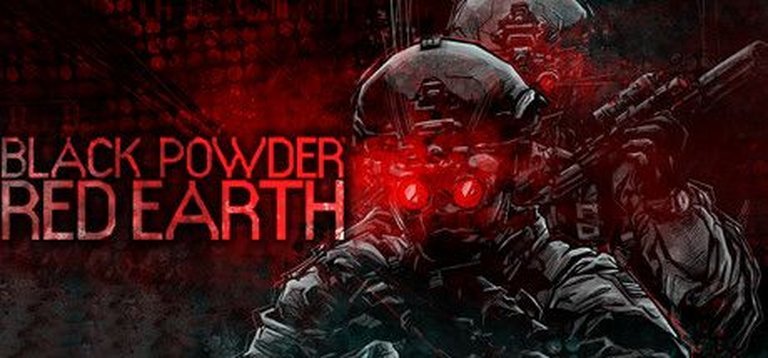
Black Powder Red Earth is a turn‑based, isometric strategy game set in a war‑torn Middle Eastern landscape, drawing its story from the Black Powder Red Earth graphic novel series. Players command units on a diagonal‑down view, navigating minimalist hand‑drawn visuals and a tight tactical system that emphasizes strategic planning and a steep learning curve.
Gameplay Videos
Where to Buy Black Powder Red Earth
PC
Black Powder Red Earth Patches & Updates
Black Powder Red Earth Mods
Black Powder Red Earth Guides & Walkthroughs
Black Powder Red Earth Reviews & Reception
mobygames.com (70/100): Critics give it a 70% score.
gamevalio.com (86/100): Very positive reception with 86% positive reviews.
steambase.io (86/100): Player Score of 86/100, very positive.
Black Powder Red Earth Cheats & Codes
PC (Steam)
| Code | Effect |
|---|---|
| invincible . inf turns | None |
Black Powder Red Earth: Review
Introduction
The moment you launch Black Powder Red Earth (BPRE) you are thrust into a hyper‑realistic, near‑future Middle‑East where private military contractors (PMCs) are the blunt instruments of geopolitics. The game’s stark, isometric‑down perspective and “minute‑to‑minute” turn‑based combat echo the tension of modern urban warfare while the narrative leans heavily on the graphic‑novel series that birthed it. Thesis: BPRE succeeds as a tightly‑designed, high‑stakes tactical experience that rewards ruthless decision‑making, but its steep learning curve, minimalist UI, and niche market positioning keep it firmly in the realm of a cult classic rather than a mainstream hit.
Development History & Context
| Aspect | Details |
|---|---|
| Studio | Echelon Software, Inc. – a 15‑person indie team that also published the title. |
| Key Personnel | Michael Durao (design, story, screenplay), Josh Taylor (art, UI, level design), Altay Murat & Mark Billington (engineering), Takafumi Matsubara (soundtrack), Tom Gambale (sound design). |
| Engine & Tech | Built on Unreal Engine 4 with FMOD for audio. The game uses a point‑and‑select interface and a diagonal‑down isometric view. |
| Timeline | Early‑access launch 31 Dec 2019 (Windows, macOS, later Linux). Full release 29 Mar 2021 on Steam. |
| Creative Vision | Jon Chang (designer) leveraged his background in special‑operations support and PMC work to craft a “near‑present” narrative that feels authentic yet fictional. The game is tied to an ongoing graphic‑novel series and a 28 mm tabletop line, forming a transmedia ecosystem. |
| Industry Landscape | 2019‑2021 saw a resurgence of turn‑based tactical games (e.g., XCOM 2, Gears Tactics) and a growing appetite for modern‑military tabletop experiences. BPRE entered a niche where digital and tabletop wargaming intersect, aiming to deliver a “real‑world” feel without the complexity of larger titles. |
Narrative & Thematic Deep Dive
Plot Overview
Set in the fictional nation of Awbari, a failed petro‑state that splintered after the 2013 US withdrawal from Iraq, BPRE follows Cold Harbor, an American PMC staffed by former Special‑Operations veterans. The story is split into several arcs (Iraq, Syria, Yemen, Awbari) that converge on a proxy war between:
- The Awbari dictatorship & Gulf petro‑monarchs – seeking to protect mineral wealth.
- A Chinese‑backed proxy state – supporting the Aayari Network, a jihadist insurgency.
Both sides hire mercenary forces from the United States, Iraq, Syria, and Europe. The player commands Crisis Troop Scorch (or the opposing Aayari Guard) in high‑value‑target raids, rescue missions, and exfiltration operations.
Characters & Factions
- Crisis Troop Scorch – elite “kill‑team” units (Advisor, Assaulter, Automatic Rifleman, Recce) equipped with drones, 40 mm grenades, and night‑vision gear.
- Aayari Guard – divided into Shurta (light infantry, no saves) and Muhtasib (armored, IED‑capable).
- Hongbin Enabling Forces – North‑Korean‑Syrian mercs backed by Chinese interests, adding a third‑party proxy dimension.
Themes
- Proxy Warfare & Resource Competition – The narrative repeatedly emphasizes that the “war” is a cover for control of Awbari’s rare‑earth deposits.
- Moral Ambiguity – Characters are former SOF operators turned mercenaries; the story explores the thin line between “foreign internal defense” and outright war.
- Information Fog & Civilian Collateral – Gameplay mechanics (unknown NPCs, mis‑identification) reinforce the theme that modern urban combat is as much about intelligence as firepower.
The graphic‑novel source material supplies a rich back‑story, while the game’s “hand‑drawn” art style (Josh Taylor) reinforces the gritty, low‑tech aesthetic of a war‑torn nation.
Gameplay Mechanics & Systems
| System | Description |
|---|---|
| Core Loop | Players assemble a four‑member squad (or up to 28 in some expansions) and execute a series of seven‑turn raids. Each turn consumes action points for movement, shooting, and drone usage. |
| Turn‑Based Tactical Engine | Diagonal‑down isometric view; point‑and‑select interface. Units can rotate (Q/E) and fire in four directions. The game enforces real‑world fire‑and‑move doctrine: you must fix a target before advancing, and enemy fire is resolved immediately after each activation. |
| Skill System | Limited “common” abilities (e.g., Switch‑blade LMAMS, radio‑breakup, drone strike) are limited per mission, not replenished over time. This creates a resource‑management layer that can tilt difficulty up or down. |
| Fog of War & NPC Identification | Civilians and insurgents are initially unknown; players must use line‑of‑sight, drones, or radio intercepts to identify them. Mis‑identification can lead to civilian casualties, which affect mission success and reputation. |
| UI & Feedback | Minimalist UI: a small action‑point counter, turn marker, and a handful of icons for drones and interventions. The UI is functional but can feel “cluttered” when many tokens appear on screen, a point noted by reviewers. |
| Progression | No tech‑tree or base‑building. Progression is scenario‑based: each mission awards experience that can unlock new unit load‑outs or intervention cards. |
| Difficulty | High learning curve; three tutorial missions exist but are brief. The game punishes mistakes ruthlessly—units can be eliminated in a single turn, echoing the “extreme violence” described in FM 3‑21.8 (U.S. Army Infantry Manual). |
| Multiplayer | Single‑player only at launch; the tabletop version later added head‑to‑head skirmish possibilities. |
Overall, the mechanics are lean and unforgiving, emphasizing realistic small‑unit tactics over the “hero‑save‑the‑day” fantasy common in many turn‑based titles.
World‑Building, Art & Sound
Setting & Atmosphere
Awbari is rendered as a war‑torn urban sprawl with tight alleys, crumbling buildings, and occasional multi‑story structures. The game’s isometric perspective provides a clear view of line‑of‑sight and cover, while the night‑time lighting (often punctuated by flares, drones, and vehicle headlights) creates a tense, claustrophobic atmosphere.
Visual Direction
- Hand‑drawn Art – The sprites and UI elements are hand‑illustrated, lending a comic‑book feel that ties back to the graphic‑novel origins.
- Unit Design – Miniatures in the tabletop line (31 resin models) mirror the in‑game sprites, reinforcing brand cohesion.
- Terrain Tiles – PVC board tiles (doors, air‑conditioner units, planter pieces) are stylized but functional, allowing for modular urban layouts.
Audio
- Sound Engine – FMOD provides a crisp, dynamic soundscape.
- Original Soundtrack – Composed by Takafumi Matsubara, the score blends ambient desert drones with tense, percussive beats that punctuate firefights.
- Foley & SFX – Tom Gambale’s sound design adds realistic gunfire, grenade explosions, and the subtle hum of drones, enhancing immersion.
The audio‑visual package works together to make each raid feel like a high‑stakes covert operation, with light sources and sound cues acting as tactical information for the player.
Reception & Legacy
| Metric | Details |
|---|---|
| Critic Score | 70 % (Turn Based Lovers, 7/10) – praised for minimalist design and hand‑drawn art, noted a “high learning curve.” |
| Steam Community | 86 % positive (Very Positive) from ~228 user reviews; praised for tactical depth and authenticity, but some cite UI clutter and steep difficulty. |
| Sales | $19.99 on Steam (no major discounts); player count has dwindled to near‑zero concurrent users, indicating a niche but dedicated fanbase. |
| Influence | The game’s transmedia approach (comic → video game → 28 mm tabletop) is relatively rare and has inspired other indie studios to explore cross‑platform storytelling. Its emphasis on realistic modern warfare has been cited by tabletop hobbyists (e.g., Goonhammer) as a benchmark for “ultra‑modern” skirmish games. |
| Future Plans | Expansion packs (first released Nov 2022) added new unit types, multi‑story structures, and intervention cards. The developers continue to support the tabletop line via Patreon, Discord, and regular social‑media updates. |
While BPRE never broke into mainstream awareness, it carved out a cult reputation among fans of modern military wargaming and narrative‑driven tactical titles. Its influence is most evident in the growing interest in “near‑future” tabletop skirmish games that blend realistic tactics with stylized art.
Conclusion
Black Powder Red Earth delivers a compact, brutally realistic turn‑based tactical experience that rewards careful planning, rapid decision‑making, and an appreciation for the moral gray zones of modern warfare. Its hand‑drawn aesthetic, FMOD‑driven soundscape, and tight integration with a graphic‑novel universe make it a standout entry in the niche of contemporary military strategy games.
However, the steep learning curve, minimalist UI, and limited post‑launch content keep it from achieving broader appeal. It remains a niche hit—a game that will be cherished by players who crave high‑stakes, short‑turn skirmishes and who enjoy digging into a richly‑woven narrative of proxy wars and resource‑driven conflict.
Verdict: Black Powder Red Earth earns a solid 7.5/10 in the annals of turn‑based tactics—a commendable, if specialized, masterpiece that will be remembered for its authenticity and its bold cross‑media ambition.