
- Release Year: 2020
- Platforms: Android, Linux, Macintosh, Windows
- Publisher: Choice of Games LLC
- Developer: Choice of Games LLC
- Genre: Adventure
- Perspective: Text-based / Spreadsheet
- Game Mode: Single-player
- Gameplay: Interactive fiction, RPG elements, Text adventure
- Setting: Fantasy
- Average Score: 65/100
Description
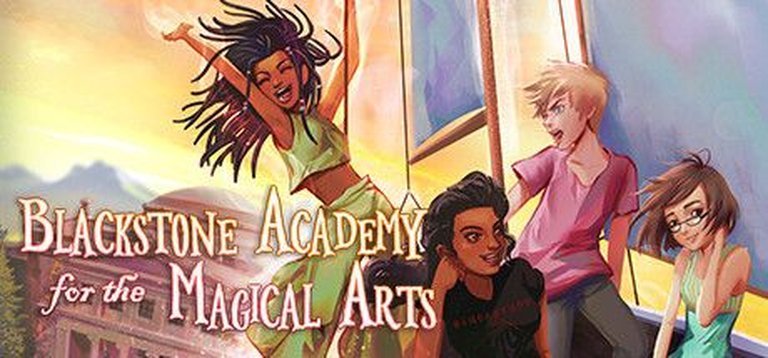
Blackstone Academy for the Magical Arts is a text-based interactive fiction RPG set in a fantasy realm where players enroll as students at a prestigious magical academy, engaging in spellcasting, academic challenges, and competitive sky sailing events to uncover secrets and ultimately save the world.
Gameplay Videos
Where to Buy Blackstone Academy for the Magical Arts
PC
Blackstone Academy for the Magical Arts Cracks & Fixes
Blackstone Academy for the Magical Arts Mods
Blackstone Academy for the Magical Arts: Review
Introduction
In the vast tapestry of contemporary gaming, few settings capture the imagination quite like a magic academy. Yet, amidst towering franchises like Harry Potter and Magical School Simulator, Blackstone Academy for the Magical Arts carves a distinct niche as a landmark in interactive fiction. Released on April 9, 2020, by Choice of Games LLC, this text-driven YA fantasy novel transcends mere gameplay to deliver a sprawling, 188,000-word narrative where player choice is the only spell required. As a historian of the genre, I argue that while its minimalist aesthetic may polarize, Blackstone’s ambitious world-building, thematic depth, and commitment to inclusive representation secure its place as a pivotal work in the evolution of interactive storytelling. It is not merely a game but a digital canvas for the imagination, redefining how fantasy narratives can be co-authored by players in an era of increasingly homogenized AAA experiences.
Development History & Context
Blackstone Academy emerged from the unique ecosystem of Choice of Games LLC, a studio specializing in text-based interactive fiction since 2013. Founded by Dan Fabulich, the company champions accessibility and narrative freedom, eschewing graphical complexity for pure storytelling. This ethos aligns perfectly with Blackstone’s author, Alana Joli Abbott, a veteran Choice of Games writer with prior titles like Choice of Kung Fu and Showdown at Willow Creek. Abbott’s vision was to create a magical school setting that subverts traditional tropes: Blackstone, nestled in an undisclosed American locale, draws heavily on Native American folklore and global mythology, a deliberate departure from Eurocentric fantasy clichés.
Technologically, the game leverages ChoiceScript, a proprietary engine designed for writers without coding expertise. This constraint, far from limiting the game, empowers branching narratives through simple menu structures, allowing for thousands of permutations based on player choices. Released during the pandemic-driven surge in escapism, Blackstone tapped into a zeitgeist where players sought immersive, low-barrier narratives. Its multi-platform debut (Windows, macOS, Linux, Android, iOS) reflected Choice of Games’ commitment to accessibility, though its browser-based and mobile interfaces highlighted the era’s tension between retro simplicity and modern expectations.
Narrative & Thematic Deep Dive
Blackstone’s narrative unfolds as a multi-act epic, blending school-life rituals with world-altering stakes. Players, cast as “Sensors” individuals who can perceive magic, navigate their inaugural year at Blackstone. The plot pivots on a dual conflict: an impending magical crisis (e.g., a destabilizing Ley Line anomaly) and a socio-political schism over supernaturals’ rights. Should players uphold the academy’s secrecy, side with pro-supernatural activists, or manipulate factions from the shadows? These choices ripple through the story, affecting relationships, alliances, and the fate of magic itself.
Characterization is the narrative’s triumph. Abbott populates Blackstone with a diverse ensemble: Native American mentors drawing from tribal lore, non-human Liminals (beings from liminal spaces), and peers grappling with identity. Dialogue crackles with authentic YA energy—witty banter in sky-sailing competitions, tense debates in Mr. Delgado’s magic theory classes, and heartfelt confessions. Yet, these moments serve deeper themes. The central dichotomy of secrecy versus transparency mirrors real-world debates on marginalized communities’ visibility, with Abbott refusing easy answers. Magic itself is framed as both innate talent (akin to neurodivergence) and learned skill (education equity), subtly critiquing deterministic fantasy tropes.
Abbott’s decade-long work on the Thimbleport setting (expanded in interviews) adds texture: Liminals, for instance, are not mere plot devices but complex beings with agency. The narrative’s gravitas lies in its refusal to trivialize its stakes. A late-game scene, where players’ choices could expose the magical world to mortal authorities, underscores the weight of every decision—whether to risk global reckoning or prioritize personal safety.
Gameplay Mechanics & Systems
As a purely text-based game, Blackstone’s “mechanics” are systems of consequence and progression. Players navigate via menu-driven choices, with stats like Intelligence, Charm, and Magic Affinity dynamically updated based on decisions. These stats gate content: high Charm unlocks romantic subplots, while Magic Affinity determines spell potency. Progression is tied to academic and extracurricular activities—attending classes, competing in sky-sailing championships, or investigating magical disturbances.
Combat is minimal and abstract, framed as dice-roll conflicts with outcomes influenced by preparedness (e.g., studying defensive spells) or stats. Sky-sailing, however, is a standout mechanic: players train and strategize for regatta-style races, with choices affecting speed, maneuverability, and rivalries. These events inject kinetic energy into a narrative-heavy game.
The UI, while functional, evokes nostalgia for 2000s-era interactive fiction. Text prompts display options numerically, with keyboard shortcuts (J/K for navigation) enabling speed. Yet, this simplicity is a double-edged sword. Some players report “unskippable cutscenes” where the narrative progresses regardless of input, undermining agency. Additionally, stat checks can feel punitive; a low Magic Affinity might lock players out of crucial lore, forcing replays. These flaws, however, are endemic to the genre, not Blackstone alone.
World-Building, Art & Sound
Blackstone’s world-building is its crown jewel. The academy is a microcosm of Abbott’s Thimbleport setting—a hidden realm where magic coexists with mundane America. Native American spirituality is woven into the fabric: characters like Coach Rogers (a combat instructor) draw from tribal traditions, and flora/fauna reflect indigenous lore. This avoids cultural appropriation by centering voices from within these communities, as Abbott noted in interviews. Sky-sailing (racing enchanted boats on aerial currents) and ley-line magic (geometric energy flows) add unique flavor, grounding the fantastical in tangible systems.
Visually, the game relies on prose as its canvas. Descriptions of Blackstone’s gothic architecture, the bioluminescent flora of its gardens, or the chaos of a sky-sailing regatta are vivid enough to paint mental pictures. Sound, however, is absent—no score, no voice acting. This silence is both a limitation and a strength, pushing players to imagine auditory cues. The absence of art forces engagement with text, deepening immersion for those willing to invest.
Reception & Legacy
Blackstone’s reception reflects its genre’s niche appeal. On Steam, it holds a “Mixed” score (65% positive from 26 reviews), with praise for its inclusivity and narrative depth balanced by critiques of pacing. Positive reviews highlight the “188,000-word saga” as a value proposition and celebrate its LGBTQ+ representation. One Steam user lauded it as “a masterclass in player-driven storytelling,” while IFDB’s MathBrush countered that the early chapters lack “oomph,” with feeling more like a “slice-of-life simulator” than a fantasy epic.
Commercially, Blackstone succeeded as a mid-tier title, bolstered by Choice of Games’ mobile presence and a free demo that converted players. Its legacy is more profound: it expanded the audience for interactive fiction, proving niche genres could thrive on mainstream platforms. Abbott’s work inspired a wave of YA fantasy IF games, including 2021’s Arcane Arts Academy. Thematically, it pushed boundaries by centering indigenous and marginalized perspectives in fantasy, influencing later titles like A Crown of Sorcery and Steel.
Conclusion
Blackstone Academy for the Magical Arts is a flawed yet essential artifact of gaming’s indie revolution. Its text-only format and reliance on imagination may alienate players accustomed to graphical fidelity, but for those willing to engage, it offers a rich, morally complex fantasy that redefines what a “magic school” can be. Abbott’s commitment to diversity, world-building, and player agency creates a narrative experience that transcends its constraints. While it may not dethrone giants like Hogwarts Legacy, Blackstone stands as a testament to interactive fiction’s enduring power—a reminder that the most magical worlds often begin between two covers, or in this case, lines of code. Its legacy is not in spectacle, but in possibility: proving that in a screen-saturated world, words remain the most potent conjuration.
Verdict: An ambitious, inclusive, and deeply humanistic achievement in interactive fiction—essential for narrative gamers and a benchmark for the genre’s future.