
- Release Year: 1997
- Platforms: Linux, Macintosh, Windows
- Publisher: Alcon Interactive Group, LLC, Dice Multi Media Europe B.V., SunTendy Interactive Multimedia Co., Ltd., Virgin Interactive Entertainment, Inc., Westwood Studios, Inc.
- Developer: Westwood Studios, Inc.
- Genre: Adventure
- Perspective: 3rd-person
- Game Mode: Single-player
- Gameplay: Detective, Graphic adventure, Multiple endings, Mystery, Point and select, Puzzle elements
- Setting: 2010s, City – Los Angeles, Cyberpunk, dark sci-fi, Future now past
- Average Score: 91/100
Description
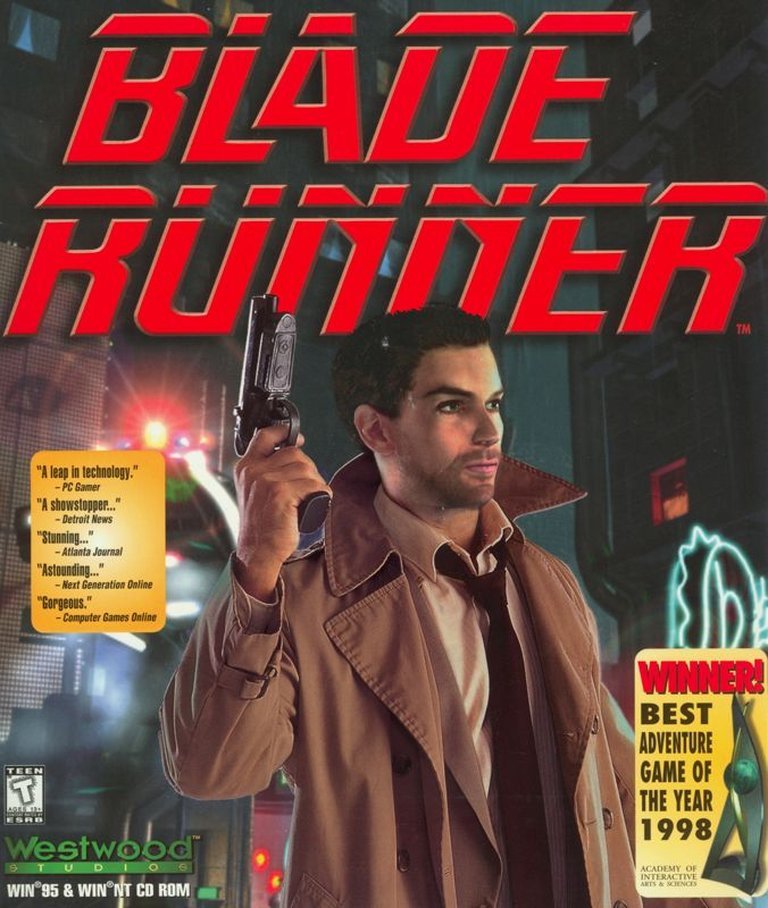
Set in the dystopian future of 2019 Los Angeles, ‘Blade Runner’ casts players as rookie police officer Ray McCoy, tasked with hunting down renegade replicants—bioengineered beings indistinguishable from humans. Through detective work involving evidence gathering, suspect interrogation, and moral choices, players navigate a rain-soaked cyberpunk world where their decisions dynamically shape the narrative, leading to one of six possible endings. The game emphasizes immersive storytelling over traditional puzzles, blending point-and-click adventure mechanics with action sequences and branching dialogue.
Gameplay Videos
Where to Buy Blade Runner
Blade Runner Free Download
Blade Runner Patches & Updates
Blade Runner Guides & Walkthroughs
Blade Runner Reviews & Reception
howlongtobeat.com (80/100): If you liked any of the Blade Runner movies or novels, I have no doubt you will like this game: the ambiance, the details, the lore, all are very representative of the Blade Runner world.
metacritic.com (100/100): I love the film and this game was made by people that also loved it. The atmosphere and style of this game is just perfect, so full of details that it is just insane.
imdb.com (100/100): Excellent game, played it over and over until i was able to achieve every ending, the atmosphere of it was awesome, definitely a game to be careful of, it will suck you in and make you cry when you dog gets killed.
mobygames.com (86/100): It’s raining all the time, neon signs flash, people in shabby clothes walk around on dirty streets, and flying machines cover the sky. One thing the game does almost impeccably is capture the atmosphere of the movie.
Blade Runner: Review
Blade Runner, developed by Westwood Studios and published by Virgin Interactive, stands as a monumental achievement in the realm of video games. Released in 1997, this point-and-click adventure game transcends its medium, offering an immersive experience that faithfully captures the essence of Ridley Scott’s cinematic masterpiece. Set in the grimy, neon-lit streets of 2019 Los Angeles, Blade Runner challenges players to navigate a world teetering on the brink of collapse, where the line between human and replicant blurs into a moral quagmire.
Development History & Context
Westwood Studios, known for their groundbreaking work on the Command & Conquer series, took on the daunting task of adapting Blade Runner into a video game. The studio’s vision was to create an original story set within the film’s universe, avoiding the pitfalls of a straightforward adaptation. This decision allowed them to sidestep potential legal entanglements and focus on delivering a unique experience that honored the source material.
The technological constraints of the era presented significant challenges. Westwood opted for a voxel-based rendering system, eschewing the polygon-based 3D accelerators prevalent at the time. This choice was driven by the need to create a game world that was both visually stunning and technically feasible. The voxel technology allowed for smooth character animations and detailed environments, albeit with some pixelation issues up close.
The gaming landscape of 1997 was dominated by traditional adventure games and emerging 3D shooters. Blade Runner stood out by blending elements of both genres, offering a detective-driven narrative with action sequences and a real-time game world. This innovative approach set it apart from contemporaries like Myst and The Curse of Monkey Island, which relied heavily on puzzles and linear storytelling.
Narrative & Thematic Deep Dive
Plot & Characters
Blade Runner’s narrative is a labyrinth of moral ambiguity and existential dread. Players assume the role of Ray McCoy, a rookie Blade Runner tasked with hunting down a group of rogue replicants. The story unfolds in a nonlinear fashion, with McCoy’s actions and decisions shaping the outcome. The game features thirteen different endings, each reflecting the player’s choices and the random events that occur throughout the game.
The characters in Blade Runner are richly drawn, each with their own motivations and secrets. McCoy, the protagonist, is a complex figure grappling with his own identity and the nature of his mission. Crystal Steele, a seasoned Blade Runner, serves as a foil to McCoy, embodying the ruthless efficiency of the law enforcement apparatus. Gaff, a veteran Blade Runner, offers guidance and wisdom, while Lieutenant Guzza represents the corrupt underbelly of the police force.
Dialogue & Themes
The dialogue in Blade Runner is sharp and evocative, capturing the film’s noir sensibilities. The game’s themes explore the nature of identity, empathy, and the consequences of unchecked power. The replicants, despite their artificial origins, are portrayed as fully realized characters capable of love, fear, and desperation. This humanization challenges the player to question their own prejudices and the moral implications of their actions.
The game’s multiple endings reflect the themes of choice and consequence. Players are forced to confront the repercussions of their decisions, whether they choose to side with the replicants, hunt them down, or walk away from the conflict altogether. This narrative structure adds depth to the game, encouraging players to explore different paths and perspectives.
Gameplay Mechanics & Systems
Core Gameplay Loops
Blade Runner’s gameplay is centered around detective work, with a focus on gathering evidence, questioning suspects, and analyzing clues. The game features a unique interface, with a pointer that changes style depending on the situation. This design choice simplifies the interaction process, allowing players to focus on the narrative and investigation.
The game’s real-time system adds a layer of complexity, with NPCs pursuing their own objectives and performing random actions. This dynamic world keeps players engaged, as they must adapt to the changing environment and the unpredictable behavior of the characters.
Combat & Progression
Combat in Blade Runner is occasional and rarely compulsory. Players have access to McCoy’s standard-issue police pistol, which can be loaded with various types of ammunition. The combat sequences are challenging but fair, requiring quick reflexes and strategic thinking.
Character progression in Blade Runner is tied to the player’s choices and the evidence they gather. The Knowledge Integration Assistant (KIA) serves as a database of clues, organizing information for easy access. This system replaces the traditional inventory, streamlining the gameplay and focusing on the detective work.
UI & Innovative Systems
The UI in Blade Runner is intuitive and user-friendly, with a clear layout that allows players to access important information quickly. The KIA is a standout feature, providing a comprehensive overview of the case and the suspects. The game’s randomization of events and multiple endings add replayability, encouraging players to explore different outcomes.
World-Building, Art & Sound
Setting & Atmosphere
The setting of Blade Runner is a dystopian vision of Los Angeles, where the sky is perpetually shrouded in smog, and the streets are awash in neon light. The game’s art direction captures the grimy, lived-in aesthetic of the film, with detailed environments and evocative visuals. The use of pre-rendered backgrounds and voxel characters creates a sense of immersion, drawing players into the world of 2019 Los Angeles.
Visual Direction
The visual style of Blade Runner is a blend of cyberpunk and noir, with a color palette that emphasizes the grimy, industrial aesthetic of the setting. The game’s use of voxel technology allows for smooth character animations and detailed environments, albeit with some pixelation issues up close. The visual direction is a testament to Westwood’s ambition, pushing the boundaries of what was possible at the time.
Sound Design
The sound design in Blade Runner is exceptional, with a score composed by Frank Klepacki that captures the mood and atmosphere of the film. The voice acting is top-notch, with many of the original actors from the film reprising their roles. The sound effects are immersive, adding to the sense of realism and immersion.
Reception & Legacy
Blade Runner received generally positive reviews upon its release, with critics praising its faithful adaptation of the film’s aesthetic and its innovative gameplay mechanics. The game held an aggregate score of 77% on GameRankings, based on sixteen reviews. It won the Interactive Achievement Award for “PC Adventure Game of the Year” and was nominated for several other awards.
The game’s legacy is secure, with many considering it a classic of the adventure genre. Its influence can be seen in subsequent games like Deus Ex and L.A. Noire, which also explore themes of identity, morality, and the consequences of unchecked power. Blade Runner’s impact on the industry is undeniable, setting a new standard for narrative-driven games and pushing the boundaries of what was possible in the medium.
Conclusion
Blade Runner is a masterclass in video game adaptation, capturing the essence of Ridley Scott’s cinematic masterpiece and translating it into a rich, immersive experience. Its innovative gameplay mechanics, compelling narrative, and exceptional production values set it apart from contemporaries and establish it as a classic of the adventure genre. Whether you’re a fan of the film or a newcomer to the world of Blade Runner, this game is a must-play experience that will leave a lasting impression. In the annals of video game history, Blade Runner stands as a testament to the power of storytelling and the potential of the medium to explore complex themes and ideas.