
- Release Year: 2013
- Platforms: Linux, Macintosh, Windows
- Publisher: Puny Human, LLC
- Developer: Puny Human, LLC
- Genre: Action
- Perspective: 3rd-person
- Game Mode: Hotseat, Online PVP
- Gameplay: Fighting
- Setting: Futuristic, Medieval, Sci-fi
- Average Score: 74/100
Description
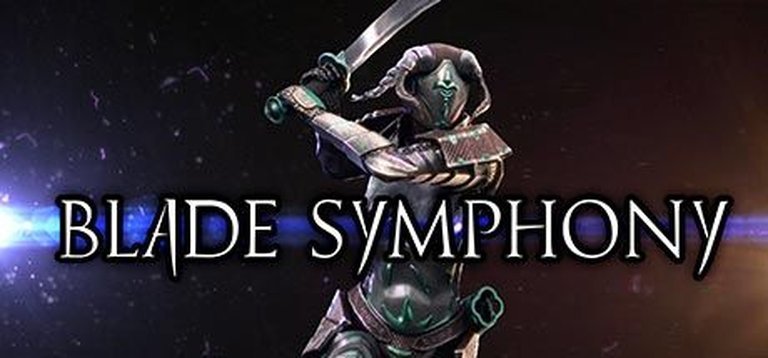
Blade Symphony is a competitive third-person fighting game set in a unique blend of medieval and sci-fi aesthetics. Players engage in intense, skill-based duels using a variety of weapons and techniques, with a focus on precise combat mechanics and strategic depth. The game supports multiplayer battles for 2-4 players, offering both online and local play, and features a distinctive art style and soundtrack that enhance its immersive, high-stakes duels.
Gameplay Videos
Where to Buy Blade Symphony
PC
Blade Symphony Mods
Blade Symphony Reviews & Reception
metacritic.com (72/100): Blade Symphony’s duels are electrifying and intimate, more than making up for a lack of content.
pcgamer.com (85/100): Blade Symphony’s duels are electrifying and intimate, more than making up for a lack of content.
theplatformer.net (80/100): Blade Symphony is a challenging experience, one that requires a significant amount of dedication in order to master the techniques and characters.
Blade Symphony: A Masterpiece of Digital Dueling
Introduction
In the vast, often homogenizing landscape of competitive multiplayer games, Blade Symphony stands as a singular, almost anachronistic gem—a game that dares to prioritize depth, etiquette, and the raw, unfiltered thrill of one-on-one combat over the bombast of modern battle royales and hero shooters. Released in 2014 by the indie studio Puny Human, Blade Symphony is a third-person sword-fighting game that distills the essence of dueling into a digital form, blending the precision of a fighting game with the spatial awareness of a 3D arena combatant. It is a game that, despite its modest commercial success, has cultivated a devoted community and left an indelible mark on the niche genre of competitive swordplay.
This review seeks to explore Blade Symphony in exhaustive detail, examining its development history, narrative and thematic underpinnings, gameplay mechanics, artistic and auditory design, critical reception, and enduring legacy. Through this analysis, we will argue that Blade Symphony is not merely a game, but a testament to the power of focused design, community-driven development, and the timeless appeal of the duel.
Development History & Context
The Birth of a Vision
Blade Symphony traces its origins to 2006, when lead designer Michael Chang and a friend sought to recreate the sword-fighting magic of Jedi Knight II: Jedi Outcast, a game whose multiplayer dueling community had begun to fade. What began as a personal project—a “scratch the itch” endeavor—evolved into a full-fledged mod for Valve’s Source engine. By 2008, Chang’s partner had dropped out, but his vision persisted. He continued to refine the mod, eventually catching the attention of the developers behind Dystopia, a popular Half-Life 2 modification. This collaboration led to the formation of Puny Human, an indie studio that would shepherd Blade Symphony from mod to commercial release.
The game’s development was not without its challenges. Chang and his team experimented with numerous mechanics, including stamina bars, lock-on cameras, and various stance-switching systems, many of which were ultimately discarded for failing to enhance the core experience. The project also faced financial hurdles, which were overcome in 2011 through a successful Kickstarter campaign that raised $19,058—exceeding its $15,000 goal. This crowdfunding effort not only secured the necessary resources but also galvanized a community of backers who would later become the game’s most ardent supporters.
The Gaming Landscape of 2014
Blade Symphony emerged during a period of significant transition in the gaming industry. The early 2010s saw the rise of free-to-play models, the proliferation of early access titles, and the growing dominance of multiplayer-focused games like League of Legends, Dota 2, and Counter-Strike: Global Offensive. In this environment, a niche, skill-based dueling game faced an uphill battle for attention. Yet, Blade Symphony carved out its own space by offering something rare: a competitive experience that was as much about psychological warfare as it was about mechanical execution.
The game’s release in May 2014 (following an April 2013 Early Access launch) was met with cautious optimism. Critics and players alike recognized its potential, though many noted its rough edges and limited content. What Blade Symphony lacked in polish, however, it made up for in depth—a depth that would only become more apparent as its community grew and its meta evolved.
Narrative & Thematic Deep Dive
A World of Shadows and Steel
At first glance, Blade Symphony appears to be a game devoid of narrative. There is no campaign, no cutscenes, no overt storytelling. Yet, beneath its surface lies a rich, if understated, lore that frames its duels as more than mere sport—they are battles in a shadow war between ancient factions.
The game’s setting is a futuristic yet feudal world where blind sword masters—adepts of the “Blind Edge” technique—shape the fate of nations. The lore, primarily detailed in a Google Docs presentation shared by the developers, reveals a conflict between three major factions:
- The Black Rose: A once-great kingdom betrayed by its own assassins, the Hokuten. The Black Rose now fights to reclaim its lost glory, represented in-game by characters like Judgement, a Murai Knight who serves as a brutal reminder of the kingdom’s former might.
- The Hokuten: A secret society of cyber-assassins who overthrew the Black Rose and now rule the Known World from the shadows. Phalanx, a relentless and augmented killer, embodies their ruthless efficiency.
- The Vagrants: Outcasts and mercenaries caught in the crossfire, including Ryoku, a master of the Blind Edge technique, and Pure, an acrobatic assassin whose origins remain shrouded in mystery.
This lore is not merely window dressing; it informs the game’s aesthetic and the personalities of its characters. Each fighter is a product of their faction’s ideology, and their designs reflect this. Judgement’s armored, samurai-knight hybrid appearance contrasts sharply with Phalanx’s sleek, cybernetic augmentations, while Ryoku and Pure embody the rogueish, unpredictable nature of the Vagrants.
Themes of Honor and Mastery
Blade Symphony is, at its core, a game about mastery—not just of its mechanics, but of oneself. The game’s emphasis on duels, its etiquette (players often bow before fights), and its lack of unlockable advantages (all progression is cosmetic) reinforce this theme. In Blade Symphony, skill is the sole currency, and every victory is a testament to the player’s growth.
This focus on mastery extends to the game’s community, which has developed its own rituals and norms. Players are expected to be respectful, even in defeat, and the act of bowing before a duel is not just a formality but a recognition of the shared pursuit of excellence. This culture of honor is rare in online gaming, where toxicity often reigns, and it is one of Blade Symphony‘s most defining features.
Gameplay Mechanics & Systems
The Dance of Blades
Blade Symphony‘s gameplay is a delicate balance of offense, defense, and mind games. At its heart is a stance-based combat system that rewards precision, timing, and adaptability. Players choose from four distinct characters (with a fifth, Vanguard, added later), each with their own fighting style, and pair them with one of five sword types: Katana, Longsword, Rapier, Scimitar, or Jian. The combination of character and weapon drastically alters the player’s approach to combat, creating a meta that is both deep and nuanced.
Characters and Stances
- Phalanx: A fencer-gladiator hybrid, Phalanx excels in long-range stabs and rapid side attacks. His balanced stance is particularly devastating, with moves like the “washing machine” (a spinning attack that deals continuous damage) making him a favorite among aggressive players.
- Judgement: A knight-samurai hybrid, Judgement is a slow but powerful bruiser. His heavy stance attacks can cleave through opponents, and his air attacks are among the best in the game for gap-closing.
- Ryoku: A vagrant street ninja, Ryoku is the most acrobatic of the bunch, with breakdance-inspired moves and a reverse blade style. His fast stance is a flurry of multihit attacks, while his balanced stance offers versatility and mobility.
- Pure: An acrobatic wushu-style assassin, Pure is the most mobile character, with cartwheels, butterfly kicks, and rapid air attacks. Her balanced stance is particularly flashy, with long, sweeping motions that can catch opponents off guard.
- Vanguard: Added post-launch, Vanguard is a quick-footed champion who uses leaning plunges to push opponents into her blade. She is designed to be a more aggressive alternative to Pure, with a focus on forward momentum.
Each character has four combat stances—Fast, Balanced, Heavy, and Air—each with its own strengths and weaknesses. Fast stances are quick but weak, Balanced stances offer a mix of speed and power, Heavy stances are slow but devastating, and Air stances provide mobility and unpredictability. Players can switch stances mid-combo, creating a fluid, dynamic fight where adaptability is key.
Weapons and Blocktechs
The choice of weapon further refines a player’s playstyle:
- Katana: Excels in ripostes, dealing double damage after a successful parry. It lacks a traditional block, instead using a “feint” mechanic to fake attacks.
- Longsword: A well-balanced weapon with a traditional block that reduces incoming damage. It is the most versatile sword, suitable for all playstyles.
- Rapier: Specializes in thrusting attacks and quick parries. Its “guard” blocktech can deflect singular strikes entirely, but it struggles against multihit attacks.
- Scimitar: Rewards continuous slashing, with damage scaling based on the number of multihits. It charges attacks faster than other swords but lacks defensive options.
- Jian: A combo-oriented weapon that reduces locktime after landing hits. Its “intercept” blocktech deflects non-Tier 3 attacks and stuns the attacker.
The interplay between stances and weapons creates a rock-paper-scissors dynamic. For example, Balanced stances generally beat Fast stances, Heavy stances beat Balanced, and Air stances beat Heavy. However, this hierarchy is not absolute—timing, positioning, and mind games can override these basic matchups.
Advanced Techniques
Mastery of Blade Symphony requires more than just understanding the basics. Advanced techniques include:
- Parries and Ripostes: When two blades clash, the outcome depends on the stances used. Winning a parry (using a superior stance) allows the player to follow up with a riposte, often dealing massive damage.
- Charged Attacks: Holding the attack button charges a strike, with three tiers of power. Tier 3 attacks always knock opponents down, creating opportunities for further punishment.
- Air Cancelling: Performing an attack and then immediately jumping cancels the recovery animation, allowing for extended combos or quick retreats.
- Side Cancelling: Alternating between left and right attacks reduces recovery time, enabling faster, more fluid combos.
- Grab Reversals: If two players grab each other simultaneously, both are stunned, creating an opening for further attacks.
- Countering from Block: Skilled players can counterattack during the gaps in an opponent’s combo, turning defense into offense.
These techniques, combined with the game’s 3D movement (including wall-running and shuffling), create a combat system that is as deep as it is rewarding.
Game Modes and Progression
Blade Symphony offers several game modes, though its bread and butter is the 1v1 duel. Other modes include:
- 2v2 Team Duels: A cooperative take on the duel format, where teamwork and coordination are key.
- Free-for-All (FFA): A chaotic mode where multiple players battle simultaneously. FFA servers often serve as training grounds for new players.
- Control Points: A team-based objective mode where players fight to capture and hold points on the map.
Progression in Blade Symphony is purely cosmetic. Players earn “Notes” (in-game currency) by winning ranked duels, which can be spent on unlocking new sword skins and character masks. This design philosophy ensures that skill, not grind, determines success—a rarity in modern multiplayer games.
Community and Workshop Integration
One of Blade Symphony‘s greatest strengths is its integration with the Steam Workshop. The community has created hundreds of custom weapons, masks, and maps, significantly expanding the game’s content. The Workshop also hosts enhanced tutorials, addressing one of the game’s few weaknesses: its lackluster in-game tutorial.
The community’s contributions extend beyond content. Players have organized tournaments, created guides (such as the comprehensive “Everything about Blade Symphony” Steam guide), and fostered a welcoming environment for newcomers. This collaborative spirit has been instrumental in keeping the game alive long after its initial release.
World-Building, Art & Sound
Aesthetic: Where Futurism Meets Feudalism
Blade Symphony‘s art direction is a striking fusion of futuristic and feudal elements. Characters wear armor that wouldn’t look out of place in a sci-fi setting, yet they wield swords that range from historical katanas to “tactical ninja” blades. The game’s arenas are equally eclectic, featuring modern cities, Shaolin-style temples, and digital arenas reminiscent of Tron.
This “anachronism stew,” as TV Tropes describes it, is not merely a stylistic choice but a reflection of the game’s lore. The Known World is one where ancient traditions and cutting-edge technology coexist, and the Blind Edge technique—mastered by characters like Ryoku—is a bridge between the two.
Sound Design: The Symphony of Steel
The game’s soundtrack, composed by Tom Stoffel, is a masterful blend of traditional Japanese instruments, piano, and electronic elements. Tracks like “Sakura Danger” and “Blade Symphony Theme” evoke both the tension of a duel and the tranquility of a Zen garden. The music is dynamic, shifting to match the ebb and flow of combat, and it plays a crucial role in immersing the player in the game’s world.
Sound effects are equally important. The clash of steel, the whoosh of a sword swing, and the grunt of a character mid-combo all contribute to the game’s tactile feel. The audio design ensures that every action has weight, reinforcing the game’s emphasis on precision and timing.
Reception & Legacy
Critical Reception: A Mixed but Respectful Response
Blade Symphony received a mixed but generally positive reception upon release. Critics praised its depth, unique gameplay, and community but noted its lack of content and rough edges. On Metacritic, the game holds a score of 72/100, with reviews highlighting its “electrifying and intimate” duels (PC Gamer) and its potential as a competitive game (Edge).
However, not all reviews were glowing. GameSpot criticized the game’s incomplete feel, citing its abrupt tutorial and limited character roster. Games.cz and Jeuxvideo.com echoed these sentiments, arguing that Blade Symphony felt more like a “small taste” of something greater than a fully realized experience.
Despite these criticisms, the game’s community was universally praised. Reviewers noted the civility and sportsmanship of its players, a rarity in online gaming. PC Gamer‘s Will Uhl described the community as having a “sense of honor” unheard of in other games, while Edge highlighted the practice of bowing before duels as a defining feature of the experience.
Commercial Performance and Evolution
Blade Symphony was initially a commercial title, priced at $15. However, in 2018, it transitioned to a free-to-play model, a move that helped sustain its player base. The game’s peak concurrent players on Steam hovered around 1,000 in its early days, but its community has remained active, thanks in large part to the Steam Workshop and ongoing community events.
The game’s legacy is one of influence rather than sales. While it never achieved mainstream success, it inspired a wave of indie sword-fighting games and demonstrated the viability of niche, skill-based multiplayer experiences. Its emphasis on etiquette and community-driven development has also served as a model for other indie titles.
Influence on Subsequent Games
Blade Symphony‘s impact can be seen in games like Absolver (2017), For Honor (2017), and Sifu (2022), all of which explore melee combat in a 3D space. While these games differ in scope and design, they share Blade Symphony‘s focus on precision, timing, and the psychological aspects of combat.
The game’s influence extends beyond mechanics. Its community-driven approach to content creation and its emphasis on player respect have become touchstones for indie developers seeking to foster positive online environments.
Conclusion: A Duel for the Ages
Blade Symphony is a game that defies easy categorization. It is neither a traditional fighting game nor a typical action title. Instead, it is a hybrid—a digital duelist’s paradise where skill, strategy, and sportsmanship converge. Its development history is a testament to the power of passion and community, its gameplay a masterclass in focused design, and its legacy a reminder that greatness does not always require mass appeal.
In an era where games are often judged by their player counts and revenue, Blade Symphony stands as a quiet rebellion. It is a game for those who seek depth over spectacle, mastery over grind, and honor over toxicity. It may not have changed the gaming landscape, but it has enriched it, offering a glimpse of what competitive gaming can be at its most intimate and exhilarating.
For these reasons, Blade Symphony is not just a good game—it is an essential one. A dueling simulator that transcends its niche to become something greater: a celebration of the art of the sword, the thrill of the fight, and the bonds forged in the heat of battle.
Final Verdict: 9/10 – A Masterpiece of Niche Design
Blade Symphony is a game that rewards dedication, punishes carelessness, and fosters a sense of community rarely seen in online gaming. Its flaws—limited content, a steep learning curve, and occasional jank—are outweighed by its strengths: deep, nuanced combat, a welcoming player base, and a commitment to skill-based gameplay. For those willing to invest the time, it offers an experience unlike any other—a digital dojo where every duel is a lesson, every victory a triumph, and every defeat a step on the path to mastery.
In the annals of gaming history, Blade Symphony may not be remembered as a blockbuster, but it will endure as a cult classic—a game that dared to be different and, in doing so, carved out a legacy all its own.