
- Release Year: 2012
- Platforms: Macintosh, Windows
- Publisher: Gaijin Entertainment Corporation, Iceberg Interactive B.V.
- Genre: Compilation
Description
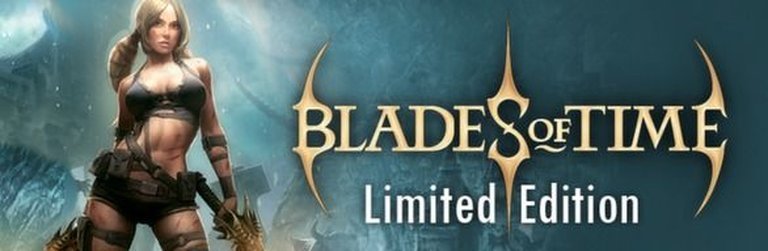
Blades of Time: Limited Edition is a compilation package featuring the action-adventure hack and slash game Blades of Time along with its Dismal Swamp DLC, digital artbook, soundtrack, and wallpapers. The game’s premise follows Ayumi, a dual-sword-wielding treasure hunter stranded on a mysterious island corrupted by Chaos magic, where she must harness her time-rewind ability to combat enemies, solve puzzles, and uncover secrets to escape the perilous environment.
Gameplay Videos
Where to Buy Blades of Time: Limited Edition
PC
Blades of Time: Limited Edition Guides & Walkthroughs
Blades of Time: Limited Edition: A Flawed Gem Forged in Temporal Chaos
Introduction: A Cult Classic Forged in Contradiction
In the pantheon of 2012’s action-adventure titles, Blades of Time stands not as a towering colossus but as a fascinating, deeply flawed artifact—a game that glimpse a brilliant future through a fog of technical compromise and thematic inconsistency. Developed by the Russian studio Gaijin Entertainment as a spiritual successor to their polarizing 2009 title X-Blades, Blades of Time represented a significant pivot: abandoning the anime-pornography aesthetic of its predecessor for a more “grounded,” Lara Croft-inspired heroine and a serious, lore-heavy narrative about primordial chaos. Its central, ingenious mechanic—Time Rewind—was a conceptual masterstroke, allowing players to create spectral clones of themselves to solve puzzles and overwhelm foes in cooperative combat long before titles like Superhot or Braid popularized temporal manipulation. The Limited Edition, released digitally for PC and Mac, packaged this ambitious core with its sole DLC, a digital artbook, soundtrack, and wallpapers, offering a comprehensive artifact of a game that was perpetually at war with itself. This review argues that Blades of Time is a crucial, if failed, experiment in the hack-and-slash genre—a title whose innovative systems were perpetually undermined by uneven execution, yet whose legacy endures in the DNA of modern action games that seek to blend fluid combat with strategic puzzle-solving.
Development History & Context: From X-Blades to Dragonland
Gaijin Entertainment’s Ambiguous Genesis
Gaijin Entertainment, founded in Moscow in 2002, had built a reputation on military simulation titles like IL-2 Sturmovik before venturing into character-driven action with X-Blades (2007/2009). That game, notorious for its hypersexualized protagonist Ayumi and simplistic combat, was a commercial success but critically panned. Blades of Time was conceived explicitly as a course correction. As noted in development retrospectives, the team aimed to retain the core “Ayumi” identity while executing a “soft reboot”: a more realistic art style, a cohesive narrative, and a fundamental rethinking of gameplay. The shift was stark; promotional materials and early concept art emphasized a mature, serious adventurer, moving away from the bikini-thong aesthetic toward a practical, if still revealing, outfit of hot pants and armored gear.
Technological Constraints and the Dagor Engine
The game was built on Gaijin’s proprietary Dagor Engine, a tool born from their simulation heritage. This engine was chosen for its capacity to render large, open environments and dynamic lighting—essential for the “Dragonland” island setting with its jungles, snowfields, and floating sky islands. However, the engine’s strengths in scale came at a cost. The same system that enabled vast vistas also struggled with the tight, responsive animations and hit detection required for a premium character action game. This technical tension—between grand spectacle and precise combat—would become a defining, fatal flaw. The team’s focus on environmental scale and the resource-intensive Time Rewind system (which had to record, store, and replay player inputs) likely diverted resources from polish, leading to the infamous control issues and glitches cited in reviews.
The 2012 Gaming Landscape
Blades of Time entered a crowded market. It directly competed with Capcom’s revered Devil May Cry and Bayonetta series, as well as Sega’s El Shaddai: Ascension of the Metatron. These titles set a high bar for fluidity, style, and mechanical depth. Gaijin’s attempt to stand out was the Time Rewind mechanic, inspired, per developer interviews, by the puzzle game Cursor10*. In an era where multiplayer was becoming a standard expectation for console action games, Gaijin also ambitiously bundled a “Outbreak” mode—a MOBA-inspired co-op and PvP component where players commanded monster armies. This was a studio overextending, trying to match the scope of AAA competitors with a mid-tier budget and a simulation engine not fully suited for the task.
Narrative & Thematic Deep Dive: Chaos, Order, and a Treasure Hunter’s Burden
Plot and Pacing: A Story of Two Halves
The narrative follows Ayumi and her mentor Zero as they teleport to the mythical Dragonland, seeking treasure. A ritual gone awry separates them, unleashing “Chaos magic” that twists the island and its inhabitants. What follows is a classic “lost world” plot, but with a temporal twist: Ayumi’s power to rewind time is directly tied to the island’s curse. The first half is a straightforward, if generic, treasure-hunters-versus-monsters saga. The midpoint revelation—that Zero has been corrupted by Chaos and that the island’s conflict stems from a war between Order (the Skyguard) and Chaos—attempts to inject cosmic stakes. Unfortunately, the execution is uneven. The story is told largely through text logs, sparse cutscenes, and environmental storytelling (ruins, notes), leading to a disjointed pacing where lore-heavy exposition clashes with the relentless combat.
Characters: From Cliché to Potential
Ayumi is the centerpiece. Despite the shift from X-Blades, her characterization remains superficial. She’s a quippy, confident treasure hunter, voiced with a distinct British accent by Miranda Raison. Her dialogue is a mix of combat one-liners (“Getting kinky with my clones!”) and occasional moments of doubt, but she rarely evolves beyond her archetype. Zero, voiced by James Faulkner, is a more stoic presence, and his corruption provides the game’s strongest emotional hook, though it is resolved too hastily. The antagonists—the militaristic Skyguard and the grotesque Chaos entities—are functionally pure obstacle, lacking the memorable flair of, say, Bayonetta’s angels or DMC’s demons. The voice acting, while an improvement over X-Blades, is cited as occasionally wooden, with script stiffness a likely culprit.
Themes: Fate, Free Will, and the Burden of Power
Thematically, Blades of Time posits an interesting conflict: the island’s Chaos represents unformed, destructive potential, while the Skyguard’s Order represents rigid, oppressive control. Ayumi’s Time Rewind is a third force—a personal, will-driven manipulation of fate. The narrative suggests that true agency comes not from accepting a predetermined story (Order) or embracing mindless destruction (Chaos) but from actively rewriting one’s path. This is embodied in the climax, where Ayumi must use timeline shifts to subdue Zero and defeat the Vicar of Chaos by altering key past events. The theme is potent but underexplored, buried under repetitive combat and simplistic dialogue. It raises questions about consequence and identity—does creating clones fragment one’s soul?—that the game never seriously grapples with.
Gameplay Mechanics & Systems: The Brilliant Core and the Cracking Foundation
Combat: A Fluid理想 marred by Friction
The core combat is a hybrid: third-person melee with light/heavy attacks, kicks, and launches, seamlessly interspersed with ranged gunplay (a rifle and machine gun). Ayumi can perform sliding strikes, finishes on staggered enemies, and combo into her magic. The 40+ unlockable skills, accessed via soul-collecting at altars, offer genuine build variety—from enhancing Dash and Slide Attack to Rage Saving for resource management. The two magic modes, Order (blue, defensive/support spells like Freeze) and Chaos (red, offensive spells like Fire), are toggled via directional inputs and build a rage meter. In theory, this creates a dynamic flow: build rage through melee, unleash a spell, rewind to avoid damage, and repeat.
The Time Rewind System: Ingenious in Theory, Awkward in Practice
This is the game’s soul and its greatest liability. Activated by holding a button, Time Rewind records Ayumi’s recent actions (the last ~10 seconds). Releasing the button creates a spectral clone that replays that sequence autonomously. Used in combat, it allows for “solo co-op”: you can rewind to dodge a boss attack while your clone continues its assault, or record a sequence of attacks on a shielded enemy, rewind, and have multiple clones assault the shield simultaneously. In puzzles, it’s used for multi-switch activation or creating temporary platforms.
Its brilliance is undeniable. It encourages tactical planning over twitch reflexes. However, it is hamstrung by three critical issues:
1. Resource Cost: It consumes a portion of the rage meter, creating a painful tension between using it for combat efficiency and saving it for a crucial puzzle or boss phase.
2. Control Awkwardness: The act of rewinding (holding a button) interrupts the flow of combat. The camera struggles to follow both Ayumi and her clones in hectic fights, leading to confusion.
3. Inconsistency: As noted in user reviews, the mechanic fails in specific “Chaos zones,” breaking the game’s own rules without clear tutorial guidance. Upgrades at altars (extending rewind length, improving clone AI) are necessary but make the early game feel crippled.
Exploration, Progression, and Flaws
Exploration is driven by a magical compass that points to treasure chests. The Order spell can reveal hidden items, encouraging backtracking. The skill tree system, while offering depth, suffers from “ability bloat”—many skills feel incremental rather than transformative. The “Dash” ability is essential for traversal and combat initiation, but its implementation can be imprecise, leading to frustrating falls. The biggest systemic flaw is resource management. Health is scarce, ammo for guns is limited, and the rage meter must be juggled for magic, rewinding, and the “Berserk” mode. This creates a constant, often unfair, feeling of scarcity, especially on higher difficulties.
The Outbreak Multiplayer: Ambitious but Underpopulated
The included “Outbreak” mode is a curious MOBA-lite where players command minion hordes to destroy towers. It integrates Time Rewind for coordinated attacks. Conceptually, it’s a clever way to apply the single-player mechanic to competitive/co-op. In practice, at launch and even in the 2019 Switch remaster, it suffered from a tiny player base, a lack of local split-screen, and a learning curve separate from the main campaign. It feels like a prototype for a mode that never found its audience, a wasted opportunity to extend the game’s life.
World-Building, Art & Sound: Aesthetic Ambition, Technical Arrest
Visual Design: A Tale Two Generations
The art direction aims for a “gritty fantasy” aesthetic. Dragonland is a series of distinct biomes: lush jungles, icy valleys, desert ruins, and the surreal sky islands. The environmental variety is commendable, but the execution is wildly inconsistent. Textures on character models (especially Ayumi and her companion Michelle) are often flat and unimpressive, with animations that can look robotic. Enemy design is more successful—the grotesque Chaos spawn and the sleek, mechanical Skyguard units convey the core conflict visually. However, the game was already looking dated in 2012, and technical issues (pop-in, frame rate drops, especially on the Switch port) further mar the experience. The Limited Edition‘s digital artbook reveals beautiful concept art that the in-game engine only intermittently realizes.
Sound Design and Score: An Overlooked Strength
This is one of the game’s most praised elements. Composer Yuri Ilyin’s score is a standout, blending orchestral swells with electronic pulses that accentuate the time-manipulation effects. Tracks like “Fabula” (exploration), “Lacuna Lumen” (ambient island mood), and the percussion-driven boss themes (“Igni et Ferro,” “Chaos Theme”) provide genuine epic atmosphere. Sound design for weapons—the satisfying thwack of the sword, the crack of the rifle, the distorted whoosh of the Time Rewind—is crisp and impactful. The voice acting, as discussed, is serviceable with the English cast (Miranda Raison, James Faulkner) delivering competent performances, while the Japanese track, according to sources, adopts a more stylized, anime-tinged delivery that better fits the original X-Blades sensibility but feels at odds with the new serious tone.
Reception & Legacy: The Story of a “Almost”
Critical Reception: The 50-Point Ceiling
Upon release, Blades of Time received “mixed or average” reviews. Metacritic scores: PC 63/100, PS3 53/100, Xbox 360 52/100. Famitsu’s 32/40 (8/8/8/8) in Japan stood in stark contrast to Western criticism. The praise consistently centered on the Time Rewind mechanic—reviewers from Destructoid, GameSpot, and EGM acknowledged its novelty and strategic potential in combat and puzzles. The fluidity of combat when it worked and the vibrant art style were also noted.
The criticisms were pointed and universal:
* Technical Jank: Unresponsive controls, clipping, and bugs (bosses phasing through floors, weapon swap failures) were frequently cited as game-breaking.
* Repetitive Design: Levels and enemy encounters were seen as monotonous, failing to evolve alongside the player’s growing abilities.
* Tonal Dissonance: The attempt at a serious narrative was undercut by Ayumi’s skimpy design and occasionally cheesy dialogue.
* Frustrating Balance: The scarcity of health/ammo/rage made the game feel punishing rather than challenging.
The 2019 Nintendo Switch remaster, developed by Gaijin themselves, was a disaster. Scoring 38/100 on Metacritic, it was plagued by severe performance issues (frame rate drops, input lag) that made the precise combat and time mechanics feel utterly broken. IGN listed it as the #3 worst-reviewed game of 2019.
Commercial Performance and Cult Status
Sales were modest. Estimates suggest ~200,000 units on Xbox 360 and ~100,000 on PS3—respectable for a mid-tier title but far from a hit. It found its audience on PC via Steam, where it maintained a small, dedicated player base. Its legacy is that of a “cult favorite” or “underrated gem” in retrospectives. User forums and video essays frequently highlight the Time Rewind as a mechanic ahead of its time, a fascinating prototype for games like Braid (though released later, Braid‘s puzzle focus differed) and Superhot. The PC version’s moddability led to community-created skin packs and graphical enhancements, extending its life. The Limited Edition itself is now a curious artifact on platforms like GOG, preserving the game in its least-buggy form (the post-launch patched PC version) alongside its soundtrack and art, serving as the definitive digital archive for this specific release.
Influence and Industry Place
Its direct mechanical influence is hard to trace—the Time Rewind is too uniquely integrated to be a common template. However, it exemplifies a design philosophy that would become more refined: systemic gameplay where a core, flexible mechanic serves multiple purposes (combat, puzzle, traversal). Games like Titanfall 2‘s temporal shift or Return of the Obra Dinn‘s deduction mechanics share this “one tool, many jobs” ethos. For Gaijin, it was a stepping stone. They abandoned the single-player action genre, returning to their roots with War Thunder and Crossout. Blades of Time remains their most ambitious, and most critically panned, narrative action project. In the history of the hack-and-slash, it’s a fascinating footnote: a game that tried to inject tactical, puzzle-like depth into the genre’s combo-chaining reflex loop, but was ultimately pulled under by the weight of its own ambition and the technical limitations of its engine.
Conclusion: A Tempered Verdict on a Temporal Experiment
Blades of Time: Limited Edition is not a “good” game by any conventional, polished standard. It is buggy, frustratingly imbalanced, tonally messy, and graphically inconsistent. To play it is to wrestle with a flawed but breathtakingly creative core. The Time Rewind mechanic is a genuine innovation—a system that makes you feel like a temporal tactician, choreographing battles with your own echoes. The combat, when the controls cooperate, has a weighty, satisfying impact. The soundtrack is legitimately epic.
Its place in video game history is secure, not as a pioneer that changed the industry, but as a cautionary tale and a curiosity. It demonstrates the perils of a mid-tier studio overreaching with an engine not built for the task, of narrative ambition clashing with character design legacy, and of a brilliant mechanical idea being suffocated by poor balancing and technical debt. Yet, its cult status proves that its heart—the thrill of rewriting a fight’s outcome with a well-timed rewind—was in the right place. The Limited Edition package, for all its digital ephemera, represents the most complete preservation of this ambition. Blades of Time is a game that deserves to be remembered, studied, and yes, even played—with the understanding that its genius is perpetually locked in a struggle with its failures. It is a 7/10 idea trapped in a 4/10 execution, and that tragic gap is what makes it so compelling. For historians, it is an essential case study; for players, it is a flawed but unforgettable adventure through the chaotic, time-warped mind of a studio reaching far beyond its grasp.