
- Release Year: 2019
- Platforms: Windows
- Publisher: Campus ADN
- Developer: Campus ADN
- Genre: Adventure
- Game Mode: Single-player
- Gameplay: Puzzle elements
- Setting: Futuristic, Sci-fi
Description
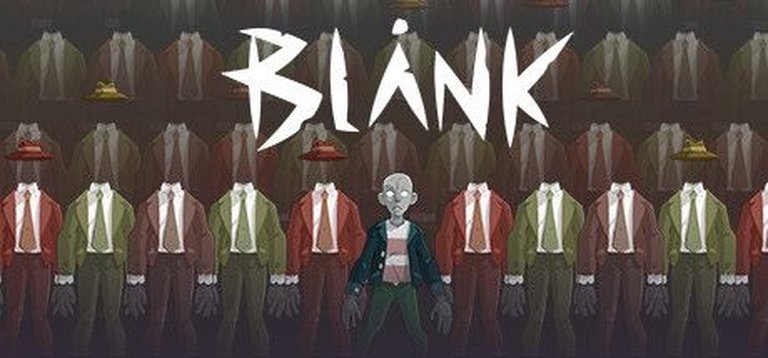
Blank is a sci-fi adventure game set in a futuristic metropolis where all inhabitants are headless. Players control the protagonist, Blank, who fashions a mannequin head to escape the oppressive city, embarking on a journey to uncover the secrets of the Metropolis, encounter colorful characters, and explore his own identity, all while solving navigation puzzles using a unique ‘Perspectives’ mechanic that alters the environment and avoiding detection by lurking enemies.
Where to Buy Blank
PC
Blank: Review
Introduction: An Opaque Gem from a Classroom to the World
In the vast, often overwhelming ecosystem of video games, certain titles emerge not from the well-funded crucibles of AAA studios or the seasoned hands of indie veterans, but from the structured chaos of academia. Blank, a free third-person puzzle-platformer released on Steam in December 2019 by the Montreal-based public college Campus ADN, is precisely such a title. It is a game that wears its origins—a 15-week sprint by 27 animation, level design, and modeling students—not as a badge of amateurism, but as a testament to focused creative ambition. This review posits that Blank is a poignant and mechanically intriguing curio, a game whose profound thematic metaphor for identity and conformity is occasionally at odds with its nascent technical and design execution. It stands as a fascinating case study in potential realized under extreme constraints, offering a glimpse into the raw, unfiltered creativity that can flourish when a small, dedicated team is given a singular, powerful idea and the freedom to build it from the ground up.
Development History & Context: Forging a Game in the Academic Crucible
To understand Blank, one must first understand the environment from which it sprang. Campus ADN (now part of the larger Cégep du Vieux Montréal) is a specialized public college program aimed at preparing students for direct entry into the Quebec game industry. The development of Blank was not a side project or a grant-funded endeavor; it was the central, culminating project for the 2018-2019 cohort of third-semester students, undertaken under the mentorship of local industry professionals. This pedagogical model is critical: the game’s primary purpose was as a learning vehicle, a means for students to apply theoretical knowledge in a compressed, team-based environment mimicking a real studio pipeline.
The technological and temporal constraints were severe. The project spanned a mere 15 weeks—a timeframe more akin to a major game jam than a commercial product cycle. The team, numbering 27 members, was sizable for a student project, suggesting a division of labor across animation, modeling, and level design disciplines. Their chosen engine was Unity, the industry’s ubiquitous starting point for indies and students alike, prized for its accessibility and rapid prototyping capabilities. The stated goal, as per the Steam description, was simple: to create a game they would enjoy playing. There was no aspiration for a sprawling open world or a 100-hour narrative; the scope was deliberately intimate, focused on perfecting a single core mechanic within a cohesive aesthetic.
This context places Blank within the lineage of “cohort games”—projects like those from the USC Interactive Media & Games Division or the Danish DADIU program (which, per Metacritic, produced another game simply titled Blank in 2026, causing potential confusion). Unlike those, however, Blank was released directly to the public on Steam for free, a bold move that transformed a private academic exercise into a publicly accessible artifact. It competes, in a tiny corner of the store, with the year’s biggest releases (2019 saw Sekiro: Shadows Die Twice, Resident Evil 2 Remake, Disco Elysium), not on content or polish, but on the raw merit of its central idea and the earnestness of its execution.
Narrative & Thematic Deep Dive: The Headless Burden of Identity
Blank’s narrative is sparse but conceptually dense, unfolding through environmental storytelling, brief interactions, and a pervasive atmosphere. The protagonist, simply named Blank, is a resident of the Metropolis, a dystopian city-state where the ultimate social norm is the absence of a head. Citizens are literally headless, their necks terminating in smooth collars. This is not a physical disability but a cultural and legal imperative; the city’s motto is an unspoken rule that to have a head is to be an outcast, a threat to the fragile order.
Blank’s crisis is existential: he feels an “urgent need to escape” this suffocating, homogenized world. His act of rebellion is both literal and metaphorical: he fills the void above his neck with a mannequin head. This object is not his own; it is a placeholder, a borrowed identity. This single action sets his journey in motion—a quest not just for physical freedom from the city’s “claws,” but for the recovery of his “true identity.” The narrative posits that his head, and with it his memories, his sense of self, have been lost or stolen. The journey through the city’s outskirts and into unknown territories is thus a pilgrimage to reassemble a fragmented self.
Thematically, Blank is a powerful allegory for conformity versus individuality, the politics of the body, and the search for authentic selfhood. The headless subjects represent a populace that has willingly surrendered its capacity for independent thought, perception, and identity—they see, hear, and speak through some implied collective or technological means, but they lack a central “I.” Blank’s prosthetic head makes him visible as “other,” marking him for persecution. His power, the “Perspectives” mechanic (explored in the next section), can be read as a metaphor for the ability to shift one’s point of view, to see the world differently, and thus to perceive truths invisible to the conformist masses.
The “colourful characters” he meets are likely other outcasts or manifestations of the city’s secrets. The ultimate revelation—the “secrets of the Metropolis” and the nature of the “Headless people”—suggests a systemic origin for their condition, possibly a forced societal engineering project. The story is less about what happens and more about the feeling of being a fragmented entity in a world that punishes wholeness. Its minimalism is a strength, allowing players to project their own anxieties about identity, belonging, and societal pressure onto Blank’s journey. It echoes the existential dread of works like Kafka or The Twilight Zone, but through the uniquely visceral lens of body horror lite.
Gameplay Mechanics & Systems: The Elegance and Limits of a Singular Perspective
The entire architectural and interactive foundation of Blank rests upon a single, brilliant core mechanic: Perspectives. As described, this power allows Blank to “make different elements of your environment appear and disappear.” This is not a simple toggle. It implies a fundamental alteration of perception—perhaps shifting between parallel layers of reality, or revealing hidden geometries by changing the viewer’s positional or mental angle. The Steam description links this directly to navigation puzzles. The player must use this perspective-switch to forge a path through what seems like impassable architecture or to reveal platforms, ledges, or objects that are “invisible” in the default view.
This mechanic is married to a stealth component. The Metropolis is patrolled by “enemies that might be lurking around,” likely robotic sentinels or headless guards enforcing the norm. The player must use the Perspectives power not just for traversal, but for evasion—perhaps disappearing from an enemy’s line of sight by shifting into a perspective where the player character is occluded or rendered as part of the background. This creates a tense, cerebral loop: observe patrol patterns, identify a path using your power, time your movements, and hide when necessary.
The gameplay is structured as a third-person puzzle-platformer with strong stealth aspects. There is no indication of combat; the emphasis is on avoidance and problem-solving. Progression is likely linear or semi-linear, with each new area presenting a more complex application of the Perspectives mechanic. The UI is presumably minimalist, aligning with the game’s dystopian aesthetic. Character progression appears non-existent—there are no stats, skill trees, or collectibles mentioned. The only “progression” is the player’s mastery of the core mechanic and the unfolding narrative.
The innovation here is the purity of the design. In an era of bloated skill trees and RPG layers, Blank commits entirely to one idea and explores its permutations. This is reminiscent of Portal‘s dedication to its portal gun or The Witness‘s focus on its panel-solving. However, this purity is also its potential flaw. A mechanic this central must be introduced, deepened, and complicated with exquisite pacing. With only a 15-week development cycle, there is a significant risk that the puzzle design could become repetitive, that the “Perspectives” concept might not have enough permutations to sustain a full game without resorting to padding. The lack of combat and traditional progression means the entire weight of the experience falls on the quality and variety of its spatial puzzles and stealth sequences. The requirement for a controller (specifically an Xbox controller) also speaks to a design philosophy prioritizing precise, tactile input for movement and perspective-switching, but it creates a barrier for some players.
World-Building, Art & Sound: A Minimalist Dystopia
The world of the Metropolis is a sci-fi / futuristic dystopia, but one rendered through a specific, constrained aesthetic. With the development team comprised of modeling and animation students, the visual style likely prioritizes stylized minimalism over photorealism. The key, haunting image is that of the headless citizenry. This design choice is monstrous yet strangely mundane, a powerful visual shorthand for a conformist society. The architecture is probably monolithic, brutalist, or sleekly totalitarian, emphasizing order, repetition, and the absence of individual marks.
Blank himself, with his mannequin head, becomes a grotesque focal point against this backdrop. The “colourful characters” he meets would serve as visual and narrative contrasts—perhaps other outcasts with their own prosthetic or anomalous features, or figures representing different facets of the city’s power structure. The environments likely shift from the claustrophobic, regimented city streets to more bizarre, abstract, or naturalistic zones as he progresses, reflecting his psychological journey outward.
The sound design is an area where the source material is silent. Given the academic nature of the project and the “Narration” tag on Steam, it’s possible the game features a minimalist, atmospheric score—perhaps ambient electronic or industrial sounds to underscore the Metropolis—and a prominent, possibly diegetic, narrator guiding Blank (and the player). The “Narration” tag is intriguing; it suggests a voice-over component, which could be a storytelling device, a guide, or even a manifestation of Blank’s own thoughts, further exploring the theme of a fragmented self seeking a coherent narrative.
The overall atmosphere is one of pervasive unease and quiet rebellion. The game likely trades in the aesthetics of isolation and otherness. Its power lies not in bombastic set-pieces but in the cumulative effect of its unsettling imagery and the cerebral tension of its puzzles. It’s a world that feels both artificial and deeply personal, a perfect reflection of its protagonist’s psyche.
Reception & Legacy: The Quiet Triumph of the Student Project
Blank exists in a niche so specific it barely registers on conventional metrics. It has no MobyScore (n/a) and is absent from major critic review aggregators like OpenCritic for 2019. Its Steam page shows “Mostly Positive” (79%) from a total of 34 user reviews. This is a tiny sample, but the positivity suggests that those who found it were pleasantly surprised by its thematic weight and mechanical hook. It was a finalist in the indie game category of the Numix Prize 2020, a Quebec-based award, indicating recognition within its local academic/indie ecosystem.
Its commercial performance is irrelevant by design; it was and remains free. Its legacy is not measured in sales or zeitgeist dominance but in its role as a proof-of-concept and a portfolio piece. For the 27 students involved, Blank is a shipped title on Steam—a tangible credential. For the curriculum at Campus ADN, it is a successful demonstration of project-based learning. In the broader history of games, it is a footnote, but a meaningful one. It represents the ethos of the “game jam mentality” extended over months: a tight scope, a novel core idea, and a passion project unshackled from market pressures.
It shares DNA with other acclaimed student projects that punched above their weight, like The Cat and the Coup or Papers, Please in its early原型阶段, though Blank is less overtly political and more abstractly psychological. It likely holds little direct influence on the industry, as its mechanics and scope are too specific and its distribution too limited. However, it serves as an inspiration for academic programs and a reminder that innovation often stems from constraints. In an age where a “failed” AAA game can cost $300 million, Blank is a quiet rebuke: sometimes, a powerful idea, executed with focus by a small team in a short time, is enough to create a memorable, thought-provoking experience.
Conclusion: A Blank Slate with Profound Impressions
Blank is not a perfect game. By the metrics of mainstream critical acclaim—graphics, content volume, mechanical depth—it is modest to a fault. Its puzzle design may not reach the genius of Jonathan Blow’s magnum opus, nor its narrative complexity of a Disco Elysium. Yet, to judge it by those standards is to miss its point entirely. As a product of a 15-week student sprint, it is a remarkable achievement. It identifies a potent, haunting metaphor—the headless society—and builds a cohesive, engaging interactive experience around it. Its “Perspectives” mechanic is a genuinely clever twist on environmental puzzling and stealth, even if it is not explored to its absolute limit.
The game’s greatest success is its thematic resonance. In Blank’s journey to recover his head and his identity, players navigate a world that feels eerily relevant, an allegory for social media echo chambers, political polarization, and the loss of individual perspective in the digital age. The mannequin head is a perfect symbol for the personas we adopt, the incomplete selves we present to the world while searching for something real underneath.
As a historical artifact, Blank is valuable. It is a snapshot of Canadian game education at a specific moment, a showcase for the talent emerging from public institutions. It argues for the continued importance of these programs as incubators for new voices and ideas. For the player, it offers a brief, intense, and thought-provoking experience—a puzzle-box of a game where the solution is not just about platforms, but about perception itself.
Verdict: A flawed but fascinating student project whose ambitious central metaphor and elegant core mechanic rise above its technical limitations. It is not a must-play for everyone, but for those interested in the pure application of a game idea or the symbolic power of interactive media, Blank is a rewarding and haunting journey into a truly headless world. Its legacy is secure as a compelling answer to the question: “What can you build in 15 weeks?” The answer, in this case, is something with a surprising amount to say.
Note: This review synthesizes information from the provided MobyGames, Steam Store, and Metacritic entries for the 2019 game “Blank” developed by Campus ADN. The extensive source material on “Black Myth: Wukong” was not relevant to this specific title and has been excluded from analysis.