
- Release Year: 2019
- Platforms: Nintendo Switch, PlayStation 4, Windows, Xbox One
- Publisher: Sold Out Sales and Marketing Limited, Team17 Digital Limited
- Developer: The Game Kitchen SL
- Genre: Special edition
- Game Mode: Single-player
- Average Score: 79/100
Description
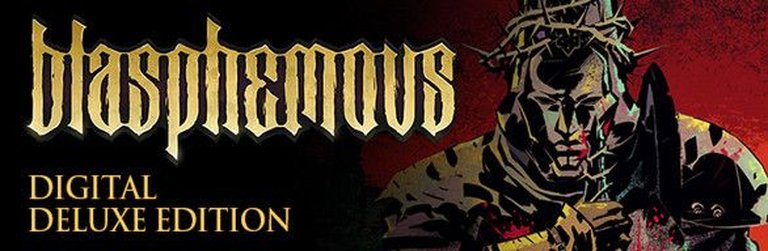
Blasphemous (Digital Deluxe Edition) is a dark fantasy action-platformer set in the grim and desolate land of Cvstodia. Players control The Penitent One, a rogue nomad seeking to unravel the mysteries of a world plagued by demonic creatures and mythical beings. The game is inspired by the city of Seville, Spain, and features a rich lore filled with religious themes, penance, and the struggle between faith and corruption. The Digital Deluxe Edition includes additional content such as an original soundtrack, artbook, digital comic, and exclusive DLC.
Where to Buy Blasphemous (Digital Deluxe Edition)
PC
Blasphemous (Digital Deluxe Edition) Cracks & Fixes
Blasphemous (Digital Deluxe Edition) Patches & Updates
Blasphemous (Digital Deluxe Edition) Mods
Blasphemous (Digital Deluxe Edition) Guides & Walkthroughs
Blasphemous (Digital Deluxe Edition) Reviews & Reception
metacritic.com (77/100): Blasphemous is a gothic horror masterpiece that can’t be missed.
destructoid.com : Blasphemous is great.
opencritic.com (79/100): Blasphemous is a beautifully crafted Soulslike/Metroidvania action game set in a delightfully unhinged, deliriously gory world filled with well-designed enemies, satisfyingly meaty combat and some truly memorable and grotesque boss battles.
Blasphemous (Digital Deluxe Edition) Cheats & Codes
PC
| Code | Effect |
|---|---|
| MoonJump | Allows the player to jump to high places |
| Unlimited Life | Player cannot die |
| Unlimited Magic | Fervor bar never depletes |
| Unlimited Holy Water Bottle | Infinite Estus Flasks |
| points | Unclear, possibly grants points or currency |
| Pray with No cooldown | Prayers can be used instantly |
| Prayer Attack Speed | Increases the speed of prayer attacks |
Blasphemous (Digital Deluxe Edition): A Brutal Pilgrimage Through a Twisted Gothic Masterpiece
Introduction
In the pantheon of modern Metroidvanias, few games dare to merge religious grotesquerie with punishing gameplay as boldly as Blasphemous. Developed by Spanish studio The Game Kitchen and published by Team17 in 2019, Blasphemous is a harrowing descent into a world where faith and torment intertwine. This review dissects the Digital Deluxe Edition, which amplifies the base experience with an artbook, soundtrack, comic, and cosmetic DLC. Its legacy lies in its unflinching commitment to thematic coherence, marrying Spanish Catholic iconography with Soulslike mechanics to create a game that is as punishing as it is poetic.
Development History & Context
Blasphemous emerged from a Kickstarter campaign in 2017, born from The Game Kitchen’s desire to channel Spain’s rich religious and cultural history into a video game. Set against a backdrop of rising indie Metroidvanias like Hollow Knight and Dead Cells, the studio sought to carve a niche by blending Dark Souls’ nihilistic ethos with the visual language of Spanish Baroque art.
Creative Vision & Inspirations
The team drew heavily from Seville’s Holy Week processions, paintings by Francisco Goya and Diego Velázquez, and the macabre aesthetics of penitente brotherhoods. Director Enrique Cabeza described the game as a “love letter” to Andalusia’s duality of piety and suffering. Technical constraints of the Unity engine were offset by a meticulous pixel-art style, which allowed hyper-detailed animations and environments despite limited resources.
Release Landscape
At launch, Blasphemous faced stiff competition from polished AAA titles, but its unique identity resonated with players craving darker, narrative-driven experiences. Post-release support, including free DLCs like Stir of Dawn and Wounds of Eventide, cemented its reputation as a labor of love, addressing player feedback while expanding lore and gameplay depth.
Narrative & Thematic Deep Dive
Plot & Characters
The Penitent One, a silent knight clad in a capirote-like helm, awakens in a world ravaged by “The Miracle,” a divine force that warps devotion into grotesque punishment. His pilgrimage involves confronting three Holy Guardian Visages, each embodying twisted interpretations of penance:
– Ten Piedad: A fusion of man and tree, born from self-flagellation.
– Tres Angustias: A trio of conjoined sisters floating on wings of sorrow.
– Our Lady of the Charred Visage: A martyr eternally burning for rejecting vanity.
The narrative unfolds through environmental storytelling, cryptic dialogues, and collectible lore entries. Key figures like the scribe Deogracias and the zealot Crisanta contextualize the Penitent One’s role as both savior and pawn in a cosmic struggle.
Themes & Symbolism
Blasphemous explores:
– Guilt and Atonement: The Mea Culpa sword literalizes the burden of sin, growing stronger as the Penitent One absorbs guilt.
– Religious Hypocrisy: The Church of Cvstodia worships suffering, yet its leaders like Escribar exploit faith for power.
– Cycle of Trauma: The game’s endings reveal the High Wills—a trio of godlike entities—manipulating “The Miracle” to feed on mortals’ penance.
The Wounds of Eventide DLC reframes the story, exposing the High Wills as parasitic architects of suffering. The true ending sees the Penitent One and Crisanta severing this cycle, sacrificing themselves to free Cvstodia—only for a mysterious womb to descend, teasing Blasphemous II’s narrative ambitions.
Gameplay Mechanics & Systems
Core Combat & Progression
Combat balances precision and brutality. The Mea Culpa’s combo system rewards timing, while parries and dodges demand Soulslike discipline. Fervor, a mana-like resource, fuels prayers (spells) like Debla of the Lights, which incinerate foes.
Character Customization
– Relics: Unlock traversal abilities (e.g., Blood Perpetuated in Sand for crossing spikes).
– Rosary Beads: Slot buffs like increased healing or elemental resistance.
– Sword Hearts: Modify Mea Culpa’s properties, trading defense for attack speed.
Punishment & Persistence
Death spawns Guilt Fragments, reducing Fervor gains until reclaimed. Checkpoints (Prie Dieu altars) refill healing Bile Flasks but respawn enemies—a risk-reward dynamic that amplifies tension.
Critiques
– Platforming Frustrations: Instant-death spikes and erratic enemy placements occasionally disrupt flow.
– Backtracking: Limited fast-travel points make late-game exploration tedious.
World-Building, Art & Sound
Aesthetic Vision
Blasphemous’ pixel art is a masterclass in grotesque beauty. Every frame drips with macabre detail:
– Architecture: Gothic cathedrals crumble into ossuaries; sewers pulse with bioluminescent fungus.
– Enemy Design: From eyeball-laden cherubs to the serpentine Sierpes, foes embody sacred profanity.
Atmosphere
Cvstodia feels oppressive yet tragically majestic. The Where Olive Trees Wither zone, a frozen wasteland dotted with crucified statues, contrasts with the molten hellscape of Patio of the Silent Steps.
Soundtrack & Audio
Carlos Viola’s score merges Gregorian chants with flamenco guitars, amplifying the game’s Iberian roots. Ambient sounds—dripping blood, distant screams—heighten the sense of desolation.
Reception & Legacy
Critical Response
Blasphemous earned a Metascore of 77–82 across platforms. Praise centered on its art and atmosphere, while criticism targeted clunky platforming. Destructoid’s 8/10 review hailed it as “a grotesque but surprisingly clean take on Souls and Castlevania,” while Nintendo Life lauded its “memorable boss battles.”
Commercial Success
The game surpassed 1 million players by 2021, bolstered by physical Deluxe Edition releases. Awards like “Best Spanish Development” at the 2019 Titanium Awards cemented its indie pedigree.
Industry Influence
Blasphemous inspired a wave of religiously themed indies (Martha Is Dead, The Last Faith) and proved that regional folklore could resonate globally. Its Kickstarter success also demonstrated the viability of culturally specific narratives in crowdfunding.
Conclusion
Blasphemous (Digital Deluxe Edition) is a landmark title—a haunting fusion of Spanish Catholicism, Metroidvania exploration, and Soulslike challenge. While its platforming and pacing flaws prevent perfection, its unflinching vision elevates it to art. The Deluxe Edition’s extras, particularly the soundtrack and artbook, deepen appreciation for its craftsmanship.
In video game history, Blasphemous stands as a testament to the power of cultural specificity. It is not just a game but a pilgrimage—one that leaves players bloodied, contemplative, and yearning for the next blasphemous revelation.
Final Verdict: A macabre masterpiece that demands reverence, even as it flays your resolve.
The Penitent One marches on.