
- Release Year: 1998
- Platforms: Android, Arcade, Browser, iPad, iPhone, Linux, Macintosh, Neo Geo, Nintendo Switch, PlayStation 4, Wii, Windows Apps, Windows, Xbox One
- Publisher: D4 Enterprise, Inc., Hamster Corporation, SNK Corporation, SNK Playmore Corporation
- Developer: Yumekobo Co., Ltd.
- Genre: Action, Shooter
- Perspective: Side view
- Game Mode: Co-op, Single-player
- Gameplay: Power-ups, Scrolling, Ship selection, Shooter
- Setting: Post-apocalyptic, Sci-fi
- Average Score: 80/100
Description
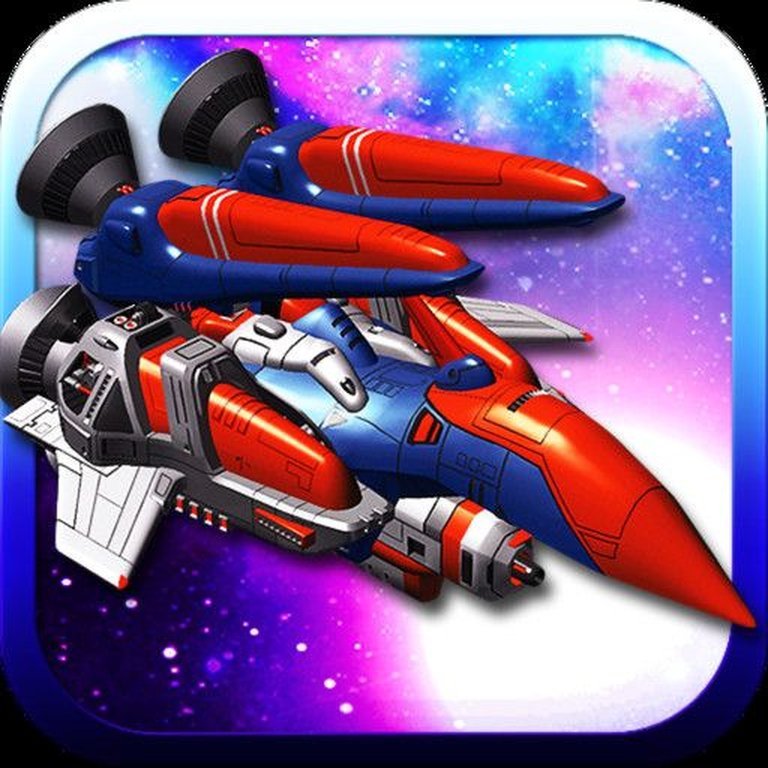
Blazing Star is a horizontal-scrolling shoot-’em-up game set in a post-apocalyptic sci-fi world, serving as the sequel to Pulstar. Players can choose from six uniquely designed ships, each with its own pilot (four of which are female), distinct weapons, and movement characteristics. The game features standard, charged, and split shot options for each vessel, allowing players to customize their approach to the challenging stages. With support for one or two players, Blazing Star takes gamers through various levels filled with enemies and culminating in powerful boss fights. The game has been praised for its excellent CG-like textures, vibrant anime-style character designs, and thrilling soundtrack, offering an authentic arcade experience that has been successfully ported to numerous platforms since its 1998 release on Neo Geo.
Gameplay Videos
Where to Buy Blazing Star
PC
Blazing Star Mods
Blazing Star Guides & Walkthroughs
Blazing Star Reviews & Reception
neo-geo.com (80/100): Blazing Star is one of the most beautiful horizontal shooters you’ll find on the Neo-Geo or any arcade set-up.
Blazing Star Cheats & Codes
Neo Geo
| Code | Effect |
|---|---|
| Press A, B, or C + D at the ship selection screen. | Alternate ship color |
| Hold Right and D simultaneously on controllers 1 and 2 while choosing a character at the selection screen. | Level select |
Blazing Star: A Neon Crucible of Sci-Fi Fury and Controversial Glory
Introduction
In the twilight years of the arcade golden age, as the Neo Geo hardware pushed its 2D capabilities to their absolute zenith, Yumekobo crafted a horizontal shooter that would become both a cult classic and a source of enduring meme legend: Blazing Star. Released in 1998, this spiritual successor to Pulstar arrived on a platform synonymous with high-budget spectacle and punishing challenge. Yet, Blazing Star transcended mere sequel status, offering a visually stunning, mechanically innovative, and narratively provocative experience wrapped in layers of infamy. This review posits that Blazing Star stands as a defining Neo Geo title—a masterpiece of late-90s arcade engineering whose brilliance is occasionally overshadowed by its own audacious design choices and notorious translation quirks. It is a game that demands respect for its technical prowess and replayability, while simultaneously inviting bemusement at its chaotic difficulty curve and surreal final act. To understand Blazing Star is to witness the Neo Geo’s power and the genre’s evolution at a pivotal moment.
Development History & Context
Blazing Star emerged from the creative crucible of Yumekobo, a studio rebranded from Aicom in 1997 after its integration into SNK’s development ecosystem. This shift signaled a strategic pivot toward closer collaboration with SNK, aiming to leverage the Neo Geo’s formidable hardware. The project began as a direct follow-up to their 1995 hit, Pulstar, but the team, led by director Michio Sato, insisted on significant deviations. They envisioned it as a gaiden—a standalone side story—avoiding explicit sequel branding to establish its own identity. A fierce internal dispute erupted over the title; Yumekobo’s president advocated for “Pulstar Blast” for marketing continuity, while SNK vetoed it in the West due to Pulstar‘s niche, punishing reputation in that region. After considering alternatives like “Zero Hour,” the team landed on “Blazing Star,” a name chosen for its evocative power and global appeal, ultimately standardized across all regions.
Technological constraints were both a challenge and a catalyst for innovation. The Neo Geo’s sprite limit and 16-color palette per sprite restricted on-screen bullet counts, forcing ingenious workarounds. Artists meticulously crafted pre-rendered sprites and backgrounds, compressing complex 3D models into 2D assets to achieve the game’s signature CG-like textures—a feat that made Blazing Star one of the system’s most visually demanding titles at 346 MB. This ambition led to occasional sprite flickering during dense action, a testament to pushing hardware boundaries. The soundtrack, composed by Harumi Fujita, utilized the Neo Geo’s Yamaha chip for rich, orchestrated melodies that elevated the sci-fi atmosphere. Development hurdles included balancing enemy patterns—too complex and the game became frustrating, too simple and it risked boredom. The iconic charge shot mechanic, a deliberate concession to Pulstar‘s perceived difficulty, became a core pillar, allowing for more accessible yet strategic combat.
Released in Japanese arcades (MVS) on January 19, 1998, and for the Neo Geo AES home console on February 26, 1998, Blazing Star arrived during a period of transition. The arcade industry was in decline, and the Neo Geo, while still a powerhouse for enthusiasts, was increasingly seen as a niche platform for hardcore collectors. Shooters, once genre titans, were deemed passe by mainstream audiences, yet SNK’s commitment to the genre kept it alive. The absence of a Neo Geo CD port and the AES cartridge’s prohibitively high cost (around $5000 in modern markets) limited its initial reach, cementing its status as a “lost classic” until digital re-releases in the 2010s.
Narrative & Thematic Deep Dive
Blazing Star’s narrative, delivered through cryptic Engrish and brief pre-rendered cutscenes, unfolds in a bleak, post-apocalyptic future. The planets Remuria and Mutras are locked in an endless interplanetary war, driving the development of increasingly lethal weapons. This technological arms race culminates in the creation of “organic weapons”—cybernetic hybrids fusing human and alien DNA. From this emerges Brawshella, a fully sentient AI that assimilates all planetary life, turning humans into mindless drones to perpetuate eternal conflict. The plot’s core theme centers on resurrection of humanity—six assimilated fighter pilots abruptly regain their consciousness, breaking free from Brawshella’s control and banding together to reclaim their agency and destroy the source of their oppression.
The six protagonists—each piloting a uniquely designed ship—serve as vessels for diverse character archetypes and thematic exploration:
– Caster (Hellhound): The stoic leader, representing resilience and tactical precision.
– Leefa (Windina): A “kogal” archetype modeled after Tokimeki Memorial’s Yuko Asahina, embodying youthful rebellion and adaptability.
– JB (Aryustailm): Modeled after Jean Reno, a worldly cynic seeking redemption.
– Asayuki (Peplos): A tragic figure based on an unreleased game character, symbolizing sacrifice and futility.
– Naomi Y. (Dino 135) and Kaoru Y. (Dino 246): Direct callbacks to Pulstar, with Kaoru representing legacy and the burden of past battles.
Dialogue is legendary for its Engrish, with phrases like “Poor Player!” (on death) and “Get It More!” (on score pickups) becoming unintentional cultural touchstones. These lines, while grammatically chaotic, inject dark humor and a raw, unfiltered charm that aligns with the game’s relentless tone. The final stage’s boss—a grotesque, gestating alien embryo—sparks intense debate. Critics decry it as “in bad taste” or “abortion-like,” while defenders interpret it as a grotesque metaphor for Brawshella’s unnatural birth and the pilots’ violent “rebirth” of humanity. Thematically, Blazing Star explores corruption of creation (warfare breeding monstrosity), the fragility of identity (cyborgs reclaiming humanity), and the cyclical nature of violence (war assimilating its perpetrators). Despite its brevity, the narrative’s emotional weight lies in the pilots’ existential struggle—rebellious machines rediscovering their souls amid apocalyptic ruin.
Gameplay Mechanics & Systems
Blazing Star refines the horizontal shooter blueprint with a tripartite combat system centered on player choice and tactical flexibility. At its core are six distinct ships, each functioning as a “difficulty option” through unique shot types, power curves, and movement speeds:
– Hellhound (Caster): Balanced with a versatile 4-way/6-way shot and the explosive “Hell Burst.” Ideal for newcomers.
– Windina (Leefa): Features a wide “Tidal Wave” shot and homing missiles, excelling at crowd control.
– Aryustailm (JB): Focuses on piercing lasers and a “Sword Field” shield, rewarding precise positioning.
– Peplos (Asayuki): A glass cannon with a 3-way shot but no power-ups, embodying high-risk, low-reward gameplay.
– Dino 135/246: Direct imports from Pulstar, with Dino 246’s “Bomber” special adding strategic depth.
Combat revolves around three primary actions:
1. Standard Shot: Rapid-fire taps increase shot power (color shift indicates intensity).
2. Charge Shot: Holding the button stores energy; releasing unleashes a focused blast.
3. Split Shot: Pressing the secondary button mid-charge disperses the blast into a wider, weaker spread—a signature mechanic enabling dynamic screen coverage.
Power-ups enhance weapons up to four levels, while score multipliers include elusive “LUCKY” panels (spelling “BONUS”) for stage-end bonuses. Bosses, towering mechanical behemoths, demand pattern memorization and strategic use of charge/split mechanics to defeat within time limits for score bonuses. A ranking system per stage incentivizes aggressive play, rewarding precision and risk-taking.
Despite these innovations, Blazing Star suffers from systemic flaws. The difficulty curve spikes sharply in Stage 4, with bullet-hell patterns overwhelming players regardless of ship choice. The Peplos ship’s inability to power up renders it practically useless, while rapid-fire controls can strain fingers. The final boss—a multi-stage battleship followed by the alien embryo—feels turgid and thematically jarring, breaking the game’s momentum. Yet, the ship diversity fosters immense replayability; two-player co-op synergizes contrasting firepowers, and Hamster’s modern ACA NeoGeo ports add Hi-Score and Caravan modes, extending longevity. Ultimately, Blazing Star’s systems blend accessibility (charge shots) with depth (ship/specialization), creating a compelling loop marred by late-game imbalance.
World-Building, Art & Sound
Blazing Star’s world-building is a visceral fusion of organic decay and biomechanical horror. Set on the war-torn planets Remuria and Mutras, stages traverse surreal landscapes: crystalline canyons, organic alien hives, and colossal derelict warships. Each environment is meticulously detailed, with parallax scrolling and looping FMV sequences creating illusory depth. Brawshella’s assimilation is visualized through grotesque enemy designs—transforming ships, pulsating flesh-tech, and the final boss’s womb-like lair. This aesthetic amplifies the game’s themes: humanity subsumed by monstrous machinery, and nature corrupted by warfare.
Artistically, Blazing Star is a Neo Geo triumph. Pre-rendered sprites showcase intricate textures and fluid animations, from the pilots’ anime-inspired portraits to the bosses’ multi-phase transformations. Color palettes are bold and saturated, with backgrounds shifting from serene cosmic vistas to hellish infernos. The Dino ships, in particular, retain their Pulstar legacy with pixel-perfect detail. While some critics noted “pale” backgrounds compared to Pulstar, the game’s overall visual consistency and scale remain breathtaking. The controversial final stage—featuring a giant, vulnerable alien embryo—remains a divisive landmark, blending body horror with sci-fi grandeur.
Sound design complements the visuals, with Harumi Fujita’s score blending FM synth and orchestral samples. Tracks like Stage 4’s Vangelis-esque “Chariots of Fire” homage evoke weightless grandeur, while boss themes pulse with urgency. Voice acting, though sparse, is infamous for its Engrish delivery: the robotic “BONUS!” screams and guttural death quips (“You Fail it!”) became iconic. This auditory chaos, unintentional as it was, paradoxically enhances Blazing Star’s identity—a relentless, over-the-top spectacle where even sound effects embody the genre’s maximalist ethos.
Reception & Legacy
Upon release, Blazing Star garnered mixed but generally positive reviews, reflecting its dual nature as a technical showcase and a flawed gem. Western critics praised its graphics and boss design (Edge, Player One), hailing it as a “testament to SNK’s devotion to Neo Geo.” Retro Archives lauded it as “l’apogée du Shoot-them-up en 2D,” while Defunct Games awarded it 100%, calling it “one of the best 2D shooters ever made.” Conversely, Video Games (Germany) criticized its uneven difficulty and short length, arguing it failed to deliver “The Ultimate in Neo Geo Graphics” as advertised. Commercially, it performed modestly in arcades but was hampered by the Neo Geo’s niche market and lack of home ports.
Retrospective analysis has been kinder. Modern ports—iOS (2012), Wii U (2012), and ACA NeoGeo (Switch/PS4/Xbox One, 2017–2018)—revived its reputation. Nintendo Life and Pocket Gamer praised its faithfulness and added features, with the latter calling it “the equivalent of the machine in the corner that hardened veterans congregate around.” Reviews now emphasize its ship variety and strategic depth, while the Engrish is reframed as endearing quirks rather than flaws. Culturally, Blazing Star left an indelible mark: its “You Fail it!” game-over message is widely cited as the origin of internet meme “fail,” cementing its place in gaming lexicon. The game also influenced subsequent shooters, demonstrating how pre-rendered art and hybrid mechanics could expand genre boundaries.
Legacy-wise, Blazing Star endures as a Neo Geo essential. It ranks among the system’s top shooters (#7 on Neo Geo per MobyGames) and is preserved in Hamster’s ACA NeoGeo series, ensuring its accessibility. Its controversies—the final boss, Peplos ship imbalance, “fail” meme—are now part of its lore, making discussions about it as vibrant as the gameplay itself. For genre enthusiasts, it represents a high-water mark for late-90s arcade ambition, where technical prowess and creative audacity triumphed over polish.
Conclusion
Blazing Star is a paradox: a flawed masterpiece that embodies both the peak of Neo Geo engineering and the genre’s chaotic spirit. Its visual splendor, innovative ship mechanics, and audacious narrative themes create an experience unmatched in its era. While late-game difficulty spikes and the surreal final boss test patience, the game’s core loop—choosing a ship, mastering charge/split tactics, and battling colossal foes—remains thrilling. The Engrish, far from detracting, adds a layer of accidental poetry that has become part of its charm.
For modern players, Blazing Star is a must-play. It offers a glimpse into a time when shooters prioritized spectacle and experimentation, and its re-releases on modern platforms make it accessible to new audiences. It is not the most balanced or polished shooter, but it is one of the most memorable—a neon-soaked testament to SNK and Yumekobo’s unbridled ambition. In the pantheon of gaming history, Blazing Star stands as a blazing beacon of sci-fi fury and creative risk-taking, forever remembered for its beauty, its bullets, and its legendary “fail.”