
- Release Year: 2021
- Platforms: Windows
- Publisher: JJBenefield Games
- Developer: JJBenefield Games
- Genre: Role-playing (RPG)
- Perspective: 1st-person
- Game Mode: Single-player
- Gameplay: Japanese-style RPG (JRPG), Menu structures, Roguelike, Turn-based
- Setting: Fantasy
- Average Score: 50/100
Description
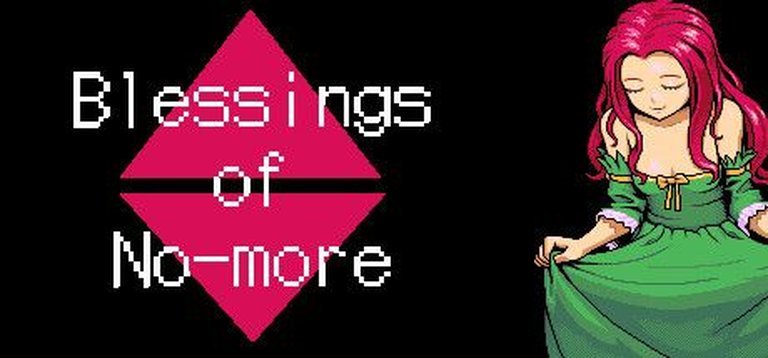
Blessings of No-more is a fantasy-themed turn-based RPG with roguelike mechanics, set in a 3D environment blending anime/manga aesthetics and PC-98-inspired art. Players awaken in darkness, guided by a mysterious girl who promises resurrection in exchange for completing a perilous task. By collecting blessings, customizing builds through stat allocation, and mastering three distinct magic trees, players must overcome procedurally generated worlds and strategic, retro-inspired combat. Each death fuels progression, offering atlas points and achievements to strengthen subsequent runs, while modern twists like summons and skill unlocks refresh the classic JRPG-style battles.
Gameplay Videos
Where to Buy Blessings of No-more
PC
Blessings of No-more Patches & Updates
Blessings of No-more: A Fractured Ode to Retro Roguelikes
Introduction
In the saturated landscape of indie roguelikes, Blessings of No-more (2021) arrives as a bewildering paradox: a 3D tribute to Japan’s cult PC-98 RPGs, wrapped in Unreal Engine 4, and sold for less than a dollar. Developed by the obscure JJBenefield Games, this turn-based oddity promises a blend of “modern rogue-like mechanics” and “old-school JRPG combat,” demanding players embrace death as a means to conquer fantastical realms. Yet beneath its audacious pitch lies a game of contradictions—straddling ambition and austerity, innovation and imitation. Is it a hidden gem for retro enthusiasts, or a footnote in Steam’s bargain bin? This review excavates its troubled legacy.
Development History & Context
A Solitary Vision in a Crowded Arena
As a one-person studio (per MobyGames credits), JJBenefield Games ventured into a market dominated by polished roguelike titans like Hades and Dead Cells. Released in March 2021, Blessings of No-more defied genre conventions by fusing Rogue Legacy’s permadeath progression with Shin Megami Tensei’s grim atmosphere. Its use of Unreal Engine 4 for a turn-based dungeon crawler was an unorthodox choice, signaling ambitions beyond typical pixel-art indies. Yet with a $0.99 price tag (per Steam listings), the game positioned itself as a budget experiment rather than a blockbuster contender.
Technological Constraints and Stylistic Borrowing
The PC-98 aesthetic—a nod to 1990s Japanese computer RPGs—contrasts sharply with its 3D environments. Steam screenshots reveal blocky, low-poly models drenched in moody lighting, evoking King’s Field by way of early PS1 horror. This juxtaposition suggests a studio wrestling with scope: while Unreal Engine 4 enabled atmospheric dungeon design, limited resources likely hindered polish. User tags like “Old School” and “3D Platformer” (per Steambase) hint at a disjointed identity, torn between retro homage and modern accessibility.
Narrative & Thematic Deep Dive
A Skeletal Tale of Resurrection
The premise is stark: you awaken in darkness, greeted by a spectral girl named Annie who offers resurrection in exchange for traversing hostile worlds. Dialogue is minimal, with characters reduced to functional archetypes (e.g., merchants, summon spirits). Narrative weight rests solely on environmental storytelling: crumbling ruins and abstract voids imply a universe ravaged by entropy.
Themes of Cyclical Tragedy
Death isn’t just a mechanic—it’s the core theme. Each failed run (and subsequent rebirth) mirrors the game’s fixation on Sisyphean perseverance. Quotes like “Every death is meaningful” (Steam description) frame failure as growth, echoing Dark Souls’ ethos. Yet unlike FromSoftware’s layered lore, Blessings of No-more buries its mythology, leaving players to infer apocalyptic stakes from fragmented item descriptions and bleak landscapes. The result is atmospheric but emotionally hollow—a void where narrative depth should reside.
Gameplay Mechanics & Systems
The Blessing Curse: Customization vs. Grind
At its best, Blessings of No-more excels in build diversity. Three magic trees (offense, support, summoning) and stat allocation allow for deep customization. “Blessings”—equippable buffs granting perks like “+20% Critical Chance” or “Summon Duration +5s”—encourage experimentation. Crafting and purchasing these via “Atlas points” (earned per death) provides tangible progression, softening roguelike frustration.
Combat: A Clash of Eras
Turn-based battles fuse Dragon Quest’s simplicity with roguelike unpredictability. Players use skills, spells, and summons (discovered via exploration) to outmaneuver foes. However, the “PC-98 style” combat—reliant on menu-heavy inputs and random encounters—clashes with modern quality-of-life expectations. Steam reviewers cite sluggish pacing and unbalanced difficulty spikes, particularly in later zones where enemy damage scaling outpaces Blessing upgrades.
UI and Technical Woes
The minimalist UI—barebones menus, sparse tooltips—prioritizes retro authenticity over usability. First-person navigation (per MobyGames) feels clunky in 3D spaces, while the absence of a map exacerbates dungeon tedium. Persistent glitches, like stat buffs failing to activate (noted in Jan 2026 Steambase reviews), further undermine trust in systems.
World-Building, Art & Sound
Aesthetic Dissonance and Atmosphere
Blessings’ greatest strength is its haunting ambiance. Shadow-drenched corridors and luminescent particle effects evoke Silent Hill’s oppressive dread, while character designs—angular, doll-like models—recall PS1-era Parasite Eve. The PC-98 influence surfaces in pixellated spell effects and synth-heavy tracks, creating a surreal blend of eras. Yet this aesthetic unity fractures in hub areas, where low-resolution textures and empty spaces betray budgetary limits.
Sound Design: Ambition Over Execution
Sparse voice acting (limited to Annie’s eerie whispers) and dissonant piano melodies amplify the game’s existential gloom. Combat sounds—crunchy spell impacts, guttural enemy rasps—are satisfying but repetitive. Regrettably, the score’s potential is diluted by abrupt looping and uneven mixing, epitomizing the title’s “rough diamond” quality.
Reception & Legacy
A Whisper in the Indie Sphere
Upon release, Blessings of No-more garnered scant attention. With only 6 Steam reviews by 2026 (split 50/50 between positive and negative) and no critic coverage (per Metacritic/OpenCritic), it languished as a curio. Positive notes praised its “addictive progression” and “unique art,” while detractors cited “unfinished systems” and “lack of direction.” The MobyScore remains unrated due to insufficient data—a testament to its obscurity.
Influence and Cultural Footprint
While not a commercial success, the game’s fusion of 3D roguelikes and JRPG tropes may inspire niche developers. Its permadeath-as-narrative device predates 2025’s acclaimed Clair Obscur: Expedition 33, suggesting thematic foresight. Yet without updates or community engagement post-launch (its last patch dropped March 2021), Blessings remains frozen in time—a relic of unrealized potential.
Conclusion
Blessings of No-more is a fascinating failure: a game so committed to its retro-modern vision that it forgets to polish the basics. Its innovative blend of JRPG depth and roguelike repetition shines in bursts—particularly in build-crafting and atmosphere—but is marred by clunky controls, narrative minimalism, and technical jank. For $0.99, it offers fleeting value to masochistic nostalgists, yet falls short of transcending its indie roots.
Final Verdict: A flawed but earnest experiment, destined for cult status among PC-98 devotees. It earns 2.5/5 stars—a testament to ambition outpacing execution. While not essential, it deserves recognition as a bold, if fractured, ode to gaming’s forgotten eras.
—A melancholy footnote in the annals of roguelike history.