
- Release Year: 2022
- Platforms: Nintendo Switch, PlayStation 4, PlayStation 5, Windows, Xbox One, Xbox Series
- Publisher: 101XP Ltd.
- Developer: Troglobytes Games, S.L.
- Genre: Action
- Perspective: Side view
- Game Mode: Single-player
- Gameplay: Hack and Slash
- Setting: Futuristic), Futuristic, Japan (Modern, Sci-fi
- Average Score: 56/100
Description
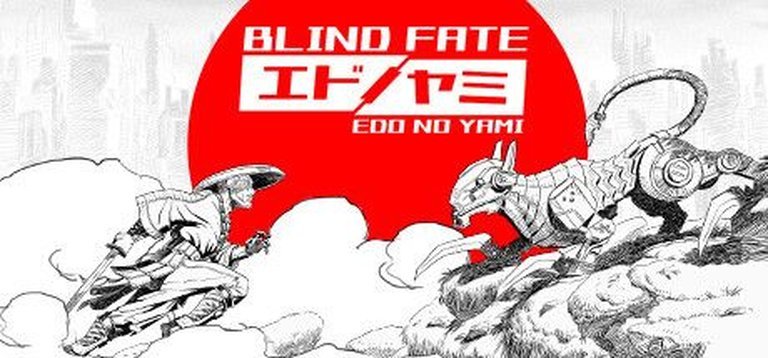
Blind Fate: Edo no Yami is a 2D side-scrolling hack-and-slash action game set in a futuristic, sci-fi reinterpretation of Edo-period Japan. Players navigate a visually striking world blending traditional Japanese aesthetics with cyberpunk elements, engaging in fast-paced combat and tactical duels. The game features a mature narrative with deep thematic exploration, though its combat mechanics and repetitive actions have drawn mixed reviews.
Gameplay Videos
Where to Buy Blind Fate: Edo no Yami
Blind Fate: Edo no Yami Free Download
Blind Fate: Edo no Yami Mods
Blind Fate: Edo no Yami Guides & Walkthroughs
Blind Fate: Edo no Yami Reviews & Reception
metacritic.com (54/100): Blind Fate: Edo no Yami has unique gameplay elements with a great story and voice acting but is incredibly difficult due to hit-detection issues and repetitive actions during your playthrough.
littlebitsofgaming.com : Seriously, how Troglobytes Games have implemented the idea of blindness is pretty damn unique.
xboxera.com (50/100): Blind Fate shows potential for this rather new dev team. They nailed multiple parts of what it takes to be great, with the writing being solid and the voice acting being fantastic. It looks good but feels terrible to play, only getting to almost decent after many hours.
thexboxhub.com (60/100): Combat is slow and clunky, not to mention repetitive and tedious. It’s a series of attack, attack, then dodge or block, before attacking again.
opencritic.com (63/100): Blind Fate: Edo no Yami is a good game that’s held back by a lack of polish.
Blind Fate: Edo no Yami: A Cyber-Samurai Odyssey of Unfulfilled Potential
Introduction
Blind Fate: Edo no Yami is a game that dares to ask a profound question: What does it mean to “see” in a world where sight is taken from you? Developed by Troglobytes Games and published by 101XP, this cyber-samurai hack-and-slash adventure thrusts players into a dystopian Edo period where machines rule and humanity clings to survival. At its core, Blind Fate is a game about perception—both literal and metaphorical—as players navigate a world through the senses of a blind protagonist, Yami, whose cybernetic enhancements allow him to “see” via sound, heat, and smell. Yet, for all its ambitious themes and innovative mechanics, Blind Fate stumbles in execution, leaving players with a game that is as frustrating as it is fascinating.
This review will dissect Blind Fate: Edo no Yami in exhaustive detail, exploring its development history, narrative depth, gameplay mechanics, artistic direction, and its place in the broader gaming landscape. Through this analysis, we will uncover whether Blind Fate is a bold experiment worth experiencing or a missed opportunity in the crowded indie space.
Development History & Context
The Studio Behind the Mask
Troglobytes Games, a Spanish indie studio, is no stranger to ambitious projects. Their previous title, HyperParasite (2020), was a chaotic, roguelike shooter that garnered praise for its unique premise and fast-paced gameplay. With Blind Fate: Edo no Yami, the studio sought to pivot toward a more narrative-driven, atmospheric experience, blending the precision of a hack-and-slash game with the depth of a cyberpunk dystopia.
The game was developed using Unreal Engine 4, a choice that allowed the team to craft a visually striking 2.5D world with detailed environments and fluid animations. However, the engine’s capabilities were not fully leveraged to address some of the game’s most glaring technical issues, such as input lag and hitbox inconsistencies.
The Vision: A Blind Samurai in a Cyberpunk Edo
The concept of Blind Fate is undeniably compelling. The game’s official description paints a vivid picture:
“It’s a new, dark and machine-filled Edo period, and the Shogunate rules over Japan with its just, but pitiless hand: you. You follow orders. You obey. You kill. Until your sight is taken from you, and you must learn to ‘feel’ the world anew.”
This premise is a fusion of feudal Japan and cyberpunk dystopia, a setting that has drawn comparisons to Ghost of Tsushima and Sekiro: Shadows Die Twice, albeit with a sci-fi twist. The developers aimed to create a game where the protagonist’s blindness was not a handicap but a unique gameplay mechanic, forcing players to rely on alternative senses to navigate and combat.
The Gaming Landscape at Launch
Blind Fate released on September 15, 2022, into a gaming ecosystem already saturated with cyberpunk and souls-like titles. Cyberpunk 2077 had recently undergone a resurgence with its Edgerunners update, and indie darlings like Citizen Sleeper and Akane were also vying for attention in the cyberpunk space. Meanwhile, the souls-like genre had become a staple of indie development, with games like Blasphemous and Death’s Gambit setting high standards for difficulty and precision.
In this context, Blind Fate had to carve out its own niche. Its blend of cyberpunk aesthetics, feudal Japanese lore, and a blind protagonist was unique, but the execution would determine whether it could stand out.
Narrative & Thematic Deep Dive
The Plot: A Tale of Vengeance and Perception
Blind Fate: Edo no Yami follows Yami, a cybernetically enhanced samurai who has lost his sight and limbs in a brutal attack. Rescued by a Tengu spirit, Yami is outfitted with prosthetic limbs and a mask that enhances his remaining senses—hearing, smell, and heat detection. The game’s narrative unfolds in a fragmented manner, jumping between Yami’s past and present as he seeks vengeance against the machines that destroyed his life.
The story is steeped in Japanese mythology, with robotic versions of yokai (supernatural creatures) serving as both enemies and bosses. The game’s lore is delivered through environmental storytelling, dialogue, and “data fragments” that Yami collects throughout his journey. These fragments provide insights into the world’s history, the rise of the machines, and Yami’s personal tragedy.
Themes: Blindness, Identity, and the Cost of Progress
At its heart, Blind Fate is a meditation on perception and identity. Yami’s blindness is not just a gameplay mechanic but a narrative device that forces players to question how they interact with the world. The game’s cyberpunk setting further explores themes of transhumanism and the cost of progress, as Yami’s cybernetic enhancements both empower and alienate him.
The game also delves into the nature of obedience and rebellion. Yami begins as a loyal servant of the Shogunate, blindly following orders (both literally and metaphorically). As the story progresses, he grapples with the morality of his actions and the true nature of the regime he serves.
Characters: Yami and the World Around Him
-
Yami: The protagonist is a complex figure, torn between his duty as a samurai and his desire for vengeance. His blindness is a constant reminder of his vulnerability, yet his cybernetic enhancements make him a formidable warrior. The voice acting (available in both Japanese and English) brings depth to his character, though the writing occasionally veers into melodrama.
-
Tengu: Yami’s AI guide serves as both a mentor and a source of comic relief. Tengu’s dialogue is often humorous, providing a counterbalance to the game’s darker themes. However, the character’s role is largely confined to tutorial segments, and his presence diminishes as the game progresses.
-
Izanami: A mysterious figure tied to Yami’s past, Izanami’s role is shrouded in ambiguity until the game’s climax. Her voice acting (performed by Catherine Am Burton Goings) is a standout, adding layers of intrigue to the narrative.
Dialogue and Writing
The game’s dialogue is a mixed bag. While the voice acting is generally strong, the writing occasionally suffers from stilted translations and overly expositional dialogue. The game’s fragmented storytelling can also be confusing, as key plot points are often buried in optional lore fragments rather than delivered through the main narrative.
Gameplay Mechanics & Systems
Core Gameplay Loop: Hack, Slash, and Sense
Blind Fate is, at its core, a side-scrolling hack-and-slash game with souls-like difficulty. Players navigate through linear levels, battling waves of enemies and bosses while managing Yami’s cybernetic abilities. The game’s most innovative mechanic is its sensor system, which allows players to switch between three modes of perception:
- Sound Sensor: Highlights enemies based on the noise they make. Essential for detecting hidden foes and traps.
- Heat Sensor: Reveals enemies and environmental hazards based on thermal signatures. Useful for spotting ranged attackers.
- Smell Sensor: Detects bloodstains and other organic traces. Primarily used in specific boss fights and puzzle segments.
The sensor system is a brilliant concept, forcing players to adapt their playstyle based on the situation. However, the execution is flawed. Switching between sensors mid-combat can feel clunky, and the game often fails to clearly communicate when a specific sensor is required. Additionally, the sound sensor is overused, as it is the most reliable way to track enemies, rendering the other sensors largely unnecessary outside of scripted sequences.
Combat: Precision and Frustration
Combat in Blind Fate is a double-edged sword. On one hand, the game’s parry-and-dodge mechanics are satisfying when executed correctly. Landing a perfectly timed parry or dodge feels rewarding, especially when followed by a devastating finisher. The game also features a combo system that encourages players to chain attacks and switch sensors mid-combo to exploit enemy weaknesses.
On the other hand, the combat is plagued by technical issues that undermine its potential:
- Hitbox Inconsistencies: Attacks often fail to connect despite appearing to land, leading to frustrating deaths.
- Input Lag: There is a noticeable delay between pressing a button and Yami’s response, making precise combat difficult.
- Energy System: Yami’s abilities (blocking, dodging, attacking) are tied to an energy meter that depletes quickly, forcing players into a tedious cycle of attack-and-recover.
The game’s difficulty curve is also poorly balanced. Early sections are brutally punishing, with enemies dealing massive damage and checkpoints spaced too far apart. Later sections become more manageable as players unlock new abilities, but the initial frustration may drive many players away before they reach this point.
Character Progression: A Slow Burn
Yami’s abilities are unlocked via a skill tree, which is tied to an XP system. Defeating enemies and bosses grants XP, which can be spent on upgrades such as:
- Double Jump: Essential for platforming segments.
- Enhanced Sensors: Improves the range and effectiveness of Yami’s perception modes.
- Combat Upgrades: Unlocks new attacks and finisher moves.
However, the progression system is painfully slow. Players may spend hours grinding through repetitive combat before unlocking meaningful upgrades. This design choice exacerbates the game’s early difficulty, as players are forced to struggle with limited abilities for an extended period.
Boss Fights: Epic in Scale, Tedious in Execution
Blind Fate features five major boss fights, each tied to a robotic yokai from Japanese folklore. These encounters are visually impressive, with detailed animations and dynamic camera angles. However, the boss fights suffer from the same issues as the regular combat:
- Overly Long Health Bars: Bosses take an inordinate amount of time to defeat, leading to tedious, drawn-out battles.
- Repetitive Patterns: Once a boss’s attack pattern is memorized, the fight devolves into a monotonous cycle of dodge-and-attack.
- Unfair Mechanics: Some bosses introduce mechanics that are poorly telegraphed, leading to cheap deaths.
The Kirin boss fight is a particularly egregious example. Players reported that a bug prevented the game from signaling key mechanics, making the fight nearly impossible until a patch was released.
Platforming and Exploration: A Missed Opportunity
Blind Fate incorporates light platforming elements, with Yami navigating through environments using his double jump and wall-climbing abilities. However, these segments are underdeveloped and clunky, with imprecise controls making even simple jumps a chore.
The game also features Metroidvania-like exploration, with certain areas locked behind ability upgrades. While this adds a layer of depth, the execution is lackluster. The game’s linear level design and repetitive enemy encounters make backtracking feel like a slog rather than a rewarding experience.
UI and Accessibility
The game’s user interface is functional but unremarkable. The sensor system is displayed via an overlay that can be toggled, but the visual clutter can make it difficult to track enemies during chaotic combat. The game also lacks customizable controls, a glaring omission given the precision required for combat.
Accessibility options are minimal, with no options for adjustable difficulty or control remapping. This is a significant oversight, especially given the game’s punishing difficulty.
World-Building, Art & Sound
Setting: A Cyberpunk Edo Period
Blind Fate takes place in New Edo, a dystopian fusion of feudal Japan and cyberpunk aesthetics. The world is ruled by a tyrannical Shogunate, with machines enforcing its will. The game’s environments are a mix of neon-lit cities, foggy docks, and ancient forests, each rendered in a striking 2.5D art style.
The game’s visual direction is one of its strongest aspects. The cyberpunk elements are seamlessly integrated with traditional Japanese architecture, creating a unique and immersive world. The character designs are equally impressive, with Yami’s cybernetic enhancements and the robotic yokai bosses standing out as highlights.
Atmosphere and Immersion
The game’s atmosphere is thick with tension and melancholy. The dystopian setting is reinforced by environmental details, such as corrupted data streams and abandoned ruins, which hint at a world on the brink of collapse. The game’s use of light and shadow is particularly effective, with Yami’s blindness adding an extra layer of unease.
However, the game’s linear level design limits exploration, preventing players from fully immersing themselves in the world. The lack of interactive elements (e.g., NPCs, side quests) further detracts from the sense of immersion.
Sound Design: A Symphony of Sensory Deprivation
The game’s sound design is a standout feature, playing a crucial role in both gameplay and atmosphere. The sound sensor relies on audio cues to detect enemies, making the game’s sound effects essential for survival. The voice acting is excellent, with the Japanese cast delivering particularly strong performances.
The musical score is a blend of traditional Japanese instruments and electronic beats, perfectly complementing the game’s cyberpunk setting. While the music is not particularly memorable, it effectively sets the tone for each environment.
Reception & Legacy
Critical Reception: A Divided Response
Blind Fate: Edo no Yami received mixed reviews upon release, with critics praising its ambition and atmosphere while criticizing its clunky gameplay and technical issues. The game holds a Metascore of 54 on Metacritic, based on nine critic reviews, and a user score of 5.8, indicating a divided reception.
Positive Aspects Highlighted by Critics:
– Innovative Sensor System: Critics appreciated the game’s unique approach to blindness as a gameplay mechanic.
– Strong Art Direction: The cyberpunk-Edo fusion was widely praised for its visual appeal.
– Voice Acting and Story: The game’s narrative and voice performances were noted as standout features.
Negative Aspects Highlighted by Critics:
– Clunky Combat: The hitbox issues, input lag, and energy system were universally criticized.
– Repetitive Gameplay: The lack of variety in combat and level design led to tedium.
– Technical Issues: Bugs, such as the Kirin boss fight glitch, marred the experience for many players.
Commercial Performance and Player Feedback
The game’s commercial performance was modest, with limited marketing and a crowded release window contributing to its niche appeal. On Steam, the game has a mixed rating, with 64% of user reviews being positive. Player feedback echoes the critical consensus, with many praising the game’s concept and atmosphere while lamenting its flawed execution.
Post-Launch Support and Patches
Troglobytes Games released a 1.0.2 patch shortly after launch, addressing some of the most egregious issues, such as the Kirin boss fight bug. However, the patch did not fully resolve the game’s core problems, such as input lag and hitbox inconsistencies. The studio’s lack of further updates suggests that Blind Fate has been abandoned, leaving players with an unfinished experience.
Influence and Legacy
Blind Fate: Edo no Yami is unlikely to be remembered as a landmark title, but its ambitious premise and unique mechanics may inspire future indie developers. The game’s sensor system is a standout innovation, demonstrating how disability can be integrated into gameplay in a meaningful way. However, its flawed execution serves as a cautionary tale about the importance of polish and player feedback in game development.
Conclusion: A Game of Brilliant Ideas and Flawed Execution
Blind Fate: Edo no Yami is a game of contradictions. It is visually stunning yet technically flawed, narratively rich yet poorly paced, and innovative in concept yet clunky in execution. The game’s greatest strength—its sensor system—is also its greatest weakness, as the mechanics that make Yami’s blindness compelling are undermined by inconsistent hitboxes and input lag.
For players willing to overlook its flaws, Blind Fate offers a unique and atmospheric experience, with a cyberpunk-Edo setting that is as beautiful as it is haunting. The game’s story and voice acting are strong, and its visual design is a testament to the talent of its developers. However, the frustrating combat and repetitive gameplay make it difficult to recommend to all but the most patient and forgiving players.
Final Verdict: 6.5/10 – A Flawed Gem Worth Exploring for the Adventurous
Blind Fate: Edo no Yami is not a great game, but it is an interesting one. It is a testament to the ambition of indie developers and a reminder of the challenges they face in bringing their visions to life. For those who can endure its rough edges, there is a rewarding experience to be found—one that lingers in the mind long after the credits roll. But for most players, Blind Fate will remain a missed opportunity, a game that could have been so much more.
Recommendation:
– For Fans of: Cyberpunk settings, souls-like difficulty, innovative gameplay mechanics.
– Avoid If: You prefer polished combat, accessible difficulty, or seamless gameplay experiences.
In the end, Blind Fate: Edo no Yami is a game that dares to be different, even if it stumbles along the way. And in an industry often dominated by safe, formulaic titles, that ambition alone is worth acknowledging.