
- Release Year: 2022
- Platforms: Windows
- Publisher: Kaleido, Inc.
- Developer: Kaleido, Inc.
- Genre: Action
- Perspective: 1st-person
- Game Mode: Single-player
- Gameplay: Platform
- Setting: Fantasy, Post-apocalyptic
- Average Score: 50/100
Description
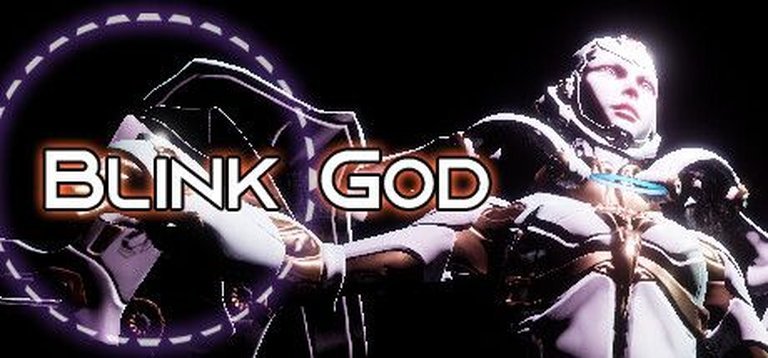
In the post-apocalyptic fantasy world of Blink God, shattered by the Great Clash into multiple realms once managed by gods who have abandoned humanity, players embody a Contender on a perilous mission to ascend to the divine throne in this first-person action-platformer featuring direct and motion controls.
Where to Buy Blink God
PC
Blink God Reviews & Reception
steambase.io (50/100): Player Score of 50 / 100 from 2 reviews (1 positive, 1 negative).
Blink God: Review
Introduction
Imagine hurtling through a shattered, godforsaken world via a self-rewinding teleportation orb—a mechanic that feels like digital bungee jumping fused with precision VR wizardry. Blink God, the 2022 Early Access debut from indie studio Kaleido, Inc., (full release in 2023), promised this vertigo-inducing thrill in a post-apocalyptic fantasy realm. As a VR-exclusive 3D platformer, it arrived amid a wave of experimental VR titles leveraging Unreal Engine 4’s capabilities, but its obscurity endures: scant reviews, a middling Steam score, and no major critical footprint. Yet, its core hook—the “Blink” power—carves a niche in VR locomotion innovation. This review argues that Blink God is a bold, flawed artifact of indie VR ambition: mechanically ingenious for precision platforming purists, but hampered by sparse content, uneven polish, and a reception that mirrors its abandoned-world theme.
Development History & Context
Kaleido, Inc., a small Korean-based indie outfit (evident from multilingual support in English, Japanese, and Korean), self-published Blink God on Steam starting June 1, 2022, as an Early Access title priced at $13.99. The studio’s vision crystallized around a “Contender’s” ascent to godhood in a fractured world, emphasizing a unique teleportation mechanic amid traps and precarious platforms. Development logs from Steam forums reveal a meticulous, iterative process: weekly/bi-weekly updates from June 2022 through April 2023, addressing everything from physics tweaks to VR compatibility (e.g., Valve Index support added in December 2022).
Technological constraints defined the era—Unreal Engine 4 and PhysX powered the physics-driven platforming, ideal for VR’s motion controls and direct input. Early Access bridged a year-long evolution: initial sphere-throwing “Blink” (where the orb returns to its origin after a delay) morphed into a refined system by full release (June 21, 2023), involving directional shifts via Shift key and “Blink Shot” teleports. Dev diaries detail fixes like wall-stuck escapes, achievement syncing, and difficulty balances (e.g., nerfing leaf sections and wooden bridges).
The 2022 gaming landscape was VR’s awkward adolescence: post-Half-Life: Alyx hype but pre-mainstream adoption, with platformers like Neon White (non-VR) inspiring speedrun precision elsewhere. Indie VR titles grappled with motion sickness and niche audiences; Blink God‘s “bungee jumping” tagline nodded to locomotion experiments amid giants like Beat Saber. Kaleido’s transparent roadmap—restructuring realms, adding tutorials, and sound overhauls—exemplified solo-dev grit, culminating in a “full release” after community feedback, though sales and visibility remained modest.
Narrative & Thematic Deep Dive
Blink God‘s story is minimalist, befitting a platformer where ascent trumps exposition. Set after the “Great Clash,” a cataclysm that splintered the world into god-ruled realms now forsaken by divine overseers, players embody a nameless “Contender” vying for vacant thrones. Reaching a throne crowns you the new deity—a cyclical theme of abandonment and usurpation echoing mythological pantheon upheavals, from Greek titans to Norse Ragnarök.
The lore unfolds via environmental storytelling: crumbling ruins, ethereal traps, and hidden medals symbolizing lost divine favor. Subtle narrative beats emerge in updates, like the December 2022 addition of “Muriel Interaction Functions” (a drone/menu companion with conversation logs), hinting at a guiding AI or fallen entity. Dialogue is sparse—tutorial prompts and lobby directions—but thematically potent: humanity’s betrayal by gods mirrors VR’s isolation, the player’s hand-thrown orbs a metaphor for grasping power in a void.
Deeper themes probe hubris and impermanence. Leveling via medal destruction grants “benefits” (unspecified in sources but implied progression perks), underscoring ascension’s cost. Undo/Return mechanics philosophically allow “rewinds,” subverting platformer permadeath tropes and questioning fate in a godless multiverse. Post-apocalyptic fantasy blends desolation with hope—brightened lobbies post-rework contrast dark realms—yet the narrative’s shallowness limits emotional investment, prioritizing mechanical parable over character arcs. No protagonists beyond the silent Contender; gods are absent specters, amplifying existential dread laced with user-tagged “psychological horror.”
Gameplay Mechanics & Systems
At its core, Blink God is a first-person VR precision platformer, where locomotion hinges on “Blink”: throw a glowing sphere from your right hand (motion-tracked), adjust direction with Shift, then fire a “Blink Shot” to snap to its position. This evolved from a delayed-return mechanic, now evoking grapple-hook fluidity with teleport snap—ideal for vertigo fans, risky for motion-sensitive players. Core loop: navigate realms’ traps/footholds, collect medals for XP/level-ups (buffs like enhanced mobility?), checkpoint via real-time saves.
Combat & Platforming
No traditional combat; “destroy” medals via Blink Shots, turning traversal into rhythmic destruction. Platforming demands pixel-perfect timing: leap across voids, dodge gimmicks (leaves, bridges, physics puzzles), with PhysX enabling dynamic interactions. Updates restructured Realm 1 and added Realm 2 (2+ hour avg. playtime), escalating complexity—early wooden areas softened, later ones punishing. Undo/Return shines: rewind misblinks instantly, mitigating VR frustration without cheapening skill.
Progression & UI
Medal-hunting drives roguelite-lite progression; levels yield “various benefits,” fostering replay for optimization. VR UI integrates “cube menu” (multi-function post-update) and Muriel drone for logs/menus. Direct/motion controls excel in immersion—hand-thrown orbs feel tactile—but flaws persist: early physics glitches (fixed), high early difficulty spikes. Lobby/tutorial revamps (bright, realm-directed) ease onboarding, with autosaves ensuring persistence.
Innovations abound: Blink’s directional tweak adds vector mastery, akin to Superhot VR‘s time-bending but spatial. Flaws? Limited realms (two confirmed) cap depth; user tags like “Difficult” and “Precision Platformer” warn of steep curves. Achievements and VR tracking enhance mastery, but sparse content (no endless mode noted) limits longevity.
World-Building, Art & Sound
The post-apocalyptic fantasy setting evokes a vertical Dark Souls—shattered realms stack like divine ziggurats, overgrown ruins blending organic decay (leaf mazes) with crystalline traps. Visuals leverage UE4’s fidelity: ethereal spheres glow against muted palettes, post-rework lobbies burst into “bright and spacious” hubs with realm portals. Atmosphere builds dread via scale—towering thrones taunt from afar—user tags (“Horror,” “Psychological Horror,” “Time Travel” vibes?) implying uncanny voids.
Art direction prioritizes clarity for precision jumps: clean geometry, PhysX-rigged debris. No screenshots detailed, but Kotaku’s gallery implies stylized anime influences (tags confirm).
Sound design, fully reworked for release, swaps harshness for “pleasant and comfortable” cues—satisfying orb whooshes, ambient echoes amplifying isolation. Music underscores ascent: tense builds for traps, triumphant swells near thrones. These elements forge immersion: Blink’s haptic feedback (implied via motion) pairs with audio cues for spatial awareness, heightening “bungee” thrills. VR’s intimacy elevates the forsaken world, though limited biomes risk repetition.
Reception & Legacy
Launch reception was muted: Steam’s 50/100 player score (from 2 reviews: 1 positive, 1 negative) reflects niche appeal—praised for Blink ingenuity, critiqued for bugs/polish (pre-updates). No MobyGames or Metacritic critic scores; OpenCritic absence underscores obscurity. MobyGames entry (Jan 2024) lacks reviews, mirroring low visibility despite Steam features (Cloud, Achievements, Family Sharing).
Commercial underperformance (no sales data, but $13.99 niche VR) stems from Early Access stigma and VR market saturation. Dev responsiveness built cult goodwill—monthly plans fixed issues—but post-2023 silence suggests dormancy. Influence? Marginal: echoes in VR platformers (Neon White speedrun DNA, grapple-likes), but no direct successors. Legacy as VR historian’s footnote: exemplifies indie iteration (EA-to-full evolution), Blink mechanic a precursor to physics-teleport hybrids. Tagged “Futuristic/Anime/Horror,” it lingers in precision niches, awaiting VR revival.
Conclusion
Blink God ascends as a testament to indie VR daring: Blink’s teleportation redefines platforming vertigo, realms craft haunting verticality, and dev tenacity polishes a gem from rough stone. Yet, sparse narrative, limited content (two realms), and frosty reception (50% Steam) tether its throne-claim. In video game history, it claims a modest pedestal—essential for VR motion masochists, skippable for masses. Verdict: 7/10—a cult precision platformer worth blinking toward, but not yet godly. Play if bungee-jumping pixels call; history remembers the climbers who fall short.