
- Release Year: 2023
- Platforms: PlayStation 5, Quest, Windows
- Publisher: Changingday
- Developer: Changingday
- Genre: Adventure
- Perspective: 1st-person
- Game Mode: Single-player
- Gameplay: Graphic adventure, Puzzle elements
- Setting: Futuristic, Sci-fi
- Average Score: 60/100
- VR Support: Yes
Description
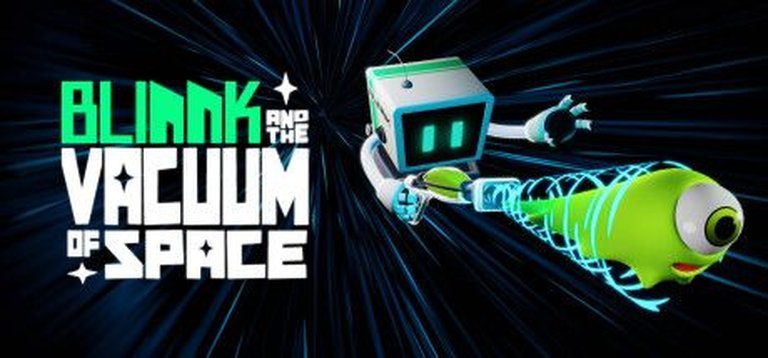
Blinnk and the Vacuum of Space is an innovative VR adventure game set on the futuristic Space Station Norpopolis, designed specifically for autistic players by autistic creators. Players join the lovable robot companion Blinnk, wielding the Vacuumiser 5000 to wrangle mischievous alien Groobs in undercover scenarios like dental cleanings, park fishing, luggage checks, and robot repairs, all within stress-free levels featuring customizable accessibility options and a chill-out zone.
Gameplay Videos
Where to Buy Blinnk and the Vacuum of Space
PC
Blinnk and the Vacuum of Space Reviews & Reception
metacritic.com (60/100): Although it’s very laidback and simple, BLINNK and the Vacuum of Space might be a good game for younguns who prefer things slow.
psfanatic.com : a very fun, relaxed and enjoyable game to play.
Blinnk and the Vacuum of Space: Review
Introduction
In the vast, starry expanse of virtual reality gaming, where high-octane shooters and mind-bending simulations often dominate, Blinnk and the Vacuum of Space emerges as a quiet revolution—a gentle, floating robot companion beckoning players into a world built not for adrenaline rushes, but for unhurried joy and profound inclusivity. Released in January 2023 on SteamVR and expanding to Meta Quest, PlayStation VR2, Pico, and Viveport, this debut title from Scotland’s Changingday studio has carved a niche as the first VR game explicitly “made for autistic people with autistic people.” Its legacy, though young, lies in pioneering accessibility as a core design philosophy rather than an afterthought, challenging the industry’s fast-paced norms. This review argues that Blinnk isn’t just a charming sci-fi adventure; it’s a landmark in VR history, proving that simplicity, empathy, and thoughtful mechanics can create experiences that empower neurodiverse players while delighting everyone else.
Development History & Context
Changingday, a small indie studio based in Glasgow, Scotland, was founded by CEO Alison Lang and Creative Director Nick Lang, parents to an autistic daughter whose experiences profoundly shaped the project. Their six-year journey began as a quest to harness VR’s immersive potential for confidence-building in real-life scenarios, evolving into Blinnk after extensive research into autistic gamers’ preferences. As a debut title, it drew on a compact team: Project Director Robbie Cargill and Nick Lang as directors, Lead Designer Markus Wilson, Narrative Lead Alex Shedlock, developers Alejandro Fernandez and Sean Borg, 3D artists Sean Mckinlay and Danny Greenan, and sound designers Rachel Simpson and Ismael Ortiz.
Launched amid VR’s post-pandemic resurgence—following hits like Job Simulator (2016) and amid platforms like PSVR2’s 2023 debut—Blinnk navigated technological constraints of standalone headsets (Quest App Lab) and PCVR (SteamVR). The era’s gaming landscape emphasized accessibility amid growing awareness of neurodiversity, but few titles targeted autism specifically; VR’s appeal to autistic players (noted in studies for reducing real-world sensory deficits) made it ideal. Budget-conscious (priced at $9.99-$24.99), Changingday prioritized motion controls and Unity engine simplicity over graphical extravagance, focusing on “stress-free interactions.” BBC Click features and interviews (e.g., Screen Rant, The Mirror) highlighted its altruistic vision, positioning it against overwhelming blockbusters in a market craving inclusive alternatives.
Narrative & Thematic Deep Dive
Blinnk and the Vacuum of Space unfolds as a comedic sci-fi tale aboard Norpopolis, a bustling space station teeming with quirky aliens and robots. The plot kicks off with player-character (Blinnk’s assistant) aiding the titular robot inventor, voiced by Mike Delamorte, in crafting “the world’s greatest sandwich” for tyrannical boss Mr. Norp (Todd Kozinka). Disaster strikes: Blinnk accidentally unleashes “Groobs”—mischievous, blob-like aliens essential to the recipe—scattering them across the station. Armed with the Vacuumiser 5000 (a versatile hoover tool), players go undercover in everyday jobs to recapture them undetected, restoring harmony before Mr. Norp’s wrath descends.
Characters shine through stellar voice acting and distinct personalities. Blinnk is a lovable, bumbling guide offering hints and comic relief; Nazel (Miriam Katz), the dentist, embodies professional eccentricity; anxious park ranger Flek (Luke deMaine) frets over quotas; bumbling security guard Bub requires player intervention at the spaceport; Wondy (Michelle Blenker), Galaxiom (NC Grey), and Zertine (Natalie Nightingale) add flavor to workshops and atriums. Dialogue, penned by Alex Shedlock, crackles with light-hearted banter—puns on dental hygiene, fishing woes, and robot repairs—infused with positive reinforcement via a “Motivational Cube” that boosts morale post-mishaps.
Thematically, Blinnk delves into empowerment through play. Autism-inspired motifs emphasize control in chaos: no-fail states mirror real-life skill-building without punishment, undercover missions simulate social masking turned triumphant, and Groob-hunting underscores patience. Broader themes of neurodiversity celebrate “being yourself” in VR’s escapist bubble, where sensory overload yields to tailored serenity. Comedy tempers sci-fi tropes—plaque-blasting in alien mouths or fishing ethereal creatures—transforming mundane tasks into absurd, affirming adventures. Subtle narrative arcs, like earning “Norp Bucks” for progression, reinforce growth, culminating in sandwich salvation and station-wide harmony.
Gameplay Mechanics & Systems
At its core, Blinnk loops around stress-free task completion laced with Groob hunts, evoking Job Simulator but sans failure or timers. Players wield the Vacuumiser 5000 via intuitive motion controls: suck up Groobs (and debris), switch tools with a button press, and navigate free-camera 1st-person VR. Four main levels unfold progressively:
- Spaceport: Impersonate Bub, scanning luggage for contraband/Groobs amid conveyor belts and X-rays—satisfying physics-based rummaging.
- Robo Workshop: Diagnose/repair bots by inspecting parts bins, swapping components; physics shine in clunky assembly.
- Nazel’s Dental Practice: Miniaturize into patients’ mouths for plaque power-washing, polishing, and tooth-shooting—hilariously intimate, with seamless tool swaps.
- Atrium Park: Farm veggies, fish for quota (minor wonkiness in rod physics noted), balancing ecology with Groob vacuums.
Progression ties to 100% Groob collection (replayable for achievements/trophies, 16 Steam ones), Norp Bucks for unlocks, and optional collectibles. UI is minimalist: watch-activated “The Fold” chill-out zone (neutral pinks, accessibility tweaks for colors/volumes/haptics/subtitles); no traditional pause, emphasizing immersion. Innovative systems include robust customization—no sudden sounds, muted haptics, scalable text—and positive feedback loops (Motivational Cube). Flaws? Short runtime (2-4 hours), occasional bugs (pre-launch fixes), and simplicity may underwhelm veterans, but for its audience, the no-discouragement ethos perfects the loop.
| Mechanic | Strengths | Potential Flaws |
|---|---|---|
| Vacuumiser Tool | Versatile, physics-fun suction/switching | None major |
| Task Variety | Job-sim twists keep fresh | Repetition in replays |
| Accessibility | Chill zone, sensory sliders | Platform variances (e.g., Quest tracking) |
| Progression | Achievement-driven 100% | Linear, brief campaign |
World-Building, Art & Sound
Norpopolis pulses with lived-in charm: a modular space station blending sterile sci-fi corridors with vibrant hubs—spaceport bustle, verdant atrium farms, gleaming workshops, grotesque dental bays. Art direction favors cartoonish whimsy (rounded aliens, expressive robots) via muted palettes—realistic pastels over blinding neons—fostering calm immersion. 3D models by Mckinlay/Greenan pop without overwhelming; free-camera VR invites exploration, like peering into Groob hiding spots.
Sound design excels in balance: Rachel Simpson/Ismael Ortiz craft soothing ambiences—no jarring spikes—with vacuum whirs, bubbly Groob gurgles, and fishing plops providing tactile feedback. Voice acting elevates: Delamorte’s affable Blinnk, Katz’s authoritative Nazel, deMaine’s neurotic Flek deliver comedic timing rivaling big-budget titles. Customizable audio (mute specifics, volume curves) enhances themes, while The Fold’s serene hums offer respite. Collectively, these forge an atmosphere of cozy chaos—inviting, never intimidating—amplifying VR’s intimacy for emotional resonance.
Reception & Legacy
Launch reception was niche but polarized: MobyGames logs 60% critics (Video Chums’ 3/5: “laidback… good for younguns who prefer slow”), Steam’s 5 user reviews skew positive (needing more for score), Metacritic TBD. PSFanatic awarded 9/10 (“fun, friendly, relaxed”), VR Realm hailed it a “giant step for VR accessibility,” earning Pure Quality Award and Scottish Games nominations. Player anecdotes praise autism-friendly design; commercial sales modest (indie VR pricing), but press (BBC, Mirror) amplified its mission.
Legacy evolves as a blueprint: influencing accessible VR amid rising neurodiversity discourse (e.g., post-Safe in Our World interviews). It spotlights VR’s therapeutic potential—research-backed confidence gains—paving for inclusive titles. Critiques of brevity/simplicity underscore its purposeful restraint, cementing influence on “slow games” and sensory-custom games, potentially shaping platforms like PSVR3.
Conclusion
Blinnk and the Vacuum of Space masterfully blends whimsy, innovation, and empathy into a VR gem that transcends gaming—it’s therapy disguised as play. From Changingday’s heartfelt origins to its no-fail utopia of Groob-wrangling jobs, it redefines success by empowering its core audience while charming broadly. Flaws like brevity pale against pioneering accessibility, superb voicework, and serene sci-fi vibes. In video game history, Blinnk claims a vital spot: not a blockbuster, but a beacon for inclusive design. Verdict: Essential for VR enthusiasts and neurodiverse players alike—9/10. Play it, chill in The Fold, and witness gaming’s kinder future.