
- Release Year: 2022
- Platforms: Windows
- Publisher: Aurora Punks AB, Curve Games Limited, IndieArk
- Developer: Cat Shawl Games
- Genre: Action
- Perspective: Side view
- Game Mode: Online PVP, Single-player
- Setting: Fantasy
- Average Score: 73/100
Description
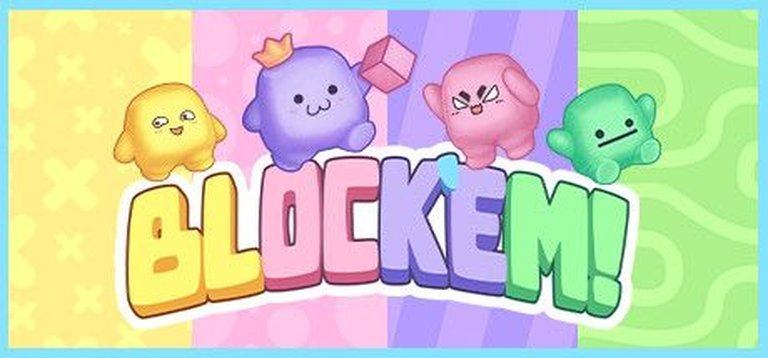
Block’Em! is a fast-paced, action-packed block-building party game designed for 2 to 4 players, blending simple controls with strategic depth. Set in a vibrant, fantasy-inspired world, players compete to either reach the goal first or outlast their opponents as the last ‘Blocky’ standing. With its colorful, 2.5D visuals and support for both local and online multiplayer, the game offers a mix of arcade-style fun and competitive chaos, perfect for casual and intense gaming sessions alike.
Where to Buy Block’Em
PC
Block’Em Guides & Walkthroughs
Block’Em Reviews & Reception
opencritic.com (60/100): Block’Em! is simple to the point gaming fun, which is pick up and play for the whole family.
store.steampowered.com (87/100): Positive (87% of the 39 user reviews for this game are positive).
ladiesgamers.com : Block’Em! is simple to the point gaming fun, which is pick up and play for the whole family.
Block’Em: A Retrospective on a Chaotic, Short-Lived Party Game
Introduction: The Rise and Fall of a Multiplayer Experiment
Block’Em is a game that, in many ways, embodies the volatile nature of modern indie development—a title born from passion, marred by controversy, and ultimately resurrected through sheer resilience. Released on September 8, 2022, by Swedish studio Cat Shawl Games and published by Curve Games, Block’Em was marketed as a “cute, addictive, and fast-paced” party game for 2-4 players. Its premise was simple: compete in block-building chaos, either racing to a goal or surviving environmental hazards. Yet, within 24 hours of launch, it was delisted from Steam due to an unexpected backlash tied to the death of Queen Elizabeth II—a bizarre twist that overshadowed its gameplay merits.
This review seeks to dissect Block’Em beyond its infamous delisting, examining its design, reception, and legacy. Was it a forgotten gem, a flawed experiment, or merely a victim of circumstance? By analyzing its mechanics, art style, and the broader context of its release, we’ll determine whether Block’Em deserves a place in the pantheon of party games—or if it’s better left as a footnote in gaming history.
Development History & Context: From Student Project to Controversial Launch
The Birth of Block’Em: A Labor of Love
Block’Em began as a student project at The Game Assembly, a Swedish game development school. The core team at Cat Shawl Games—a small indie studio of 3-4 developers—refined the concept over years, blending platforming, puzzle-solving, and competitive multiplayer into a bite-sized experience. The game’s development was documented in Steam devlogs, showcasing its evolution from a prototype to a polished Unity-based title.
The Publishing Deal & Pre-Launch Hype
Curve Games, a British publisher known for indie hits like Human: Fall Flat and For the King, signed Block’Em for a multiplatform release, including Steam and a planned Nintendo Switch version. The game was positioned as a family-friendly, pick-up-and-play title, capitalizing on the success of games like Fall Guys and Overcooked in the party game genre.
Pre-launch marketing emphasized:
– Simple controls (jump, place blocks, push opponents).
– Multiple game modes (race, survival, block-placement challenges).
– Vibrant, cartoonish aesthetics with customizable “Blocky” characters.
The Delisting Debacle: A Game Caught in a Cultural Storm
On September 9, 2022—one day after launch— Block’Em was pulled from Steam. The reason? A wave of negative reviews flooded the game’s page, not due to its quality, but because of troll comments referencing the death of Queen Elizabeth II, who had passed away the same day.
Curve Games, a British publisher, acted swiftly to remove the game, citing:
“Highly sensitive and unacceptable comments on the platform unrelated to the game.”
The decision sparked debate:
– Supporters argued the delisting was an overreaction, punishing the developers for Steam’s toxic review culture.
– Critics (including some British gamers) defended Curve’s move, noting the cultural insensitivity of the trolls.
The game remained offline for six months, with Cat Shawl Games providing updates via Steam forums. Finally, on March 8, 2023, Block’Em returned—without the Nintendo Switch version, which remains unreleased as of 2024.
The Indiegame Landscape in 2022: A Crowded Party
Block’Em entered a saturated market of party games, competing with:
– Fall Guys (massively multiplayer battle royale).
– Overcooked! All You Can Eat (co-op chaos).
– Gang Beasts (physics-based brawling).
– Moving Out (cooperative moving mayhem).
Its $6.99 price point and minimalist design made it a hard sell against more established titles. The delisting only worsened its visibility, leaving it to rely on word-of-mouth and post-relisting discounts (it’s now frequently on sale for $1.39).
Narrative & Thematic Deep Dive: A Game Without a Story
The Absence of Plot: Pure Gameplay Over Narrative
Block’Em is unapologetically devoid of story. There are no cutscenes, no lore, no characters with backstories—just Blockies, adorable cube-shaped creatures with interchangeable faces, battling in abstract arenas.
This minimalist approach is both a strength and a weakness:
✅ Pros:
– Instant accessibility—no tutorials, no exposition.
– Focus on competition—players jump straight into the action.
– Universal appeal—no language barriers or complex themes.
❌ Cons:
– Lack of personality—the Blockies are cute but forgettable.
– No progression—no unlockables, no meta-game, no reason to return after a few matches.
– Missed thematic potential—the “block-building” mechanic could have tied into a creation vs. destruction narrative (e.g., Minecraft meets Tetris), but it remains purely functional.
Themes: Chaos, Competition, and Fleeting Friendships
While Block’Em lacks overt storytelling, its gameplay conveys subtle themes:
1. Controlled Chaos – The arenas are designed to escalate tension, with lava rising, fireballs flying, and players sabotaging each other.
2. Fragile Alliances – In survival modes, players may temporarily team up before betraying each other—a darkly humorous take on cooperative competition.
3. Ephemeral Victory – Winning a match grants no lasting reward, mirroring the transient nature of party games (fun in the moment, forgotten afterward).
The game’s tagline—“A sure way to make friendships stronger… or not!”—hints at its social experiment nature. Like Mario Party or Jackbox, Block’Em thrives on player interactions, not scripted drama.
Gameplay Mechanics & Systems: Simple Controls, Shallow Depth
Core Gameplay Loop: Race, Survive, Repeat
Block’Em offers three primary modes, all played in short, fast-paced rounds:
1. Race to the Goal – First player to reach the exit wins.
2. Survival – Last Blocky standing as the arena collapses.
3. Block Placement – Cover the most floor space with blocks.
Each match is best-of-five, with the overall winner crowned after ~10-15 minutes.
Controls & Movement: Easy to Learn, Hard to Master?
The controls are intentionally simplistic:
– Jump (A/Space)
– Place Block (X/Left Click)
– Push Opponent (B/Right Click)
Pros:
– Controller-friendly (works well with gamepads).
– No complex combos—ideal for casual players.
Cons:
– Lack of depth—no advanced techniques (e.g., wall-jumping, block-stacking strategies).
– Physics can feel floaty—jumps and pushes sometimes lack precision.
Multiplayer: The Heart (and Flaw) of Block’Em
The game supports:
– Local (split-screen)
– Online (2-4 players)
Online Play:
– Functional but barebones—no matchmaking lobby, just direct invites.
– Smooth performance (no major lag reported).
– Player retention issues—many matches end with players quitting after one round.
AI Opponents:
– Basic bots fill empty slots in single-player.
– No difficulty settings—bots are either too easy or frustratingly unpredictable.
Level Design: Repetitive Arenas with Minimal Variety
The game features ~10 arenas, each with:
– Colorful, blocky aesthetics (pastel hues, geometric shapes).
– Environmental hazards (lava, fireballs, moving platforms).
Problems:
– Lack of distinct mechanics—most stages play similarly.
– No procedural generation—matches quickly feel samey.
UI & UX: Functional but Uninspired
- Minimalist menus—easy to navigate but lacks charm.
- No customization—no skins, no taunts, no player profiles.
- Score tracking is basic—no stats, no replays, no leaderboards.
Innovation vs. Flaws: Does Block’Em Bring Anything New?
✅ Innovations:
– Block-placement as a competitive mechanic (unlike Tetris, where it’s solitary).
– Fast rounds—ideal for quick gaming sessions.
❌ Flaws:
– No single-player content—unplayable alone for long.
– No post-launch support—no updates, no new modes, no DLC.
– Over-reliance on player-created chaos—if your group isn’t rowdy, the game falls flat.
World-Building, Art & Sound: A Vibrant but Shallow Playground
Visual Design: Cute, But Lacking Identity
Block’Em’s art style is bright, cartoonish, and intentionally simple:
– Blocky characters with swappable faces (smiley, angry, surprised).
– Pastel-colored arenas with floating platforms and hazards.
– Minimal animations—characters have no idle movements, making them feel stiff.
Inspirations:
– Minecraft (blocky aesthetics).
– Fall Guys (colorful, chaotic multiplayer).
– Qbert* (isometric platforming).
Critique:
– Lacks visual polish—textures are flat, lighting is basic.
– No distinct art direction—could be any generic indie party game.
Sound Design: Forgettable but Functional
- Upbeat, chiptune-inspired soundtrack (composed by Aurora Punks).
- Basic sound effects (block placement, jumps, explosions).
- No voice acting—just grunts and cheers from Blockies.
Pros:
– Music fits the tone—lighthearted and fast-paced.
– No audio bugs—sound effects are clear.
Cons:
– No memorable tracks—background music fades into the noise.
– Lack of dynamic audio—no tension-building cues in survival modes.
Atmosphere: Chaotic Fun, But No Lasting Impression
Block’Em’s world is pure gameplay—there’s no lore, no world-building, no reason to care about the Blockies beyond the next match. This minimalism works for a party game, but it also means the game lacks personality.
Comparison to Competitors:
| Game | Art Style | World-Building | Replay Value |
|---|---|---|---|
| Fall Guys | Polished, meme-worthy | Whimsical, ever-expanding | High (seasons, cosmetics) |
| Overcooked | Chaotic, detailed | Thematic (kitchens, time travel) | High (DLC, co-op depth) |
| Block’Em | Basic, functional | None | Low (no updates) |
Reception & Legacy: A Game Overshadowed by Controversy
Critical Reception: Mixed Reviews, Limited Coverage
Due to its delisting and niche appeal, Block’Em received little mainstream coverage. The few reviews that exist paint a divided picture:
Positive Feedback (Steam User Reviews – 87% Positive):
– “Great for quick multiplayer fun!”
– “Simple but addictive—perfect for game nights.”
– “Cute and chaotic, like a mix of *Bomberman and Tetris.”*
Negative Feedback:
– “Too repetitive—no reason to keep playing.”
– “Feels like an early access game.”
– “Online is dead, bots are dumb.”
Professional Reviews:
– LadiesGamers (Mixed): “Simple to the point… lacks replay value.”
– Rapid Reviews UK (3/5): “Fun for a night, but forgettable.”
Commercial Performance: A Sales Flop?
- Steam stats (as of 2024):
- ~5,000 owners (estimated).
- Peak players: ~50 concurrent (post-relisting).
- Frequently discounted (now $1.39 on sale).
The game failed to gain traction, likely due to:
1. Delisting killing momentum.
2. No post-launch content.
3. Oversaturated market.
Legacy: A Cautionary Tale for Indie Devs
Block’Em’s story is a case study in indie game pitfalls:
✅ What Went Right:
– Strong core mechanic (block-based competition).
– Quick, accessible gameplay (ideal for parties).
– Resilience—developers fought to relist the game.
❌ What Went Wrong:
– No contingency plan for trolls (Steam reviews can kill a game).
– Lack of post-launch support (no updates, no community engagement).
– Weak marketing post-delisting (most players never heard of it).
Influence on Future Games?
Block’Em hasn’t spawned imitators, but its block-placement mechanics could inspire future party games. However, its lack of lasting impact means it’s more likely to be a footnote than a trendsetter.
Conclusion: A Flawed but Fun Party Game That Deserved Better
Final Verdict: 6/10 – “A Decent Night In, But Not a Classic”
Block’Em is not a bad game—it’s a competent, if unremarkable, party experience. Its simple controls, fast rounds, and chaotic multiplayer make it a solid choice for a quick gaming session with friends. However, its lack of depth, repetitive levels, and zero post-launch support ensure it won’t hold attention for long.
Who Should Play It?
✔ Casual gamers looking for a cheap, easy-to-learn party game.
✔ Groups who enjoy competitive chaos (Mario Party fans, Fall Guys players).
✔ Players who love retro-inspired indie games (think Bomberman meets Tetris).
Who Should Avoid It?
✖ Solo players—the AI is not a substitute for humans.
✖ Those seeking deep mechanics or progression.
✖ Anyone expecting a Fall Guys-level experience.
Where Does Block’Em Stand in Gaming History?
Block’Em is not a lost masterpiece, but it’s not a failure either. It’s a victim of circumstance—a game that could have been a cult hit if not for its delisting and lack of updates. In the grand scheme of party games, it’s a minor entry, but one that deserves recognition for its resilience.
Final Thought:
If you see Block’Em on sale for $1.39, it’s worth a try for a single wild night with friends. Just don’t expect to remember it a month later.
Score Breakdown:
– Gameplay: 6.5/10
– Art & Sound: 5.5/10
– Replay Value: 4/10
– Innovation: 5/10
– Overall: 6/10 – “Fun While It Lasts”
Block’Em is a game that could have been great, but in its current state, it’s a fleeting diversion—one that, much like its Blocky characters, disappears as quickly as it arrives.