
- Release Year: 2006
- Platforms: Windows
- Publisher: 720games
- Developer: 720games
- Genre: Puzzle
- Perspective: Top-down
- Game Mode: Single-player
- Gameplay: Tile matching puzzle
- Average Score: 68/100
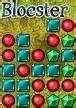
Description
Blocster is a singleplayer puzzle game set on a 20×16 grid where players swap adjacent pieces to create groups of identical pieces that align with open space, causing them to disappear. The goal is to clear the entire board without leaving unswappable blocks behind, which would require a level restart. Isolated pieces transform into jewels for bonus points, and players compete for the fastest time, highest score, or most jewels collected, with scores logged to an internet leaderboard.
Blocster Reviews & Reception
mikkosgameblog.com : Blockster is just not fun to play.
Blocster: Review
Introduction
Blocster is a unique puzzle game that challenges players to clear a grid by strategically swapping adjacent blocks to form groups aligned with empty spaces. Released in 2006 by 720games, it stands apart from traditional matching games by adding spatial alignment and consequence-based planning. This review delves into its mechanics, design, and legacy to determine its place in the puzzle game pantheon.
Development History & Context
Developed by 720games and self-published, Blocster launched on Windows in June 2006. At the time, the puzzle game market was dominated by classics like Tetris and newer hits like Bejeweled. Blocster aimed to differentiate itself by combining matching mechanics with spatial reasoning and consequence management. While its development history is sparse, its release during the casual gaming boom suggests it was intended for broad appeal.
Narrative & Thematic Deep Dive
Unlike many puzzle games, Blocster lacks an explicit narrative. Its themes revolve around strategic thinking, resource management, and dealing with long-term consequences. Each move requires players to consider not just immediate matches but also future possibilities and potential dead ends. The tension between quick play and thoughtful planning is central to its gameplay experience.
Gameplay Mechanics & Systems
The core mechanic involves swapping adjacent blocks to form groups of three or more identical pieces. These groups must align with empty spaces (either horizontally or vertically) to disappear. The key innovation is that improper swaps can create isolated blocks or unswappable clusters, rendering the level unsolvable and requiring a restart. Three game modes—fastest time, highest score, and most jewels—offer varied goals, adding replay value. The point-and-click interface is intuitive, allowing precise swaps. However, the lack of an undo feature adds permanent consequences to each move.
World-Building, Art & Sound
Set on a grid, Blocster’s world lacks narrative depth. The art features a clean, top-down view with vibrant, distinct block colors. Simple but effective visual feedback shows legal swaps and successful matches. The sound design is minimal, relying on ambient tracks and subtle effects to enhance concentration.
Reception & Legacy
Critical reception is limited, but existing ratings (3.4/5 on MobyGames, 7.0 on SocksCap64) suggest moderate appreciation. The game’s innovative mechanics appeal to puzzle enthusiasts, but its lack of a save feature and unforgiving difficulty curve may deter casual players. Its inclusion of online leaderboards in 2006 was progressive but failed to gain significant traction. Blocster remains an obscure gem, known primarily for its unique take on the puzzle genre.
Conclusion
Blocster offers a refreshing twist on classic matching games with its emphasis on spatial alignment and consequence management. Despite some accessibility issues, it provides engaging gameplay that rewards strategic thinking and forward planning. For puzzle aficionados seeking depth beyond surface-level matching, Blocster is a must-play experience. In an era dominated by simplistic casual games, it stands as a testiment to deeper, more contemplative puzzle design.