
- Release Year: 2020
- Platforms: Nintendo Switch, PlayStation 4, Windows, Xbox One
- Publisher: Inti Creates Co., Ltd., Limited Run Games, Inc.
- Developer: ArtPlay Co., Ltd., Inti Creates Co., Ltd.
- Genre: Action
- Perspective: Side view
- Game Mode: Co-op, Single-player
- Gameplay: Platform
- Setting: Fantasy
- Average Score: 82/100
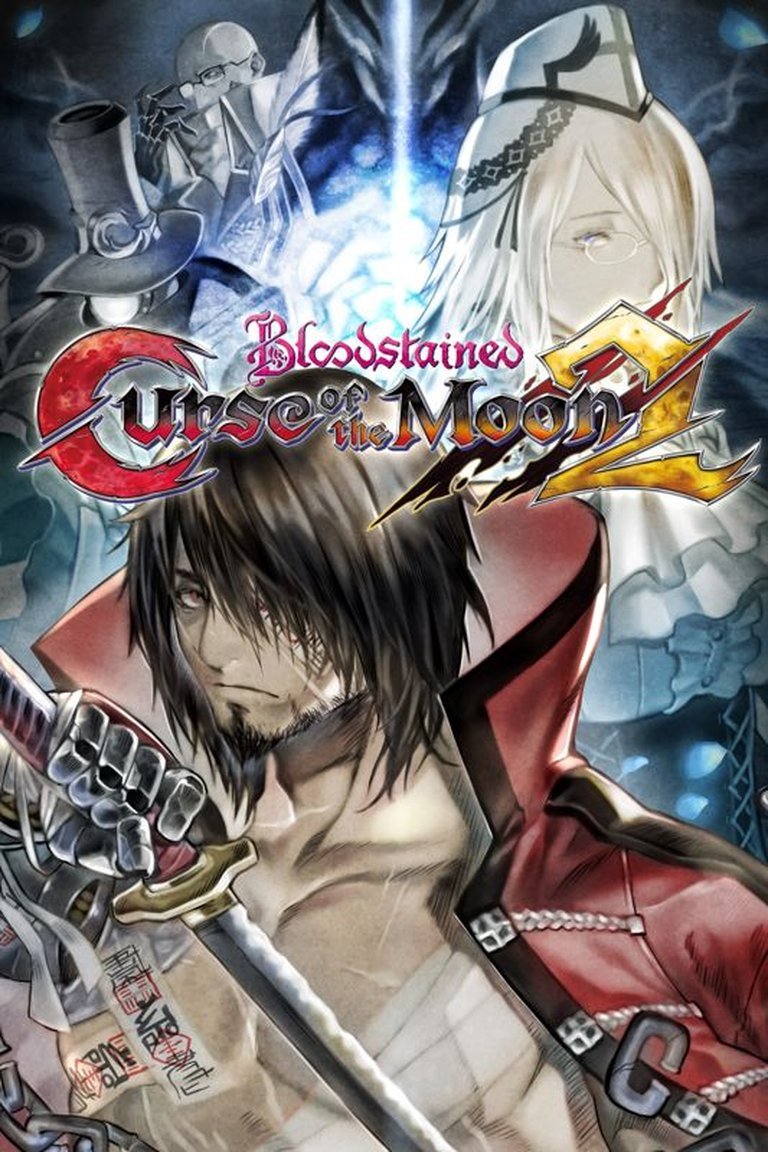
Description
Bloodstained: Curse of the Moon 2 is a retro-inspired 2D side-scrolling action-platformer set in a fantasy world steeped in horror, where players control a selectable cast of characters—including options with female protagonists and wolf-like allies—to battle demonic forces across intricate levels filled with challenges, bosses, and supernatural curses, building on the acclaimed formula of its predecessor in the Bloodstained series.
Gameplay Videos
Where to Buy Bloodstained: Curse of the Moon 2
PC
Bloodstained: Curse of the Moon 2 Free Download
Bloodstained: Curse of the Moon 2 Mods
Bloodstained: Curse of the Moon 2 Guides & Walkthroughs
Bloodstained: Curse of the Moon 2 Reviews & Reception
metacritic.com (82/100): Bloodstained: Curse of the Moon 2 is a superb sequel.
gamespot.com : a marked improvement over the first Curse of the Moon.
destructoid.com : Classic Castlevania vibes with a modern co-op twist.
steambase.io (85/100): Very Positive
switchscores.com (81/100): average score of 8.07
Bloodstained: Curse of the Moon 2: Review
Introduction
Imagine a pixelated corgi piloting a steampunk mech through demon-infested castles, stomping spikes and hovering over bottomless pits while a samurai swordsman cleaves lunar horrors in half—this is the audacious world of Bloodstained: Curse of the Moon 2, a retro platformer that captures the punishing precision of NES-era Castlevania while injecting the quirky eccentricity of its parent franchise. As the third entry in Koji Igarashi’s (IGA) Bloodstained series and direct sequel to the 2018 surprise hit Curse of the Moon, it builds on a legacy of spiritual successors to Konami’s gothic action legacy. Released in 2020 amid a renaissance of indie retro-hommages, this game isn’t mere nostalgia bait; it’s a meticulously crafted evolution that demands mastery of its systems for transcendent highs. My thesis: Curse of the Moon 2 elevates the formula with innovative character synergies, co-op brilliance, and narrative branching, cementing it as the pinnacle of modern 8-bit “Igavania” design and a must-play for platformer purists.
Development History & Context
Inti Creates, the Japanese studio behind Mega Man-esque hits like Azure Striker Gunvolt and Blaster Master Zero, spearheaded development alongside ArtPlay, with Hiroki Miyazawa directing and IGA serving as producer and scenario supervisor. This collaboration stemmed from Bloodstained: Ritual of the Night‘s Kickstarter stretch goal: the original Curse of the Moon, a prequel spin-off reimagining Bloodstained‘s lore in an alternate “Zangetsu’s spirit world” continuity to preserve narrative flexibility. By 2020, post-Ritual of the Night‘s 2019 launch, IGA’s vision crystallized: homage Castlevania III: Dracula’s Curse—linear stages, recruitable allies, brutal knockback—while embracing modern playability.
Technological constraints mimicked NES limitations deliberately: 8-bit pixel art, chiptune scores by Ippo Yamada and team, side-scrolling action without expansive metroidvania backtracking. Yet, Inti Creates innovated within bounds—health bars for bosses, Legend Mode’s time limits post-launch (July 30, 2020), and Boss Rush. The 2020 landscape was fertile: indie retro boom (Shovel Knight, Cuphead), dormant Castlevania IP under Konami, and pandemic-fueled demand for bite-sized, replayable escapism. Platforms spanned Switch, PS4, Xbox One, PC (Steam App 1257360), with Limited Run Games’ 2021 physical runs and 2023’s Japan-exclusive Curse of the Moon Chronicles bundle affirming cult status. IGA’s oversight ensured thematic ties to Bloodstained‘s alchemical demon summonings, while Inti’s polish addressed Curse 1‘s brevity.
Narrative & Thematic Deep Dive
Curse of the Moon 2 unfolds in episodic structure—four main campaigns (Episodes 1-2 core, EX optional, Final climax)—demanding replays for the true ending, echoing Castlevania‘s branching paths but with deeper consequences. Post-Curse 1‘s demon-slaying (ignoring its six endings for continuity freedom), exorcist Dominique detects a demonic tower summoning a castle. She dispatches Zangetsu, the curse-bearing Eastern swordsman grudge-driven against demons and alchemists, wielding the darkness-devouring Zangetsuto.
Allies join dynamically:
– Dominique: Spear-wielding church exorcist (from Ritual), healer with offensive magic; her possession branches the plot.
– Robert: Bald ex-soldier, Zangetsu’s comrade; rifle expert hating churches/alchemists after demons killed his wife.
– Hachi: Debt-repaying Welsh Corgi in alchemist-captured steampunk mech; comic relief with loyal charm.
Choices pivot: Episode 1’s Soul Eraser sword vs. Zanmatou (spares innocents) determines Mephisto boss outcomes, unlocking EX (allies Miriam/Alfred/Gebel from Curse 1) or straight to Finale. The true path assaults a lunar demon base via shoot-’em-up space segment, culminating in Sariel—Veteran solo-Zangetsu mode slices the Moon in half, fates ambiguous.
Themes probe redemption vs. vengeance: Zangetsu’s curse mirrors Castlevania‘s Belmont burden, but alliances humanize him; Dominique’s possession explores corruption’s seduction. Humor tempers horror—Hachi’s antics, Robert’s banter—blending macabre (flesh-mutated dragons) with whimsy (corgi invincibility). Dialogue, supervised by IGA, weaves Bloodstained‘s shardbinder lore without canon commitment, rewarding lore hounds via multiple endings (e.g., dark energy assimilation echoes Curse 1‘s “Emperor of Darkness”).
| Episode | Key Plot Branch | Unlocked Characters | Boss Climax |
|---|---|---|---|
| 1 | Tower to Castle | Dominique, Robert, Hachi | Possession/Demonic Force |
| 2 | Rescue Dominique | Core Trio | Mephisto (Sword Choice) |
| EX | Alternate Save | Miriam, Alfred, Gebel | Mephisto Redux |
| Final | Lunar Assault | Full Roster | Sariel (Moon-Slice Alt) |
This structure, per Famitsu interviews, balances accessibility with depth, evolving Curse 1‘s six endings into a lunar epic.
Gameplay Mechanics & Systems
Core loop: Traverse non-linear stages via world map, swap characters mid-level, smash candles for hearts/WP (weapon points), conquer bosses. Seven playable heroes shine:
– Zangetsu: Balanced sword (spinning slashes, charge), talismans; upgrades like Soul Eraser.
– Dominique: High jumps, spears/magic; healing risks her lifebar.
– Robert: Rifle (piercing Partisan/Grenade/Drake Cannon), wall-cling/crawl; fragile.
– Hachi: Tanky stomp/hover, spike-walking, Iron Body invincibility.
– Later: Miriam (whip/shards), Alfred (spells), Gebel (bat transform).
Innovations:
– Character Synergy: Paths tailor-made (Robert snipes afar, Hachi flattens thorns); co-op stacks (2P Zangetsu atop Hachi smashes high candles).
– Modes: Casual (infinite retries, no knockback, less damage); Veteran (NES-authentic peril); Legend (time limits, respawns).
– UI: Cleaner—WP below HP, 1UP gauge, boss bars, timers. Co-op bubbles sidelined players.
Flaws: Repetition across episodes feels padded (same stages, ramped bosses); jump imprecision frustrates (fixed arcs, pit deaths). Yet, secrets abound—hidden walls, checkpoints evolve per episode. Co-op revolutionizes: Drop-in, shared WP, dynamic duos (Robert atop anyone for crawls). ~20 hours for completion (3+ runs), Boss Rush/Legend extend replayability. Per Destructoid/GameSpot, it’s “palatable retro” with fair spikes, though lava/platform sections grate.
World-Building, Art & Sound
8-bit fantasy-horror: Demonic castles, frigid hells, lunar palaces evoke Castlevania III‘s moody palette—crimson moons, biomechanical abominations. Pixel art by Yūta Watanabe/Shin Nakamura excels: Fluid animations (Hachi’s derailment), layered backgrounds (tower silhouettes). Atmosphere builds via branching ruins signaling paths, candle colors (pink hearts, yellow subs).
Soundtrack (Ippo Yamada et al.): Chiptune mastery—”Moonlit Blade” pulses tension, “Jamais Vu” crescendos boss dread. SFX crisp—sword shings, mech clanks—immerses without overwhelming. Elements synergize: Visual gore (Aliens-esque dragon maws) pairs chiptune dirges, fostering “Nintendo hard” dread-reward cycle.
Reception & Legacy
Launch acclaim: Metacritic 82 (Switch)/80 (PC), OpenCritic 86% recommend, MobyGames 81% critics/7.7 overall. Siliconera (100%): “Meatiest retro”; Destructoid (9/10): “Leading the charge”; GameSpot (8/10): “Eccentric joy.” Critiques: Retro Gamer (76%): “Didn’t grab like original”; RPGFan (65%): “Step down.” Steam: 85% Very Positive (1,500+ reviews). Evolved positively—patches fixed lag, physicals sold out, Chronicles bundle.
Influence: Revived Igavania demand (Ritual DLC nods); co-op inspires (Shovel Knight digi). In history, it bridges NES purity with modern depth, outshining Mega Man 10 per VentureBeat, ensuring Bloodstained‘s spin-off viability amid IGA’s Scarlet Engagement (2026).
Conclusion
Bloodstained: Curse of the Moon 2 masterfully refines its predecessor’s blueprint—deeper characters, co-op genius, branching mastery—into a retro triumph that demands investment for euphoria. Minor repetition and spikes aside, its playful horror, precise platforming, and IGA polish secure a top-tier spot in platformer pantheon, beside Castlevania III and Super Castlevania IV. Verdict: Essential 9.2/10—buy for solo mastery, co-op legend status. A curse worth embracing.