
- Release Year: 2017
- Platforms: Windows
- Publisher: 2Play Studios
- Developer: 2Play Studios, Prasius Entertainment
- Genre: Action
- Perspective: Side view
- Gameplay: Platform
Description
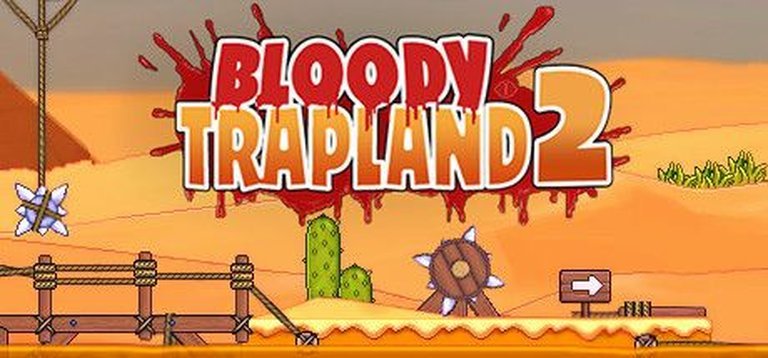
Bloody Trapland 2 is a 2D side-scrolling platformer where players join adventurers Henry, Jack, Jazzy, and Blanky on a journey through rich and varied worlds. The game emphasizes tough yet fair challenges, including traps, puzzles, and secrets to unravel, supported by solo or cooperative multiplayer for up to four players and an in-game editor for creating and sharing custom levels.
Gameplay Videos
Where to Buy Bloody Trapland 2
Bloody Trapland 2 Reviews & Reception
bestgamesreviews.info : Bloody Trapland 2: Curiosity is a surprisingly polished indie title that delivers a challenging yet rewarding platforming experience.
steamcommunity.com : I would recommend this game to anyone looking to get a 100% completion that they can wear proudly on their profile.
Bloody Trapland 2: Curiosity – A Definitive Analysis of a Cult Precision Platforming Masterpiece
Introduction: The Unassuming Titan of Hardcore Co-op Platforming
In the vast ecosystem of indie games, few titles embody the “easy to learn, hard to master” philosophy with such brutal elegance as Bloody Trapland 2: Curiosity. Emerging from the Swedish indie scene in 2017/2019 (depending on whether one peers at its Early Access or official 1.0 launch), this sequel refined and perfected the challenging, trap-laden 2D platforming of its 2011 predecessor into a meticulously crafted, brutally fair, and profoundly social experience. While it never achieved the commercial blockbuster status of contemporaries like Celeste or Super Meat Boy, its legacy is cemented not in sales figures, but in its fierce devotion among a dedicated player base and its influential design in the realms of cooperative precision platforming and user-generated content. This review will argue that Bloody Trapland 2 is a critical, if overlooked, artifact of the late-2010s indie platformer boom—a game whose primary narrative is not told through cutscenes, but through the collective, agonized, and triumphant sighs of players navigating its deadly corridors together.
Development History & Context: Forging a Co-op Legacy in Stockholm
Bloody Trapland 2 was developed by 2Play Studios, a small Stockholm-based independent studio, in collaboration with Prasius Entertainment. The project was helmed by Christoffer Torshall, serving as Developer/Producer. The original Bloody Trapland (2011) was born from a perceived gap in the market: a lack of adventurous platformers with robust, seamless local and online co-op. This core tenet—the “couch-play” philosophy—was not an add-on but the foundational pillar for the sequel.
The technological context was the Unity engine, a staple for indies offering both accessibility and cross-platform potential (Windows, Mac, Linux, later PS4/Xbox One). The development spanned a lengthy period, including a significant Early Access phase (from December 2016). This was a strategic masterstroke; the studio used this time not just for bug-fixing, but to directly incorporate player feedback to tune the infamous “tough as nails” difficulty, ensuring it was perceived as fair rather than cheap. The 2017 Steam Greenlight campaign (as noted on ModDB) was a necessary step for visibility on the increasingly curated platform.
The 2017–2019 gaming landscape was saturated with precision platformers. However, Bloody Trapland 2 distinguished itself by making 4-player cooperative chaos a central, polished feature with dedicated servers, a stark contrast to many contemporaries that focused solely on solo journeys. Its vision was clear: a game where shared struggle and shared victory were the primary emotional payload.
Narrative & Thematic Deep Dive: The Plot is the Trap, the Secret is the Skunk
Narrative in Bloody Trapland 2 is minimalist, environmental, and player-driven, representing a deliberate design choice common in hardcore platformers. The official description provides the skeletal framework: “Join Henry, Jack, Jazzy & Blanky as they re-enter the Traplands.” These four adventurers are not given deep backstories or dialogue-driven arcs. They are avatars for the player’s skill and perseverance.
The true narrative engine is the “big underlying mystery that follows you in the form of a skunk.” This enigmatic entity is the game’s most famous and debated feature. Its appearance is sporadic, ambiguous, and often interpreted as a glitch, a hidden observer, or a meta-commentary on the player’s own “curiosity.” The title’s subtitle, Curiosity, is not merely decorative; it is the thematic core. The game posits that the primary drive is not to “save the princess” or “stop the villain,” but to explore, to probe, to see what lies behind that suspicious wall or below that deceptively safe platform.
Collectibles (tokens, gems) are not trinkets but “puzzle pieces to a bigger secret.” This creates a powerful gameplay-narrative loop: the desire to uncover the mystery fuels the willingness to endure the game’s severe challenges. The plot, therefore, is a metagame about the player’s own relentless curiosity and determination. It’s a theme perfectly aligned with the “character never levels up, you do” philosophy—the growth is in the player’s skill and knowledge, not in a statistical character sheet. The world itself is a series of interconnected “islands” with puzzles from “the ancients,” framing the entire experience as an archaeological expedition into a hostile, fascinating ruin.
Gameplay Mechanics & Systems: The Architecture of Agony and Triumph
Bloody Trapland 2’s gameplay is a masterclass in systematic, escalating challenge design.
Core Loop & Movement: The foundation is deceptively simple: run, jump, slide, and dash. The dash is a cornerstone mechanic, a limited-use tool that must be managed for both traversal and invincibility frames against certain hazards. Mastery of the air control and precise timing for sliding under obstacles or dashing through narrow gaps is non-negotiable. This is the “simple to learn” part.
The “Hard to Master” Spectrum: The genius lies in the combinatorial explosion of traps. The game introduces elemental hazards (spikes, lasers, freezing projectiles, crushing blocks, boulders), environmental puzzles (switches, moving platforms, collapsing floors), and “death scenarios”—elaborate, Rube Goldberg-esque sequences of traps that require split-second precision and memorization. Levels are meticulously designed to teach a mechanic in a safe context before deploying it in a lethal combination later.
Character Differentiation & Co-op Dynamics: While movement is universal, the four characters (Henry, Jack, Jazzy, Blanky) offer subtle, meaningful differences in hitbox size and perhaps jump height (sources are vague on specifics). This matters profoundly in co-op. The game’s headline feature is 1-4 player co-op, both local split-screen and online via dedicated servers. This is not a tacked-on mode; levels are designed for cooperation. One player might need to hold a switch down while others dash through a opened passage. Chaos ensues when players accidentally trigger traps for each other, but the profound satisfaction of synchronizing dashes and solves is unparalleled. The support for mixed local/online sessions and Steam Remote Play Together further broadened its social reach.
Progression & Meta-Systems: In a bold rejection of RPG-lite trends, “your character never levels up, you do.” There is no power progression. The only “unlockables” are content (like new worlds, character skins, or editor tools) rewarded for finding secrets and completing challenges. This 100% focus on player skill is purist and demanding. The in-game level editor is a monumental feature. Described as “over the top powerful” and using the same tools as the developers, it allows players to create, share via Steam Workshop, and play custom levels in Challenge Mode. This effectively created an infinite supply of content and cemented the game’s longevity.
UI & Flaws: The UI is functional and unobtrusive. A notable potential flaw, hinted at in the Steam store page disclaimer: “Playing on the Keyboard is possible, though Gamepad is recommended. Full support for Gamepad, except when building levels in editor.” This suggests the editor’s complexity may have been a barrier to entry for would-be modders without a controller, a curious design choice.
World-Building, Art & Sound: A Cartoonish Catacomb
The game’s aesthetic is a vibrant, colorful 2D pixel-art style with a “cartoonish” and “cute” bent, as per user tags. This creates a striking juxtaposition with the brutal difficulty. The backgrounds are detailed and varied across different “island” worlds, providing visual variety and subtle environmental storytelling through architecture and debris. The character animations are fluid and expressive, making deaths (which are frequent and graphic in their variety) feel almost comical rather than punishing—a crucial psychological cushion.
The sound design is praised as “crisp and satisfying.” Sound effects for jumps, dashes, and trap activations provide critical audio feedback. The soundtrack is described as “upbeat and energetic,” maintaining a motivating tempo during repeated attempts. Together, the art and sound craft an atmosphere that is playful and deadly serious simultaneously, reinforcing the game’s unique tone. The “Mysterious Skunk” itself is an audio-visual enigma, its appearance and sound contributing to the overarching eerie curiosity motif.
Reception & Legacy: The 7.7% that Persevered
Bloody Trapland 2 achieved a “Very Positive” rating on Steam (84% positive from ~805 reviews at the time of writing), a strong score for a niche hardcore title. Its completionist stats are staggering: only 7.7% of owners have beaten the game, and a community guide author rated its difficulty a 92/100, calling it “incredibly difficult” and “insanely” challenging in its final levels, requiring “near-inhuman precision.” This hyperbolic praise from its target audience is the highest compliment.
However, this extreme difficulty created a polarizing reception. Critics (of which MobyGames notes an absence—”Be the first to add a critic review”) are silent, suggesting it flew under the radar of mainstream gaming press. Its commercial success was modest ($9.99 price point, $2.49 sometimes on sale). Its legacy is therefore cultural and design-focused, not commercial.
- Co-op Platforming Benchmark: It stands as a definitive example of how to build a cooperative experience into a precision platformer. The dedicated servers and seamless drop-in/drop-out set a practical standard for indie co-op.
- The “Fair Hard” Philosophy: Through its Early Access tuning, it contributed to the discourse on what constitutes “fair” difficulty in platformers—clear telegraphing of traps, consistent rules, and no hidden “gotchas.”
- User-Generated Content as a Lifeline: Its powerful editor and Workshop support demonstrated a model for sustaining an indie game’s life almost indefinitely through community creation, a practice later perfected by games like Super Mario Maker 2 but rare in the hardcore platformer space at the time.
- The Skunk as Internet Folklore: The mysterious skunk became a piece of communal lore, discussed in forums and guides, representing the game’s commitment to enigmatic, player-driven discovery.
It did not spawn a flood of imitators in the co-op hard platformer space, but its influence can be felt in the design priorities of later titles that blend social play with high-stakes precision.
Conclusion: A Flawed Gem of Perseverance and Fellowship
Bloody Trapland 2: Curiosity is not a perfect game. Its narrative is skeletal, its difficulty will alienate the vast majority of players, and its obscurity is undeniable. Yet, for the dedicated few—the 7.7%—it offers something profound: a pure, unadulterated test of skill, timing, and cooperation, wrapped in a charming, mysterious package.
Its place in video game history is that of a cult classic and a design touchstone. It represents a moment where a small studio, understanding a specific player desire (hard, fair, social platforming), executed it with near-flawless mechanical precision and supported it with an unprecedented level of user creation tools. It proves that a game’s story can be the shared suffering and triumph between friends, its plot the collective map of secrets uncovered, its antagonist the cold, logical perfection of a well-designed trap.
The final verdict is this: Bloody Trapland 2 is a brilliant, punishing, and deeply rewarding artifact of indie design courage. It is a game that asks not “What level am I?” but “How much better am I than I was 20 deaths ago?” For those who answer that call, the Traplands and their mysterious skunk await—a challenging, curious, and ultimately unforgettable monument to the joy of overcoming seemingly impossible odds, together.