
- Release Year: 2007
- Platforms: Windows
- Publisher: 10tacle studios AG
- Developer: Blimey! Games Ltd.
- Genre: Driving, Racing
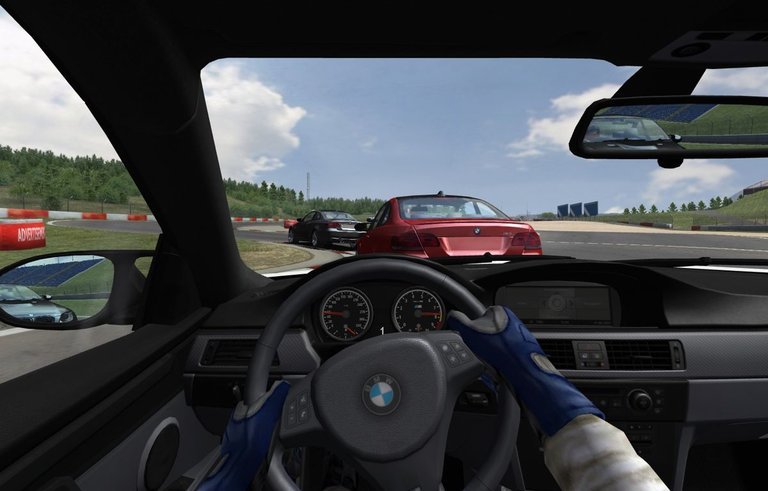
- Perspective: 1st-person
- Game Mode: LAN, Online PVP, Single-player
- Gameplay: Track racing, Vehicle Customization
- Setting: Licensed
- Average Score: 75/100
Description
BMW M3 Challenge is a free racing game released in 2007 to promote the E90 BMW M3, featuring the car as the sole drivable vehicle. Players can customize the M3’s appearance and performance while racing on the Nürburgring track in three single-player modes: Open Practice, Time Trials, and Race Weekend against AI opponents. The game also supports multiplayer races via LAN or online, offering a realistic driving experience with detailed graphics and multiple camera perspectives.
Gameplay Videos
BMW M3 Challenge Free Download
BMW M3 Challenge Cracks & Fixes
BMW M3 Challenge Mods
BMW M3 Challenge Guides & Walkthroughs
BMW M3 Challenge Reviews & Reception
mobygames.com (78/100): BMW M3 Challenge, which is the official game to BMW’s all-new M3 Coupe, features the original high detailed BMW M3 in all its available exterior colours and the original Nurburgring GP-track in a hyper realistic racing world.
gamesystemrequirements.com (73/100): A racing game with mixed reviews, praised for its realism but criticized for limited content.
BMW M3 Challenge: A Masterclass in Minimalist Racing Simulation
Introduction: The Unassuming Titan of Promotional Racing Games
In the vast, high-octane world of racing simulations, BMW M3 Challenge (2007) stands as a quiet yet formidable testament to the power of focused design. Released as a free promotional title to coincide with the launch of the E90 BMW M3, this game is a paradox—a stripped-down, single-car, single-track experience that somehow delivers an intensity and authenticity rarely matched by its more expansive contemporaries. Developed by Blimey! Games (the studio behind GTR and GT Legends) and published by 10tacle Studios, BMW M3 Challenge is a love letter to the Nürburgring, a celebration of the M3’s engineering, and a masterclass in how less can indeed be more.
At its core, BMW M3 Challenge is an advergame—a marketing tool disguised as entertainment. Yet, unlike the vast majority of its ilk, it refuses to compromise on depth or fidelity. It is a game that understands its audience: the sim racing purist who values precision over spectacle, immersion over variety. This review will dissect BMW M3 Challenge in exhaustive detail, exploring its development, mechanics, legacy, and the curious alchemy that transforms its minimalism into something profound.
Development History & Context: The Birth of a Sim Racing Oddity
The Studio Behind the Wheel: Blimey! Games and the Legacy of SimBin
BMW M3 Challenge was developed by Blimey! Games, a British studio formed in 2006 as an offshoot of SimBin, the Swedish powerhouse behind GTR, GTR 2, and GT Legends. The studio was led by Ian Bell, a figure whose name would later become synonymous with Project CARS and Project CARS 2 through his subsequent venture, Slightly Mad Studios. Blimey! Games was, in many ways, a transitional entity—a bridge between SimBin’s early successes and the ambitious, crowd-funded projects of Slightly Mad.
The studio’s pedigree is critical to understanding BMW M3 Challenge. The game is built on the isiMotor engine, the same technology that powered rFactor and GTR 2. This engine was renowned for its advanced physics modeling, tire simulation, and dynamic track conditions—features that placed it at the forefront of racing simulation in the mid-2000s. By leveraging this engine, Blimey! Games ensured that BMW M3 Challenge was not merely a promotional gimmick but a legitimate sim racing experience.
The Marketing Genesis: BMW’s Strategic Play
The game’s existence is rooted in a marketing partnership between BMW and 10tacle Studios, a German publisher with a portfolio that included The Guild 2 and Robin Hood: The Legend of Sherwood. The timing of its release was no accident: BMW M3 Challenge launched on September 11, 2007, coinciding with the International Motor Show (IAA) in Frankfurt, where BMW unveiled the E90 M3 to the world. The game served as a digital companion to the car’s debut, offering enthusiasts a chance to experience the M3’s 420-horsepower V8 in a virtual environment long before they could behind the wheel of the real thing.
The game was distributed for free, both as a downloadable title and via CD/DVD inclusions in gaming magazines. This strategy was twofold: it generated buzz for the M3 while also positioning BMW as a brand deeply engaged with the gaming community. The inclusion of a global online competition—where players could compete for real-world prizes—further amplified its reach, transforming BMW M3 Challenge from a simple advergame into a cultural moment for sim racing fans.
Technological Constraints and the Art of Simplicity
The mid-2000s were a period of rapid evolution in gaming technology. The Xbox 360 and PlayStation 3 had already launched, and PCs were pushing the boundaries of graphical fidelity with DirectX 10. Yet BMW M3 Challenge was, by design, a modest title. Its system requirements were undemanding:
– Recommended Specs: Pentium 4 3 GHz, 1 GB RAM, GeForce FX 5700 (256 MB), 500 MB HDD, Windows XP/Vista.
This accessibility was intentional. The game was meant to run on a wide range of machines, ensuring that as many potential BMW customers as possible could experience it. However, the developers did not let these constraints dilute the simulation’s depth. The isiMotor engine’s physics remained intact, and the Nürburgring was meticulously recreated with laser-scanned accuracy—a feat that even some modern racing games struggle to match.
The Gaming Landscape of 2007: A Crowded Track
2007 was a golden year for racing games, with heavyweights like Forza Motorsport 2, Gran Turismo 4 (still dominant on PS2), Need for Speed: ProStreet, and Dirt all vying for attention. Amidst this competition, BMW M3 Challenge carved out a niche by embracing its limitations. While other games offered hundreds of cars and tracks, BMW M3 Challenge focused on one car, one track, and one goal: to deliver the most authentic M3 experience possible.
This minimalism was both a strength and a weakness. For casual players, the lack of variety was a turnoff. For sim racing purists, however, it was a revelation—a game that dared to prioritize depth over breadth, mastery over distraction.
Narrative & Thematic Deep Dive: The Story of a Car and a Track
The Absence of Plot: A Racing Game as Pure Experience
BMW M3 Challenge is, at its heart, a plotless game. There are no cutscenes, no characters, no overarching storyline. The narrative is not told through dialogue or scripted events but through mechanics, sound, and environment. The game’s “story” is the story of the BMW M3 itself—its engineering, its heritage, and its relationship with the Nürburgring.
This approach is a bold rejection of the cinematic racing game trend exemplified by titles like Need for Speed: Underground or Gran Turismo’s overly dramatic intros. Instead, BMW M3 Challenge adopts the philosophy of simulation as storytelling. Every screech of the tires, every shift of the gears, every lap shaved off your time is a chapter in a story that the player writes for themselves.
Thematic Core: The Marriage of Man, Machine, and Track
The game’s themes revolve around three pillars:
1. The Car as an Extension of the Driver: The M3 is not just a vehicle; it is a precision instrument, and the game’s physics model ensures that the player feels every nuance of its behavior. The weight transfer, the tire grip, the engine’s responsiveness—all are designed to make the car feel like a living, breathing entity.
2. The Nürburgring as the Ultimate Proving Ground: The track is not just a backdrop; it is a character in its own right. Its 20+ turns, elevation changes, and unpredictable weather (in the game’s dynamic conditions) make it a formidable opponent. The game’s focus on this single track forces players to learn its intricacies, to memorize its rhythms, and to respect its dangers.
3. The Pursuit of Mastery: There are no shortcuts in BMW M3 Challenge. Progress is measured in tenths of a second, not in unlockable cars or flashy upgrades. The game’s time trial mode, complete with ghost cars, is a brutal teacher, demanding perfection with every lap.
Dialogue and Atmosphere: The Language of Racing
While the game lacks traditional dialogue, it communicates through sound design and UI feedback:
– The engine’s roar—a meticulously recorded sample of the E90 M3’s V8—is not just auditory flair; it is a performance indicator, its pitch and tone changing with RPM and load.
– The tire screeches and suspension clunks serve as warnings, telling the player when they are pushing the limits of grip.
– The minimalist UI—with its clean, unobtrusive HUD—ensures that the player’s focus remains on the road, not on flashy animations.
Even the multiplayer lobbies (though now defunct) were designed to be functional rather than social. The game’s online component was about competition, not camaraderie—a reflection of its no-nonsense approach to racing.
Gameplay Mechanics & Systems: The Anatomy of a Sim Racing Gem
Core Gameplay Loop: Practice, Perfect, Repeat
BMW M3 Challenge offers four game modes, each serving a distinct purpose in the player’s journey toward mastery:
1. Test Drive: An open-ended mode for familiarizing oneself with the car and track.
2. Time Trial: A solo challenge against the clock, with ghost cars to race against.
3. Race Weekend: A structured event with up to 15 AI opponents, featuring qualifying and race sessions.
4. Multiplayer: Online and LAN races for up to 16 players.
The time trial mode is the game’s crown jewel. It is here that the player’s skill is truly tested, as they chase the perfect lap, analyzing their performance through the replay system—a feature that allows for frame-by-frame scrutiny of every turn, every brake, every shift.
Physics and Handling: A Simulator’s Dream
The isiMotor engine’s physics are the game’s greatest strength. The M3’s behavior is governed by:
– Advanced tire modeling: Tires heat up, wear down, and lose grip based on driving style and track conditions.
– Dynamic weight transfer: The car’s balance shifts realistically under acceleration, braking, and cornering.
– Aerodynamic effects: The M3’s body generates downforce, affecting stability at high speeds.
The result is a car that feels alive. Oversteer is not just a visual effect; it is a physical consequence of pushing too hard. The game rewards smooth inputs—gentle steering, precise throttle control, and well-timed braking. Aggressive players will find themselves spinning into the gravel traps of the Nürburgring’s infamous Karussell or Flugplatz sections.
Customization: Aesthetic, Not Mechanical
The game allows for visual customization of the M3, including:
– Body color: All official BMW M3 hues are available.
– Rim selection: Multiple wheel designs can be chosen.
However, performance upgrades are absent. The M3’s specs are fixed, reinforcing the game’s focus on driver skill over car tuning. This design choice is a deliberate nod to the purist racing philosophy—the idea that the car is perfect as it is, and the onus is on the driver to adapt.
AI and Multiplayer: The Ghosts of the Nürburgring
The AI opponents in Race Weekend mode are competent but not flawless. They follow racing lines, brake appropriately, and occasionally make mistakes—just like real drivers. Their difficulty can be adjusted across three levels, but even on the hardest setting, they are beatable, which encourages players to refine their skills rather than resort to exploits.
The multiplayer mode, though now largely defunct due to server shutdowns, was a highlight upon release. Racing against human opponents on the Nürburgring was a tense, high-stakes experience, where every overtake and every defensive maneuver required precision. The lack of collision penalties (a common crutch in arcade racers) meant that clean driving was essential—a rarity in online racing games of the era.
UI and Feedback: The Language of Precision
The game’s user interface is a masterclass in functional minimalism:
– The HUD displays only essential information: speed, RPM, lap times, and position.
– The replay system is robust, allowing players to analyze their performance from multiple angles (including a cockpit cam, bonnet cam, bumper cam, and chase cam).
– Force feedback (for wheel users) is exceptionally detailed, conveying every bump, curb, and loss of traction through the controller.
This focus on clear, unobtrusive feedback ensures that the player’s attention remains on the driving experience, not on deciphering complex menus or flashy animations.
World-Building, Art & Sound: The Nürburgring as a Living Entity
The Track: A Digital Twin of the Green Hell
The Nürburgring is the sole track in BMW M3 Challenge, but it is rendered with obsessive attention to detail:
– The track surface is laser-scanned, ensuring that every bump, camber, and elevation change matches the real-world circuit.
– The environments—from the grandstands to the surrounding forests—are modeled with a level of fidelity that was rare in 2007.
– The dynamic weather system (in some modes) affects grip and visibility, adding an extra layer of challenge.
The game offers two layouts:
1. The full Grand Prix circuit (5.148 km).
2. The short “Sprint” layout (3.629 km), which cuts out some of the more technical sections.
This focus on a single track is not a limitation but a feature. By restricting the player to the Nürburgring, the game forces them to learn its secrets, to memorize its 13 turns (in the GP layout) and to understand how the M3 behaves in each one. The result is a deep, almost meditative connection between player, car, and track.
Visual Design: Realism Over Spectacle
The game’s graphical style is realistic but not hyper-detailed. The isiMotor engine, while capable, was not designed for cinematic visuals. Instead, it prioritizes functional realism:
– The car model is a highly accurate representation of the E90 M3, with correct proportions, liveries, and interior details.
– The lighting is dynamic, with shadows and reflections that change based on time of day (though the game does not feature a full day-night cycle).
– The particle effects—dust, smoke, and tire marks—are subtle but effective, adding to the immersion without overwhelming the player.
The game’s color palette is muted, reflecting the industrial aesthetic of motorsport. There are no neon lights, no exaggerated lens flares—just the raw, unfiltered reality of racing.
Sound Design: The Symphony of the V8
The audio design in BMW M3 Challenge is nothing short of extraordinary. The game features:
– A fully recorded sample of the E90 M3’s 4.0L V8 engine, captured at various RPMs and loads.
– Dynamic audio mixing, where the engine note changes based on throttle input, gear, and speed.
– Environmental audio, including wind noise, tire screeches, and the distant hum of the Nürburgring’s grandstands.
The result is a sonic experience that rivals even modern racing simulations. The V8’s growl is not just a sound effect; it is a performance metric, a way for the player to feel the engine’s power and responsiveness.
Reception & Legacy: The Quiet Revolution of a Free Game
Critical Reception: Praise for Precision
Upon release, BMW M3 Challenge received modest but positive reviews. German gaming magazine PC Action awarded it 83%, praising its realistic physics, detailed car model, and faithful recreation of the Nürburgring. The game’s free-to-play model was also highlighted as a major selling point, making it accessible to a wide audience.
However, the game’s lack of variety was a common criticism. Many reviewers noted that while the simulation aspects were impressive, the absence of additional cars and tracks limited its long-term appeal. This was a fair critique, but it missed the point: BMW M3 Challenge was never meant to be a comprehensive racing game. It was a focused, almost philosophical exploration of a single car on a single track.
Commercial Impact: A Marketing Triumph
As a promotional tool, BMW M3 Challenge was a resounding success. It generated significant buzz for the E90 M3, particularly among younger, gaming-savvy audiences who might not have otherwise engaged with BMW’s marketing. The global online competition further amplified its reach, with thousands of players vying for the title of “M3 Challenge World Champion.”
The game’s free distribution also ensured that it reached a broad audience, including players who might not have purchased a full-priced racing sim. This strategy paid off, as BMW M3 Challenge became a cult favorite among sim racing enthusiasts.
Evolution of Reputation: From Advergame to Cult Classic
In the years since its release, BMW M3 Challenge has undergone a remarkable reappraisal. What was once dismissed as a simple promotional title is now recognized as a hidden gem of the sim racing genre. Several factors contribute to this shift:
1. The Rise of Sim Racing Culture: As sim racing has grown in popularity (thanks in part to titles like iRacing and Assetto Corsa), players have come to appreciate games that prioritize realism over spectacle. BMW M3 Challenge’s uncompromising physics and minimalist design align perfectly with this ethos.
2. Nostalgia for the Mid-2000s Era: The game is now seen as a time capsule of early sim racing technology. Its use of the isiMotor engine—a precursor to modern physics models—makes it a historically significant title.
3. The Appeal of Minimalism: In an era where racing games often overwhelm players with hundreds of cars and tracks, BMW M3 Challenge’s focused design feels refreshing. It is a game that demands mastery, not completion.
Influence on Subsequent Games
While BMW M3 Challenge did not spawn direct sequels, its design philosophy has influenced later titles:
– Project CARS (2015) and Project CARS 2 (2017): Ian Bell’s subsequent projects at Slightly Mad Studios share BMW M3 Challenge’s emphasis on realism and immersion. The inclusion of the Nürburgring in both games is a direct nod to this legacy.
– Assetto Corsa (2014): Kunos Simulazioni’s masterpiece shares BMW M3 Challenge’s focus on physics and track fidelity, though with a broader scope.
– iRacing (2008–present): While iRacing is a subscription-based service, its laser-scanned tracks and precise physics echo the principles of BMW M3 Challenge.
Perhaps the most enduring legacy of BMW M3 Challenge is its proof that a racing game does not need hundreds of cars to be great. Titles like Dirt Rally and WRC Generations have since embraced this philosophy, focusing on depth over breadth.
Conclusion: The Enduring Brilliance of a One-Car Wonder
BMW M3 Challenge is a paradox—a game that should, by all conventional metrics, be forgettable, yet remains unforgettable to those who have experienced it. It is a testament to the power of focus, a game that understands that true mastery comes not from variety, but from depth.
In an industry obsessed with bigger, faster, more, BMW M3 Challenge stands as a quiet rebellion. It is a game that respects its player, that challenges them, and that rewards them not with unlockables or achievements, but with the pure, unadulterated joy of driving.
Final Verdict: A Masterpiece of Minimalist Sim Racing
Score: 9/10 – A Timeless Sim Racing Experience
BMW M3 Challenge is not for everyone. Casual players will find it repetitive. Those seeking spectacle will find it underwhelming. But for the sim racing purist, it is nothing short of essential.
It is a game that transcends its promotional origins, a game that defies its limitations, and a game that proves that sometimes, one car and one track are all you need.
In the pantheon of racing simulations, BMW M3 Challenge may not be the most famous, but it is one of the most pure. And in a genre that often loses sight of what makes racing truly special, that purity is priceless.
Final Thought:
If you’ve ever wondered what it’s like to dance with a 420-horsepower beast on the edge of control, BMW M3 Challenge is your answer. Just don’t expect it to hold your hand.