
- Release Year: 1983
- Platforms: DoJa, FM-7, Hitachi S1, MSX, NES, PC-6001, PC-88, PC-98, Sharp X1, Wii, Windows
- Publisher: ASCII Corporation, D4 Enterprise, Inc., Enterbrain, Inc., G-mode Co., Ltd.
- Developer: Kouji Sumii
- Genre: Strategy, Tactics
- Perspective: Top-down
- Game Mode: Single-player
- Gameplay: Army recruitment, Automatic combat, Real-time
- Setting: Fantasy
- Average Score: 15/100
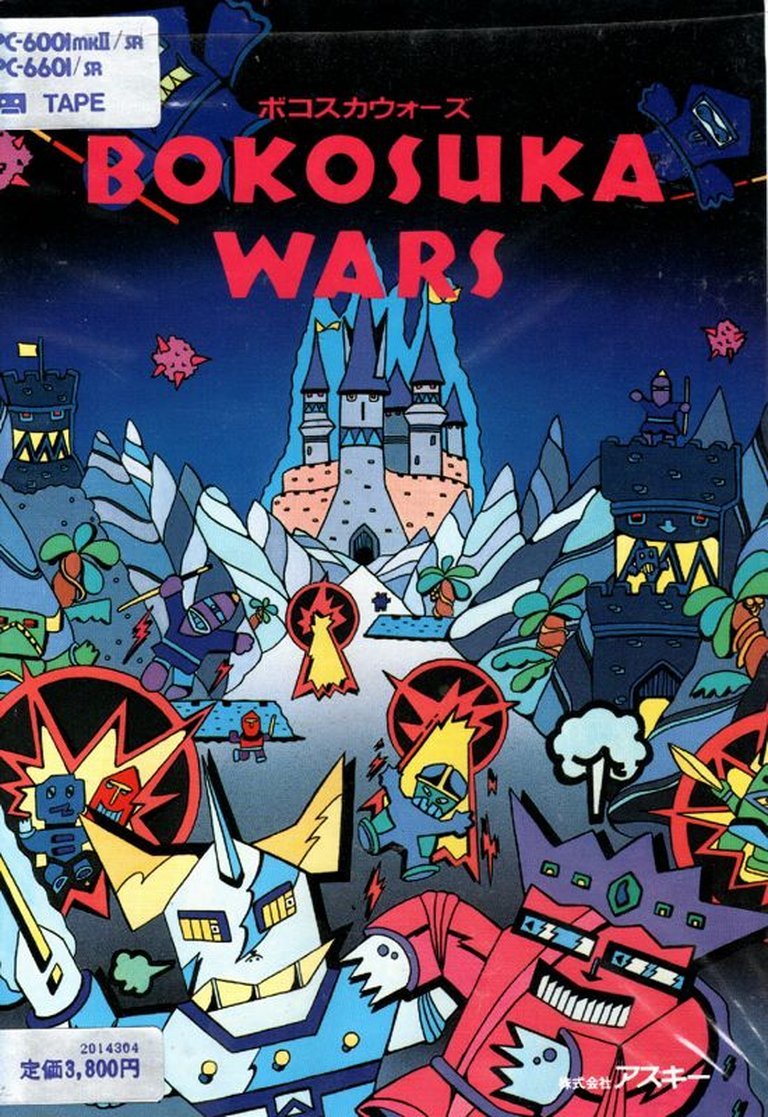
Description
In the fantasy setting of Bokosuka Wars, King Ogreth of the Basam Empire invades your kingdom, capturing or petrifying your soldiers into rocks and trees, leaving King Suren alone to trek 600 meters to the enemy’s castle. As a real-time strategy game, players must revive soldiers by bumping into obstacles, free imprisoned knights to build an army, and strategically engage in auto-calculated battles against attacking foes, with death meaning a full restart.
Gameplay Videos
Bokosuka Wars Free Download
Bokosuka Wars Mods
Bokosuka Wars Guides & Walkthroughs
Bokosuka Wars Reviews & Reception
crpgaddict.blogspot.com (15/100): probably responsible for a lot of the hate the game receives.
gamewise.tumblr.com : one of the most unfair games to have ever been put onto a disk, cartridge, or otherwise.
Bokosuka Wars Cheats & Codes
NES
| Code | Effect |
|---|---|
| Hold Select + Start, press Reset, shout into the microphone until title music starts | Higher Stats / Fight Without Losing |
| 0700:1F | Infinite Energy |
Bokosuka Wars: Review
Introduction
Imagine a battlefield where your king marches relentlessly leftward across a 600-meter gauntlet, bumping trees to revive petrified soldiers, dodging traps, and hurling phalanxes of pawns and knights into probabilistic duels—all in real-time, with no saves, no mercy, and a single death spelling “WOW, YOU LOSE!” in garish red letters. Bokosuka Wars (1983), the brainchild of solo developer Kōji Sumii, isn’t just a game; it’s a raw prototype of the tactical RPG genre, blending chess-like unit management, roguelike risk, and proto-RTS urgency. Born on Japan’s Sharp X1 amid the early home computer boom, it won ASCII’s inaugural Software Contest Grand Prix and spawned ports across MSX, PC-88, FM-7, NES, and beyond. Despite its crude controls and infamous NES reputation as “the worst game ever,” Bokosuka Wars endures as a foundational artifact—flawed, frustrating, yet visionary in forging “simulation RPGs” that influenced everything from Fire Emblem to modern reverse tower defense hybrids. This review argues that its legacy transcends its limitations: it’s not a masterpiece, but a bold spark that ignited Japan’s strategy-RPG revolution.
Development History & Context
Bokosuka Wars emerged from the fertile chaos of Japan’s 1983 home computer scene, a Wild West of hobbyist coding far removed from the West’s Apple II/IBM PC duopoly. Kōji Sumii, a pseudonymous programmer (later “Rasho”), crafted it solo for the Sharp X1—a capable but niche machine with a Z80 CPU, keyboard input, and crisp monochrome graphics. Sumii submitted it to ASCII Entertainment’s first Software Contest, clinching the Grand Prix amid entries that foreshadowed giants like Dragon Quest (whose creators won via similar contests at Enix). ASCII, a powerhouse publisher of tools and games, boxed and distributed it immediately, fueling ports to dominant platforms: MSX and PC-88 (1984), then FM-7, PC-6001, PC-98, Hitachi S1, and NES (1985, ported by Workss).
Technological constraints shaped its DNA. The X1’s real-time demands favored top-down scrolling over turn-based grids, while limited sprites (especially on NES) forced the Famicom version’s infamous solo-start mechanic—King Suren revives troops from trees/rocks, unlike PC editions’ pre-loaded armies freed from prisons. This “afternoon RPG” brevity (no saves until passwords emerged later) fit console play sessions, but clashed with PC depth.
The era’s landscape was electric: Japan dominated microcomputers (PC-88/FM-7 outsold Western PCs), birthing action-RPGs like Dragon Slayer and sims like Koei’s Nobunaga’s Ambition. Western strategy leaned turn-based (Empire Deluxe), but Bokosuka‘s real-time phalanx marches echoed Spacewar!‘s naval roots while previewing RTS micromanagement. Sumii’s vision? A desperate king’s odyssey blending RPG progression (level-ups, promotions) with chess tactics and arcade risk—innovative, but hardware-bound, yielding a NES port derided for sprite limits turning strategy into luck.
Narrative & Thematic Deep Dive
At heart, Bokosuka Wars is a minimalist revenge saga: King Ogreth (Dragonet in Japanese originals) of the Basam Empire conquers King Suren’s realm, petrifying troops into trees, cacti, rocks (NES/PC ports vary). Suren, alone at 597m, quests left to Ogreth’s castle, reviving allies and toppling foes. No dialogue, no cutscenes—just an odometer ticking down amid “Onward, Bokosuka!” chiptune lyrics in the Japanese manual (penned by Sumii himself: “Advance, my people! Scatter obstructing foes!”).
Plot Structure and Characters
The “story” unfolds linearly across one endless battlefield, segmented by milestones (walls at 500m/400m/300m/200m). Heroes are archetypes: King Suren (220-320 power, linchpin; his death ends all), Knights (150-310, prison-busters), Soldiers/Pawns (30-310, trap-clearers, guard-weakener). Promotion after three wins turns them gold (e.g., soldiers to 140+ power), symbolizing heroism forged in fire. Villains mirror: Guards (100→10 vs. soldiers), Mages/Summoners (spirits galore), Warriors/Pages/Killers (250 power chokepoints), culminating in Ogreth (250, improbably lethal).
Themes: Desperation, Probability, and Sacrifice
Thematically, it’s a meditation on fragile leadership and attrition warfare. Suren’s isolation evokes Homeric odysseys, but RNG battles underscore chaos—power disparities (320 vs. 10) yield upsets, mirroring war’s lottery. Progression tempts hubris: Level weaklings or risk elites? Traps post-victory loops amplify replay peril, theming endless siege. No economy or gear; narrative emerges via recruitment (50 allies max vs. 180 foes) and phalanx herding, evoking 300‘s doomed stand. Culturally, “bokosuka” (onomatopoeic “smack-wham” beatdown) injects pulp whimsy, but victory’s “BRAVO! YOU WIN!” belies pyrrhic costs—stragglers lost to obstacles, a commentary on command’s burdens.
Gameplay Mechanics & Systems
Bokosuka Wars distills strategy to a real-time march: Control King/army via D-pad (toggle all/King/Knights/Soldiers). Bump objects for recruits; knights shatter stockades; soldiers defuse death tiles. Enemies roam but can’t initiate—you collide for auto-battles (swords→”B” flash; power diff + RNG decides).
Core Loops
1. Recruitment/Progression: Collect 15 knights/35 soldiers. Victories boost power (Soldiers: 30→40→50→140 gold); third-win promotion spikes stats. Max army: 50, but movement herds them crudely—units clump, snag on terrain, forcing toggles/backtracks.
2. Combat Calculus: Binary outcomes (no HP). Exploit matchups (soldiers nerf guards; king triggers summoners). RNG bites: 310 vs. 10 can fail. Endgame: Killer corridor (50%+ loss rate), Ogreth swarm (75% upset chance)—overwhelm via numbers/power.
3. Risk Management: Patience vs. rush. Early: Max Suren (320). Mid: Build golds. Late: Traps demand soldiers. Loops add traps, scaling via counters (upper-right victories).
UI/Controls: Minimalist genius—enemies left/allies left/distance/Suren power/battle stats. NES D-pad shines for phalanxes but falters in crowds (no individuals). Toggle helps, but stragglers doom runs.
Innovations/Flaws: Pioneered sim-RPG (leader permadeath, unit XP/promos, real-time tactics). Reverse tower defense vibe (push vs. defenses). Flaws: NES sprite limits inflate randomness; clunky movement frustrates (CRPG Addict: “Handicaps huge armies”); no manual = opacity (powers hidden).
| Mechanic | Strength | Weakness |
|---|---|---|
| Recruitment | Organic army-building | RNG placement |
| Battles | Tactical choice | Heavy RNG |
| Movement | Phalanx authenticity | Collision jank |
| Progression | Promotions addictive | Binary deaths |
A 1-hour win (modest play) rewards mastery, but 8-10 deaths teach humility.
World-Building, Art & Sound
The “world” is a singular, scrolling battlefield—fantasy desolation of grids, obstacles, and hordes. No overworld; immersion via procedural peril (summoner spirits, walls). Atmosphere builds tension: Odometer dread, enemy swarms, trap spikes.
Visuals: Top-down pixel art—stark icons (king’s sailor shirt, gold promotions gleam). Sharp X1 crisp; NES colorful but sprite-clogged (limits force solo start). “Unconscionably ugly” (HonestGamers), yet evocative: Trees pulse life, battles flash urgency. Scale evokes ants marching doom.
Sound: Monophonic loop—”Onward, Bokosuka!” march, grating after 10 minutes (GameCola: “excruciating”). Battle “B”s punctuate; win/lose jingles cathartic. Manual lyrics add lore: “Uncertain battlefield, our departure impending!”
Elements synergize: Sparse art/sound amplify isolation, turning grids into epic siege.
Reception & Legacy
Launch: Japanese smash—contest win, multi-platform ports (9+ total, Wii VC 2008, Windows 2015). Commercial hit (Famicom context: Parish/1UP hailed success). Critics scarce; MobyGames 6.3/10 (critics 41%: NES 20-65%; players 3.3/5).
Evolution: NES infamy—”worst ever” (emulation era bandwagon; no West release, Engrish memes). Defenders (CRPG Addict, Chrontendo) praise innovation over polish. New Bokosuka Wars (1984, magazine type-in) balanced it; Bokosuka Wars II (2016 PS4/Xbox/Switch) modernizes with factions/co-op, gap of 33 years.
Influence: Seminal sim-RPG—leader death, unit progression birthed Fire Emblem-line. Proto-RTS (real-time builds/fights); action-RPG roots (Dragon Slayer kin); reverse TD (push castle). Gamasutra/1UP credit genre foundations; echoes in Phantom Brave (tree units), One Way Heroics (scrolling doom).
Conclusion
Bokosuka Wars is a jagged gem: Frustrating RNG, clunky herds, repetitive dirge mar play, but its phalanx march, probabilistic duels, and desperate recruitment pioneered tactical RPGs amid 1983’s tech limits. NES port amplified flaws, birthing undue hate, yet PC originals reveal Sumii’s vision—a raw blueprint for Japan’s strategy boom. Not essential like Ultima, but vital history: Play for emulation thrills, study for genius. Verdict: 7/10—Pioneering relic, flawed but foundational in video game history’s chaotic dawn.