
Description
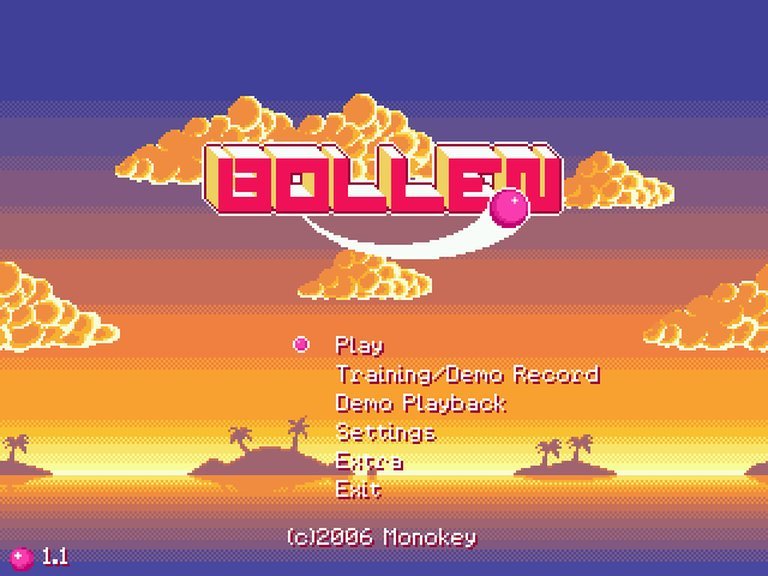
Bollen is a 2006 freeware fantasy platformer for Windows where players control a ball through 23 side-scrolling 2D levels, guiding it to exit flags while collecting coins for extra lives every 25th one and golden cups to unlock five very hard bonus stages. Players encounter Mr. Happy for jumps, the deadly Mr. Evil, and a rival ball that pushes them around in this direct-control action game.
Bollen: Review
Introduction
In the vast, often unforgiving landscape of early 2000s indie gaming, where freeware titles flickered like distant stars in the shadow of AAA giants, Bollen emerges as a humble yet endearing relic—a 2D platformer that distills the pure joy of ball-rolling physics into 23 meticulously crafted levels. Released in 2006 as a freeware download for Windows by the enigmatic solo developer Monokey, Bollen captures the DIY spirit of an era when bedroom coders could craft addictive experiences without corporate backing. Its legacy lies not in blockbuster sales or cultural phenomenon status, but in its unpretentious purity: a game that prioritizes tight controls, clever level design, and emergent challenge over bombast. This review posits that Bollen is a forgotten cornerstone of indie platforming, exemplifying how constraint breeds innovation and reminding us why simple mechanics can outlast flashy trends in video game history.
Development History & Context
Monokey, the sole credited developer and publisher of Bollen, represents the archetype of the mid-2000s freeware auteur—a lone creator leveraging accessible tools like Game Maker or Flash to bypass traditional publishing gatekeepers. Released in 2006 exclusively for Windows as a free download, Bollen arrived during a transitional golden age for PC gaming. The industry was rebounding from the post-PlayStation 2 crash, with browser-based Flash games dominating sites like Newgrounds and Miniclip, and early Steam fostering indie distribution. Yet, freeware platforms like those hosted on personal websites or niche forums allowed creators like Monokey to experiment unbound by monetization pressures.
Technological constraints shaped Bollen‘s DNA: 2D scrolling visuals and keyboard-only direct control reflect the era’s hardware limits—mid-range PCs with 512MB RAM struggling with 3D, pushing developers toward sprite-based efficiency. Monokey’s vision appears straightforward yet ambitious: craft a ball-rolling platformer that echoes classics like Marble Madness (1984) or Super Monkey Ball (2001), but with fantasy flair and escalating difficulty. The gaming landscape was ripe for this; platformers proliferated post-Super Mario World (1990), but indies like Cave Story (2004) proved solo devs could rival studios. Bollen‘s public domain model invited sharing, aligning with the freeware ethos of games like Tetris clones or Jazz Jackrabbit fangames. Added to MobyGames in 2015 by contributor Tomas Pettersson—nearly a decade post-release—it underscores the game’s obscurity, preserved more by archival passion than contemporary hype.
Key Developmental Milestones
- Pre-Release Context: Likely prototyped in 2005 amid Flash platformer booms (Fancy Pants Adventures, 2005).
- Core Tech Stack: 2D engine inferred from side-view scrolling; keyboard input only, emphasizing precision over analog nuance.
- Post-Launch: No patches noted; freeware status ensured longevity via fan mirrors, evading obsolescence.
This context positions Bollen as a bridge between arcade purity and modern indies like Celeste (2018), born from technological thrift and creative zeal.
Narrative & Thematic Deep Dive
Bollen eschews verbose plotting for minimalist, environmental storytelling, a hallmark of constraint-driven design. There is no overt protagonist beyond “the ball”—a silent, spherical everyman navigating abstract fantasy realms toward exit flags. The 23 levels form a loose progression: early stages introduce mechanics, mid-game ramps tension via collectibles, and the final five (unlocked by golden cups) deliver masochistic trials. Absent traditional dialogue or cutscenes, narrative emerges through interaction: coins symbolize fleeting rewards (every 25th grants an extra life, evoking Sisyphean persistence), while golden cups gatekeep mastery.
Characters manifest as archetypal foes and allies, personifying thematic binaries:
– Mr. Happy: A benevolent bouncer inducing jumps, representing serendipitous aid amid peril.
– Mr. Evil: Instant-death antagonist, embodying inevitable failure and the game’s punitive edge.
– The Other Ball: A neutral pusher, introducing chaotic physics and player agency in collision dynamics.
Themes revolve around perseverance versus fragility. The ball’s momentum-based movement mirrors life’s uncontrollable rolls—precise inputs yield progress, but one misjudged slope spells doom. Fantasy setting (per MobyGames specs) infuses whimsy: levels evoke enchanted caverns or floating isles, with collectibles as mythical treasures. No deep lore exists—no backstories or codex—but emergent themes arise from repetition: death resets to checkpoints, fostering resilience. Dialogue is nil, yet “narrative gestalt” (per narratologist Craig Lindley) unifies experiences into a hero’s journey: novice orb to cup-hoarding legend.
Critically, this sparseness amplifies replayability; players project their saga onto the ball, transforming mechanics into myth. Flaws include narrative opacity—golden cup hunts feel arbitrary without hints—but this rewards discovery, aligning with indie ethos over hand-holding.
Gameplay Mechanics & Systems
At its core, Bollen is a side-view 2D scrolling platformer demanding Newtonian precision: guide the ball to exit flags via keyboard (likely arrow keys for movement, space for jumps/boosts). Primary loop—navigate, collect, survive—is elegantly looped across 23 levels, escalating from tutorial-esque ramps to labyrinthine traps.
Core Loops Deconstructed
- Traversal: Ball physics dominate—gravity, momentum, and friction create “rolling” authenticity. Slopes accelerate dangerously; flatlands demand micro-adjustments.
- Collection: Coins build lives (25 = +1), encouraging thorough exploration. Golden cups (one per level) unlock bonus stages, gating content meritocratically.
- Hazards & Interactions:
- Mr. Happy: Proximity-triggered jump, enabling high platforms.
- Mr. Evil: One-touch kill, forcing pattern avoidance.
- Other Ball: Physics-based shoving, adding unpredictability (player can redirect via positioning).
No combat exists; “progression” is lives-based, with deaths respawning at stage starts/checkpoints. UI is spartan: coin counter, lives tally, level selector post-completion. Innovations shine in physics puzzles—bounce chains via Mr. Happy, or lure Other Balls as makeshift platforms. Flaws: Keyboard-only input lacks analog finesse (vs. modern controllers), and no variable difficulty risks alienating casuals. Yet, the last five “very hard” levels innovate via compounded mechanics, blending precision platforming with resource denial. Replayability stems from cup hunts and high-score chases, yielding 5-10 hours for mastery.
| Mechanic | Strengths | Weaknesses |
|---|---|---|
| Physics | Responsive, addictive rolls | Slippery on steep inclines |
| Collectibles | Motivates 100% runs | Cryptic cup locations |
| Hazards | Thematic variety | Punitive restarts |
Overall, systems cohere into a taut loop, flawed yet masterful in economy.
World-Building, Art & Sound
Bollen‘s fantasy setting is abstract minimalism: side-scrolling stages evoke dreamlike realms—craggy platforms, starry voids, glowing exits—without explicit lore. Atmosphere builds via procedural intimacy: each level’s layout feels hand-sculpted, fostering wonder in simplicity (e.g., cavernous drops implying ancient chasms). Visuals: Pixel art inferred (era-appropriate 2D sprites), with ball’s sheen, coin sparkles, and enemy animations conveying personality. Colors pop—vibrant golds against shadowy blues—enhancing readability and mood.
Sound design, uncredited, likely features chiptune loops: bouncy melodies for traversal, stings for deaths, satisfying “clinks” for pickups. No voicework; audio reinforces isolation, letting physics “speak.” These elements synergize: visuals guide navigation, sound cues hazards (e.g., Mr. Evil’s growl), culminating in immersive flow states. Contributions: World-building via levels evokes epic quests; art/sound amplify tension, making fragility palpable.
Reception & Legacy
Launch reception was ghostly—no critic reviews on MobyGames, unranked score. One player rates 3.8/5 (as of sources), praising addictiveness but noting difficulty spikes. Commercial: Freeware zeroed sales, yet downloads proliferated via forums. Reputation evolved post-2015 MobyGames entry; niche fans hail it as “hidden gem” for pure platforming.
Influence: Echoes in Roll Away (2005) successors and moderns like Toki Tori 2 (2013) or Balatro (2024) indies emphasizing physics mastery. Prefigures free-to-play model (public domain), impacting itch.io era. No direct successors, but embodies 2000s freeware wave alongside N++ precursors. Cult status grows via preservationists; absent Wikipedia historical lists, yet merits “platformer footnote.”
Metrics Snapshot
- MobyGames: 1 rating (3.8/5), 0 reviews.
- Cultural Ripple: Minor; inspired ball-rollers, but eclipsed by Flash floods.
Conclusion
Bollen endures as a testament to indie ingenuity: 23 levels of balletic precision, emergent themes of tenacity, and physics poetry that punches above its freeware weight. Flaws—minimalism borders sparsity, difficulty alienates—pale against joys of mastery. In video game history, it claims a vital niche: mid-2000s freeware pioneer, bridging arcade roots to modern indies. Verdict: Essential for platformer historians; 8/10 for purists. Redownload it—roll on, forgotten orb.