
- Release Year: 2011
- Platforms: Windows
- Publisher: TopQer s.r.o.
- Genre: Compilation
- Average Score: 73/100
Description
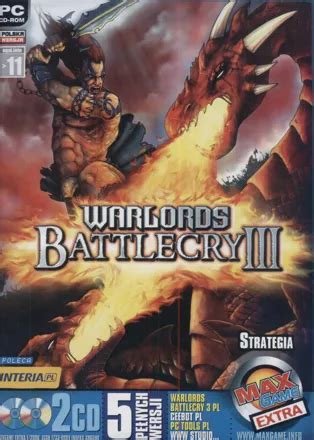
Bomba Hry: Warlords Battlecry 3 / Avencast is a 2011 Windows compilation pack that bundles two fantasy titles: Warlords Battlecry III, a real-time strategy game set in the world of Etheria where Selentine Merchants venture into the southern continent of Keshan, awakening the wrath of the snake-like Ssrathi empire led by the fearsome Shaman-King Iriki, sparking a cataclysmic war; and Avencast: Rise of the Mage, an action RPG centered on a young mage’s perilous journey through a mystical realm fraught with dark forces.
Bomba Hry: Warlords Battlecry 3 / Avencast Reviews & Reception
metacritic.com (73/100): The depth of races and units in Warlords Battlecry 3 is enough to fill three other lesser RTS games.
Bomba Hry: Warlords Battlecry 3 / Avencast Cheats & Codes
PC
When playing skirmish or multiplayer, press Enter to open the passcode box and type the codes.
| Code | Effect |
|---|---|
| iamatank | Activates tank mode cheat |
| iaminivincible | Activates invincibility cheat |
| iamagod | Activates god mode cheat |
Bomba Hry: Warlords Battlecry 3 / Avencast: Review
Introduction
In the cluttered bargain bins of Eastern European gaming history, few titles shine as brightly as Bomba Hry: Warlords Battlecry 3 / Avencast, a 2011 Windows compilation that bundles two ambitious, underappreciated gems from the mid-2000s: Warlords Battlecry III (2004) and Avencast: Rise of the Mage (2007). Released by Czech publisher TopQer s.r.o. as part of their “Bomba Hry” (Game Bomb) series of budget double-packs—alongside quirky pairings like Richard Burns Rally / Crazy Taxi 3—this collection resurrects cult classics amid the rise of digital distribution and free-to-play RTS clones. Warlords Battlecry III, the headliner, represents the zenith of the Warlords series’ evolution from Strategic Studies Group’s turn-based 4X roots into a real-time strategy (RTS) powerhouse laced with RPG persistence. Paired with Avencast‘s dark, isometric action-RPG flair, the package offers a double dose of fantasy depth for pennies. My thesis: Bomba Hry isn’t just a nostalgic relic; it’s a time capsule proving that innovative genre hybrids from the post-Warcraft III era still outshine modern microtransaction-heavy fare, cementing Warlords Battlecry III as an unsung masterpiece of hero-driven warfare and Avencast as a mage’s moody odyssey.
Development History & Context
Bomba Hry: Warlords Battlecry 3 / Avencast emerged in 2011 from TopQer s.r.o., a Slovakian budget publisher specializing in compilations for the post-piracy Eastern European market, where physical media lingered amid economic constraints. Dropped on September 5, 2011, with no fanfare—no covers, no reviews on MobyGames—it bundled Warlords Battlecry III (Moby ID: 13924) and Avencast (Moby ID: 30541) without patches or enhancements, targeting nostalgia seekers on aging Windows XP rigs.
Warlords Battlecry III‘s origins trace to Australia’s Infinite Interactive, founded by Steve Fawkner—veteran of Strategic Studies Group’s (SSG) Warlords series (1990-1997), which pioneered hex-based strategy. Fawkner, handling lead design, programming, and composition alongside Janeen Fawkner (producer/art director), Dean Farmer, Mick Robertson, and Nick McVeity (programmers), built on Battlecry I (2000) and II (2002). Enlight Software secured worldwide rights in August 2003, going gold May 10, 2004. Released NA May 19 (EU June 25), it arrived in RTS’s golden age: post-Warcraft III (2002), amid Dawn of War (2004) and Age of Empires III (2005). Tech constraints—1GHz CPU, 128MB RAM minimum—yielded 2D isometric visuals via Bink Video middleware and Miles Sound System, prioritizing depth over spectacle. Infinite’s vision: fuse RTS base-building with RPG hero progression, ditching II‘s Risk-like map for a dynamic Etheria hub. No unit caps, mid-battle leveling, and 16 races honored SSG’s lore while innovating.
Avencast: Rise of the Mage, developed by Clockwork Labs (Argentina) and published by Global Star Software in 2007, was a smaller affair: an isometric action-RPG echoing Diablo II but centered on sorcery. Scarce credits reflect indie constraints, but its 2007 release post-World of Warcraft expansion tapped mage fantasies amid action-RPG saturation (Titan Quest, 2006). The 2011 pairing? Pure budget synergy—RTS/RPG (Warlords) with pure RPG (Avencast)—in a landscape shifting to Steam (where Warlords later thrived, Very Positive 83% from 906 reviews).
Narrative & Thematic Deep Dive
The compilation’s storytelling peaks in Warlords Battlecry III, whose Etheria saga draws from SSG’s exhaustive lore (Etheria Fandom wiki details millennia-spanning epics: Sundering in 1032 by Dark Elf Mordaine unleashing Horsemen Bane, Sartek, Anthrag, Melkor). The campaign opens with Selentine Merchants—greedy humans from Agaria’s knightly tribes (Sirians, Elenians, etc.)—plundering Keshan, home of serpentine Ssrathi under Shaman-King Iriki. Players embody a crew officer spotting a storm over Mordanion (Sundered Isle), uncovering a rift slain High Elves and a Ssrathi corpse. Seers of Kalpaxotl reveal a desperate Ssrathi mage unleashed Gorgon, fifth Horseman of Destruction, who flees northwest to The Wastes.
Quests spiral: battle Ssrathi/Selentines, ally races via diplomacy (16 factions, biases like Dwarves vs. Plaguelords), raid Realms of Death (Lord Bane), Famine (Melkor), Plague (Anthrag). Climax: Dark Dwarf Runelord Brax’s plan—keys from Horsemen lieutenants seal Gorgon’s fortress; Brax’s earthquake entombs it. Themes probe imperialism (Selentines as colonizers awakening ancients), hubris (Ssrathi rift), cosmic horror (immortal Horsemen echoing Biblical apocalypse), and uneasy alliances in fractured Etheria (post-Sundering elves/dwarves feud). Dialogue is sparse but flavorful—heroes voice ambitions; races banter biases. Replayability blooms: 70+ missions vary by diplomacy, optional quests yield titles/awards.
Avencast contrasts with a leaner, personal tale: protagonist Arx, orphaned mage-in-training at Avencast Academy, uncovers a demonic conspiracy amid rival houses. Betrayal, forbidden magic, boss-rush culminate in god-slaying. Themes of corruption, power’s cost echo Warlords‘ daemon-summoning, but dialogue-heavy cutscenes and moral choices add intimacy. No deep lore dump—it’s player-driven discovery in a gothic world. Together, they thematize fantasy’s underbelly: fragile empires amid elder evils.
Gameplay Mechanics & Systems
Warlords Battlecry III masterfully hybrids RTS/RPG. Core loop: overhead Etheria map (cities/shops/academies/mercs) feeds RTS missions. Capture neutral resource buildings (Gold/Metal/Crystal/Stone)—auto-generating sans workers—for barracks/towers/units. Heroes (28 classes, 16 races: new Swarm/Ssrathi/Plaguelords; split Humans into Empire/Knights) lead retinues (loyal squads leveling to 20), equip 130+ spells/items (13 schools: new Arcane/Poison/Divination). Mid-battle XP gains (no cap past 50), special abilities, dragon-summoning (6 colors) empower late-game heroes as unit-shredders.
UI shines: intuitive stances (10+ for units: aggressive/defensive/heal), automated micro (retinues follow), fog of war, victory modes (raze/king-of-hill). Skirmish/multiplayer (2-6, LAN/internet, functional but unsupported) randomizes via editor. Flaws: clumped large battles, AI spam-rushes. Avencast shifts to hack-and-slash: third-person mage combat—spell combos, staff melee, skill trees (fire/ice/chaos)—in hub-based quests/boss arenas. Progression: loot/levels amid platforming puzzles. UI is cluttered but responsive; flaws include repetitive fights, short length (~10 hours).
Both innovate: Warlords‘ persistence (import heroes), Avencast‘s spell-crafting. Compilation flaw: no integration—standalone installs.
World-Building, Art & Sound
Etheria’s tapestry in Warlords—jungles/ruins/lava caverns/subterranean lairs (neutral roamers)—immerses via lore codex (Agaria knights, Dwarven citadels like Khaz Elenak, Orkish Jihad). 2D sprites (upgraded from II) pop with spell FX; rock/lava terrains add tactical verticality. Sound: Steve Fawkner’s orchestral score evokes epic marches; unit barks (griffons, minotaurs) grunt authentically. Miles Sound ensures polish.
Avencast‘s gothic academy—shadowy halls, plague-ridden wilds—breeds dread via detailed 3D/isometric art, dynamic lighting. Sound design amplifies: visceral spell whooshes, ominous chants. Compilation’s 2D/3D mix feels era-appropriate; Steam ports enhance (Trading Cards/Family Sharing).
Atmosphere elevates: Warlords‘ diplomacy shapes alliances, Avencast‘s isolation underscores mage solitude.
Reception & Legacy
Bomba Hry flew under radar—no MobyScore/reviews— but components endured. Warlords Battlecry III: Metacritic 73 (“mixed/average,” IGN 8/10: “depth fills three RTS”; GameSpot 7.2), GameRankings 73. MobyGames 6.9/10. Steam: 83% Very Positive (906 reviews). Praised for AI/replayability, critiqued graphics/AI quirks. Avencast: Similar cult status (MobyGames 7.0-ish implied), lauded combat, dinged bugs.
Legacy: Warlords influenced hero-RTS (SpellForce, Dawn of War), birthed Fawkner’s Puzzle Quest (2007, match-3 RPG smash). Open-source code spurred mods. Avencast echoed in mage-focused ARPGs (Dragon Age). Compilation preserved amid abandonment, fueling GOG/Steam revivals (Warlords €9.99). Influences: hybrid persistence pre-Heroes of Might & Magic V, diplomacy pre-Total War.
Conclusion
Bomba Hry: Warlords Battlecry 3 / Avencast distills 2000s ambition: Warlords Battlecry III‘s genre-fusing triumph (exhaustive replayability, lore-rich Etheria) overshadows Avencast‘s solid but slimmer sorcery. Flaws—dated visuals, no multiplayer support—pale against innovations. Verdict: Essential for RTS/RPG historians; 9/10 as budget holy grail, etching Infinite Interactive’s vision into Etheria’s undying saga. Seek Steam/GOG for eternity.