
- Release Year: 2018
- Platforms: Windows
- Genre: Action
- Perspective: Diagonal-down
- Game Mode: Single-player
- Gameplay: Arcade
- Average Score: 84/100
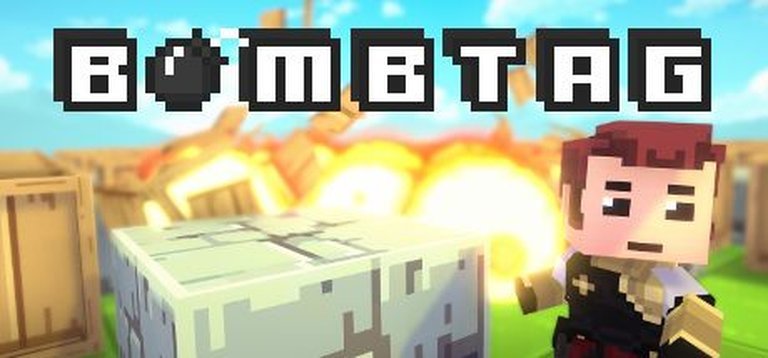
Description
BombTag is a free-to-play online multiplayer game inspired by the classic Bomberman series, offering fast-paced and chaotic arcade-style gameplay. Players drop bombs to destroy crates, collect power-ups, and eliminate opponents while avoiding self-destruction. The game supports up to 8 players per match, featuring two modes (free-for-all and teams) and six maps, with additional content planned. Unique mechanics like bomb-kicking add strategic depth, and matches typically last just a few minutes, making it ideal for quick, competitive sessions.
Where to Buy BombTag
PC
BombTag Guides & Walkthroughs
BombTag Reviews & Reception
steambase.io (84/100): A triumphant return to form for the series.
store.steampowered.com (84/100): Very Positive (84% of 1,520 user reviews for this game are positive).
BombTag: A Modern Homage to Bomberman’s Chaotic Legacy
Introduction: The Spark of a Classic Reimagined
In the vast, ever-shifting landscape of multiplayer gaming, few titles manage to distill the essence of retro arcade chaos into a modern, accessible package. BombTag, released in 2018 by solo developer David Schneider, is one such rarity—a free-to-play, online-only love letter to Bomberman, the iconic franchise that defined competitive bomb-dropping mayhem for decades. At its core, BombTag strips away the frills of contemporary gaming, offering a pure, unadulterated experience of strategy, reflexes, and explosive betrayal.
Yet, beneath its simplistic voxel art and straightforward mechanics lies a game that has quietly carved out a niche among fans of fast-paced, high-stakes multiplayer. With over 1,500 “Very Positive” reviews on Steam and a dedicated (if dwindling) community, BombTag stands as both a testament to the enduring appeal of Bomberman’s formula and a case study in the challenges of sustaining an indie multiplayer game in an oversaturated market.
This review will dissect BombTag from every angle—its development, its gameplay systems, its artistic identity, and its troubled legacy—to answer a fundamental question: Can a game so deeply rooted in nostalgia forge its own path, or is it doomed to live in the shadow of its inspiration?
Development History & Context: A Solo Passion Project in a Crowded Arena
The Studio and the Vision
BombTag is the brainchild of David Schneider, a solo developer who took on the monumental task of designing, programming, and publishing the game independently. In an era where even small indie teams often rely on crowdfunding or publisher support, Schneider’s decision to go it alone speaks to both the accessibility of modern game engines (in this case, Unity 5.6.4f1) and the risks of flying without a safety net.
The game’s development was driven by a clear, unapologetic mission: to recreate the addictive, adrenaline-fueled gameplay of classic *Bomberman while adapting it for online multiplayer. Unlike Hudson Soft’s original series, which thrived in local couch co-op, *BombTag was built from the ground up for online play, a decision that would later prove both its greatest strength and its most glaring weakness.
Technological Constraints and Design Choices
Released in February 2018, BombTag arrived at a time when the indie multiplayer scene was dominated by battle royales (Fortnite, PUBG) and hero shooters (Overwatch). The game’s voxel-based art style—a deliberate callback to Bomberman’s grid-based arenas—was a bold aesthetic choice, eschewing the hyper-realistic or cel-shaded trends of the late 2010s in favor of something more abstract and nostalgic.
Key technical decisions included:
– Unity Engine: Chosen for its accessibility and cross-platform potential (though BombTag remained Windows-exclusive at launch).
– Peer-to-Peer Networking: A cost-effective solution for a solo developer, but one that would later contribute to connectivity issues.
– Minimal System Requirements: The game runs on Intel HD Graphics 4000, making it accessible to low-end PCs—a smart move for a free-to-play title.
The Gaming Landscape in 2018
BombTag entered a market where Bomberman itself was in a state of flux. Konami’s handling of the franchise had been inconsistent, with Super Bomberman R (2017) receiving mixed reviews for its clunky online play. Meanwhile, indie alternatives like TowerFall Ascension and Nidhogg had proven that retro-inspired multiplayer could thrive if executed well.
However, BombTag faced an uphill battle:
1. The Free-to-Play Stigma: While the model removed barriers to entry, it also attracted skepticism about monetization (though BombTag’s microtransactions were limited to cosmetic character customization).
2. The Death of Local Multiplayer: With fewer players owning multiple controllers or gathering for couch co-op, online-only games like BombTag had to rely entirely on matchmaking—always a gamble for indie titles.
3. Discovery Challenges: Steam’s algorithm in 2018 was already flooded with indie games, making visibility a constant struggle.
Despite these hurdles, BombTag managed to find an audience, if only briefly.
Narrative & Thematic Deep Dive: The Silence of the Bombs
The Absence of Story
BombTag is, at its heart, a pure gameplay experience. There is no campaign, no lore, no characters with backstories—just a series of arenas where players drop bombs until only one remains. This minimalism is both a strength and a missed opportunity.
- Strength: The lack of narrative allows the game to focus entirely on its core mechanics, ensuring that every match is about skill, strategy, and quick reflexes.
- Weakness: In an era where even competitive games like Overwatch and Valorant use storytelling to build player attachment, BombTag’s complete absence of personality makes it harder to stand out.
Themes: Chaos, Competition, and Self-Sabotage
While BombTag lacks explicit storytelling, its themes emerge organically from gameplay:
1. Controlled Chaos: The game thrives on the tension between planning (placing bombs strategically) and improvisation (dodging explosions at the last second).
2. Betrayal and Trust: In team modes, friendly fire is always a risk, turning allies into potential threats—a nod to Bomberman’s infamous “last-second betrayal” moments.
3. The Illusion of Skill: As one Steam guide jokingly suggests, “literally don’t place a bomb down and let the other people kill themselves”—a meta-commentary on how luck often outweighs skill in explosive free-for-alls.
Character Customization: A Hollow Attempt at Personality
The game’s sole narrative element is its character customization system, which offers over 800 cosmetic pieces (via a paid “Character Customization Pack”). However, since these customizations have no impact on gameplay and the characters remain silent, faceless avatars, they feel more like a monetization afterthought than a meaningful expression of identity.
Gameplay Mechanics & Systems: The Art of the Explosion
Core Gameplay Loop: Simple to Learn, Hard to Master
BombTag’s gameplay is a refined distillation of Bomberman’s formula:
1. Bomb Placement: Players drop bombs to destroy crates and opponents.
2. Power-Ups: Crates contain random upgrades (e.g., increased bomb range, extra bombs, speed boosts).
3. Kicking Mechanics: Players can slide into bombs to kick them, adding a layer of skill-based maneuvering.
4. Sudden Death: Matches end when only one player or team remains.
The diagonal-down perspective (a rare choice in modern games) ensures that players have a clear view of the arena, though it can take time to adjust to the fixed camera angle.
Game Modes: Variety Without Depth
At launch, BombTag offered:
– Free-for-All (FFA): A classic last-man-standing mode.
– Team Deathmatch: 2v2 or 4v4 battles where teamwork is theoretically encouraged (but often devolves into chaos).
The promise of “more to come!” in the Steam description suggests that Schneider had ambitions for additional modes, but no major updates materialized post-launch.
Progression and Meta-Systems
- Ranked System: A basic ladder system tracks player skill, though matchmaking can be inconsistent due to the game’s small player base.
- Leaderboards: Global rankings add a competitive edge, but without regular tournaments or events, they feel static.
- Controller Support (Beta): A nod to Bomberman’s console roots, though PC players overwhelmingly prefer keyboard/mouse.
Flaws in the Design
- Netcode Issues: Peer-to-peer networking leads to occasional desyncs and lag, a critical flaw in a game where split-second timing is everything.
- Lack of Depth: Unlike Bomberman’s later entries, which introduced environmental hazards and complex power-ups, BombTag’s mechanics remain shallow.
- No Single-Player Content: The absence of bots or a campaign limits the game’s appeal to solo players.
World-Building, Art & Sound: A Minimalist Explosion
Visual Design: Voxels and Nostalgia
BombTag’s voxel art style is its most distinctive feature. The blocky, low-poly aesthetic evokes Minecraft’s early days but with a more polished, arcade-like sheen. The six launch maps (e.g., “Dusty Depot,” “Lava Pit”) are functional but lack the personality of Bomberman’s themed arenas.
- Pros:
- Clean, readable visuals that make it easy to track bombs and power-ups.
- A deliberate throwback to retro gaming.
- Cons:
- The art style feels generic, lacking the charm of Bomberman’s pixel art or the creativity of games like Crossy Road.
Sound Design: The Symphony of Destruction
The audio in BombTag is functional but unmemorable:
– Bomb Explosions: Satisfying crunches and booms.
– Power-Up Pickups: Generic “ding” sounds.
– Music: A forgettable loop that fades into the background.
Unlike Bomberman’s iconic, upbeat soundtracks, BombTag’s audio does little to enhance the experience.
Atmosphere: The Loneliness of the Online Arena
The game’s biggest atmospheric failing is its empty servers. A multiplayer game lives or dies by its community, and BombTag’s player base has dwindled to near-nonexistence in 2024. The occasional “Is this game dead?” thread on Steam is a stark reminder of how quickly indie multiplayer titles can fade without ongoing support.
Reception & Legacy: A Flash in the Pan
Critical and Commercial Reception
- Steam Reviews: 84% Positive (1,520 reviews), with players praising its fast-paced gameplay and faithfulness to Bomberman.
- Metacritic: No critic reviews, highlighting the game’s niche appeal.
- Player Retention: The game saw a brief surge at launch but quickly lost steam (pun intended) due to:
- No post-launch content updates.
- Server connectivity issues (e.g., “Could not connect to database server” errors).
- Lack of marketing beyond Steam’s algorithm.
Influence and Legacy
BombTag’s legacy is one of unfulfilled potential:
– It proved that there was still demand for Bomberman-style games in the modern era.
– Its failure to sustain a player base serves as a cautionary tale for solo developers attempting online multiplayer projects.
– It remains a cult favorite among a small but dedicated group of fans who occasionally revive it for private matches.
Comparisons to Other Games
| Game | Release Year | Developer | Key Differences |
|---|---|---|---|
| Super Bomberman R | 2017 | Konami | Full single-player campaign, local multiplayer, but clunky online. |
| TowerFall Ascension | 2013 | Matt Makes Games | Archer-based combat, more polished netcode. |
| BombTag | 2018 | David Schneider | Free-to-play, online-only, voxel art. |
| Bombfest | 2021 | Wild Bunch | More modern graphics, cross-play, active development. |
Conclusion: A Noble Experiment That Fizzled Out
BombTag is a game that succeeds in its core mission—delivering a faithful, fast-paced Bomberman experience—but fails in its execution. Its lack of post-launch support, shallow mechanics, and reliance on a dwindling player base ultimately doom it to obscurity.
Final Verdict: 6.5/10 – “A Spark That Never Ignited”
- For Fans of Bomberman: A worthy (if flawed) tribute.
- For Competitive Gamers: Too shallow to sustain long-term play.
- For Solo Developers: A lesson in the dangers of online multiplayer without a roadmap.
BombTag will likely be remembered as a footnote in gaming history—a brief, bright explosion that faded too quickly. Yet, for those who experienced its chaotic matches in 2018, it remains a nostalgic reminder of how sometimes, the simplest games can be the most fun.
Final Recommendation: If you can gather a group of friends for private matches, BombTag is a blast. Otherwise, you’re better off digging up an old Bomberman cartridge.
Post-Script: As of 2024, BombTag’s Steam forums are filled with players asking, “Is anyone still here?”—a haunting epitaph for a game that once dared to carry the torch of a legend.