
- Release Year: 1997
- Platforms: DOS, Windows
- Publisher: Japan Software Engineering Shop
- Developer: Electronic Music and Animated Graphics CO., LTD.
- Genre: Action, Puzzle, Strategy, Tactics
- Perspective: Side view, Top-down
- Game Mode: Hotseat, Single-player
- Gameplay: Arcade, Board game, Shooter
- Average Score: 70/100
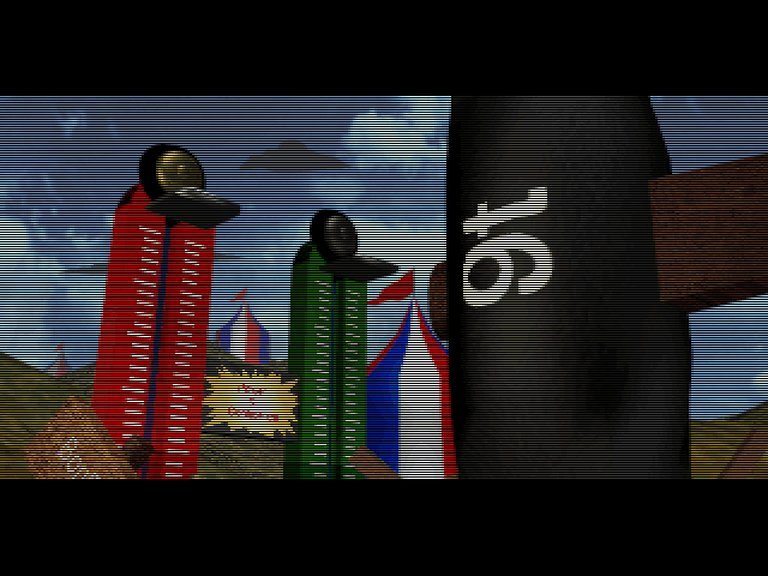
Description
Bon Bon Paradise is a 1997 compilation of 20 simple, arcade-style games, including card games, shooting, billiards, Tetris, and more. The game offers four modes—arcade, travel, versus, and practice—and supports up to two players, with each game featuring its own scoreboard. It also includes support for PC Gun peripherals, blending casual and competitive gameplay in a lighthearted, multi-genre experience.
Bon Bon Paradise Free Download
Bon Bon Paradise Reviews & Reception
mobygames.com (60/100): An above-average arcade title in its time.
myabandonware.com (80/100): This is a fun lightgun party game for pc.
Bon Bon Paradise: A Forgotten Gem of 1997’s Mini-Game Mania
Introduction: The Curious Case of a Lost Arcade Compilation
In the late 1990s, the PC gaming landscape was a wild frontier—a time when developers experimented with everything from full-motion video adventures to bizarre hybrid genres. Amidst this creative chaos, Bon Bon Paradise (1997) emerged as a quirky, overlooked compilation of 20 mini-games, blending arcade action, puzzle-solving, and lightgun shooters into a single, eclectic package. Developed by Electronic Music and Animated Graphics CO., LTD. and published by Japan Software Engineering Shop, this Taiwanese title never achieved mainstream recognition, yet it remains a fascinating artifact of an era when game design was unburdened by modern conventions.
At first glance, Bon Bon Paradise appears to be little more than a digital carnival—a hodgepodge of simple, score-chasing diversions. But beneath its unassuming surface lies a surprisingly ambitious attempt to merge multiple genres into a cohesive, multiplayer-friendly experience. With support for PC light guns, modem/Internet play, and a travel mode that frames its mini-games as a globetrotting adventure, the game defies easy categorization. Was it ahead of its time? A forgotten pioneer of the party-game genre? Or simply a curious footnote in gaming history?
This review seeks to answer those questions by dissecting Bon Bon Paradise in exhaustive detail—its development, its mechanics, its cultural context, and its lasting (or lack thereof) legacy.
Development History & Context: A Taiwanese Oddity in a Japanese-Inspired Era
The Studio Behind the Game: Electronic Music and Animated Graphics CO., LTD.
Little is known about Electronic Music and Animated Graphics CO., LTD. (EMAG), the obscure Taiwanese developer behind Bon Bon Paradise. The studio’s name suggests a focus on multimedia and animation, which aligns with the game’s vibrant, if rudimentary, visual style. Given the era, it’s likely that EMAG was one of many small Asian studios attempting to capitalize on the booming PC gaming market of the mid-to-late ’90s.
The publisher, Japan Software Engineering Shop (JSES), was similarly niche, primarily distributing titles in Taiwan and other East Asian markets. Their involvement hints at a broader trend: Japanese-inspired games being localized and adapted for Taiwanese audiences, often with unique twists.
Technological Constraints & Design Philosophy
Bon Bon Paradise was released in 1997, a transitional year for PC gaming. The industry was shifting from DOS to Windows 95, and while 3D acceleration was becoming mainstream (thanks to Quake and Tomb Raider), many developers still relied on 2D sprites and simple polygons. EMAG’s game reflects this hybrid approach:
- Hardware Requirements: The game demanded a 486DX CPU, VESA-compatible graphics, and mouse/keyboard support, with optional light gun compatibility—a rarity for PC games at the time.
- Multiplayer Ambitions: It supported null-modem, LAN, and even early Internet play, a forward-thinking feature for a mini-game collection.
- CD-ROM Distribution: Unlike many DOS games still shipped on floppies, Bon Bon Paradise embraced the CD-ROM format, allowing for higher-quality audio and more content.
The Gaming Landscape of 1997: A Crowded Carnival
1997 was a golden year for gaming, but also an overcrowded one. Major releases included:
– Final Fantasy VII (PlayStation)
– GoldenEye 007 (N64)
– Fallout (PC)
– Grand Theft Auto (PC/PS1)
Amidst these titans, Bon Bon Paradise was a modest, multi-genre experiment—more akin to WarioWare (which wouldn’t debut until 2003) than the narrative-driven epics dominating the market. Its closest contemporaries were:
– Microsoft Entertainment Pack (1990-1997) – A series of casual Windows games.
– Mario’s Game Gallery (1995) – A licensed Nintendo mini-game collection.
– Carnival Games (1998) – A later, more polished take on the concept.
Yet, Bon Bon Paradise distinguished itself with light gun support (a feature more common in arcades and consoles) and a travel-themed meta-structure, suggesting an attempt to craft a cohesive experience rather than just a loose compilation.
Narrative & Thematic Deep Dive: A Journey Without a Story
The Illusion of a Plot: “Travel Mode” as a Framing Device
Bon Bon Paradise is not a narrative-driven game—it has no characters, no dialogue, and no overarching story. However, its “Travel Mode” attempts to provide a loose thematic throughline:
- Players “visit” different locations (e.g., a casino, a shooting gallery, a billiards hall), each representing a different mini-game.
- The progression is non-linear, allowing players to jump between games at will.
- There is no explicit lore, but the aesthetic—bright, cartoonish, and slightly surreal—evokes a digital amusement park.
Themes: Nostalgia, Competition, and Digital Playgrounds
While Bon Bon Paradise lacks a traditional narrative, its themes emerge through its structure and presentation:
- The Carnival Aesthetic – The game’s visuals and sound design mimic a festive, chaotic arcade, reinforcing the idea of gaming as a social, playful experience.
- Score-Chasing as Progression – Like classic arcade games, the primary motivation is high scores, fostering competition.
- Accessibility Over Depth – The games are simple by design, catering to casual players rather than hardcore gamers.
The Absence of Characters & Dialogue
Unlike WarioWare (which later popularized mini-game compilations with a cast of quirky characters), Bon Bon Paradise is completely devoid of personality. There are no NPCs, no cutscenes, and no textual storytelling. This makes it feel more like a toolset than a game—a sandbox of mechanics rather than a curated experience.
Gameplay Mechanics & Systems: A Smorgasbord of Simple Pleasures
The Four Play Modes
Bon Bon Paradise structures its 20 mini-games around four distinct modes:
- Arcade Mode – A traditional high-score chase, with each game offering increasing difficulty.
- Travel Mode – A loose “world tour” where players unlock games by “visiting” locations.
- Versus Mode – Competitive multiplayer (local or online) for up to two players.
- Practice Mode – A no-pressure way to learn each game’s mechanics.
The 20 Mini-Games: A Breakdown
The game’s core appeal lies in its diverse selection of mini-games, which can be broadly categorized as:
| Category | Examples | Mechanics |
|---|---|---|
| Shooting Gallery | Target practice, duck hunt clones | Light gun or mouse-based aiming |
| Card Games | Poker, blackjack, solitaire | Turn-based strategy |
| Puzzle Games | Tetris clone, matching games | Pattern recognition |
| Action/Reflex | Billiards, cup-stacking, whack-a-mole | Timing and precision |
| Arcade Classics | Space invaders-like shooters | Fast-paced reaction tests |
Standout Games:
- Light Gun Shooters – Rare for PC at the time, these games (e.g., duck hunting, target shooting) were clearly inspired by Nintendo’s Duck Hunt and Sega’s Virtua Cop.
- Billiards – A surprisingly deep physics-based game for the era.
- Tetris Clone – A serviceable, if unremarkable, take on the puzzle classic.
- Cup-Stacking – A simple but addictive timing challenge.
Controls & Input: A Mixed Bag
- Mouse/Keyboard – Most games rely on point-and-click or keyboard inputs, which work fine but lack precision.
- Light Gun Support – A standout feature, but one that required specific hardware (PC Guns like the Konami Justifier).
- Multiplayer Options – Null-modem, LAN, and Internet play were ambitious for 1997, but likely underutilized due to the game’s obscurity.
Progression & Replayability
- Scoreboards – Each game tracks high scores, encouraging replayability.
- Unlocks in Travel Mode – A primitive form of progression, but with little incentive beyond completionism.
- No Deep Mechanics – The games are shallow by design, making Bon Bon Paradise a short-lived novelty rather than a long-term engagement.
Flaws & Missed Opportunities
- Lack of Polish – Many games feel unfinished, with clunky controls and repetitive gameplay.
- No Unified Theme – Unlike WarioWare, there’s no cohesive identity—just a loose collection of ideas.
- Hardware Limitations – The light gun support was innovative but impractical for most PC users.
World-Building, Art & Sound: A Digital Carnival Frozen in Time
Visual Design: A Colorful, Low-Poly Wonderland
Bon Bon Paradise embraces a bright, cartoonish aesthetic that feels like a digital carnival:
- 2D Sprites & Simple 3D – The game uses a mix of pixel art and low-poly models, giving it a hybrid look that was common in late ’90s PC games.
- Vibrant Color Palette – The environments are loud and cheerful, reinforcing the arcade atmosphere.
- Minimal Animation – Characters and objects move stiffly, betraying the game’s budget constraints.
Sound Design: MIDI Melodies and Arcadian Beeps
- Music – The soundtrack consists of upbeat, looped MIDI tracks that fit the carnival theme but lack memorability.
- Sound Effects – Basic bleep-bloops for shooting, card flips, and other actions—functional but unremarkable.
- No Voice Acting – The game is completely silent in terms of dialogue, reinforcing its mechanical, score-driven nature.
Atmosphere: A Digital Playground Without a Soul
While Bon Bon Paradise succeeds in evoking a festive mood, it lacks the charm and personality of later mini-game compilations. There’s no narrative context, no characters to root for, and no world to explore—just a series of abstract challenges.
Reception & Legacy: The Game That Time Forgot
Critical & Commercial Reception: A Non-Entity
- No Major Reviews – Bon Bon Paradise received almost no coverage in Western gaming media.
- Player Scores – On MobyGames, it holds a 3/5 average (based on only two ratings), suggesting mixed but generally positive reception from the few who played it.
- Obscurity – The game was primarily sold in Taiwan, limiting its global reach.
Legacy: A Proto-WarioWare That Never Got Its Due
While Bon Bon Paradise faded into obscurity, its core concept—a rapid-fire mini-game compilation—would later be perfected by:
– WarioWare, Inc. (2003) – Nintendo’s breakout hit that popularized the genre.
– Carnival Games (2007) – A more polished, family-friendly take.
– The Jackbox Party Pack (2014–present) – Modernizing the concept for streaming audiences.
Bon Bon Paradise was ahead of its time in some ways (light gun support, online multiplayer) but too rough and niche to leave a lasting mark.
Conclusion: A Flawed but Fascinating Relic of the Late ’90s
Bon Bon Paradise is not a great game—it’s clunky, repetitive, and lacking in polish. But it is a fascinating time capsule, a bold experiment that attempted to merge arcade action, puzzle-solving, and multiplayer competition into a single package.
Final Verdict: 6/10 – A Curio Worth Preserving
- Strengths:
- Ambitious multiplayer options (for 1997).
- Light gun support (a rare PC feature).
- Variety of mini-games (something for everyone).
- Weaknesses:
- Lack of depth in most games.
- No cohesive identity or narrative.
- Obscurity limited its impact.
Where It Stands in Gaming History
Bon Bon Paradise is not a lost masterpiece, but it is a valuable artifact—a reminder of a time when developers took risks, when mini-game compilations were still a novelty, and when PC gaming was a wild, uncharted frontier.
For retro enthusiasts and gaming historians, it’s worth a playthrough—if only to see what could have been had it received the polish and attention it deserved.
Final Score: ★★★☆☆ (3/5) – A Flawed but Fascinating Experiment
Would it have been a classic with better execution? Possibly. But as it stands, Bon Bon Paradise remains a forgotten footnote—one that deserves to be remembered, if not revered.