
- Release Year: 2019
- Platforms: Nintendo Switch, Windows, Xbox One, Xbox Series
- Publisher: Oizumi Amuzio Inc., Ultimate Games S.A.
- Developer: Mad Gamesmith
- Genre: Action
- Perspective: Side view
- Game Mode: Co-op, Single-player
- Gameplay: Mini-games, Platform
- Setting: Fantasy
- Average Score: 49/100
Description
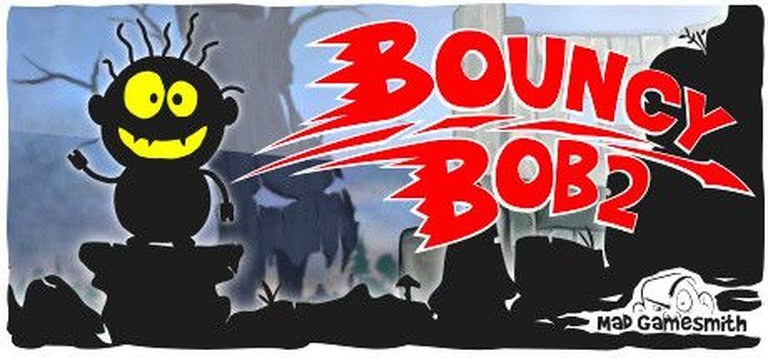
Bouncy Bob 2 is a side-scrolling, 2D platformer that immerses players in a fantasy world where the primary mode of movement is jumping. Developed by Mad Gamesmith and published by Ultimate Games S.A., the game features a unique mechanic where players can only jump, adding a layer of strategy and challenge. Players can engage in various game modes, including a single-player tower mode and multiplayer arena battles, with up to four players competing to achieve the highest KO count. The game is available on multiple platforms, including Windows, Nintendo Switch, and Xbox Series.
Gameplay Videos
Where to Buy Bouncy Bob 2
PC
Bouncy Bob 2 Guides & Walkthroughs
Bouncy Bob 2 Reviews & Reception
theswitcheffect.net : The concept is certainly interesting, and deserves some exploration, but does it deserve a spot in your hallowed party game lineup?
metacritic.com : There are no critic reviews for this game yet.
store.steampowered.com (63/100): 63% of the 11 user reviews for this game are positive.
mygamer.com (35/100): And when jumping is the worse part about this game, only frustration, hatred, and rage quitting is guaranteed.
nsgreviews.com : * Disclaimer: Reviews are from the Steam (PC) version of the game. These are not indicative of performance on Switch.
Bouncy Bob 2: A Chaotic Leap of Faith
A Comprehensive Analysis of a Divisive Party Game Sequel
Introduction
In 2017, Bouncy Bob arrived as a low-budget indie curiosity—a game so mechanically shallow it became infamous for selling at $0.01 on the Nintendo Switch eShop, racking up over 300,000 downloads purely through price osmosis. Two years later, Bouncy Bob 2 emerged, doubling down on its predecessor’s janky charm but inheriting its seismic flaws. Developed by Polish studio Mad Gamesmith and published by Ultimate Games, this couch co-op party title aimed to refine its bounce-centric combat while expanding its multiplayer offerings. Yet, the question remains: Does it transcend its origins as a bargain-bin oddity, or is it merely another missed jump? Through this review, we dissect Bouncy Bob 2’s design, legacy, and paradoxical appeal as a “so bad it’s almost fun” experiment in indie game excess.
Development History & Context
Studio Vision & Constraints
Mad Gamesmith, a small team known for rudimentary arcade titles like Foodtruck Arena and Gallic Wars: Battle Simulator, positioned Bouncy Bob 2 as a “crazy couch co-op experience” (Steam). Built in Unity, the game targeted a 2019 market saturated with indie party games like Overcooked! and Cake Bash. However, lacking the polish or budget of its contemporaries, Bouncy Bob 2 relied on sheer absurdity: a combat system where characters could only jump and swipe swords mid-air, alongside modes parodying Fruit Ninja and volleyball.
The Discount Dilemma
The original Bouncy Bob’s commercial “success” was purely transactional—a race-to-the-bottom pricing strategy that prioritized volume over quality. The sequel, priced at $4.99 (frequently discounted to $0.74), followed suit, banking on Steam sales and Switch eShop visibility. This approach reflected the broader indie ecosystem’s struggle for attention, where even negative press could drive curiosity purchases.
Narrative & Thematic Deep Dive
Bouncy Bob 2 is thematically sparse, opting for cartoonish chaos over storytelling. The premise is simple: 12 silhouette-style characters (customizable in color) battle across 14 arenas in five modes. The lack of dialogue or lore reduces the experience to pure gameplay—a deliberate choice that aligns with its arcade ambitions.
Themes of Controlled Chaos
The game thrives on unpredictability, embodying a “party game for people who hate precision” ethos. Modes like Swarm (a horde defense against zombies) and Blender (a Fruit Ninja clone) lean into absurdity, while Volleyball and Arena mode encourage frenetic, laughter-driven competition. The absence of narrative depth isn’t a flaw but a design pillar: this is a game about embracing chaos, not mastering it.
Gameplay Mechanics & Systems
Core Loop: Jump or Die
Movement is restricted to jumping—a mechanic governed by a swaying arrow that determines trajectory. Holding the jump button longer increases distance, while directional inputs stabilize aim. Attacks, limited to sword swipes and temporary power-ups (e.g., bombs, throwing stars), suffer from notorious hitbox inconsistencies. As critic Zachary Gasiorowski noted, “Getting close to enemies on purpose is nearly impossible” (MyGamer).
Modes Galore, Polish Scarce
– Tower Challenge: A single-player gauntlet with escalating AI difficulty.
– Arena Mode: 4-player free-for-all combat.
– Swarm: Co-op survival against zombie waves.
– Blender: Fruit-chopping score attacks.
– Volleyball: A ludicrous sword-based parody of the sport.
While creative, these modes are hampered by unresponsive controls and “frequent and long load times” (MyGamer). The Switch version faced additional criticism for Pro Controller sync issues.
UI & Progression
The interface is functional but barebones, with minimal tutorials. Character progression is nonexistent—a missed opportunity to incentivize replayability.
World-Building, Art & Sound
Visuals: Silhouettes & Simplicity
The hand-drawn art style features stark silhouettes accented by splashes of color, evoking a Limbo-meets-Club Penguin aesthetic. Platforms and arenas are clearly distinguishable, but environments lack detail, reinforcing the game’s minimalist arcade roots.
Sound Design: Forgettable but Inoffensive
Cartoonish tunes and slapstick sound effects complement the chaos without standing out. As The Switch Effect noted, “The soundtrack really doesn’t draw a lot of attention to itself”—a blessing for multiplayer sessions where player banter takes priority.
Reception & Legacy
Critical Pan, Commercial Niche
Bouncy Bob 2 garnered Mixed reviews on Steam (63% positive) and scathing critiques elsewhere. Reviewers universally panned its controls, with John Bush calling it “inaccurate and hard to control” (The Switch Effect). Despite this, its ultra-low price point secured a cult following among budget hunters and ironic game-night enthusiasts.
Industry Impact
The game’s legacy lies not in innovation but in highlighting the indie market’s race to the bottom. It serves as a case study in how aggressive pricing can drive downloads despite poor quality—a trend amplified by digital storefronts’ discount algorithms.
Conclusion
Bouncy Bob 2 is a tragicomedy of game design: a title so enamored with its own zaniness that it forgets to be fun. While its multiplayer modes spark fleeting moments of laughter, the clunky controls, lack of depth, and technical issues render it a frustrating novelty. For $0.74, it’s a passable curiosity for drunk game nights; at full price, it’s an unconscionable ask. In the annals of video game history, Bouncy Bob 2 will be remembered not as a so-bad-it’s-good gem but as a cautionary tale—proof that even the bounciest protagonist can’t leap over a low bar.
Final Verdict: ★★☆☆☆ (2/5) — A dollar-store party game with a heart of gold… and hands of butter.