
- Release Year: 2023
- Platforms: Android, iPad, iPhone, Windows
- Publisher: Snapbreak Games AB
- Developer: Big Loop Studios Ltd, Snapbreak Games AB
- Genre: Puzzle, Sliding block, Tile puzzle
- Perspective: 1st-person
- Game Mode: Single-player
- Gameplay: Escape room, Mechanical puzzles, Point-and-click, Puzzle
- Setting: Mystery
- Average Score: 86/100
Description
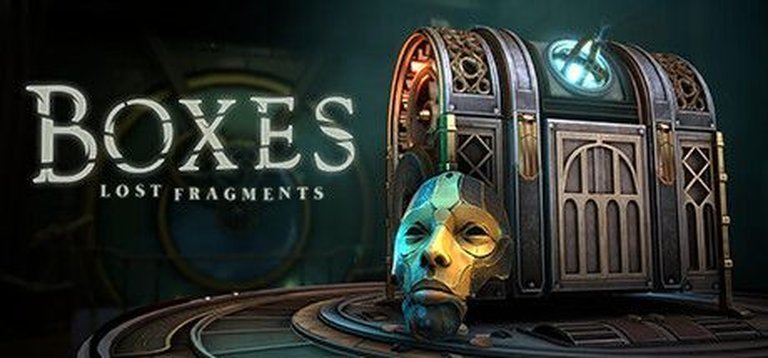
Boxes: Lost Fragments is a first-person puzzle game that challenges players to solve intricate sliding block and tile puzzles within mysterious, beautifully designed boxes. Developed by Snapbreak Games AB and Big Loop Studios Ltd, the game features stunning visuals and an immersive atmosphere as players unlock secrets and navigate increasingly complex challenges across multiple platforms including iPhone, iPad, Windows, and Android, offering a relaxing yet mentally engaging experience praised for its clever design and addictive gameplay.
Gameplay Videos
Where to Buy Boxes: Lost Fragments
PC
Boxes: Lost Fragments Free Download
Boxes: Lost Fragments Patches & Updates
Boxes: Lost Fragments Guides & Walkthroughs
Boxes: Lost Fragments Reviews & Reception
opencritic.com (82/100): Boxes: Lost Fragments is a shining example of puzzle video gaming, wonderfully constructed and utterly absorbing.
metacritic.com (84/100): Boxes: Lost Fragments offers a polished and engaging puzzle experience. The game’s stunning visuals, immersive atmosphere, and cleverly designed puzzles offer a satisfying challenge for players of all experience levels.
playnforge.com : Overall, this is a perfect quick and fun game to play on a lazy afternoon. It’s equally challenging and pretty, and it will give you some head-scratching puzzles to solve.
Boxes: Lost Fragments Cheats & Codes
Mobile (iOS/Android)
Open the game and wait until you’re on the main menu screen (not in a puzzle). Tap the gear icon (⚙️) in the upper-right corner — that’s your Settings menu. Scroll down and look for “Enter Code” or “Promo Code”—sometimes it takes a second to appear if there’s a server-side delay. Tap that, then type or paste the code into the field. Double-check for spaces; the game hates extra whitespace. Hit Confirm—and if it’s valid, you’ll get a pop-up showing your reward.
| Code | Effect |
|---|---|
| FRACTAL25 | 25 hint credits |
| LOSTKEYS | Unlock bonus side room |
| MINDVAULT | Double reward multiplier |
| GOLDENGEAR | 1,000 in-game coins |
Mobile (Other)
Step 1: Visit the official Boxes: Lost Fragments website. Step 2: Access the code input section within the game interface. Step 3: Enter the code to unlock exclusive in-game content.
| Code | Effect |
|---|---|
| 2bd44f6e81 | free rewards |
| 2756d3c2e4 | 1000 free spins |
| 38a7061e5 | 253 spins |
| 2ab5357be2 | 1000 free spins |
| d3f2b6e16 | Coins, Spins and Gems |
| 21f3a7701f | 1000 free spins |
| 2c34b29ce1 | Coins, Spins and Gems |
| e0cd6399e | Random gifts |
| 1201c64784 | 1000 free spins |
| 474f2951e | Free character |
| d5a74bdcd | Coins, Spins and Gems |
| 3e9300aa1 | free rewards |
| 10e8e36a67 | free rewards |
| 11b902b2a | free rewards |
| 29ef134c9f | free rewards |
| 2e10be80a1 | free rewards |
| 30761b332e | free rewards |
| 21963e53b4 | free rewards |
| 686edf595 | free rewards |
Boxes: Lost Fragments: Review
Introduction
In the ever-evolving landscape of puzzle games, few titles manage to blend intricate mechanics with atmospheric storytelling as seamlessly as Boxes: Lost Fragments. Developed by Bulgaria’s Big Loop Studios and published by Sweden’s Snapbreak Games, this cryptic adventure debuted in October 2023 on iOS before arriving on PC in February 2024, followed by console ports in November 2025. Drawing inspiration from classics like The Room but carving its own niche through narrative depth and mechanical ingenuity, Boxes: Lost Fragments stands as a testament to the enduring appeal of tactile, immersive puzzle-solving. This review dissects its development, narrative, gameplay, and legacy, arguing that while its brevity and thematic simplicity temper its ambition, its polished execution and accessibility make it a standout achievement in the genre.
Development History & Context
Big Loop Studios, a veteran developer with over 30 million players across titles like Doors: Paradox, conceived Boxes: Lost Fragments as a deliberate pivot toward intricate, multi-layered mechanical puzzles. The project spanned an arduous 30-month development cycle—far exceeding initial projections—a period that proved pivotal. Late-stage innovations, such as a “tower-like upward progression” system, were introduced in the final three months, refining the game’s core loop. Crucially, developers embraced community feedback: an early ending was scrapped after player criticism, while playtesting led to expanded puzzle designs, new game modes, and enhanced accessibility features.
Technologically, the game leverages Unity to render its 3D environments, enabling the team to prioritize high-fidelity visuals and smooth animations. Released amid a puzzle-game renaissance dominated by The Room and Faraway: Puzzle Escape, Boxes: Lost Fragments filled a niche for players seeking narrative-driven escapism without the punishing difficulty of its contemporaries. Its cross-platform strategy—initially mobile, then PC and consoles—reflected Snapbreak Games’ focus on accessible, high-quality experiences, with the studio ensuring consistent performance across devices. This meticulous development ethos culminated in a product that, despite delays, exemplifies iterative refinement.
Narrative & Thematic Deep Dive
Boxes: Lost Fragments weaves a beguiling tale of mystery and control through the lens of a heist gone awry. Players assume the role of a legendary thief infiltrating a lavish mansion, only to discover the residence is a labyrinthine prison of enigmatic puzzle boxes. As they progress, cryptic notes reveal a sci-fi-infused backstory involving artificial intelligence, dark matter, and the fragility of human agency. The narrative unfolds through environmental storytelling—notes hidden within boxes and rooms—gradually exposing the mansion’s true purpose: a vessel for harnessing “dark matter,” an ethereal substance tied to consciousness and control.
Thematic depth lies in its exploration of loss and the illusory nature of autonomy. The thief’s initial confidence erodes as puzzles reveal they are not in control but part of a larger experiment. Dialogue is sparse yet potent, with notes dripping with existential dread (“I’m dark matter. The universe inside me is full of something, and science can’t even shine a light on it”). The climax—a cliffhanger suggesting the mansion is a “containment field” for human consciousness—leaves players grappling with questions of identity and freedom. While some critics note the narrative’s brevity, its integration with puzzle mechanics—each box fragment peeling back layers of the mystery—creates a cohesive, haunting journey.
Gameplay Mechanics & Systems
At its core, Boxes: Lost Fragments is a triumph of mechanical design, marrying point-and-click simplicity with layered complexity. Each of the five chapters unfolds in a distinct mansion section (e.g., steampunk laboratories, ornate libraries), where players solve interconnected boxes to unlock fragments. These fragments, in turn, resolve central room puzzles, creating a rewarding loop of discovery.
The boxes themselves are marvels of ingenuity: each features four sides with varied puzzles—from Aztec-themed symbol matching to railroad-inspired logic gates. Solutions require careful observation, experimentation, and attention to subtle sound cues (e.g., a chime indicating alignment). Puzzles escalate in sophistication, blending mechanical manipulation (e.g., rotating cogs) with object-based riddles. Notably, the game eschews timers or combat, fostering a relaxed, contemplative pace. Accessibility is a strength: a hint system offers contextual nudges rather than solutions, while a skip function ensures no player is permanently stuck.
However, systems have flaws. Mouse controls on PC occasionally lack precision, requiring pixel-perfect clicks that frustrate. Puzzles, while clever, can feel formulaic after repeated playthroughs, with solutions mirroring patterns from earlier boxes. Character progression is nonexistent—players gain no abilities, relying solely on wits—which limits long-term engagement. These quibbles aside, the core loop remains compelling, balancing challenge with satisfaction.
World-Building, Art & Sound
Boxes: Lost Fragments’s mansion is a character unto itself, a realm where every texture and shadow breathes mystery. The art direction, heavily inspired by The Room, uses a steampunk aesthetic with meticulous attention to detail: brass gears, ornate carvings, and weathered woodwork populate each box, rendered with Unity’s capabilities to create tactile realism. Environmental storytelling shines in rooms like a decaying library or a neon-drenched laboratory, where visual motifs (e.g., recurring clockwork imagery) reinforce themes of entropy and control. The color palette contrasts warm oranges with cool teals, enhancing the uncanny atmosphere.
Sound design elevates immersion beyond mere visuals. Minimalist ambient soundscapes—droning echoes and ethereal hums—create unease, punctuated by satisfying mechanical clicks and whirs as boxes react to interaction. Audio cues guide players subtly; for instance, a soft chime signals puzzle completion. This synergy of art and sound transforms mundane actions into sensory delights, making even the most complex puzzles feel organic. On consoles, haptic feedback further enhances tactile engagement, though mobile versions occasionally lose nuance in translation.
Reception & Legacy
Upon release, Boxes: Lost Fragments garnered critical acclaim, with a Metascore of 84 and OpenCritic average of 82%. Critics lauded its “polished and engaging puzzle experience” (Movies Games and Tech), praising its visual splendor and “addictive” gameplay (Gameluster). The accessibility features resonated with newcomers, while veterans appreciated the creativity in puzzle design. However, critiques centered on its brevity (3–6 hours) and “thin narrative” (GameGrin), with some puzzles dismissed as “predictable” (Indie Hive).
Player reception on Steam was equally enthusiastic, with a 93% “Very Positive” rating from over 4,800 reviews. Players celebrated its “mesmerizing” art and “satisfying” solutions, though echoed concerns about length and replayability. Commercially, the game performed steadily, buoyed by cross-platform availability and a $14.99 price point (discounted frequently).
Legacy-wise, Boxes: Lost Fragments has cemented Big Loop Studios’ reputation for quality in the puzzle genre. Its influence is evident in titles prioritizing atmospheric immersion over sheer difficulty, while its community-driven refinements set a benchmark for player-inclusive development. Though unlikely to spawn a franchise, its cliffhanger ending and mechanical ingenuity ensure it remains a touchstone for puzzle enthusiasts.
Conclusion
Boxes: Lost Fragments is a masterclass in focused design—a short, potent journey that lingers long after completion. Its narrative, while concise, weaves a compelling tapestry of mystery and control, elevated by breathtaking visuals and sound. Gameplay, though occasionally hindered by precision issues or repetition, excels in its balance of challenge and accessibility. As a historical artifact, it exemplifies the power of iterative development and community feedback, proving that even a “flawed” gem can achieve greatness.
For fans of The Room or Doors: Paradox, this is an essential play—its brevity a virtue, not a flaw. Yet for those seeking narrative depth or extreme challenge, its shortcomings may overshadow its brilliance. Ultimately, Boxes: Lost Fragments stands as a testament to the adage that less can be more: a meticulously crafted puzzle box, its secrets as layered and satisfying as the game itself. It earns a resounding recommendation as a modern classic, warts and all.