
- Release Year: 2008
- Platforms: Linux, Macintosh, OnLive, PlayStation 3, Windows, Xbox 360, Xbox One
- Publisher: Game Factory Interactive Ltd., Hothead Games, Inc., Microsoft Corporation, MumboJumbo, LLC, Number None Inc., Russobit-M, UTV Ignition Entertainment Ltd., ZOO Corporation
- Developer: Number None Inc.
- Genre: Action, Puzzle
- Perspective: Side view
- Game Mode: Single-player
- Gameplay: Platforming, Puzzle-solving, Rewinding, Time manipulation
- Setting: Fantasy
- Average Score: 62/100
Description
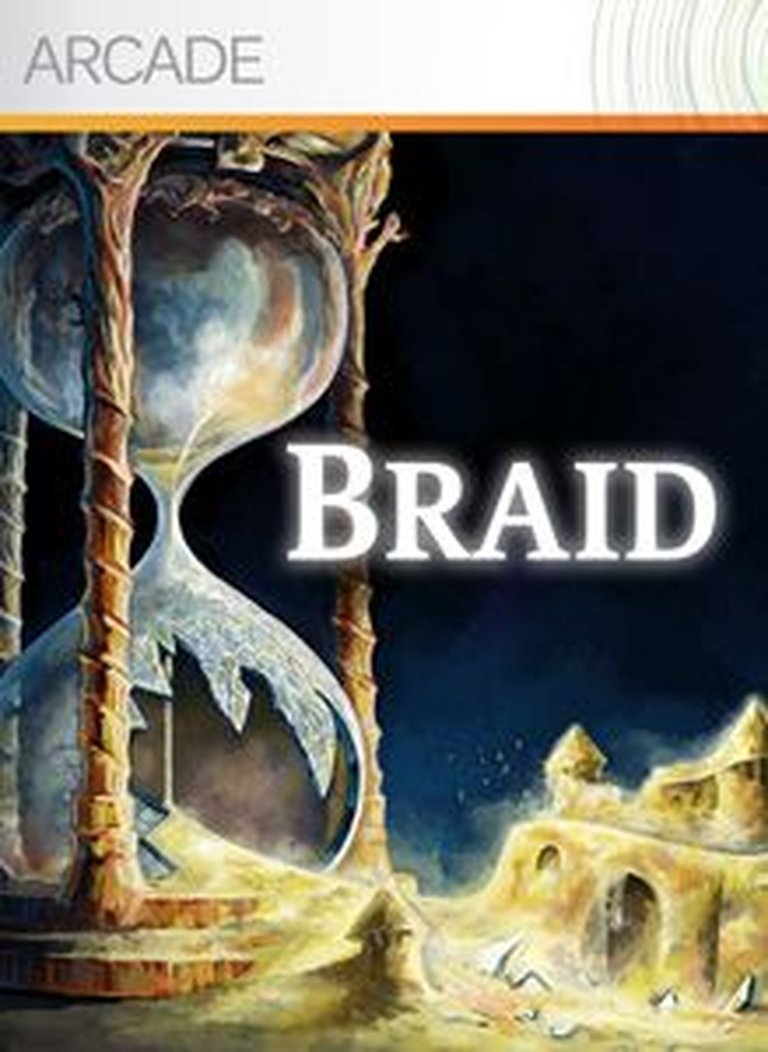
Braid is a puzzle-driven 2D platformer where players control Tim on a quest to rescue a mysterious princess, set across six surreal worlds. The game revolves around innovative time manipulation mechanics, allowing players to rewind actions at will, collaborate with past selves, and alter time through movement and environmental interactions. Each world introduces unique twists on time, requiring strategic puzzle-solving and exploration, while fragmented narrative pieces reveal Tim’s emotional journey. The minimalist design ensures every element serves a purpose, culminating in a thought-provoking finale that recontextualizes the story.
Gameplay Videos
Where to Buy Braid
Braid Free Download
Braid Cracks & Fixes
Braid Mods
Braid Guides & Walkthroughs
Braid Reviews & Reception
metacritic.com (93/100): A triumphant return to form for the series.
reddit.com : Braid (2008) has aged pretty poorly.
imdb.com (10/100): One of the most original games of all time and of the greatest platform games of all time. Genius.
ign.com (85/100): Braid is a platformer/puzzle game with unique elements that aim to provide a mind-expanding, filler-free experience.
Braid: A Temporal Masterpiece in Gaming’s Tapestry
Introduction
In the annals of video game history, few titles have dared to intertwine mechanics, narrative, and artistry as provocatively as Braid. Released in 2008 by indie developer Jonathan Blow, this puzzle-platformer ignited debates about gaming’s artistic potential while redefining player expectations. At its core, Braid disguises existential melancholy within a deceptively cheerful facade, weaponizing time itself as both a gameplay tool and a narrative device. This review posits that Braid stands not merely as a game, but as a watershed moment in indie development—a philosophical interrogation of regret, perception, and the medium’s untapped potential.
Development History & Context
A Vision Born of Dissent
Jonathan Blow, a vocal critic of mainstream gaming’s “unethical” reward systems (as noted in MobyGames reviews), conceived Braid in 2004 as a rebuttal to industry conventions. Self-funded with $180,000 over three years, Blow collaborated with webcomic artist David Hellman (A Lesson Is Learned But The Damage Is Irreversible) to craft its painterly aesthetic. The game emerged during Xbox Live Arcade’s nascent indie boom, a landscape dominated by arcade ports and bite-sized experiences. Technologically, Braid leveraged 2D simplicity to subvert expectations, sidestepping the era’s obsession with 3D fidelity to focus on systemic innovation.
Blow’s design ethos rejected compromise. He famously clashed with Microsoft over Xbox Live certification demands, refusing to dilute puzzles with hand-holding prompts. This stubbornness reflected a broader indie rebellion against homogenized design, positioning Braid as a manifesto against titles like World of Warcraft, which Blow derided as “the junk food of gaming.”
Narrative & Thematic Deep Dive
A Labyrinth of Regret
Braid’s narrative operates on four interconnected layers:
1. Surface Myth: Tim’s quest to rescue a princess from a monster, echoing Super Mario Bros. tropes.
2. Textual Fragments: Books in each world reveal Tim’s introspection—obsession, failure, and a “mistake” he seeks to undo.
3. Mechanical Allegory: Time manipulation mirrors Tim’s fixation on rewriting history. The rewind function isn’t a convenience; it’s a prison of reflection.
4. The Atomic Subtext: Hidden stars and the phrase “Now we are all sons of bitches” (per Wikipedia) imply a reading of Tim as a Manhattan Project scientist, the princess symbolizing the atomic bomb.
The finale’s temporal inversion exposes Tim as the monster—the princess flees him, not toward him. This twist, described by Eurogamer as “jaw-dropping,” recontextualizes the journey as a meditation on culpability and the impossibility of absolution. Blow’s refusal to clarify the story (“something big and subtle and resists being looked at directly”) invites interpretations ranging from personal grief to Cold War allegory, cementing Braid as gaming’s Mulholland Drive.
Gameplay Mechanics & Systems
Time as a Puzzle, Time as a Prison
Braid’s genius lies in its six worlds, each introducing a unique temporal law:
| World | Mechanic | Design Philosophy |
|---|---|---|
| Time & Forgiveness | Unlimited rewind | Erasing failure, enabling experimentation |
| Time & Mystery | Green-glowed objects resist time reversal | Synchronization puzzles |
| Time & Place | Horizontal movement dictates time’s flow | Spatial-temporal entanglement |
| Time & Decision | Shadows replay past actions | Collaboration with oneself |
| Hesitance | Time-dilation ring | Localized relativity |
| World 1 | Universal time reversal | Narrative climax |
Puzzles demand “theoretical solving” (Sciere, MobyGames)—players must visualize solutions before execution. A notorious example: using a shadow clone to hold a switch while the present Tim advances. The absence of death (thanks to rewind) eliminates punishment, focusing entirely on cognitive labor. Yet, this elegance has limits. Some puzzles, like pixel-perfect platforming in World 4, frustrate with trial-and-error gauntlets (Mark Langdahl, MobyGames). Still, the lack of filler—every platform, enemy, and lever serves a purpose—embodies Blow’s “mathematical precision.”
World-Building, Art & Sound
A Canvas of Melancholy
David Hellman’s art blends Impressionist tranquility with surreal dissonance. Backgrounds blur into watercolor dreamscapes (e.g., World 5’s rotting piers against opulent furniture), while foreground elements remain crisply interactive. Particle effects—waving grass, drifting clouds—subtly animate this stillness, creating a world that feels alive yet frozen.
The soundtrack, featuring Jami Sieber’s cello and Shira Kammen’s folk strains, reverses seamlessly with time, its melodies warping into haunting echoes. Tracks like “Downstream” synchronize with gameplay to evoke longing—a “soothing” counterpoint to frustration (Wired). This audiovisual harmony culminates in moments like rewinding a death: music flows backward, petals reassemble, and time itself becomes a tactile medium.
Reception & Legacy
From Indie Darling to Canonical Classic
Braid’s 2008 launch sold 55,000 copies in a week (Wikipedia), eventually moving 450,000 units by 2012. Critics hailed it as a “masterpiece” (Official Xbox Magazine), earning a 93 Metacritic score and awards from IGF (Innovation in Game Design) to BAFTA (Artistic Achievement). Debates flared over its $15 price—steep for a 4-6 hour experience—but its legacy transcended commerce.
The game’s influence permeates indie design:
– Philosophical Puzzles: The Witness (Blow’s 2016 follow-up) expanded on environmental storytelling.
– Narrative Mechanics: Portal and Inside later echoed Braid’s diegetic storytelling.
– Indie Viability: Proved small teams could achieve critical/financial success sans publishers, paving the way for Fez and Celeste.
Academia embraced Braid as a case study in ludonarrative resonance, while its Anniversary Edition (2024)—with developer commentary and remastered art—reaffirmed its timelessness.
Conclusion
A Monument to Medium
Fifteen years post-release, Braid remains indelible—a game that marries brain-teasing ingenuity with poetic solemnity. It challenges players not just to solve puzzles, but to confront the weight of irrevocable choices. While its difficulty spikes and opaque storytelling may alienate some, these are not flaws but provocations. In deconstructing platformer tropes and weaponizing time, Braid transcends its genre, joining the pantheon of works like Shadow of the Colossus and Portal that redefine gaming’s expressive boundaries. For historians and players alike, it is essential: a testament to indie gaming’s transformative power and a beacon for what the medium can achieve when artistry eclipses convention.
Final Verdict: A masterpiece of interactive storytelling, Braid is not merely played—it is unraveled, contemplated, and endured. Its place in history is as unshakable as the tragedies it so elegantly encrypts.