
- Release Year: 2022
- Platforms: Windows
- Publisher: Piece Of Voxel
- Developer: Piece Of Voxel
- Genre: Action
- Perspective: 1st-person
- Game Mode: Single-player
- Gameplay: Puzzle elements, Survival horror
- Setting: Horror
- Average Score: 38/100
Description
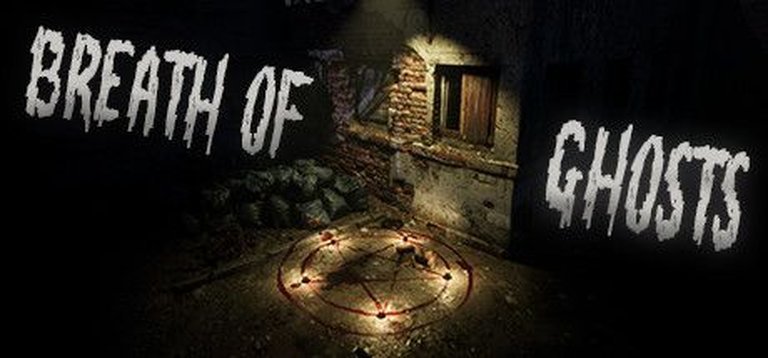
Breath of Ghosts is a first-person horror game that immerses players in an atmosphere of fear. They must collect clues, solve puzzles, and escape ghosts while navigating a world filled with mysterious energy entities. Survival is the key as these entities can sometimes physically harm or even kill the player.
Gameplay Videos
Where to Buy Breath of Ghosts
PC
Breath of Ghosts Cracks & Fixes
Breath of Ghosts: A Fractured Ode to Haunted Energy
In the saturated landscape of indie horror, where jump scares and gore often overshadow narrative ambition, Breath of Ghosts emerges as a curiously compelling enigma. Released in June 2022 by the solo developer Piece Of Voxel, this first-person survival horror title dares to frame the supernatural not as ectoplasmic phantoms or vengeful spirits, but as sentient manifestations of ambient energy itself. With its starkly realistic 3D environments, a world steeped in unseen forces, and a gameplay loop centered on fragile survival, Breath of Ghosts offers a uniquely disquieting experience—one that, despite its technical and design flaws, carves out a memorable niche in the genre. This exhaustive review dissects its development, narrative mechanics, artistic vision, and enduring legacy to determine whether its haunting premise transcends its execution.
Development History & Context: The Spark of a Solo Vision
Breath of Ghosts is the brainchild of Piece Of Voxel, a developer whose identity remains as elusive as the entities within the game. Operating outside the traditional AAA or mid-tier studio structures, Piece Of Voxel crafted this title with a clear, albeit ambitious, vision: to translate a scientifically tinged horror concept into interactive form. The game’s core premise—that the world is suffused with energy that coalesces into sentient “ghosts”—is rooted in a blend of quantum physics speculation and paranormal lore. This foundation suggests a desire to ground the supernatural in a pseudo-scientific framework, offering players not just scares, but a chilling reimagining of reality itself.
Technologically, the game leveraged Unreal Engine or similar middleware to deliver its “realistic 3D graphics,” a stated goal aiming for immersion over stylized abstraction. However, this focus came with constraints. The lack of graphics settings, a frequent and pointed complaint in the Steam community discussions (notably threads like “Why no Graphic settings?”), points to a development cycle prioritized on core functionality and atmosphere over technical customization or graphical fidelity. The era of its release (2022) was one of intense competition in the indie horror space. Titles like Resident Evil Village and The Medium set high graphical and narrative bars, while a flood of low-budget horror games crowded Steam. Breath of Ghosts entered this fray with a low price point ($2.49 at launch, often steeply discounted), aiming for accessibility and a niche audience drawn to its unique energy-ghost concept. Its development was likely a passion project, reflecting the personal vision of its creator amidst the pressures of a crowded market and the technical limitations often faced by solo or small-team developers.
Narrative & Thematic Deep Dive: Whispers in the Static
The narrative of Breath of Ghosts unfolds not through traditional cutscenes or character dialogue, but through environmental storytelling and the collection of fragmented clues—notes, photographs, and cryptic documents. The protagonist, unnamed and silent, is an ordinary individual who stumbles upon the terrifying truth: the world is permeated by energy entities, “ghosts” that exist as barely visible, transparent “blobs of pure energy.” These beings, the game posits, are a natural consequence of the universe’s energy saturation. Most of the time, they pass harmlessly through humans, “moving through us painlessly.” But occasionally, they can physically interact, causing injury or death. The protagonist’s “luck” is to have experienced this interaction firsthand, becoming trapped in a reality where the unseen is lethally real.
The plot is driven by the need to survive and escape. This manifests as navigating decaying environments—abandoned buildings, shadowy streets—while piecing together the lore of these energy entities. The notes and photographs serve as the primary narrative devices, often written in a detached, observational tone that reinforces the game’s pseudo-scientific bent. Phrases like “colossal amount of energy that so far humanity has not been able to use for its needs” and “energy has learned to absorb such a species as energy entities” establish a worldview where the supernatural is reframed as misunderstood physics. This lack of overt human drama or character development shifts the focus entirely to the environment and the pervasive, inhuman threat.
Thematically, the game explores profound unease through its lens of invisible forces. It taps into primal fears of the unseen and the vulnerability of the human body to forces beyond comprehension. The energy entities embody this threat—they are not malicious in a human sense, but are simply other, existing on a different plane of reality that intersects dangerously with our own. This creates a profound sense of existential dread. The game also subtly critiques human ignorance, suggesting our perception of reality is limited and dangerous. The protagonist’s journey becomes a metaphor for confronting the terrifying unknown within our own world. While the narrative is skeletal and delivered through often obtuse environmental clues, its core concept—the horror of coexisting with lethal, invisible energy—is undeniably potent and original, even if its execution leaves much to be desired in terms of player guidance or emotional payoff.
Gameplay Mechanics & Systems: Fragile Steps and Flickering Shadows
Breath of Ghosts adheres to a first-person perspective, emphasizing immersion and direct control. The core gameplay loop revolves around exploration, environmental puzzle-solving, and tense evasion, rather than direct combat. Players traverse realistically rendered (though often bug-ridden) environments, searching for key items: notes that reveal backstory, clues to progress, and photographs that document the entities or the environment itself. These items are integrated into the game’s puzzle mechanics, requiring players to piece together information, solve spatial riddles, or interact with objects in specific sequences to unlock new areas or paths.
Combat, as understood in traditional action games, is notably absent. The description explicitly states the goal is “escaping various entities or ghosts.” Encounters with the energy entities are therefore sequences of pure survival horror. The player must rely on stealth, evasion, and environmental hiding to avoid detection. The threat is often indicated by subtle environmental cues—a sudden drop in temperature, a flickering light, an unnerving sound cue—before the entity itself becomes visible, albeit fleetingly, as a distortion in the air or a faint shimmering outline. This design choice heightens tension; the player is perpetually vulnerable, with no means to fight back, forcing reliance on observation, timing, and courage.
Character progression is minimal, if present at all. The sources do not mention health upgrades, skill trees, or inventory management beyond the basic collection of clues. The UI is described as “direct control,” implying a minimalist interface focused on movement and interaction. However, this simplicity became a point of contention. Community discussions repeatedly highlighted the lack of basic options like graphics settings, volume controls, or even a clear inventory system (e.g., “How do you use the items in inventory?”). This lack of polish extends to game mechanics. User-reported bugs, detailed in screenshots and discussions (like “Застрял, без возможности вылезти” – Stuck without a way out, or “Лестницы ведут в ‘затекстурье'” – Stairs leading into ‘texture hell’), indicate significant technical issues with collision detection, level design, and texture streaming. These flaws actively undermine the gameplay loop, turning moments of potential dread into frustrating technical hurdles. The game lacks achievements, another requested feature, further diminishing the sense of progression or accomplishment for players seeking more than just a brief, atmospheric experience.
World-Building, Art & Sound: A World of Unseen Currents
The world of Breath of Ghosts is its most compelling element. Set in ordinary modern environments—cities, villages, abandoned structures—it reframes the mundane as deeply unsettling. The core premise dictates that these energy entities “live everywhere, in our cities and villages,” subtly warping perception. The art direction leans into “realistic 3D graphics,” aiming for a grounded, photorealistic aesthetic that makes the intrusion of the supernatural more jarring. Textures, while often criticized in the community for low quality or loading issues (the “texture hell” screenshots), contribute to a sense of decay and neglect. Environments are typically dimly lit, relying on shadows, flickering lights (real or supernatural), and stark contrasts to build atmosphere. The design prioritizes claustrophobic corridors, oppressive interiors, and desolate exteriors to amplify feelings of isolation and vulnerability.
The visual representation of the ghosts is intentionally subtle and ambiguous. Described as “transparent blobs of pure energy,” they avoid traditional horror tropes. Their visibility seems to fluctuate, sometimes appearing as faint distortions, other times as more defined, shimmering forms, aligning with the idea that they exist just outside human perception. This subtlety is a strength, forcing players to strain their eyes and rely on peripheral vision, heightening paranoia. The lack of traditional monster design keeps the focus on the concept itself—the chilling idea of lethal energy being sentient.
Sound design is critical to the atmosphere, though detailed specifics are scarce in the sources. It logically employs environmental ambience: creaking floorboards, distant howls, electrical hums, and unsettling silence. The entities likely have unique audio cues—a low hum, a crackle of static, a faint whisper—to signal their proximity, using sound to create tension where visuals might not. The game supports multiple languages (9, according to Steambase.io), with full subtitles and interface, but audio is only confirmed in English. This suggests a focus on accessibility for an international audience, even if the core experience remains rooted in English-language dialogue or narration (though dialogue itself isn’t a primary feature). The overall soundscape aims to be oppressive and immersive, using audio to guide attention and evoke a sense of being watched or followed by an unseen force, complementing the visual design of a world haunted by invisible currents.
Reception & Legacy: A Spark in the Indie Darkness
At launch, Breath of Ghosts received a mixed reception, a stark reality reflected in its Steam user reviews (“Mixed” with 40% of 30 reviews being positive) and the tenor of its community discussions. Players were drawn to its unique premise, low price, and atmospheric potential. However, the experience was frequently undermined by significant technical issues and a lack of polish. The absence of graphics settings, pervasive bugs (getting stuck, texture problems, camera issues), the lack of achievements, and a sometimes obtuse puzzle structure were common criticisms. Threads like “Scared in every way?” and reports of frustrating glitches dominated the Steam community hub, indicating a game that felt unfinished or rushed despite its intriguing core idea.
Commercially, its low price point ($2.49) and inclusion in small bundles likely ensured it reached a niche audience seeking budget horror, but it didn’t achieve significant commercial success or widespread critical acclaim. Professional reviews are notably absent (MobyGames score: n/a), suggesting it flew under the radar of major gaming publications. Over time, its reputation has solidified as a flawed curio. While it hasn’t spawned a large dedicated following or significant modding community, it retains a certain notoriety within the indie horror sphere for its audacious concept. Its legacy lies in its unique angle on the supernatural—framing ghosts as energy entities—and its existence as a testament to the passion of solo developers working within constraints. It serves as a reference point for games attempting to blend scientific concepts with horror, even if its execution is often cited as a cautionary tale regarding technical polish and player guidance. It stands alongside other ambitious but imperfect indie titles, representing the exploratory, risk-taking spirit of the genre, while also highlighting the challenges faced by small teams in delivering a polished, cohesive experience.
Conclusion: A Haunting Idea, Marred by Fractured Execution
Breath of Ghosts is a game of compelling contrasts. It offers a genuinely novel and chilling premise—energy-based ghosts haunting our everyday world—that deserves recognition for its ambition and thematic depth. The first-person perspective, grounded in “realistic” visuals, creates a palpable sense of vulnerability. The core loop of exploration, clue-finding, and tense evasion holds inherent promise for survival horror enthusiasts seeking something beyond the usual tropes. The developer’s vision to reimagine the supernatural as a natural, albeit terrifying, force of physics is intellectually stimulating and provides a refreshing take on the genre.
However, the execution falls short of realizing this potential. The game is severely hampered by technical issues, from frustrating bugs that break immersion (getting stuck, texture corruption) to the baffling absence of basic options like graphics settings or achievements. The narrative, while conceptually strong, is delivered through sparse, often cryptic environmental clues that can feel disjointed and lacking in player guidance. The gameplay, reliant on evasion and puzzles, suffers from the technical instability and a lack of refinement in mechanics and UI.
Ultimately, Breath of Ghosts stands as a fascinating but flawed experiment in indie horror. It occupies a unique space in video game history as a title that dared to conceptualize the paranormal through a lens of physics, offering a genuinely unsettling idea. Yet, its legacy is defined more by its unrealized potential than by its actualized experience. It serves as a reminder of the challenges faced by solo developers and the fine line between ambitious vision and polished execution. For players undeterred by technical roughness and drawn to the most unconventional horror concepts, Breath of Ghosts offers a brief, atmospheric journey into a world where the unseen is lethally real. For the wider industry, it represents a spark of creativity that, perhaps with more resources and refinement, could have ignited a truly unique fire in the genre. As it stands, it remains a fractured ode to haunted energy—a game you remember for its chilling idea, even if the journey towards it was often frustrating.