
- Release Year: 2015
- Platforms: Android, iPad, Windows
- Publisher: Big Fish Games, Inc
- Developer: 4 Friends Games
- Genre: Adventure, Puzzle
- Perspective: First-person
- Game Mode: Single-player
- Gameplay: Hidden object
- Average Score: 89/100
Description
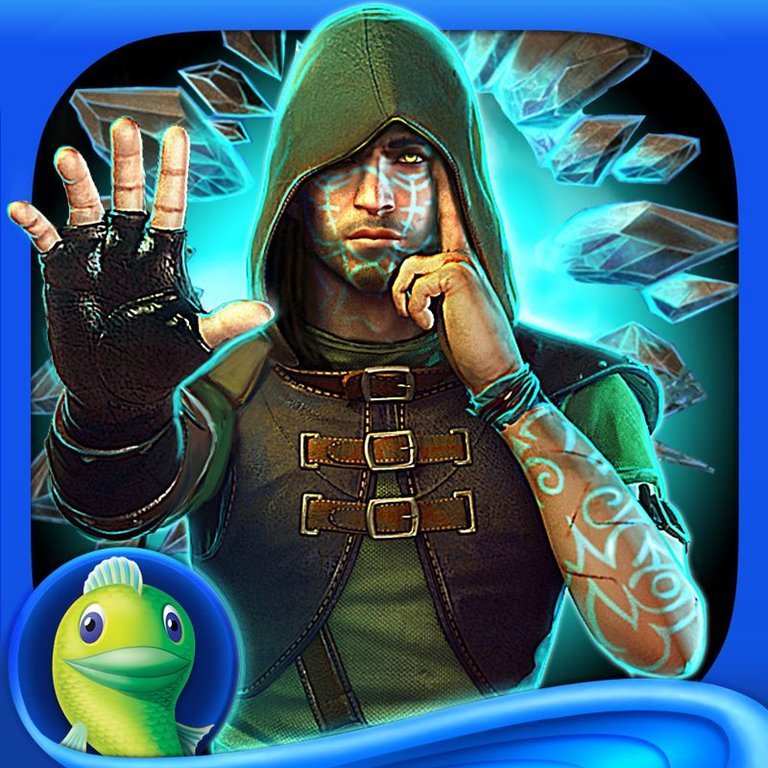
Bridge to Another World: The Others Collector’s Edition is a first-person hidden object adventure game where players traverse a mystical bridge to an alternate world. The core premise involves solving puzzles and exploring eerie environments to find a cure and rescue the player’s brother from the sinister entities known as the Others.
Gameplay Videos
Where to Buy Bridge to Another World: The Others Collector’s Edition
PC
Bridge to Another World: The Others Collector’s Edition Guides & Walkthroughs
Bridge to Another World: The Others Collector’s Edition Reviews & Reception
absolutist.com : Definitely worth checking out.
Bridge to Another World: The Others Collector’s Edition: A Crucible of Genre Conventions and Casual Ambition
Introduction: The Portal to Predictability
In the bustling ecosystem of casual gaming, few franchises have demonstrated the quiet, persistent fortitude of the Bridge to Another World series. By 2015, the hidden object puzzle adventure (HOPA) genre was a well-trodden path, lined with mysterious curses, eerie forests, and portal-hopping narratives. Against this backdrop, Bridge to Another World: The Others Collector’s Edition (hereafter The Others CE) did not arrive as a revolutionary manifesto. Instead, it presented itself as a masterclass in genre synthesis—a game that understands its audience’s expectations with such precision that it becomes both a comforting ritual and a subtle commentary on the state of casual adventure design. This review will argue that The Others CE represents the apotheosis of the mid-2010s Big Fish Games model: a technically competent, narratively familiar, and exceptionally player-friendly package that prioritizes accessibility and value over audacity, ultimately cementing its place as a cornerstone of the “collector’s edition” boom while revealing the creative constraints of its chosen form.
Development History & Context: Forging a Portal in a Crowded Realm
Bridge to Another World: The Others Collector’s Edition was developed by 4 Friends Games, a studio that would later rebrand as Friendly Fox, and published by Big Fish Games, Inc. (with later Steam publications under the BFG Entertainment label). Its release timeline is telling: the iPad version debuted on December 4, 2015, followed by Android in 2016 and Windows in 2017. This staggered, multi-platform rollout was the standard playbook for casual studios targeting the vast, overlapping audiences of mobile touchscreens and PC/Mac download clients.
The game emerged from a specific technological and market context. The mid-2010s saw the maturation of the HOPA format on platforms like Big Fish Games and GameHouse. These titles operated within clear constraints: relatively simple 2D or 2.5D art assets, story-driven but linear progression, and gameplay loops centered on finding hidden objects against a static scene, followed by inventory-based puzzles. The “Collector’s Edition” model itself was a crucial business innovation, transforming a $6.99 digital download into a $19.99 premium package by bundling a strategy guide, bonus game, soundtrack, art gallery, and other digital trinkets. The Others CE perfectly exemplifies this model. Its development was less about pushing graphical boundaries (the system requirements—a 1.0 GHz processor, 1 GB RAM—are negligible) and more about perfecting a formula: efficient asset reuse, modular scene construction for hidden object searches, and a narrative framework that could sustain multiple sequels (it is the second entry in the Bridge to Another World series, following Burnt Dreams).
The gaming landscape was one of genre specialization. It catered to a demographic often underserved by the mainstream press: older players, those seeking low-stress entertainment, and fans of episodic, story-light gameplay. In this context, The Others was not competing with The Witcher 3, but with hundreds of other HOPAs. Its success was predicated on brand recognition (the series name), consistent quality, and the perceived value of its Collector’s Edition trimmings.
Narrative & Thematic Deep Dive: A Curse, a Brother, and an Endless Portal
The narrative of The Others CE is delivered through a combination of brief cinematic cutscenes, text dialogue, and environmental storytelling—a standard for the genre. The player assumes the role of an unnamed protagonist, a hunter whose life has been dedicated to a singular, personal mission.
The Core Plot: The inciting incident is the attack by a mysterious entity called “The Other” on the protagonist’s brother, Jace. This attack leaves Jace afflicted by a “mysterious curse.” The player’s motivation is twofold: protect Jace and find a cure. Years of hunting these malevolent beings culminate in the discovery of a portal—the titular “Bridge to Another World”—that leads to the homeland of The Others. The promise is clear: venture into this alien realm to not only find a cure for Jace but to finally understand the nature of the threat.
Characters & Dialogue: Character development is minimalist, a necessity of the format. The protagonist is a blank-slate avatar, defined solely by their relationship to Jace and their role as a hunter. Jace exists primarily as a plot device—the “damsel in distress” whose condition fuels the entire quest. The “Others” are not characters but an antagonistic force, a nebulous evil described in the ad copy as so strange “if ‘people’ is even the right word.” Dialogue serves functional purposes: to advance the quest, provide context for the next hidden object scene (“I need to find the key to the shed”), or deliver atmospheric exposition. There is little banter, no character arc for the hero, and the villains remain faceless and mysterious. This is not a failing unique to The Others, but a genre-wide trait that prioritizes gameplay momentum over dramatic depth.
Themes & Undercurrents: Thematically, the game touches on classic HOPA motifs:
* Sacrifice & Familial Duty: The entire quest is motivated by love for a sibling, a relatable and powerful driver.
* The Unknown & Otherness: The portal represents the ultimate unknown. The title’s “The Others” explicitly dehumanizes the enemy, framing them as a terrifying, alien “other.” This taps into primal fears of the unfamiliar, though the game’s visual design (discussed below) gives them a somewhat conventional “monster” aesthetic.
* Redemption & Answers: The ad blurb’s tantalizing hint—”you may even find the answers to your past. Answers that have long eluded your grasp”—suggests a backstory for the protagonist, possibly a connection to the world of The Others. However, this thread is largely unexplored in the game’s provided materials, making it feel more like a marketing hook than a substantive theme. It represents a missed opportunity to add a layer of personal mystery to the standard “save the family” plot.
The story’s execution is efficient but shallow. It is a scaffolding for gameplay, not a narrative engine in its own right. Its strength lies in its clear stakes and immediate motivation, not in subtext or complex plotting.
Gameplay Mechanics & Systems: The Refined HOPA Loop
The Others CE operates on a tightly controlled, feedback-rich gameplay loop typical of modern HOPAs.
Core Loop: Each “location” or “scene” presents a static, beautifully rendered image. The primary task is a Hidden Object Hunt (HOP): find a list of items (e.g., “rusty key,” “torn map piece,” “glowing mushroom”) against the cluttered backdrop. These items are logically placed but intricately hidden, requiring keen observation. Completing the HOP typically awards a key item or currency needed to progress.
The HOP is interspersed with Inventory-Based Puzzles. Found objects are used to interact with the environment: a crowbar found in one scene is used to pry open a crate in another; symbols collected must be matched to a lock. These puzzles vary in logic but are generally intuitive, with a hint system available that will either highlight a hidden object or, for puzzles, provide escalating clues.
Progression & Systems: Progression is linear and scene-to-scene. The “map” is a series of interconnected still images, with each completed scene unlocking the next. There is no character leveling or stat management. “Progression” is defined by story beats and puzzle resolution. The Collector’s Edition adds two notable systemic layers:
1. The Raven Hunt: A meta-game where players seek hidden raven silhouettes in every scene. Finding them unlocks “special bonuses,” which are likely concept art, music tracks, or other digital collectibles from the Extras menu. This encourages careful re-examination of scenes and adds replay value.
2. Adjustable Difficulty: As noted in the Absolutist review, the game allows players to personalize their experience, likely through toggles for hint cost, sparkle effects on interactive objects, and timer presence. This is a crucial feature for a genre aimed at relaxation, allowing players to tailor the challenge from “casual stroll” to “puzzling hike.”
Innovation & Flaws: Innovation is modest but purposeful. The “bridge” mechanic—moving between the “normal” world and the “Other” world versions of certain locations—is the game’s signature systemic hook. It adds a layer of puzzle logic: an object might be present in one realm but not the other, requiring the player to jump between dimensions to solve a problem. This is a clever twist on the standard HOPA formula.
Flaws are largely technical and documented in the Steam Community. A user report describes a progression-blocking bug involving a “belows” (bellows) item and a non-interactable portrait, requiring a restart. Another mentions runtime errors and crashes. The Game-Owl update log from April 2015 confirms the developer was actively patching: fixes for “Extras HOPs or Raven Hunt,” “mirror sound issue,” “progression blocks,” and general stability. These issues, while seemingly resolved in patches, point to the risk of complex scene scripting and inventory logic in a genre not always known for rigorous QA. The UI is standard for the genre—functional but not elegant—with a bottom bar for inventory and a menu for hints/strategy guide access.
World-Building, Art & Sound: An Ogresque Tapestry
This is where The Others CE most clearly distinguishes itself from its peers and fulfills the promise of its “Braveheart-meets-Lord-of-the-Rings-Ogresque” descriptor (Absolutist).
Visual Direction & Atmosphere: The art style is painterly and atmospheric, favoring mood over hyper-realism. Environments are lush, dark, and often awe-inspiring in scale: ancient, mist-shrouded forests; crumbling stone bridges; cavernous, torch-lit Otherworld strongholds. The color palette relies heavily on deep greens, browns, grays, and sickly magentas for the “Other” realm, creating a consistently somber and mystical tone. The “Ogrestic” influence is evident in the design of the land itself—massive, rugged, primeval—and in the designs of the “Others,” who appear as hulking, bestial brute warriors with crude armor and formidable weapons. This gives the game a surprisingly gritty, high-fantasy aesthetic compared to the often-cutesier or gothic-horror styles common in HOPAs.
The world-building is environmental. Lore is conveyed through scrolls, books, and murals found as hidden objects or puzzle components. The “Bridge” itself is a constant visual and thematic motif, appearing as a literal structure and a metaphorical concept. The dual-world mechanic enhances the world-building, showing how the same physical space is corrupted or altered by the presence of the Otherworld.
Sound Design: The soundscape is a critical component of the atmosphere. It features a brooding, melodic, and often ominous soundtrack that swells during key discoveries and quietens during exploration. Ambient sounds—wind through trees, distant creature calls, the crackle of torches—ground the scenes. The sound design effectively sells the “ancient, haunted wilderness” vibe. The mention of a “mirror sound issue” in patches suggests the audio implementation, particularly for dimension-hopping effects, was a technical focus.
Collectively, the art and sound create an experience that feels more like an illustrated dark fantasy novel come to life than a typical casual game. This elevated presentation is a major selling point and a key reason for the game’s positive player reception.
Reception & Legacy: A Solid Foundation in a Sea of Sequels
Critical & Commercial Reception at Launch: Critical coverage of individual casual HOPA titles is notoriously sparse in traditional outlets. MobyGames shows no critic reviews for The Others CE. Its reception exists primarily in the ecosystem of its publishers (Big Fish, GameHouse) and user reviews on platforms like Steam. The Steam data (via Steambase) shows a Player Score of 89/100 from 9 reviews at the time of writing, with 8 positive and 1 negative. This tiny sample size suggests modest sales on Steam, consistent with a niche port of a mobile-focused title. The positive reviews likely praise the atmosphere, puzzle design, and value of the Collector’s Edition extras. The single negative review on the Steam Community Hub details a game-breaking bug, highlighting the risk of PC ports from mobile-optimized codebases.
Evolution of Reputation & Legacy: In the years since, The Others has not become a “classic” in the broader gaming consciousness. Its legacy is firmly rooted within the HOPA genre and the Bridge to Another World series itself. The series has continued robustly, with over ten entries spanning various fairy tale and fantasy themes (Christmas Flight, Secrets of the Nutcracker, Escape From Oz, Alice in Shadowland). The Others is remembered as a pivotal, well-regarded early entry that established the series’ tone of “dark fantasy adventure.” It demonstrated that the franchise could move beyond its initial premise and tackle more epic, war-themed storytelling.
Its influence on the industry is indirect but significant. It is a data point in the success of the Collector’s Edition model, proving that players would pay a premium for bundled extras in a casual context. It also reinforced the viability of episodic, series-based development in the casual space, where brand loyalty and predictable release schedules are more valuable than singular, blockbuster hits. It did not innovate mechanics but refined them, contributing to the “gold standard” player experience for mid-tier HOPAs: adjustable difficulty, minimal frustration, strong atmosphere, and abundant bonus content.
Conclusion: A Worthy Sentinel at the Bridge
Bridge to Another World: The Others Collector’s Edition is not a game that seeks to redefine its genre. It is a game that seeks to perfect it within its established parameters. It succeeds admirably in this more modest goal. Its strengths are clear: a consistently compelling, painterly art direction that elevates the experience; a dual-world puzzle mechanic that adds meaningful depth; a suite of Collector’s Edition bonuses that deliver tangible value; and a difficulty-slider approach that respects the player’s desire for either relaxation or challenge.
Its weaknesses are the genre’s weaknesses: a perfunctory plot, thin characterization, and a formula that, by its nature, becomes predictable. The technical hiccups noted in early player reports are a reminder of the complexities lurking beneath the game’s polished surface.
In the grand canon of video game history, The Others CE will not be studied for its narrative genius or mechanical revolutions. Its place is in the annals of genre craftsmanship. It stands as a testament to the enduring appeal of a well-executed formula, the economic power of the digital collector’s market, and the ability of a modest studio to create a world that, while familiar in structure, feels genuinely immersive in its aesthetic realization. For fans of hidden object adventures, it is a reliably excellent entry. For historians, it is a pristine artifact of the casual gaming boom’s mature phase—a game that knows exactly what it is and executes that vision with commendable skill and a clear-eyed understanding of its audience’s desires. It is, in the end, a bridge to a very satisfying, if familiar, other world.