
- Release Year: 2020
- Platforms: Windows
- Publisher: Bilibili Inc.
- Developer: Beijing Xingpan Technology Co., Ltd.
- Genre: Action, Puzzle
- Perspective: Side view
- Game Mode: Single-player
- Gameplay: Platform
- Setting: China (Ancient, Fantasy, Imperial)
- Average Score: 73/100
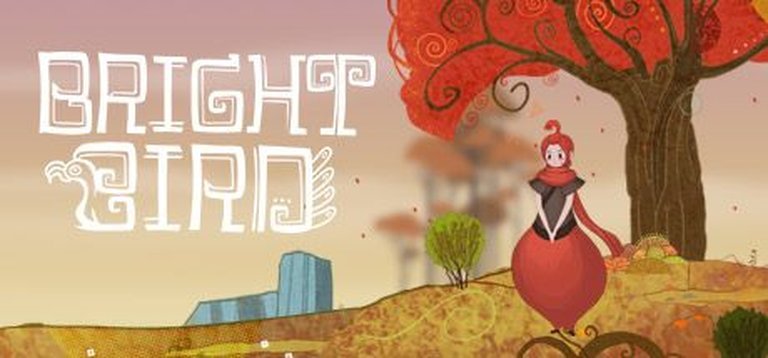
Description
Bright Bird is a 2D side-scrolling action-puzzle game set in a fantasy version of ancient China, where players control either Yao the heroine or Xuan the hero to embark on a journey to find the mythical Bright Bird and solve a smog crisis. The game features a seamless world filled with challenging puzzles, traditional Oriental cultural elements, and a collecting system that allows players to recruit unique characters to aid in their quest.
Gameplay Videos
Where to Buy Bright Bird
PC
Bright Bird Patches & Updates
Bright Bird Guides & Walkthroughs
Bright Bird Reviews & Reception
store.steampowered.com (73/100): Rich with national style flavor, the game’s art and music bring a pleasant audio-visual experience.
steambase.io (74/100): Bright Bird has earned a Player Score of 74 / 100.
Bright Bird: A Hidden Gem of Chinese Indie Game Design
Introduction: The Rise of a Cultural Puzzle-Platformer
In the vast, often oversaturated landscape of indie games, Bright Bird (重明鸟) emerges as a quiet but remarkable testament to the creative potential of China’s burgeoning indie scene. Released in March 2020 by Beijing Xingpan Technology Co., Ltd. and published by Bilibili Inc., this side-scrolling puzzle-platformer weaves together traditional Chinese aesthetics, environmental storytelling, and intricate puzzle design into a seamless, atmospheric experience. While it may not have garnered the same level of global acclaim as titles like Hollow Knight or Ori and the Blind Forest, Bright Bird stands as a fascinating case study in how cultural identity and innovative gameplay mechanics can coalesce into something uniquely compelling.
This review will dissect Bright Bird in exhaustive detail, exploring its development context, narrative depth, mechanical intricacies, artistic vision, and legacy. By the end, we’ll determine whether it deserves a place in the pantheon of great indie games—or if it remains an overlooked curiosity in the annals of gaming history.
Development History & Context: The Birth of a Chinese Indie Darling
The Studio Behind the Game: Beijing Xingpan Technology Co., Ltd.
Bright Bird was developed by Beijing Xingpan Technology Co., Ltd., a relatively small studio with a portfolio that includes titles like Shadowless and Doge Simulator. While not a household name in the West, Xingpan is part of a wave of Chinese indie developers who have begun to carve out a distinct identity in the global gaming market. Their work often emphasizes cultural authenticity, blending traditional Chinese art and mythology with modern gameplay sensibilities.
The studio’s collaboration with Bilibili Inc., one of China’s largest online entertainment platforms, provided Bright Bird with a built-in audience. Bilibili’s involvement also highlights the growing synergy between Chinese tech giants and indie developers, a trend that has helped elevate games like Genshin Impact and Bright Memory to international prominence.
The Vision: A Love Letter to Chinese Culture
From its inception, Bright Bird was conceived as more than just a puzzle-platformer. The developers sought to create a game that would serve as a vessel for traditional Chinese culture, incorporating elements of ancient relics, imperial aesthetics, and mythological storytelling. The game’s title itself, 重明鸟 (Chóngmíng Niǎo), translates to “Bright Bird,” a creature from Chinese mythology often associated with the sun and renewal.
The team’s ambition was to craft a “seamless side-scrolling world” where players could immerse themselves in a visually rich environment while engaging with puzzles that felt organic to the setting. This vision was realized through a combination of hand-drawn 2D art, meticulous level design, and a narrative that subtly critiques modern environmental issues through the lens of ancient folklore.
Technological Constraints and the Unity Engine
Developed using the Unity engine, Bright Bird leverages the tool’s flexibility to create a fluid, side-scrolling experience with a strong sense of depth. The game’s “Cross the Dimension” feature, which optimizes level designs to create a layered visual effect, is a testament to the team’s ability to work within Unity’s constraints to achieve a distinctive artistic style.
The game’s technical requirements are modest by modern standards, with minimum specs calling for an Intel Core i5-760 or AMD FX-8100 processor, 4GB of RAM, and a DirectX 10-compatible GPU. This accessibility ensured that Bright Bird could reach a broad audience, particularly in regions where high-end gaming rigs are less common.
The Gaming Landscape in 2020
Bright Bird launched at a time when the indie game market was experiencing both unprecedented growth and intense competition. The early months of 2020 saw the release of critically acclaimed titles like Ori and the Will of the Wisps, Hades, and Spiritfarer, all of which set high benchmarks for artistic and mechanical excellence. Against this backdrop, Bright Bird faced the challenge of standing out in a crowded field.
However, the game’s focus on Chinese culture and mythology gave it a unique selling point. While Western indie games often draw from European or Japanese influences, Bright Bird offered something different: a deeply rooted exploration of Chinese heritage, presented in a way that was accessible to global audiences. This cultural distinctiveness, combined with its puzzle-platforming mechanics, helped it carve out a niche.
Narrative & Thematic Deep Dive: A Tale of Myth, Ecology, and Renewal
Plot Overview: The Quest for the Bright Bird
Bright Bird unfolds in a fantastical version of ancient China, where a mysterious smog crisis threatens the land. Players take on the role of either Yao, the heroine, or Xuan, the hero, as they embark on a journey to find the legendary Bright Bird—a mythical creature said to possess the power to dispel the smog and restore balance to the world.
The narrative is delivered through environmental storytelling, minimal dialogue, and occasional cutscenes. The game’s world is filled with ruins, temples, and hidden chambers, each offering clues about the civilization that once thrived there. The smog itself serves as both a narrative device and a gameplay mechanic, obscuring paths and requiring players to solve puzzles to clear it.
Characters: Yao and Xuan
While Bright Bird is not a character-driven narrative in the traditional sense, the protagonists Yao and Xuan serve as avatars for the player’s journey. Their designs are rooted in classical Chinese aesthetics, with flowing robes, intricate hairstyles, and weapons that evoke traditional martial arts.
- Yao: The heroine, often depicted with a graceful, almost ethereal presence. Her movements are fluid, and her abilities lean toward agility and precision.
- Xuan: The hero, whose design is more rugged and grounded. His playstyle emphasizes strength and endurance, offering a contrast to Yao’s finesse.
The game’s “Collecting System” allows players to recruit additional characters with unique personalities, each of whom can assist in solving puzzles. These characters are drawn from Chinese folklore and history, adding layers of depth to the world.
Themes: Environmentalism and Cultural Preservation
At its core, Bright Bird is a story about renewal and the restoration of harmony between humanity and nature. The smog crisis is a clear allegory for modern environmental degradation, framed within a mythological context. The game suggests that the solution to ecological collapse lies not in technology alone but in reconnecting with ancient wisdom and cultural heritage.
This theme is reinforced by the game’s visual design, which is steeped in traditional Chinese art and architecture. Temples, calligraphy, and relics are scattered throughout the world, serving as reminders of a lost golden age. The Bright Bird itself symbolizes hope—a beacon of light in a world shrouded in darkness.
Dialogue and Localization
The game’s dialogue is sparse but evocative, with a focus on poetic phrasing and philosophical musings. The English localization, while competent, occasionally struggles to capture the nuance of the original Chinese text. Some players have noted that certain cultural references and wordplay are lost in translation, which can diminish the game’s emotional impact for non-Chinese audiences.
Gameplay Mechanics & Systems: Puzzles, Platforming, and Progression
Core Gameplay Loop: Exploration and Puzzle-Solving
Bright Bird is, at its heart, a puzzle-platformer. The game’s structure revolves around exploring a seamless, side-scrolling world, uncovering hidden paths, and solving environmental puzzles to progress. The puzzles are the game’s standout feature, offering a mix of logic-based challenges, physics manipulation, and pattern recognition.
The game’s difficulty curve is well-balanced, with early puzzles serving as tutorials for more complex challenges later on. Players are encouraged to experiment, as many puzzles have multiple solutions or require creative use of the game’s mechanics.
Combat and Platforming
While Bright Bird is primarily a puzzle game, it incorporates light combat and platforming elements to keep the gameplay dynamic. Players can engage in sword fights with enemies, though combat is not the focus. The platforming sections are more prominent, requiring precise jumps, wall-climbing, and grappling to navigate the environment.
The game’s physics engine is serviceable but not exceptional. Some players have reported minor issues with hit detection and character movement, particularly during fast-paced platforming sequences. However, these flaws are generally overshadowed by the game’s strong puzzle design.
Character Progression and the Collecting System
Bright Bird features a unique “Collecting System” that allows players to recruit additional characters, each with their own abilities. These characters can be called upon to assist in solving puzzles, adding a layer of strategy to the gameplay. For example, one character might be able to manipulate wind currents, while another can decipher ancient scripts.
The system is reminiscent of games like The Lost Vikings or Trine, where players switch between characters to overcome obstacles. However, Bright Bird streamlines the process, allowing for a more fluid experience.
User Interface and Controls
The game’s UI is minimalist, with a focus on immersion. Health, inventory, and puzzle hints are displayed unobtrusively, ensuring that the player’s attention remains on the world. The controls are responsive, with support for keyboard, mouse, and gamepad inputs.
One notable feature is the game’s “hint system,” which provides subtle guidance for players stuck on a puzzle. Rather than offering outright solutions, the hints nudge players in the right direction, preserving the sense of discovery.
Innovative and Flawed Systems
Bright Bird’s most innovative mechanic is its “Cross the Dimension” feature, which creates a sense of depth in an otherwise 2D environment. By optimizing level design and visual art, the developers crafted a world that feels expansive and layered, despite its side-scrolling perspective.
However, the game is not without its flaws. Some puzzles can feel overly obscure, requiring trial-and-error rather than logical deduction. Additionally, the game’s save system is somewhat antiquated, relying on manual saves rather than automatic checkpoints. This can lead to frustration, particularly in sections where precision platforming is required.
World-Building, Art & Sound: A Feast for the Senses
Setting and Atmosphere
Bright Bird’s world is a masterclass in atmospheric design. The game’s setting—a mythical version of ancient China—is brought to life through intricate level design, lush backgrounds, and a hauntingly beautiful color palette. The smog that permeates the world is not just a narrative device but a visual motif, casting an eerie glow over the environment.
The game’s sense of place is further enhanced by its attention to detail. Ancient temples, crumbling statues, and hidden chambers are rendered with a level of care that invites exploration. The world feels alive, with subtle animations and environmental effects that create a sense of immersion.
Visual Direction: A Blend of Tradition and Modernity
The art style of Bright Bird is a fusion of traditional Chinese ink painting and modern digital art. The game’s backgrounds are reminiscent of classical landscape paintings, with mist-shrouded mountains, flowing rivers, and delicate cherry blossoms. The character designs, meanwhile, draw from both historical Chinese fashion and contemporary anime influences.
The game’s use of light and shadow is particularly striking. The Bright Bird’s glow cuts through the smog, creating a stark contrast between darkness and illumination. This visual dichotomy reinforces the game’s themes of renewal and hope.
Sound Design and Music
The audio design in Bright Bird is understated but effective. The game’s soundtrack, composed of traditional Chinese instruments like the guzheng and pipa, complements the visuals perfectly. The music is atmospheric, with melodies that evoke a sense of nostalgia and wonder.
Sound effects are used sparingly but to great effect. The rustling of leaves, the distant call of birds, and the echo of footsteps all contribute to the game’s immersive atmosphere. The absence of voice acting is a deliberate choice, allowing the player to project their own interpretations onto the characters.
Reception & Legacy: A Game Ahead of Its Time?
Critical and Commercial Reception
Bright Bird received a mixed but generally positive reception upon release. On Steam, the game holds a “Mostly Positive” rating, with 73% of over 700 reviews recommending it. Players praised the game’s art style, puzzle design, and cultural authenticity, though some criticized its occasional obscurity and lack of polish.
Critically, Bright Bird was overshadowed by larger indie releases in 2020. Major outlets like Kotaku and Rock Paper Shotgun mentioned it in lists of upcoming Chinese indie games, but it did not receive the same level of coverage as titles like Hades or Spiritfarer. This lack of mainstream attention has contributed to its status as a hidden gem rather than a breakout hit.
Evolution of Its Reputation
In the years since its release, Bright Bird has developed a cult following, particularly among fans of puzzle games and Chinese culture. Its reputation has been bolstered by word-of-mouth recommendations and its inclusion in indie game showcases like BitSummit.
The game’s legacy is also tied to the broader rise of the Chinese indie scene. As more Chinese developers gain international recognition, Bright Bird is increasingly seen as an early example of how cultural identity can be woven into gameplay in a way that resonates with global audiences.
Influence on Subsequent Games
While Bright Bird has not directly inspired a wave of imitators, its success has contributed to the growing interest in games that blend traditional culture with modern mechanics. Titles like Bright Memory and Black Myth: Wukong have followed in its footsteps, though with a greater emphasis on action and spectacle.
The game’s puzzle design, in particular, has been cited as an influence by smaller indie developers. Its seamless world and environmental storytelling have become touchstones for games that prioritize atmosphere and exploration over combat.
Conclusion: A Flawed but Brilliant Gem
Bright Bird is not a perfect game. Its puzzles can be frustrating, its platforming occasionally clunky, and its narrative underdeveloped. Yet, it is a game of remarkable ambition and beauty—a love letter to Chinese culture wrapped in a puzzle-platformer’s guise.
What sets Bright Bird apart is its commitment to its vision. The developers at Xingpan Technology did not set out to create a game that would top sales charts or win awards. Instead, they crafted an experience that is deeply personal, culturally rich, and mechanically engaging. In an industry often dominated by sequels and safe bets, Bright Bird is a reminder of the power of indie games to surprise, challenge, and inspire.
Final Verdict: 8/10 – A Must-Play for Puzzle Enthusiasts and Culture Seekers
Bright Bird is a game that rewards patience and curiosity. It is not for those seeking fast-paced action or a deep narrative, but for players who appreciate intricate puzzles, stunning visuals, and a world steeped in mythology, it is an absolute delight. Its flaws are outweighed by its strengths, and its cultural significance cannot be overstated.
In the grand tapestry of video game history, Bright Bird may not be a thread that stands out to everyone. But for those who take the time to unravel its mysteries, it reveals itself as a small but brilliant masterpiece—a bright bird in a smog-filled sky.