
- Release Year: 2024
- Platforms: Nintendo Switch, PlayStation 4, PlayStation 5, Windows, Xbox One, Xbox Series
- Publisher: tinyBuild LLC
- Developer: Drop Bear Bytes Pty Ltd
- Genre: Role-playing (RPG)
- Perspective: Diagonal-down
- Game Mode: Single-player
- Gameplay: Moral choices, Tactical RPG, Turn-based
- Setting: Oceania, Post-apocalyptic
- Average Score: 55/100
Description
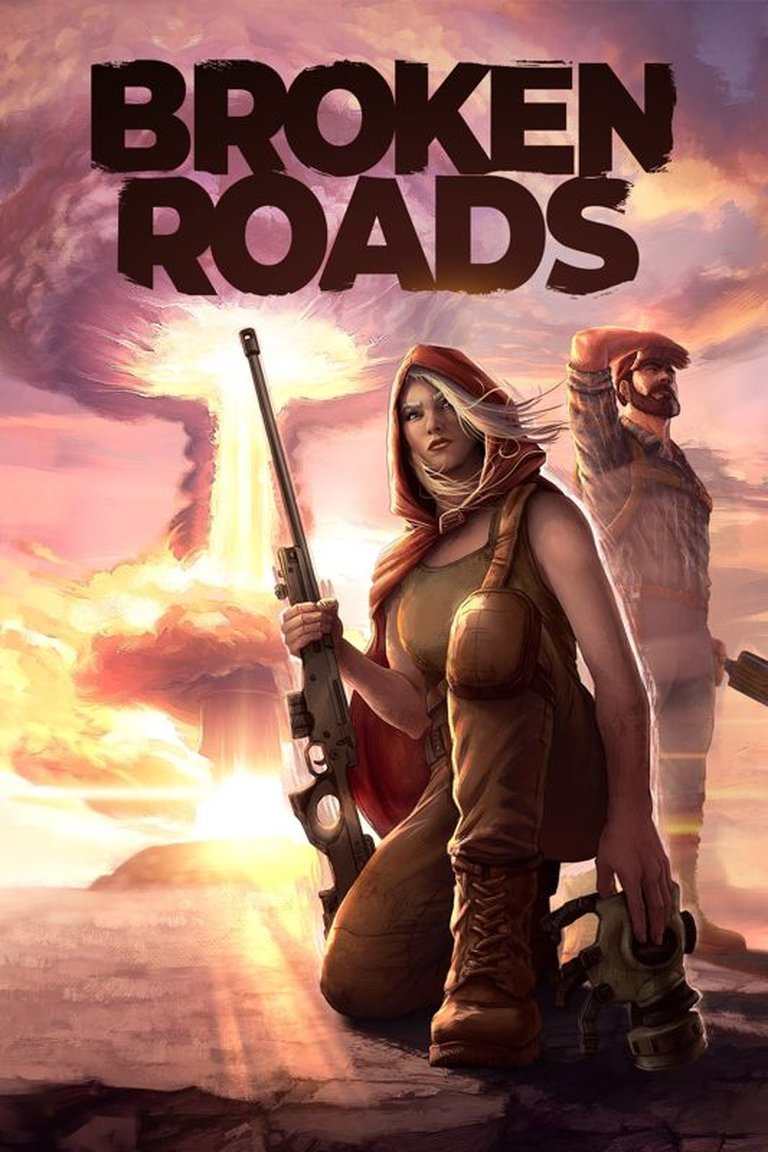
Broken Roads is a tactical RPG set in the harsh post-apocalyptic Australian Outback, where players lead a group of survivors through desolate landscapes, making critical choices that shape their journey. Featuring isometric visuals and turn-based combat, the game challenges players to navigate morally gray dilemmas while exploring dangerous terrain and engaging in strategic battles in a world ravaged by disaster.
Gameplay Videos
Where to Buy Broken Roads
Broken Roads Free Download
Broken Roads Guides & Walkthroughs
Broken Roads Reviews & Reception
metacritic.com (70/100): However, in order to love it, you really need to be able to overlook its flaws.
metacritic.com (70/100): Broken Roads is a solid effort that falls short of capitalizing on its central mechanics.
metacritic.com (70/100): still needs a bit more work to be an easy recommendation.
metacritic.com (90/100): Broken Roads is one of the most different and interesting games you’ll play this year.
metacritic.com (0/100): …c’est le jeu entier qui est cassé, pas seulement les routes !
metacritic.com (80/100): I have upgraded my review to 8 of 10 after extensive improvements by the Developers.
metacritic.com (10/100): The game is bad in all respects, I don’t even want to describe it.
ign.com : Broken Roads has ideas that could have made it an RPG to rival Disco Elysium, instead it runs out of steam almost immediately.
rockpapershotgun.com : Labelling responses to tough calls with which morality they broadly correspond with just feels like presenting the quiet part of the dilemma loud, a dry WIP framework rather than a juiced out script.
gamesradar.com : Broken Roads provides a strong draw with its Aussie take on the post-apocalypse and the philosophical strands running through its open-ended role-playing. Rather than leading to an interesting destination, however, these roads really are somewhat broken, with systems that don’t feel properly integrated, bizarre leaps of logic and even bugs that lead you into dead ends.
Broken Roads: Review
Introduction
In the vast and often repetitive landscape of post-apocalyptic role-playing games, Broken Roads emerges not as a simple imitation of titans like Fallout or Disco Elysium, but as a bold, culturally specific experiment. Developed by Australian studio Drop Bear Bytes and released in April 2024, this isometric tactical RPG dares to transplant the genre’s familiar tropes into the desolate Wheatbelt region of Western Australia. Its central thesis lies in a revolutionary “Moral Compass” system, promising to transcend binary good/evil morality through nuanced philosophical frameworks. Yet, as players traverse the game’s “broken roads,” they confront a stark truth: while Broken Roads boasts profound ambition and unique cultural identity, its execution is tragically fractured. This review deconstructs a game that embodies the tension between visionary design and compromised implementation—a flawed diamond in the rough, reflecting the very harshness of its Australian setting.
Development History & Context
The Studio and Vision
Founded in 2019 by Craig Ritchie, Drop Bear Bytes emerged from Torquay, Australia, driven by a passion for classic isometric RPGs like Fallout 2 and Planescape: Torment. The studio’s name—a playful reference to Australia’s mythical drop bears—is emblematic of its ethos: blending danger with humor. Ritchie envisioned Broken Roads as a love letter to Australian identity, leveraging the nation’s “conflicted culture”—colonialism, Indigenous heritage, and resilient humor—to create a post-apocalypse unlike any other. As Ritchie stated, Australia’s legacy offered “a balance between humor, fun and levity with serious, adult themes and tough questions” (Wikipedia).
Constraints and Technological Context
Developed in Unity, Broken Roads faced significant challenges. Its scope narrowed from a continent-spanning adventure to the Wheatbelt due to resource limitations. Yet Australian government support—including Victorian and Queensland arts funding—provided crucial backing. The team meticulously researched the region, photographing landmarks and consulting Indigenous elders (notably Yorta Yorta writer Cienan Muir) for authentic representation. Tragically, the loss of narrator Uncle Jack Charles in 2022 underscored the human stakes of development. The game’s delay from 2023 to 2024 hinted at ambitions outpacing execution—a pattern mirrored in its final release.
The Gaming Landscape at Launch
Released into a genre saturated with Disco Elysium-inspired dialogue-driven RPGs and polished titles like Baldur’s Gate 3, Broken Roads arrived with high but fraught expectations. Its pre-launch comparisons to Planescape: Torment and Disco Elysium set a bar few could meet. Yet 2024’s market demanded polish—a standard Broken Roads struggled to achieve, as evidenced by its buggy launch and publisher Versus Evil’s collapse in late 2023. This context frames Broken Roads as a passion project fighting against commercial and technical headwinds.
Narrative & Thematic Deep Dive
Plot and Characters
Broken Roads opens with a promising premise: a world reshaped by an apocalypse that decimated 80% of Australia’s population. Players assume one of four archetypal roles (e.g., “Jackaroo,” a cattle hand), forming a party of survivors after a raid on the town of Brookton. The core narrative follows this group’s quest for a new home, navigating factional power struggles in settlements like Kalgoorlie and Norseman. Yet the plot suffers from narrative dissonance. Motivations are underdeveloped—players lead strangers with no backstory, making decisions feel arbitrary. As IGN noted, “you’re introduced to a bunch of people who don’t have much personality,” reducing party members to “hard boiled survivors” (IGN). The introduction of magical realism (e.g., supernatural kangaroos) feels jarringly unearned, muddying the story’s grounded tone.
Dialogue and the Moral Compass
The game’s centerpiece is its “Moral Compass,” a four-quadrant system (Utilitarian, Humanist, Machiavellian, Nihilist) designed to govern dialogue and quest choices. In theory, this system offers unprecedented depth: a Machiavellian character might prioritize fear over empathy, unlocking unique traits. However, execution falters. Dialogue options are locked into narrow philosophical lanes, creating a “dry, WIP framework” (Rock Paper Shotgun) rather than organic dilemmas. Choices often yield superficial consequences—e.g., altering a town’s mayor has no lasting impact. As Rock Paper Shotgun critiqued, labeling responses with philosophical terms “feels like presenting the quiet part of the dilemma loud.” The system’s 36,000 permutations sound impressive in theory but rarely translate to meaningful role-playing.
Thematic Resonance
Where Broken Roads excels is in its thematic authenticity. The game explores Australia’s colonial legacy, Indigenous resilience, and class divides with unflinching honesty. Settlements mirror real-world tensions: Indigenous communities grapple with cultural erasure, while survivors clash over utilitarianism versus humanism. The writing brims with Aussie grit—Vegemite sandwiches, slang (“right bastards”), and dark humor—yet avoids caricature. As Digitally Downloaded praised, it delivers “a compelling narrative of human resilience, community, weakness and savagery” (Metacritic). Yet these themes are often buried beneath fetch quests and technical hiccups, diluting their impact.
Gameplay Mechanics & Systems
Core Loops and Structure
Broken Roads blends traditional isometric exploration with turn-based tactical combat. Players navigate a world map dotted with small, interconnected settlements, embarking on quests that range from political intrigue (e.g., rigging elections) to mundane chores (e.g., repairing sprinklers). This structure encourages exploration but devolves into tedious “fetch quests” (IGN), with players backtracking across loading screens for trivial items. Quest design is inconsistent—some tasks offer multiple solutions, while others demand exhaustive dialogue grinding. As Gamepressure lamented, “moving the plot requires aimlessly wandering around locations.”
Combat: A Fractured Experience
Combat is a mixed bag. Turn-based mechanics evoke classics like Baldur’s Gate 3, but execution is flawed. The UI suffers from collision issues, making target selection “difficult and sometimes impossible” (PC Gamer). Enemy AI is rudimentary—opponents prioritize attacking even when self-destructive—while animations feel sluggish. Random encounters (e.g., “combat wombats”) offer little variety, and battles are rarely challenging. Pacifist approaches are theoretically viable but poorly implemented, as IGN noted: “you’re locked out of pretty much all other conversation options once you’ve started down a given alignment path.”
Character Progression and Innovation
The classless system allows near-unlimited customization, with skill trees influenced by the Moral Compass. A Utilitarian might excel at leadership but falter in stealth, while a Nihilist gains combat prowess at social costs. This innovation is undermined by shallow progression—many skills feel redundant, and gear upgrades are infrequent. As Game Rant observed, “you can easily get by without managing your equipment.” Moral traits offer intriguing bonuses (e.g., Machiavellian fear tactics), but they’re underutilized. The system’s potential is squandered by a lack of meaningful depth.
World-Building, Art & Sound
Setting and Atmosphere
Set in post-apocalyptic Western Australia, Broken Roads captures the Outback’s haunting beauty. The Wheatbelt’s red dirt, heritage pubs, and sparse urban decay are meticulously recreated, thanks to on-location research. Towns like Kalgoorlie feel lived-in, with factions clashing over resources and ideology. Yet the world is small, and exploration feels constrained. As Gamepressure noted, regions are “rather small,” with “not much to do,” reinforcing the game’s “lonely scavenger hunt” vibe (Eurogamer).
Visual Design
The hand-drawn art style is a standout. Characters and environments blend realism with whimsy—mutated kangaroos and dilapidated farms evoke both beauty and decay. The isometric perspective is functional but dated, with UI elements feeling “incredibly and completely botched” (Gamepressure). Environmental storytelling shines through item descriptions (“ex-food for future food”), but technical glitches (e.g., stuck characters, collision errors) mar the experience.
Sound and Music
Sound design enhances the desolate atmosphere, with haunting acoustic tracks echoing the Outback’s emptiness. Voice acting is sporadic but effective when present, though the narrator’s delivery is “difficult to listen to” (IGN). Aussie accents and slang add authenticity, though the optional “slang translator” occasionally breaks immersion. Sound effects (gunfire, rustling wildlife) are competent but unremarkable.
Reception & Legacy
Launch and Critical Response
Broken Roads launched to mixed reviews, holding a Metacritic score of 61/100 and an OpenCritic recommendation rate of just 33%. Critics lauded its ambition and setting but lamented its execution. Digitally Downloaded called it “one of the most different and interesting games you’ll play this year” (90%), while IGN deemed it “disappointing” (40%). Common complaints included buggy quests, shallow combat, and a morality system that “doesn’t end up making good use of it” (IGN). Eurogamer criticized the “lonely and pointless” narrative, with companions “having nothing to say” (2/5).
Player Feedback and Evolution
Player reviews mirrored critics, with Steam users rating it “Mixed” (52% positive). Many praised the Moral Compass’ potential but cited technical flaws. As one Steam user noted: “Broke Roads is an Interesting Setting… Work still needs to be done on Combat” (8/10). Post-launch patches addressed some bugs, but the game’s reputation struggled. Its commercial failure was cemented when Drop Bear Bytes entered administration in February 2025, owing millions to creditors.
Legacy and Influence
Broken Roads remains a cautionary tale for ambitious indies. Its cultural specificity—a rare authentic Australian RPG—sets it apart, while its Moral Compass concept, though flawed, influenced subsequent RPGs. Yet its legacy is one of unfulfilled promise. As Hardcore Gamer Magazine noted, it’s a “flawed game, yes, but a flawed game with a beating heart” (3.5/5). For genre fans, it’s a curio; for historians, a case study in ambition versus resources.
Conclusion
Broken Roads is a game of profound contrasts. Its Australian heart beats with authenticity, its Moral Compass dares to innovate, and its writing brims with cultural nuance. Yet these strengths are drowned in a sea of technical debt, shallow gameplay, and narrative disarray. What could have been a landmark RPG becomes instead a flawed artifact—a testament to the difficulty of translating vision into code.
In the end, Broken Roads lives up to its name in the most ironic way: its roads are broken, not by apocalyptic events, but by the weight of unmet expectations. It’s a game that will be remembered for its ideas more than its execution, a noble failure that enriches the RPG landscape even as it fails to conquer it. For players seeking a deeply philosophical, culturally rich experience—and willing to tolerate jank—Broken Roads offers a unique, if frustrating, journey. But for most, it’s a detour best avoided.