
- Release Year: 2000
- Platforms: Windows
- Publisher: Lonaisoft Technology Co., Ltd., Siria Entertainment Co., Ltd.
- Developer: Lonaisoft Technology Co., Ltd.
- Genre: Action
- Perspective: Side view
- Game Mode: Single-player
- Gameplay: Arcade, Platform
- Setting: Fantasy
- Average Score: 72/100
Description
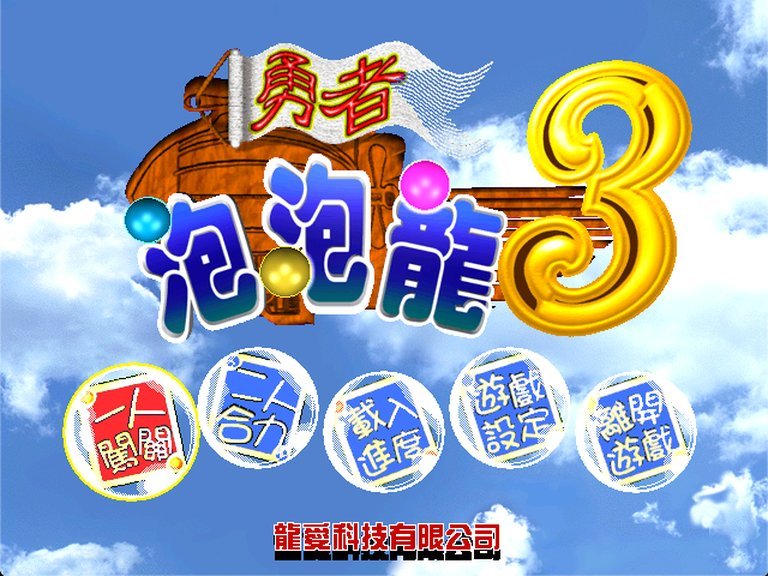
Bubble Hero 3 is a fantasy-themed action-platformer released in 2000, continuing the series’ homage to Bubble Bobble. The game features side-view, fixed-screen gameplay with anime/manga-inspired visuals, now upgraded to prerendered 3D graphics instead of the previous hand-drawn 2D art. Players control a variety of characters, navigating levels by trapping enemies in bubbles and popping them, while introducing new playable heroes to the classic bubble-blowing formula.
Gameplay Videos
Bubble Hero 3 Reviews & Reception
mobygames.com (72/100): A direct take on Bubble Bobble with extra playable characters and prerendered 3D artwork.
Bubble Hero 3: A Bubble-Blowing Odyssey Through Time and Space
Introduction: The Legacy of a Bubble-Blown Empire
In the vast, effervescent ocean of video game history, few franchises have left as indelible a mark as Bubble Bobble. Taito’s 1986 arcade masterpiece didn’t just define a genre—it birthed an entire ecosystem of bubble-based platformers, each vying to capture the magic of its predecessor. Among these, Bubble Hero 3 (2000) stands as a fascinating artifact: a Taiwanese-developed homage that evolved from a humble clone into a culturally rich, mechanically refined, and visually ambitious celebration of its inspiration. Developed by Lonaisoft Technology Co., Ltd. and published by Siria Entertainment Co., Ltd., Bubble Hero 3 is the third installment in the Yongzhe Paopao Long (Brave Bubble Dragon) series, a franchise that began as a blatant Bubble Bobble knockoff but gradually carved out its own identity through charm, creativity, and an unapologetic embrace of its roots.
This review aims to dissect Bubble Hero 3 with the precision of a bubble-popping dragon, exploring its development history, narrative quirks, gameplay innovations, artistic flourishes, and enduring legacy. Far from being a mere footnote in gaming history, Bubble Hero 3 is a time capsule of early 2000s PC gaming—a bridge between the arcade golden age and the digital future, and a testament to the universal appeal of trapping enemies in soap bubbles and watching them float away.
Development History & Context: The Rise of the Bubble Dragons
The Birth of a Clone
The Bubble Hero series emerged from the fertile ground of Taiwan’s burgeoning gaming industry in the late 1990s, a time when the country was rapidly becoming a hub for PC game development, particularly in the realm of casual and arcade-style titles. Lonaisoft Technology Co., Ltd., the studio behind the franchise, was one of many small developers capitalizing on the popularity of classic arcade games by creating “spiritual successors” for the PC market. The original Yongzhe Paopao Long (1997) was an unabashed Bubble Bobble clone, featuring two bubble-spewing dragons, Abi and Ni Ni, navigating single-screen platforms, trapping enemies in bubbles, and popping them for points. The game’s DOS-based graphics and simplistic design were a far cry from Taito’s polished arcade original, but it found an audience in Taiwan and South Korea, where it was localized as Boogle Boogle 3000.
Evolution Through Iteration
The sequel, Bubble Hero 2 (1998), marked a significant leap forward. Transitioning to Windows, the game introduced two new playable dragons—Beibei, a blue, boxing-obsessed dragon, and Xiao-zhen, a bespectacled yellow dragon—expanding the roster to four. The narrative, while still minimal, gained a semblance of structure: the dragons are shipwrecked on a mysterious island and must fight their way through themed stages to escape. The game also incorporated FMV cutscenes, a rarity for indie titles of the era, and a password save system, catering to the growing PC audience.
By the time Bubble Hero 3 entered development in the late 1990s, Lonaisoft had a clear vision: to create the most ambitious Bubble Bobble-inspired game yet. The studio embraced the technological advancements of the era, particularly the shift from 2D to 3D graphics. While the core gameplay remained 2D (a side-scrolling, fixed-screen platformer), Bubble Hero 3 replaced the hand-drawn sprites of its predecessors with prerendered 3D models, giving the game a distinct visual identity that set it apart from other clones. This hybrid approach—2D gameplay with 3D aesthetics—was a common trend in late ’90s and early 2000s games, seen in titles like Donkey Kong Country (1994) and Pandemonium (1996), and it allowed Bubble Hero 3 to stand out in a crowded market.
The Gaming Landscape of 2000
The year 2000 was a transitional period for the gaming industry. The arcade scene, once the dominant force in gaming, was in decline, while home consoles like the PlayStation 2 and PC gaming were on the rise. Bubble Hero 3 arrived at a time when nostalgia for classic arcade games was beginning to blend with the possibilities of modern technology. Games like Bust-A-Move 4 (1999) and Puzzle Bobble 4 (1999) kept the bubble-popping genre alive, but Bubble Hero 3 offered something different: a full-fledged platformer with RPG-lite elements, a globetrotting adventure, and a roster of nine playable characters, each with unique designs if not distinct gameplay traits.
The game’s release was primarily targeted at the Taiwanese and South Korean markets, where it was marketed under its original title Yongzhe Paopao Long 3 and the Korean Boogle Boogle 3000, respectively. Despite its niche appeal, Bubble Hero 3 found a dedicated fanbase, thanks in part to its inclusion in budget PC game compilations and its availability on early digital distribution platforms.
Narrative & Thematic Deep Dive: A Journey Through a Chibi-Fied World
The Plot: A Thin but Charming Excuse
Bubble Hero 3’s narrative is, in the grand tradition of Bubble Bobble, an excuse plot—a loose framework designed to justify the gameplay rather than drive it. The premise is simple: nine crystal shards from the dragons’ world have been scattered across Earth, and it’s up to the Bubble Dragons to retrieve them. The dragons—now numbering nine, including returning favorites Abi, Ni Ni, Beibei, and Xiao-zhen, plus five newcomers—travel the globe, visiting locations like Japan, China, India, Egypt, Africa, California, Antarctica, and Hawaii, before culminating in a final showdown in outer space.
The story is told through FMV cutscenes, a hallmark of the series since Bubble Hero 2. These sequences, while rudimentary by modern standards, are packed with charm and humor. For instance, after defeating the Hawaii stage’s boss, a Poseidon-like deity, one of the dragons goes snorkeling—only to be stalked by a shark. The shark reappears moments later, covered in forks and knives, as the dragons give chase, mistaking it for a potential meal. It’s a moment of pure, wordless comedy that encapsulates the game’s lighthearted tone.
Themes: Adventure, Unity, and Cultural Exploration
At its core, Bubble Hero 3 is a celebration of adventure and camaraderie. The dragons’ journey is one of unity, with each character contributing to the collective goal of retrieving the crystal shards. The game’s globetrotting structure allows it to explore a variety of cultural themes, albeit through a chibi-fied, cartoonish lens. Each stage is themed around a different country or region, with enemies and bosses drawn from local folklore and stereotypes.
- Japan: Yokai like Rokurokubi (long-necked ghosts) and Kappa (water imps) populate the stages, culminating in a boss fight against a sumo wrestler who defies expectations by being surprisingly agile.
- China: The stage features pandas, Mandarin bureaucrats, and a Kirin (a mythical Chinese dragon) as the boss, blending traditional imagery with playful exaggeration.
- Egypt: Mummies, scorpions, and Anubis-like figures abound, with the Sphinx serving as the boss—a riddling, glove-wearing enigma.
- Africa: The stage includes lions, gorillas, and tribal warriors, though the depiction leans heavily on stereotypes, particularly with the Witch Doctor boss, whose exaggerated lips border on offensive by modern standards.
- Antarctica: A winter wonderland where penguins and snowmen coexist with a Bad Santa boss who throws spiked presents and rides a sled to run over the dragons.
The game’s approach to cultural representation is a product of its time—playful but occasionally tone-deaf. However, its heart is in the right place, using these themes to create a vibrant, varied world that keeps the gameplay fresh.
Characters: A Rainbow of Bubble Dragons
Bubble Hero 3’s most significant narrative innovation is its expanded roster of playable characters. While the original Bubble Bobble featured just two dragons (Bub and Bob), Bubble Hero 3 offers nine distinct Bubble Dragons, each with unique designs and color schemes:
- Abi (Red): The original male protagonist, redesigned from his earlier, more aquatic appearance.
- Ni Ni (Pink): The female counterpart to Abi, now more proportionate and cute.
- Beibei (Blue): A boxing enthusiast with a tough-guy demeanor.
- Xiao-zhen (Yellow): A bespectacled, studious dragon.
- Xiao-qiang (Green): A new addition, notable for blowing the giant bubble that saves the team in the finale.
- Xiao-mei (Purple): A feminine dragon with a playful design.
- Xiao-hu (Orange): A fiery, energetic dragon.
- Xiao-lan (Light Blue): A calm, collected dragon.
- Robert (Silver): The Token Robot of the group, a mechanical dragon with a deadpan expression.
While the characters lack distinct personalities or abilities (a missed opportunity), their varied designs add visual flair to the game. The character select screen is a riot of color, and the ability to choose different dragons for each playthrough adds a layer of customization, even if it’s purely cosmetic.
Gameplay Mechanics & Systems: The Art of the Bubble
Core Gameplay: A Refined Formula
Bubble Hero 3 adheres closely to the Bubble Bobble formula while introducing refinements that make it feel fresh. The game is an elimination platformer, where the goal is to trap all enemies on a single screen in bubbles and pop them to progress. The controls are simple:
– Arrow keys to move.
– Spacebar to jump.
– Ctrl to blow bubbles.
The bubble mechanics are where the game shines. Bubbles go through three stages:
1. Transparent (0.3 seconds): Harmless to enemies.
2. Colored (player’s color): Can trap enemies.
3. Gray: Useless and disappears.
This system adds a layer of strategy—players must time their bubble blows to ensure they’re effective. Trapped enemies float upward, and players must pop the bubbles to defeat them. If left too long, enemies break free, adding tension to the gameplay.
Level Design: A Global Tour
The game is divided into nine worlds, each representing a different location:
1. Japan
2. China
3. India
4. Egypt
5. Africa
6. California (Wild West)
7. Antarctica
8. Hawaii
9. Space Station (Final Stage)
Each world consists of multiple single-screen levels, culminating in a boss fight. The levels are designed with verticality in mind, featuring multiple platforms and hazards. One of the game’s most interesting mechanics is the “wrap-around” screen: if a player or enemy falls off the bottom of the screen, they reappear at the top, a feature borrowed from Bubble Bobble that adds a unique spatial dynamic.
Power-Ups and Smart Bombs
Bubble Hero 3 includes a variety of power-ups that enhance gameplay:
– Extra Lives: Shaped like dragon heads, these are rare but valuable.
– Shields (Hearts): Act as temporary hit points, protecting the player from damage.
– Dynamite: A screen-clearing explosive, though its effectiveness is limited.
– Bubble Modifiers: Some power-ups change the player’s bubbles into cartoon bombs, fire bubbles, or water bubbles, adding variety to combat.
– Smart Bombs: These include a giant foot (a Monty Python reference), a sun that incinerates enemies, and a dragon that breathes fire, all of which clear the screen in spectacular fashion.
One of the most innovative power-ups is the Power-Up Mount, introduced in Bubble Hero 4 but hinted at in Bubble Hero 3. This allows players to ride tamed enemies, such as a Gorgon or a dinosaur, adding a layer of strategy and mobility.
Boss Fights: A Test of Skill and Timing
The boss fights in Bubble Hero 3 are a highlight, each offering unique mechanics and challenges:
– Sumo Wrestler (Japan): Jumps around the screen, attempting to crush the player with his weight.
– Kirin (China): A multi-limbed dragon that floats on a lotus pad, attacking with gemstones.
– Sphinx (Egypt): Stretches its paws to attack and spits projectiles from its headgear.
– Poseidon (Hawaii): Wields a trident that summons lightning, with a whale for a lower body and an octopus for a hat.
– Bad Santa (Antarctica): Throws spiked presents and rides a sled to run over the player.
– Giant Robot (Space Station): The final boss, a Gundam-like mech that cries upon defeat before summoning a stronger version of itself.
The boss fights require precision timing and strategic bubble use. For example, the Poseidon boss can only be damaged by popping bubbles that contain water elements, forcing players to adapt their tactics.
Mini-Games: A Welcome Diversion
Between levels, players can engage in mini-games, adding variety to the experience:
– Memory Match: A classic card-matching game where players flip cards to find pairs.
– Fishing: Players catch fish and avoid trash, with bonuses for rare catches.
– Dinosaur Race: A side-scrolling race against another dragon on the back of a dinosaur.
– Tic-Tac-Toe: A simple but fun diversion.
– Slot Machine: A reaction-based game where players stop reels to form winning combinations.
These mini-games are optional but provide extra lives and points, making them a worthwhile distraction.
Difficulty and Progression
Bubble Hero 3 strikes a balance between accessibility and challenge. The game is forgiving in the early stages, with plenty of power-ups and extra lives to collect. However, later levels ramp up the difficulty with faster enemies, tighter platforms, and more complex boss patterns. The continue system allows players to retry levels after a game over, though the continue countdown (where the dragon spirals its eyes in distress) adds a sense of urgency.
The game’s progression system is linear, with worlds unlocking sequentially. However, the password save system (carried over from Bubble Hero 2) allows players to jump to later levels, a welcome feature for those looking to replay specific stages.
World-Building, Art & Sound: A Vibrant, Prerendered Wonderland
Visual Design: The Shift to 3D
Bubble Hero 3’s most striking feature is its prerendered 3D graphics, a departure from the hand-drawn sprites of its predecessors. The dragons and enemies are rendered in 3D but move in a 2D plane, creating a hybrid aesthetic that was cutting-edge for indie games of the era. The result is a game that looks distinctly modern while retaining the charm of classic platformers.
The character designs are a highlight, with each dragon boasting a unique color scheme and personality. The enemy designs are equally creative, from the Rokurokubi of Japan to the cactus bandits of the Wild West. The boss designs are particularly memorable, with the Poseidon boss (a whale-bodied, octopus-hatted deity) and the Bad Santa (a gift-throwing, sled-riding menace) standing out as examples of the game’s whimsical creativity.
Level Aesthetics: A Global Palette
Each world in Bubble Hero 3 has a distinct visual theme, reinforced by its background art and enemy designs:
– Japan: Cherry blossoms, torii gates, and traditional architecture.
– China: Pagodas, lanterns, and misty mountains.
– Egypt: Pyramids, hieroglyphs, and sandy dunes.
– Africa: Savannahs, tribal huts, and wooden bridges.
– Wild West: Cacti, saloons, and desert landscapes.
– Antarctica: Ice caves, snowdrift, and auroras.
– Hawaii: Palm trees, beaches, and tiki statues.
– Space Station: Metallic corridors, control panels, and views of Earth.
The fixed-screen levels are compact but detailed, with interactive elements like rising bubbles that release hazards (fire, water, lightning) when popped. The wrap-around screen mechanic adds a layer of verticality, making levels feel more dynamic than they appear.
Sound and Music: A Catchy, Repetitive Soundtrack
The sound design in Bubble Hero 3 is functional but unremarkable. The bubble-blowing sound effects are satisfying, and the enemy defeat noises are appropriately cartoonish. The boss battle music ramps up the tension, though the looping tracks can become repetitive over long play sessions.
The music is where the game shines, with upbeat, melodic tracks that fit each world’s theme. The Japan stage features a traditional-sounding tune, while the Wild West has a twangy, guitar-driven track. The space station music is synth-heavy, evoking classic sci-fi arcade games. While the soundtrack lacks the orchestral grandeur of modern games, it’s catchy and nostalgic, perfectly complementing the gameplay.
Atmosphere: A Lighthearted, Whimsical Adventure
Bubble Hero 3’s greatest strength is its atmosphere. The game exudes a playful, lighthearted vibe, from the cartoonish enemy designs to the humorous FMV cutscenes. The globetrotting structure keeps the experience fresh, with each world offering new visuals, enemies, and challenges. The mini-games and power-ups add variety, ensuring that the gameplay never feels stale.
The game’s humor is a standout feature. The shark-chasing cutscene in Hawaii, the Bad Santa boss, and the crying robot in the final stage all showcase the developers’ willingness to embrace absurdity. This humor, combined with the colorful visuals and upbeat music, creates an experience that is joyful and engaging, even two decades after its release.
Reception & Legacy: A Cult Classic in the Making
Critical Reception: A Niche Favorite
Bubble Hero 3 received limited critical attention upon its release, in part due to its niche market (primarily Taiwan and South Korea) and lack of Western distribution. However, the game developed a cult following among fans of Bubble Bobble and arcade-style platformers. On MobyGames, the game holds an average player score of 3.6/5, indicating a positive but not overwhelming reception.
Reviewers praised the game’s:
– Expanded character roster (nine playable dragons).
– Prerendered 3D graphics, which gave it a modern look.
– Varied level designs and globetrotting theme.
– Humorous cutscenes and boss fights.
Criticisms focused on:
– Repetitive gameplay (the core bubble mechanics remain largely unchanged from Bubble Bobble).
– Lack of character differentiation (the dragons play identically).
– Occasionally frustrating difficulty spikes, particularly in later levels.
Commercial Performance: A Budget Success
Bubble Hero 3 was not a blockbuster hit, but it found success in budget PC game compilations and early digital distribution platforms. Its low system requirements (it ran on most late ’90s PCs) and addictive gameplay made it a popular choice for casual gamers. The game’s inclusion in abandonware collections (such as MyAbandonware and Retrolorean) has ensured its continued availability, allowing new generations of players to discover it.
Influence and Legacy: The Bubble Bobble Family Tree
Bubble Hero 3 is part of a larger ecosystem of Bubble Bobble clones and spiritual successors, including:
– Puzzle Bobble (Bust-A-Move): The puzzle-focused spin-off that became a franchise in its own right.
– Bubble Bobble 4 Friends (2019): A modern revival of the series with updated graphics and multiplayer.
– Touhou Spell Bubble (2020): A Touhou Project crossover that blends bubble-popping with bullet-hell mechanics.
– Bubble Witch 3 Saga (2016): A mobile puzzle game that borrows elements from Bubble Bobble.
While Bubble Hero 3 did not revolutionize the genre, it refined the formula and demonstrated that there was still life in the bubble-popping platformer. Its globetrotting structure and expanded roster influenced later games in the Bubble Hero series, particularly Yongzhe Paopao Long 4 (2003), which featured 16 playable characters and a digital realm setting.
Cultural Impact: A Taiwanese Gaming Gem
Bubble Hero 3 is a proudly Taiwanese game, reflecting the country’s growing gaming industry in the late ’90s and early 2000s. The game’s blend of Eastern and Western influences—from its anime/manga art style to its Wild West and Antarctic stages—showcases Taiwan’s unique position as a cultural crossroads. The game’s humor and charm have made it a beloved artifact among retro gaming enthusiasts, particularly those interested in non-Western game development.
Conclusion: A Bubble Worth Popping
Bubble Hero 3 is a flawed but fascinating entry in the Bubble Bobble legacy. It doesn’t reinvent the wheel, but it polishes it to a shine, offering a colorful, humorous, and engaging experience that stands the test of time. The game’s prerendered 3D graphics, expanded character roster, and globetrotting adventure make it a standout title in the sea of Bubble Bobble clones.
While it lacks the depth of modern platformers and the innovation of its inspiration, Bubble Hero 3 more than makes up for it with charm, creativity, and sheer fun. It’s a time capsule of early 2000s PC gaming—a bridge between the arcade golden age and the digital future, and a testament to the universal appeal of trapping enemies in bubbles and watching them float away.
Final Verdict: 8/10 – A delightful, if derivative, bubble-blowing adventure that deserves its place in retro gaming history.
For fans of Bubble Bobble, platformers, or whimsical, globetrotting adventures, Bubble Hero 3 is a hidden gem worth discovering. And for those who’ve never experienced the joy of popping a bubble and sending a Rokurokubi flying into the stratosphere, there’s no better time to dive in. After all, in the world of Bubble Hero 3, every bubble is a new adventure waiting to burst.