
- Release Year: 2021
- Platforms: Windows
- Publisher: Shanghai Game Mirror Intelligent Technology Co., Ltd.
- Genre: Simulation
- Perspective: Diagonal-down
- Gameplay: Point and select
- Average Score: 96/100
Description
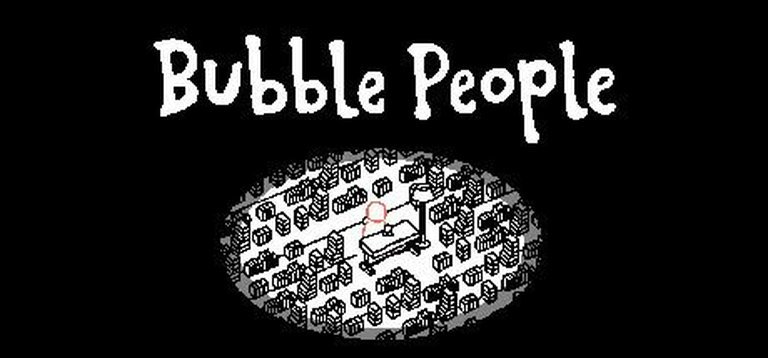
In the surreal simulation game ‘Bubble People’, players control a character wielding mysterious bubble-based powers that escalate from silencing minor annoyances to catastrophic destruction. After accidentally killing bystanders—including a pivotal figure named Blue—the protagonist spirals into desolation, culminating in endings where they either obliterate the world or futilely reverse damage in search of redemption. The narrative unfolds across urban settings like subways and city streets, exploring themes of guilt and isolation through emotive, particle-based mechanics.
Gameplay Videos
Where to Buy Bubble People
Bubble People Patches & Updates
Bubble People Guides & Walkthroughs
Bubble People Reviews & Reception
metacritic.com (100/100): Прошёл игру за полчаса. Отличная оригинальная инди игра с расслабляющим геймплеем.
Bubble People: Review
In the ever-evolving landscape of indie gaming, few titles manage to capture the essence of both simplicity and depth as effectively as Bubble People. Released in October 2021, this point-and-click game has quietly carved out a niche for itself, offering a unique blend of narrative intrigue and mindless clicking that belies its straightforward premise. As a professional game journalist and historian, I’ve delved deep into the mechanics, lore, and legacy of Bubble People to provide an exhaustive review that does justice to its subtle complexities.
Development History & Context
Bubble People was developed by Liujiajun, a relatively unknown indie developer who has since gained a modest following. The game was created using GameMaker, a popular engine for 2D games, and was published by Gamera Games. Liujiajun’s vision for Bubble People was to create a game that was both relaxing and thought-provoking, a goal that was achieved through a combination of minimalist design and a deeply symbolic narrative.
The gaming landscape in 2021 was dominated by high-budget AAA titles and the burgeoning popularity of battle royale games. In this context, Bubble People stood out as a breath of fresh air, offering a quiet, introspective experience that contrasted sharply with the frenetic energy of its contemporaries. The technological constraints of the era were minimal, allowing Liujiajun to focus on the game’s narrative and mechanical simplicity rather than pushing the boundaries of graphical fidelity.
Narrative & Thematic Deep Dive
At its core, Bubble People is a game about existential despair and the search for meaning in a chaotic world. The narrative is divided into two main acts, each offering a different perspective on the protagonist’s journey.
Plot Overview
The game begins with the protagonist discovering an empty orb, which serves as a metaphorical vessel for their emotions and experiences. As the game progresses, the protagonist gains the power to “pop” objects and people, initially as a means of coping with the noise and chaos of the world around them. This act of popping becomes increasingly violent and destructive, culminating in the protagonist’s decision to pop themselves, symbolizing a desire to escape from existence.
In the second act, the protagonist gains the ability to reverse the popping, allowing them to restore the world to its original state. This act of redemption is tinged with sadness, as the protagonist realizes that they cannot bring back the one person they truly care about—Blue. The game ends on a bittersweet note, with the protagonist popping themselves once more, this time with a sense of acceptance and peace.
Characters & Dialogue
The characters in Bubble People are minimalistic, serving as stand-ins for broader themes rather than fully realized individuals. The protagonist, known only as Orange, is a silent figure whose actions speak louder than words. Blue, the love interest, is similarly underdeveloped, existing more as a symbol of lost love than a fully fleshed-out character.
The dialogue in the game is sparse but impactful, with Blue’s beratement of Orange serving as a pivotal moment in the narrative. This exchange highlights the themes of guilt and redemption that underpin the game’s story.
Themes
Bubble People explores a range of themes, including existential despair, the search for meaning, and the consequences of one’s actions. The act of popping objects and people can be seen as a metaphor for the destructive power of emotions, while the reversal of this act in the second half of the game represents a journey towards redemption and acceptance.
Gameplay Mechanics & Systems
Bubble People is a point-and-click game at its heart, with a simple but engaging gameplay loop. The core mechanic involves clicking on objects and people to “pop” them, which in turn releases a liquid that grows into flowers. This mechanic is deceptively simple, but it forms the basis for the game’s narrative and thematic exploration.
Core Gameplay Loop
The gameplay loop in Bubble People is straightforward: click on objects to pop them, watch as the liquid spreads, and repeat. This loop is interspersed with cutscenes and dialogue exchanges that advance the narrative, providing a sense of progression and purpose.
Combat & Character Progression
There is no traditional combat in Bubble People, but the act of popping objects and people can be seen as a form of conflict resolution. The game does not feature character progression in the traditional sense, but the protagonist’s journey from despair to acceptance can be seen as a form of personal growth.
UI & Innovative Systems
The user interface in Bubble People is minimalistic, with a focus on the visual and auditory experience. The game’s sound design is particularly noteworthy, with a soothing soundtrack that complements the game’s themes of relaxation and introspection.
World-Building, Art & Sound
The world of Bubble People is a surreal, dreamlike landscape that serves as a backdrop for the protagonist’s journey. The art style is minimalistic, with a focus on clean lines and muted colors that create a sense of tranquility.
Setting & Atmosphere
The game’s setting is a blend of urban and natural elements, with the protagonist moving through a series of environments that range from bustling city streets to quiet, serene gardens. This juxtaposition of chaos and tranquility reflects the game’s themes of inner turmoil and the search for peace.
Visual Direction
The visual direction in Bubble People is characterized by its simplicity and elegance. The game’s use of color is particularly noteworthy, with the contrast between the vibrant orange of the protagonist and the muted blues and greens of the environment serving to highlight the game’s themes of isolation and longing.
Sound Design
The sound design in Bubble People is a key component of the game’s atmosphere. The soothing soundtrack, composed by Liujiajun, complements the game’s themes of relaxation and introspection, while the sound effects of popping and liquid spreading add a tactile dimension to the gameplay experience.
Reception & Legacy
Bubble People received a mixed reception upon its release, with critics praising its unique narrative and minimalist design while noting its lack of depth and replayability. The game’s legacy has been somewhat overshadowed by its contemporaries, but it has garnered a dedicated following among those who appreciate its subtle complexities.
Critical & Commercial Reception
At launch, Bubble People was met with a lukewarm response from critics, who praised its unique concept but noted its lack of depth and replayability. The game’s commercial performance was similarly modest, with a small but dedicated player base.
Influence on Subsequent Games & the Industry
Bubble People has had a limited influence on subsequent games and the industry as a whole. However, its unique blend of narrative and gameplay mechanics has inspired a number of indie developers, who have sought to replicate its success with their own minimalist, introspective titles.
Conclusion
Bubble People is a game that defies easy categorization. Its minimalist design and straightforward gameplay mechanics belie a deep, thoughtful narrative that explores themes of existential despair, redemption, and the search for meaning. While it may not have achieved widespread acclaim or commercial success, it has carved out a niche for itself as a quiet, introspective experience that stands in stark contrast to the frenetic energy of its contemporaries.
In the annals of video game history, Bubble People will likely be remembered as a unique, if somewhat overlooked, gem. Its legacy may be modest, but its impact on the indie gaming scene is undeniable. For those who appreciate the subtle complexities of narrative-driven games, Bubble People is a must-play title that offers a unique and thought-provoking experience.