
- Release Year: 2001
- Platforms: Android, Browser, iPad, iPhone, Linux, Macintosh, Palm OS, Symbian, Windows Mobile, Windows
- Publisher: Absolutist Ltd.
- Developer: Absolutist Ltd.
- Genre: Puzzle
- Perspective: Side view
- Game Mode: Online PVP, Single-player
- Gameplay: Tile matching puzzle
- Average Score: 60/100
Description
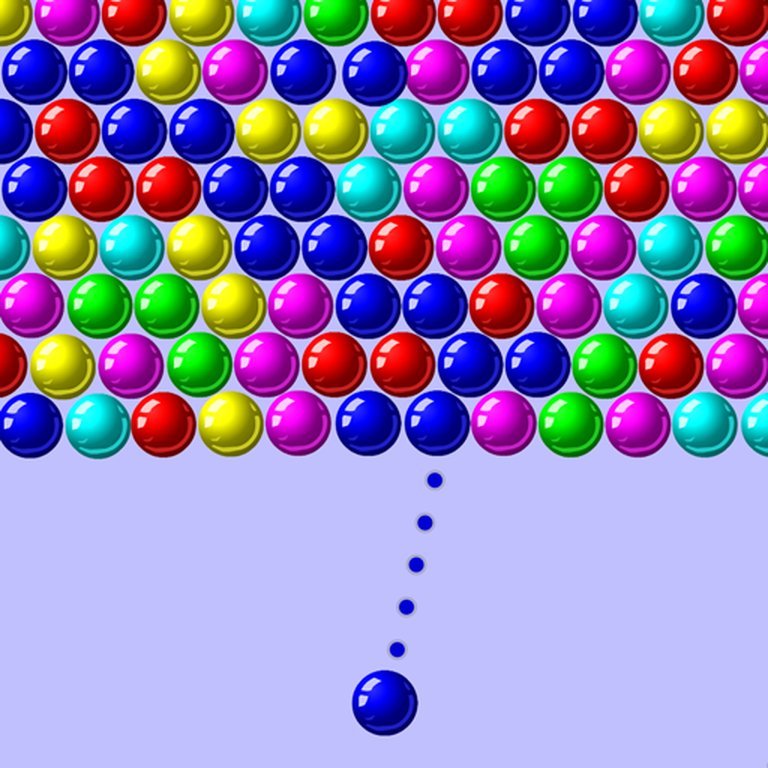
Bubble Shooter is a classic puzzle game where players use a cannon to shoot colored bubbles into a playing area, aiming to match three or more bubbles of the same color to make them disappear. As the game progresses, new rows of bubbles are added, increasing the challenge. The game ends if the playing area fills up completely. With its simple yet addictive gameplay, Bubble Shooter offers various modes, difficulty levels, and customizable themes across multiple platforms, making it a timeless favorite for casual gamers.
Gameplay Videos
Where to Buy Bubble Shooter
PC
Bubble Shooter Free Download
Bubble Shooter Guides & Walkthroughs
Bubble Shooter Reviews & Reception
mobygames.com (60/100): Shoot 3 bubbles or more in this classic bubble shooter game. It never gets bored and you always find time for a quick game.
Bubble Shooter: A Comprehensive Retrospective on a Puzzle Classic
Introduction: The Timeless Appeal of a Simple Mechanic
Few games in the history of casual gaming have achieved the enduring popularity of Bubble Shooter. Released in 2001 by Absolutist Ltd., this unassuming puzzle game—rooted in the mechanics of Puzzle Bobble (1994)—has transcended its humble origins to become a cultural touchstone, a digital comfort food for millions. Its premise is deceptively simple: shoot colored bubbles to match three or more, clearing them from the screen before they overwhelm you. Yet, beneath this straightforward loop lies a masterclass in game design—one that balances accessibility, strategy, and addictive feedback in a way that has kept players engaged for over two decades.
This review will dissect Bubble Shooter in exhaustive detail, exploring its development history, gameplay mechanics, cultural impact, and legacy. We will argue that its success is not merely a product of luck or nostalgia, but rather a testament to the universal appeal of well-crafted puzzle design. Like Tetris before it, Bubble Shooter proves that the most enduring games are often those that refine a single, elegant mechanic to perfection.
Development History & Context: From Arcades to the Digital Age
The Genesis: Taito’s Puzzle Bobble and the Birth of a Genre
The story of Bubble Shooter begins not in 2001, but in 1994, with Taito’s Puzzle Bobble (known as Bust-A-Move in the West). A spin-off of the beloved platformer Bubble Bobble (1986), Puzzle Bobble stripped away the action-adventure elements of its predecessor, distilling the experience into a pure puzzle game. Players controlled Bub and Bob, the iconic bubble-blowing dragons, now wielding a cannon to fire colored bubbles at a descending grid. The goal: match three or more bubbles of the same color to pop them, preventing the grid from reaching the bottom of the screen.
Puzzle Bobble was a critical and commercial success, capitalizing on the early ’90s puzzle game boom alongside titles like Tetris and Columns. Its arcade roots gave it a fast-paced, high-score-chasing appeal, while its bright, cheerful aesthetics made it accessible to a broad audience. By 1995, it had been ported to consoles like the SNES and Sega Genesis, cementing its place in gaming history.
The Rise of Clones and the Birth of Bubble Shooter
As with any successful game, Puzzle Bobble inspired a wave of clones. Developers recognized the potential of its core mechanic—simple to learn, difficult to master, and endlessly replayable. By the late ’90s, variations of the bubble-matching formula began appearing on early digital platforms, particularly as web-based Flash games.
Enter Absolutist Ltd., a Ukrainian game developer founded in 2000. Specializing in casual and puzzle games, Absolutist saw an opportunity to adapt Puzzle Bobble’s mechanics for the burgeoning PC market. In March 2001, they released Bubble Shooter for Windows, positioning it as a shareware title—a model that allowed players to try a limited version before purchasing the full game.
Technological Constraints and Design Choices
The early 2000s were a transitional period for gaming. While consoles like the PlayStation 2 and Nintendo GameCube dominated the living room, PC gaming was fragmented between retail releases and emerging digital distribution. Bubble Shooter was designed with simplicity in mind, both in terms of gameplay and technical requirements:
- Low System Requirements: The game ran smoothly on even the most modest PCs of the era, making it accessible to a wide audience.
- Mouse-Only Controls: Unlike Puzzle Bobble’s arcade controls, Bubble Shooter used a point-and-click interface, which was intuitive for casual players.
- Shareware Model: The game’s distribution as shareware allowed it to spread virally, with players sharing demo versions among friends and colleagues.
Absolutist’s decision to embrace digital distribution—rather than physical retail—proved prescient. As broadband internet became more widespread, Bubble Shooter found a home on gaming portals and download sites, where its addictive nature made it a perfect “time-waster” for office workers and students alike.
The Gaming Landscape in 2001
To understand Bubble Shooter’s impact, it’s essential to contextualize the gaming environment of the early 2000s:
- The Casual Gaming Revolution: While AAA titles like Halo: Combat Evolved and Grand Theft Auto III dominated headlines, a quieter revolution was underway. Games like Bejeweled (2001) and Diner Dash (2003) were proving that simple, accessible experiences could attract massive audiences.
- The Decline of Arcades: As home consoles improved, arcades were fading in popularity. Bubble Shooter’s PC release allowed it to capture the spirit of arcade puzzle games in a home setting.
- The Rise of Flash Games: Websites like Miniclip and AddictingGames were becoming hubs for browser-based gaming. Bubble Shooter’s mechanics were perfectly suited to this format, though its initial release predated the Flash gaming boom by a few years.
Absolutist’s timing was impeccable. By releasing Bubble Shooter in 2001, they positioned it as a bridge between the arcade puzzle games of the ’90s and the casual gaming explosion of the mid-2000s.
Narrative & Thematic Deep Dive: The Minimalism of Pure Gameplay
The Absence of Story: Why It Works
Bubble Shooter is a game with no narrative, no characters, and no dialogue. There are no cutscenes, no lore, and no overarching plot. The player is presented with a cannon at the bottom of the screen, a grid of colored bubbles above, and a single objective: clear the bubbles before they reach the bottom.
This minimalism is not a flaw—it is a deliberate design choice. By stripping away all extraneous elements, Bubble Shooter focuses entirely on its core mechanic, allowing players to engage with the game on a purely mechanical and strategic level. This approach aligns with the philosophy of classic puzzle games like Tetris and Solitaire, where the challenge is self-contained and the reward is intrinsic.
Themes: Order vs. Chaos
While Bubble Shooter lacks explicit storytelling, it does convey a subtle thematic tension between order and chaos:
- The Player’s Role: The player is an agent of order, methodically eliminating bubbles to prevent the grid from descending into chaos.
- The Game’s Resistance: The grid itself is a force of entropy, constantly threatening to overwhelm the player. Each new row of bubbles adds pressure, forcing the player to adapt their strategy.
- The Satisfaction of Completion: The act of popping bubbles—especially in large, cascading chains—provides a visceral sense of control and accomplishment.
This dynamic mirrors real-world problem-solving, where the player must impose structure on an increasingly complex system. It’s a metaphor that resonates subconsciously, contributing to the game’s addictive appeal.
The Psychology of Addiction: Why We Keep Playing
Bubble Shooter’s lack of narrative allows it to tap into universal psychological triggers:
- The “Just One More Turn” Effect: The game’s short, self-contained rounds make it easy to play “just one more game,” a hallmark of addictive design.
- Variable Reward System: The satisfaction of clearing a large cluster of bubbles releases dopamine, reinforcing the desire to replicate that success.
- Low Stakes, High Engagement: Because there’s no penalty for failure beyond losing a round, players feel free to experiment and improve without pressure.
In this way, Bubble Shooter exemplifies the principles of flow state—a mental state where the player is fully immersed in an activity, losing track of time and external distractions.
Gameplay Mechanics & Systems: Deconstructing the Bubble-Matching Formula
Core Gameplay Loop: The Art of the Perfect Shot
At its heart, Bubble Shooter is a tile-matching puzzle game with a real-time twist. The gameplay can be broken down into the following steps:
- Aiming: The player controls a cannon at the bottom of the screen, which fires a colored bubble. The bubble’s trajectory is determined by the angle at which it’s fired.
- Matching: When a fired bubble connects with two or more bubbles of the same color, they pop, and any bubbles no longer connected to the grid fall away.
- Progression: After a set number of shots (typically six), a new row of bubbles is added to the top of the grid. The game ends if the bubbles reach the bottom of the screen.
- Scoring: Points are awarded based on the number of bubbles popped in a single shot, with bonuses for chain reactions and large combos.
This loop is elegant in its simplicity, yet it allows for a surprising depth of strategy.
Strategic Depth: More Than Just Point-and-Click
While Bubble Shooter is easy to pick up, mastering it requires tactical thinking:
- Bounce Shots: Skilled players use the walls to bank shots, reaching bubbles that would otherwise be inaccessible.
- Color Planning: Anticipating the next bubble’s color is crucial. Players must decide whether to aim for an immediate match or set up a more lucrative combo.
- Risk Management: Clearing bubbles from the bottom of the grid is often more strategic than going for high-scoring top rows, as it prevents the grid from descending too quickly.
The game’s difficulty scales naturally as the grid fills, forcing players to adapt their strategies on the fly.
Game Modes and Variations
Over the years, Bubble Shooter has introduced several variations to keep the formula fresh:
- Classic Mode: The original, untimed experience, where players can take their time to plan shots.
- Sniper Mode: A challenge mode where the goal is to clear the grid using the fewest shots possible.
- Arcade Mode: A timed variant that adds pressure and urgency.
- Multiplayer: Later versions introduced online competitive modes, allowing players to face off in real-time.
These modes cater to different playstyles, from relaxed puzzle-solving to high-stakes competition.
UI and UX: The Importance of Clarity
Bubble Shooter’s user interface is a masterclass in minimalist design:
- Clean Visuals: The playing field is uncluttered, with bubbles clearly distinguishable by color.
- Intuitive Controls: The mouse-driven aiming system is responsive and easy to grasp.
- Feedback: Audio and visual cues—such as the satisfying “pop” sound and the animation of falling bubbles—reinforce successful actions.
This clarity ensures that players can focus entirely on the gameplay without distractions.
Flaws and Limitations
No game is perfect, and Bubble Shooter is not without its criticisms:
- Repetition: Some players may find the gameplay loop too repetitive over extended sessions.
- Lack of Innovation: Later iterations of the game have struggled to evolve beyond the core mechanic, leading to a sense of stagnation.
- Limited Depth: Unlike games like Tetris, which have spawned competitive scenes and advanced techniques, Bubble Shooter’s strategic ceiling is relatively low.
However, these flaws are outweighed by the game’s strengths, particularly its accessibility and addictive qualities.
World-Building, Art & Sound: Crafting a Cozy Digital Playground
Visual Design: Bright, Cheerful, and Timeless
Bubble Shooter’s art style is deliberately simple, eschewing realism in favor of bold colors and clean shapes:
- Bubble Aesthetics: The bubbles themselves are vibrant and rounded, with a slight glossy sheen that makes them visually appealing.
- Backgrounds: Early versions featured static backgrounds, while later iterations introduced themes like “Underwater” and “Gems,” adding variety without overwhelming the gameplay.
- Animations: The popping animations are satisfying, with bubbles bursting into confetti-like particles.
This visual approach ensures that the game remains timeless, avoiding the pitfalls of dated graphics.
Sound Design: The Symphony of Popping Bubbles
Sound plays a crucial role in Bubble Shooter’s appeal:
- The “Pop” Sound: The iconic sound effect when bubbles burst is instantly gratifying, providing auditory feedback that reinforces the player’s actions.
- Background Music: Early versions featured simple, looped melodies that were unobtrusive yet catchy. Later versions introduced more varied soundtracks.
- Ambient Effects: Subtle sounds, such as the “click” of the cannon firing, add to the game’s tactile feel.
The sound design is minimalist but effective, enhancing immersion without distracting from gameplay.
Atmosphere: A Digital Comfort Zone
Bubble Shooter creates a relaxing yet engaging atmosphere—a digital space where players can unwind while still exercising their brains. This balance is key to its enduring popularity:
- Low-Stakes Fun: The game’s lack of punishment for failure makes it a stress-free experience.
- Sensory Satisfaction: The combination of bright visuals, satisfying sounds, and smooth animations creates a pleasurable feedback loop.
- Nostalgic Charm: For many players, Bubble Shooter evokes memories of early 2000s gaming, adding a layer of sentimental value.
Reception & Legacy: From Obscurity to Ubiquity
Critical Reception: A Mixed but Positive Response
Bubble Shooter’s reception has been largely positive, though not without detractors:
- Praise:
- Addictive Gameplay: Critics and players alike have praised the game’s “just one more round” appeal.
- Accessibility: Its simple controls and lack of barriers to entry have made it a favorite among casual gamers.
- Longevity: Many reviews highlight the game’s ability to remain engaging over long periods.
- Criticism:
- Lack of Innovation: Some critics argue that the game does little to evolve the Puzzle Bobble formula.
- Repetition: A few reviews note that the gameplay can become monotonous after extended play.
A 60% score from Clubic (2003) reflects this mixed sentiment, acknowledging the game’s strengths while critiquing its derivative nature.
Commercial Success and Expansion
Despite its modest beginnings, Bubble Shooter has become a commercial juggernaut:
- Multi-Platform Release: The game has been ported to Windows, Mac, Linux, Palm OS, Symbian, iOS, Android, and browsers, ensuring its availability across nearly every digital platform.
- Mobile Dominance: The iOS and Android versions, released in 2010 and 2012 respectively, have garnered millions of downloads, capitalizing on the rise of mobile gaming.
- Acquisition by Ilyon Dynamics: In 2015, Absolutist sold the Bubble Shooter IP to Ilyon Dynamics, which expanded the brand into social media platforms like Facebook Messenger and eSports via Skillz.
This expansion has solidified Bubble Shooter’s place as one of the most ubiquitous casual games of the 21st century.
Cultural Impact and Influence
Bubble Shooter’s influence extends beyond its own success:
- Inspiring a Genre: The game has spawned hundreds of clones and variations, from Zuma to Bubble Witch Saga.
- Casual Gaming Revolution: It played a role in legitimizing casual puzzle games as a viable market, paving the way for titles like Candy Crush Saga.
- Gamification: The game’s mechanics have been adapted for educational and marketing purposes, demonstrating its versatility.
The Game’s Evolution: From Clone to Cultural Icon
What began as a Puzzle Bobble clone has evolved into a cultural phenomenon. Bubble Shooter’s journey reflects broader trends in gaming:
- The Shift to Digital: Its success as a downloadable and later mobile game highlights the industry’s move away from physical media.
- The Rise of Casual Gaming: It proved that games didn’t need complex narratives or high-end graphics to captivate audiences.
- The Power of Simplicity: In an era of increasingly complex games, Bubble Shooter stands as a testament to the enduring appeal of elegant, minimalist design.
Conclusion: The Enduring Legacy of a Puzzle Masterpiece
Bubble Shooter is more than just a game—it is a cultural artifact, a testament to the power of simple, well-executed design. Its journey from a Puzzle Bobble clone to a global phenomenon speaks to its universal appeal, bridging generations and platforms with ease.
Final Verdict: A Timeless Classic
Rating: 8.5/10 – A Masterclass in Casual Gaming
Bubble Shooter excels in nearly every aspect of its design:
✅ Gameplay: Addictive, strategic, and endlessly replayable.
✅ Accessibility: Easy to learn, difficult to master.
✅ Longevity: Remains engaging after two decades.
✅ Cultural Impact: Inspired a genre and influenced gaming trends.
Criticisms:
❌ Repetition: Can feel monotonous in long sessions.
❌ Lack of Innovation: Later iterations struggle to evolve the formula.
Yet, these flaws are minor when weighed against the game’s strengths. Bubble Shooter is a hallmark of casual gaming, deserving of its place alongside Tetris, Bejeweled, and Solitaire as one of the most influential puzzle games of all time.
Where Does It Stand in Gaming History?
Bubble Shooter is not a game that redefined an era or pushed technological boundaries. Instead, it perfected a formula, proving that the most enduring games are often those that refine a single, brilliant idea to its purest form. In the pantheon of puzzle games, it stands as a quiet revolutionary—a game that didn’t need flashy graphics or complex narratives to captivate millions.
For players, it remains what it has always been: a digital comfort, a brief escape into a world of colorful bubbles and satisfying pops. And in that simplicity lies its genius.
Final Thought: If you haven’t played Bubble Shooter, do yourself a favor—fire it up, take aim, and let the bubbles fall where they may. You might just find yourself lost in its timeless charm.