
- Release Year: 2003
- Platforms: Macintosh, Windows
- Publisher: Phelios Inc., Space Ewe Software
- Developer: Space Ewe Software
- Genre: Action
- Perspective: Side view
- Game Mode: Single-player
- Gameplay: Platform
- Setting: Fantasy, Futuristic, Sci-fi
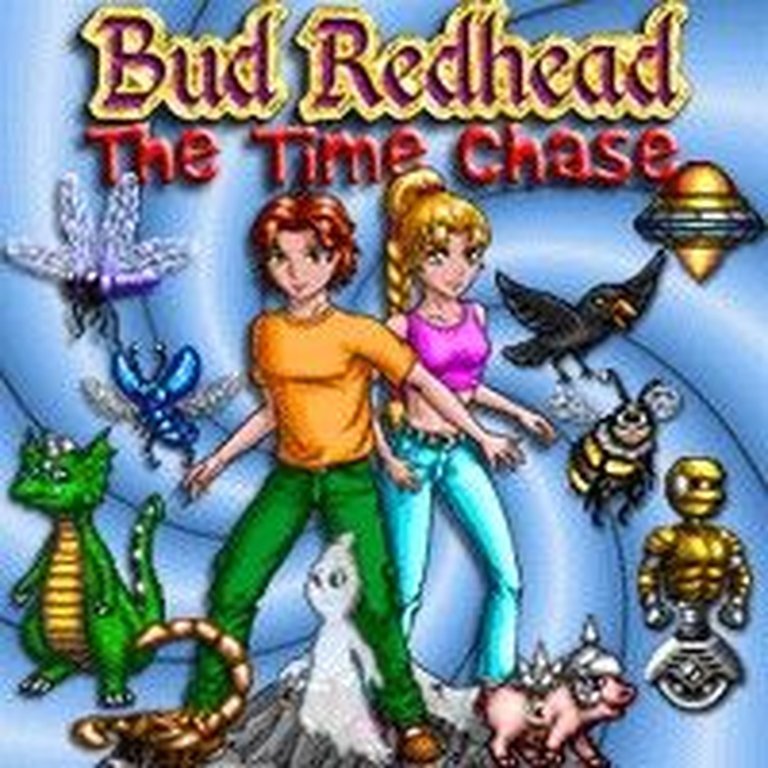
Description
Bud Redhead: The Time Chase is a 2D platform adventure where the protagonist journeys through time and space to rescue his girlfriend Rachel from the intergalactic abductor Feyatta. Players explore four distinct worlds—ancient forests, Egyptian catacombs, medieval castles, and dungeons—culminating in a final confrontation on Feyatta’s spaceship orbiting Saturn. The game features 20 levels with high-resolution graphics, parallax scrolling, hidden secrets, and platforming challenges requiring running, jumping, and stomping enemies.
Gameplay Videos
Bud Redhead: The Time Chase Free Download
Bud Redhead: The Time Chase Cracks & Fixes
Bud Redhead: The Time Chase Mods
Bud Redhead: The Time Chase Guides & Walkthroughs
Bud Redhead: The Time Chase Reviews & Reception
retro-replay.com : Bud Redhead: The Time Chase delivers a classic 2D platforming experience that feels both familiar and fresh.
Bud Redhead: The Time Chase Cheats & Codes
PC
While Playing the game enter one of the codes below.
| Code | Effect |
|---|---|
| opensesame | Automatically pull all levers in level. |
| mortalagain | Deactivate unlimited lives. |
| lifeplease | Gain one extra life. |
| fullenergy | Automatically recover all of your life energy. |
| letmeout | Open the Exit Portal even if you haven’t collect required amount of Golden Coins. |
| liveforever | Gain unlimited lives that are never lost upon death. |
| hidesecrets | Hide all collectibles hidden inside every secret passage and secret area. |
| spikedshoes | Disable sliding when stepping onto Slippery Surfaces. |
| ordinaryshoes | Re-enable sliding when stepping onto Slippery Surfaces. |
| showmeall | Show all collectibles hidden inside every secret passage and secret area. |
| Light Blue, Brown, Dark Blue, Green, Green | Forest 1-2 |
| Dark Blue, Green, Red, Light Blue, Dark Blue | Forest 1-3 |
| Green, Red, Red, Brown, Dark Blue | Forest 1-4 |
| Light Blue, Green, Red, Brown, Light Blue | Forest 1-5 |
| Red, Brown, Green, Dark Blue, Light Blue | Egypt 2-1 |
| Brown, Light Blue, Red, Green, Brown | Egypt 2-2 |
| Green, Dark Blue, Dark Blue, Light Blue, Light Blue | Egypt 2-3 |
| Green, Light Blue, Light Blue, Red, Light Blue | Egypt 2-4 |
| Dark Blue, Brown, Brown, Red, Green | Egypt 2-5 |
| Red, Green, Red, Dark Blue, Light Blue | Castle 3-1 |
| Green, Green, Brown, Light Blue, Brown | Castle 3-2 |
| Light Blue, Light Blue, Green, Red, Brown | Castle 3-3 |
| Brown, Dark Blue, Brown, Light Blue, Green | Castle 3-4 |
| Green, Red, Red, Light Blue, Red | Castle 3-5 |
| Dark Blue, Red, Green, Green, Red | Spaceship 4-1 |
| Green, Dark Blue, Light Blue, Green, Dark Blue | Spaceship 4-2 |
| Brown, Light Blue, Red, Light Blue, Green | Spaceship 4-3 |
| Red, Green, Dark Blue, Light Blue, Dark Blue | Spaceship 4-4 |
| Brown, Light Blue, Brown, Green, Light Blue | Spaceship 4-5 |
| Light Blue, Red, Green, Dark Blue, Red | Boss |
Bud Redhead: The Time Chase: A Timeless Platformer’s Forgotten Journey
Introduction
In an era dominated by 3D graphics and sprawling open worlds, Bud Redhead: The Time Chase (2003) emerged as a defiant celebration of 2D platforming. Developed by husband-and-wife duo Bojan and Irena Urošević under Space Ewe Software, this shareware gem transported players through epochs and galaxies, blending classic mechanics with ambitious sci-fi storytelling. While often overshadowed by AAA releases, its meticulous design, heartfelt narrative, and technical polish reveal a labor of love that transcends its humble origins. This review examines how Bud Redhead not only honored the golden age of platformers but also expanded its possibilities, solidifying its status as a cult classic and a testament to indie ingenuity.
Development History & Context
The Vision of Space Ewe Software
Conceived over three years (c. 2000–2003) by Bojan (programming, music) and Irena (graphics, level design) Urošević, Bud Redhead was born from a desire to revive the spirit of 90s platformers like Sonic the Hedgehog and Super Mario Bros. Operating from Croatia, Space Ewe Software embodied the indie ethos of the early 2000s: small team, limited resources, and unyielding passion. The game’s shareware model ($9.95 for the full version) reflected the era’s digital distribution boom, offering a free trial of the first three levels to hook players.
Technological Constraints and Innovations
Developed for Windows 95/98/XP (with a 2005 Mac port), the game pushed the limits of 2D visuals with 800×600 resolution and parallax scrolling across three background planes. This was ambitious for a small studio, especially given the constraints of DirectX 3-era hardware. The Uroševićs’ technical prowess is evident in the game’s fluid animations and complex level designs, which averaged over 60 screens per level—a staggering scale for the time. Notably, the game’s early alpha (codenamed “Project B,” April 2001) showcased vastly different visuals (e.g., black skies in the Forest world), illustrating the team’s iterative refinement.
The Gaming Landscape of 2003
In 2003, the PC gaming scene was saturated with first-person shooters and RPGs. 2D platformers were relics, dismissed as “outdated.” Against this backdrop, Bud Redhead was a radical act of preservation. Its emphasis on precision platforming, secret areas, and hand-drawn art harked back to a bygone era while incorporating modern conveniences like auto-save checkpoints and password systems. Phelios Inc.’s publishing support helped bridge the gap between indie ambition and market viability, though the game remained a niche passion project.
Narrative & Thematic Deep Dive
A Sci-Fi Fable with Heart
At its core, Bud Redhead is a rescue mission layered with existential weight. Bud, an ordinary teenager, witnesses his childhood sweetheart Rachel abducted by Feyatta, a green-furred intergalactic abductor. After Bud damages Feyatta’s teleporter device, agents Zark and Kraz from the Cosmic Federation equip him with anti-gravity shoes and send him through time. The journey spans four epochs: an 8,000-year-old forest, Egyptian catacombs, medieval castles, and Feyatta’s Saturn-orbiting spaceship.
Characters and Motivations
- Bud Redhead: The quintessential everyman, his journey transforms him from a helpless bystander to a reluctant hero. His silent determination contrasts with the game’s wry humor (e.g., failing to pronounce “Feyatta” initially).
- Rachel: More than a damsel in distress, her abduction fuels the narrative, and her resilience is hinted at through hidden messages in levels.
- Zark and Kraz: These grey aliens (whose names are reverses) serve as cosmic mentors. Their dialogue reveals the Cosmic Federation’s non-interference policy, framing Bud’s quest as a loophole in galactic law.
- Feyatta: A tragic villain revealed to be coerced by Ozarion, a greater-scope villain who abducted Feyatta’s parents. This subverts typical evil motives, adding pathos to the final confrontation.
Thematic Resonance
The game explores time as both a plot device and a metaphor. Each world represents a different epoch’s challenges: the forest’s primal chaos, Egypt’s ancient mysteries, the castle’s feudal rigidity, and the spaceship’s cold futurism. The anti-gravity shoes symbolize power with consequence—contact with water causes instant death—mirroring Bud’s burden. The twist ending, where Feyatta’s parents are freed, underscores themes of redemption and breaking cycles of violence.
Gameplay Mechanics & Systems
Core Loop: Precision and Exploration
Bud Redhead eschews complex abilities in favor of polished fundamentals: running, jumping, climbing, and stomping. Progress hinges on collecting coins to open exit portals, but true mastery lies in uncovering secrets. Each level contains hidden alcoves, 43 enemy types, and 27 obstacles, demanding patience and skill.
Combat and Enemies
Enemies fall into three categories:
1. Stompable: Goomba-like creatures defeated via jumping.
2. Bomb-Required: Hedgehogs, scorpions, and ghosts (immune to stomping) require explosive crates.
3. Environment Hazards: Spikes, thorns, and water (lethal due to the shoes) add tension.
Combat is tactical but accessible, rewarding evasion over aggression. The “Score Multiplier” system incentivizes collecting all gems and coins, turning levels into intricate puzzles.
Progression and Secrets
The 20 levels (5 per world) are interconnected via:
– Auto-saves: After level completion.
– Checkpoints: Manual save points within levels.
– Password System: A color-coded input allows skipping to specific levels, a nod to cartridge-era convenience.
Secrets range from extra coins to letters spelling “PASSWORD,” enabling replayability. The final boss fight shifts to a shoot ’em up mode, offering a genre twist.
Polish and Accessibility
Responsive controls, joystick/gamepad support, and adjustable resolutions (800×600 or 640×480) ensure broad accessibility. The difficulty curve balances challenge with encouragement, making it welcoming for all ages—a rarity in the genre.
World-Building, Art & Sound
A Visual Journey Through Time
Irena Urošević’s art is a standout achievement. Each world boasts a distinct aesthetic:
– Forest: Lush, with cascading waterfalls and dense foliage.
– Egypt: Shadowy catacombs, flickering torches, and hieroglyph-adorned walls.
– Castle: Medieval grandeur, featuring fireplaces, stained glass, and tapestries.
– Spaceship: Futuristic chrome, neon accents, and Saturn’s rings visible through windows.
Parallax scrolling creates depth, while character animations (e.g., Bud’s fluid climbing) breathe life into sprites. The high-resolution art remains striking, avoiding the pixelation common in 2003-era 2D games.
Sound Design and Atmosphere
Bojan Urošević’s music is equally evocative. Ambient tracks shift per world—mystical melodies in the forest, percussive rhythms in Egypt, and ethereal synth in the spaceship. Sound effects (coin jingles, stomps, enemy cries) are crisp. The MikWin audio library ensured compatibility, though the lack of voice acting preserves the game’s retro charm.
Narrative Integration
Storybook-style cutscenes between worlds advance the plot without disrupting gameplay. These vignettes, paired with environmental storytelling (e.g., Rachel’s postcards in secret areas), deepen immersion. The contrast between Bud’s earnestness and Feyatta’s sinister laughter (during boss fights) heightens emotional stakes.
Reception & Legacy
Critical Response at Launch
Bud Redhead polarized critics but earned consistent praise for its craftsmanship:
– Just RPG (92%): “A rare gem… polished and well-balanced.”
– Game Tunnel (80%): “Nostalgic and refreshing… fun for all ages.”
– Macworld (80%): “Homage to early 90s classics.”
– CNET (80%): “Simple but fell flat unless you love the genre.”
– AppleLinks.Com (60%): “A sucker for old arcade style… not without flaws.”
Player testimonials effused enthusiasm: “The best shareware game ever bought” (Ian K.), “A drug” (Francesca N.). It won “Independent Action Game of the Year 2003” at DIY Games, validating its niche appeal.
Evolution and Influence
Over time, Bud Redhead has been reevaluated as a cult classic. Its emphasis on precision platforming and secret-hunting prefigured indie darlings like Celeste and Hollow Knight. The Uroševićs’ dedication—evident in the game’s scale and polish—set a benchmark for small-scale development. Though it never achieved mainstream fame, its preservation on platforms like the Internet Archive ensures its legacy.
Conclusion
Bud Redhead: The Time Chase is a triumph of passion over pragmatism. In a gaming landscape fixated on technological spectacle, Space Ewe Software delivered a meticulously crafted 2D odyssey that honored its influences while pushing boundaries. Its blend of tight platforming, time-bending narrative, and gorgeous artistry proves that innovation need not come from reinvention—sometimes, it’s about perfecting the fundamentals.
Verdict: A hidden gem of early 2000s indie development. Bud Redhead’s charming story, ingenious level design, and technical prowess make it more than a nostalgic footnote; it’s a masterclass in how restraint and creativity can outscale brute force. For platformer enthusiasts, it remains an essential journey—one that, even after two decades, continues to resonate with the timeless joy of a perfectly timed jump.