
- Release Year: 2021
- Platforms: Macintosh, Windows
- Publisher: Mens Sana Interactive
- Developer: Mens Sana Interactive
- Genre: Card, Puzzle, Solitaire, Tile
- Perspective: 1st-person
- Game Mode: Single-player
- Gameplay: Cards, Tiles
Description
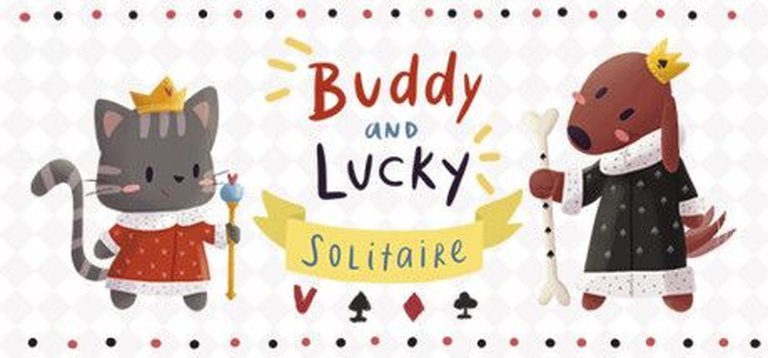
Buddy and Lucky Solitaire is a casual puzzle game that blends classic solitaire gameplay with adorable pet companions, allowing players to enjoy turn-based card games in picturesque settings like city or countryside. With a colorful, hand-drawn aesthetic and relaxing themes, it offers a family-friendly experience where you can play solitaire alongside friendly animals, enhancing the traditional card game with charming visuals and a soothing atmosphere.
Gameplay Videos
Where to Buy Buddy and Lucky Solitaire
PC
Buddy and Lucky Solitaire: A Review
Introduction: The Quiet Revolution of a Digital Patience Game
In the vast and noisy ecosystem of video games, dominated by cinematic blockbusters and competitive esports, there exists a serene and profoundly important corner dedicated to digital relaxation. It is here, in this contemplative space, that Buddy and Lucky Solitaire asserts its quiet identity. Released in June 2021 by the consistently thoughtful studio Mens Sana Interactive, this title is not an attempt to reinvent the ancient wheel of Solitaire, nor is it a cynical cash-grab. Instead, it represents a deliberate, artful curation of a classic experience—a “chill-out” game built on a foundation of respect for its predecessor and a clear, modern aesthetic vision. My thesis is this: Buddy and Lucky Solitaire succeeds not through mechanical innovation, but through the impeccable execution of a holistic design philosophy. It understands that the core appeal of Solitaire is its meditative, solitary rhythm, and it enhances that rhythm with a cohesive world, charming characters, and a presentation that feels both timeless and freshly handcrafted. It is a masterclass in the “casual” genre, proving that simplicity, when tended to with care, can yield a product of exceptional quality and lasting comfort.
Development History & Context: The Mens Sana Interactive Mantra
The Studio and Its Vision
Mens Sana Interactive, the developer and publisher, has carved a distinct niche in the “casual and relaxing” market. Their portfolio (including titles like Little Inner Monsters and various puzzle games) consistently prioritizes psychological comfort, gentle aesthetics, and stress-free gameplay loops. Buddy and Lucky Solitaire is a quintessential expression of this studio’s design mantra: “A solitaire game is a great way to escape the hustle and bustle of everyday life.” The vision was not to create a strategic card battler, but a digital sanctuary. The choice to base the game on Classic Solitaire (Klondike)—the most universally recognized variant—was a pragmatic and genius move. It eliminates the learning curve, allowing the player’s cognitive energy to be spent on the soothing process of sorting, not on rule comprehension.
Technological and Market Context (2021)
By 2021, the digital card/tabletop space was crowded. Major studios were producing complex, narrative-driven digital adaptations (like Slay the Spire clones) or licensed AAA card games (Hearthstone, Legends of Runeterra). The market for pure, unadulterated Solitaire was largely served by basic, ad-laden mobile apps or outdated PC collections. The era’s technological constraints were minimal for a 2D card game, allowing Mens Sana to focus resources on art and audio. The game’s system requirements (a 2GHz Dual Core, 4GB RAM) are exceptionally light, ensuring accessibility on nearly any PC or Mac from the previous decade, a conscious decision to align with its “anyone, anytime” ethos. Its release on Steam—a platform not historically associated with simple solitaire games—was a calculated risk, targeting an audience seeking a “palate cleanser” between more intensive gaming sessions.
Narrative & Thematic Deep Dive: A Duality of Place and Companionship
Buddy and Lucky Solitaire possesses a narrative framework so subtle it could be mistaken for mere flavor text, but it is the essential glue that transforms a game into an experience. The plot is not about a grand quest but a choice of where and with whom to play.
The Antagonistic Protagonists: Buddy vs. Lucky
The genius lies in the duality of its mascots.
* Buddy represents the urban dweller. His card deck features illustrations of city life—likely rooftops, cafes, street scenes. He embodies a cozy, contained, man-made tranquility. Playing with Buddy’s deck is about finding peace within the bustling world.
* Lucky represents the nature lover. Her deck showcases countryside landscapes—forests, flowers, pastoral vistas. She embodies an expansive, organic, immersive calm. Playing with Lucky’s deck is about escaping to the natural world.
This isn’t just a cosmetic swap; it’s a thematic bifurcation of the relaxation experience. The player’s “story” is self-authored: “Today, I am in the city with Buddy,” or “Today, I need the countryside with Lucky.” The dialogue and animations (as noted in the Steam description: “Buddy and Lucky animating the cards”) are implied to be celebratory or encouraging—a thumbs-up from Buddy when a sequence is completed, a joyful leap from Lucky. These silent, animated reactions are the game’s version of character depth, reinforcing the supportive, non-judgmental companionship.
The Underlying Themes: Mindfulness and Environmental Connection
1. Active Mindfulness: The gameplay loop—drawing, organizing, moving cards—is inherently meditative. The game amplifies this by encouraging the player to “take a break from time to time to enjoy the landscape around you – within reach of a mouse move!” This is a direct instruction to engage in mindful observation, to look away from the cards and at the scenery. The game thus becomes a tool for practicing attentional control.
2. The Negotiated Sanctuary: The six scenarios (3 city, 3 countryside, per the description) are not just backdrops; they are proposed sanctuaries. The player negotiates their preferred state of mind through this simple selection. This positions the game not as an escape from reality, but as a curated fragment of reality—a peaceful city park or a sunny meadow—that one can step into at will.
3. Companionship Without Demands: Buddy and Lucky are perfect digital pets. They offer presence without need. They don’t require feeding, walking, or complex interaction. Their companionship is purely atmospheric, a warm visual and animated presence that alleviates the solitude of single-player solitaire. This taps into the deep human desire for low-fidelity, stress-free companionship.
Gameplay Mechanics & Systems: Respecting the Classic
Core Loop: Unadulterated Klondike
The game offers Classic Solitaire (Klondike) in Draw 1 and Draw 3 modes. This is the critical design decision. No bizarre rule twists, no power-ups, no “energy” systems. The core gameplay is 100% standard Klondike, the solitaire most players learned on a Windows 95 PC. This is a declaration of intent: the classic mechanics are deemed perfect as-is. The “innovation” lies entirely in the presentation and packaging around these mechanics.
The “Innovation”: Environmental Integration and Collectibility
1. The Landscape as a Feature: The most significant mechanical addition is the “hidden object” element. While the primary view is the card table (top-down/perspective mixed, with a fixed/flip-screen visual), the player can move the mouse to the edges of the screen (implied by “within reach of a mouse move!”) to view the broader landscape scenario. This isn’t just a pretty view; it contains special items to find, which unlock in-game bonus cards. This creates a gentle, rewarding meta-loop: solve a few rows of cards, take a breath, scan the vista for a hidden object, feel a small reward. It breaks the intense card-focus without breaking the overall session flow.
2. Dual DecKS: The choice between the Buddy (city) and Lucky (countryside) decks is the primary “progression” system. There is no character leveling or stat building. The progression is experiential: “I have now experienced all six scenarios.” The bonus cards found in the landscapes serve as a tangible record of exploration.
3. UI and Accessibility: The interface is “point and select,” as simple as it gets. The cards are “beautifully illustrated” by Katia Numakura, with distinct, hand-drawn suits that make card identification effortless and delightful. The UI does not intrude. This is a game that could be played by someone unfamiliar with video games.
Flaws and Limitations (By Design)
The only “flaws” are inherent to its design philosophy, which may not suit all:
* No Timed Modes: Players seeking pressure will find none.
* No Variant Rules: Purists of other solitaire games (Spider, FreeCell) are out of luck.
* Simplistic Feedback: Win/loss conditions are binary, with no nuanced statistics beyond completion.
World-Building, Art & Sound: The Handcrafted Sanctuary
Visual Direction: A Still-Life in Motion
The art, credited to Katia Numakura, is the game’s defining feature and primary selling point. The style is described as “lovely illustrations,” “hand-drawn,” “cartoony,” “colorful.”
* Card Art: The decks are not generic pips. The suits (hearts, diamonds, clubs, spades) are likely themed to Buddy or Lucky’s worlds (e.g., heart suits might be cityscapes or animal hearts). This makes the core act of sorting cards visually engaging on a moment-to-moment basis.
* Scenario Backgrounds: The six scenarios are the game’s “worlds.” They are not interactive levels but detailed, serene paintings that function as the table’s backdrop and the panoramic view. The “3D” tag is slightly misleading—it’s likely a 2D illustration with a slight parallax effect when moving the mouse to the edges, giving a sense of depth without true 3D modeling.
* Animation: The characters animate on the cards. A “Buddy” or “Lucky” figure might appear on certain cards (perhaps the face cards or aces) and perform a small, cheerful animation when moved or played. This injects life and personality into the static card mechanics.
Sound Design: The Auditory Blanket
The game features a “perfect relaxing soundtrack.” This is crucial. The audio design is non-diegetic (not from the game world) but entirely absorptive. It likely consists of:
* Soft, lo-fi piano or acoustic guitar melodies.
* Ambient nature sounds (birds, wind, distant city hum) tied to the scenario.
* Gentle, satisfying sound effects for card movements—a soft thwip or shush instead of a harsh click.
The soundtrack is a continuous, low-entropy auditory blanket designed to lower heart rates and encourage deep focus.
Atmosphere and Synergy
The power is in the synergy. Placing a beautifully illustrated card with a charming character on it onto a clean, shadowed table, against a backdrop of a sun-dappled forest or a twilight city skyline, while a soft piano plays, creates a total sensory experience of calm. It’s not just a card game; it’s a mood piece. The “hidden object” element reinforces this by making the player an active observer of the world, not just the cards.
Reception & Legacy: A Niche Triumph
Critical Reception
As documented on Metacritic and MobyGames, there are no published critic reviews for Buddy and Lucky Solitaire. This is not a sign of failure but of the game’s niche positioning. Major outlets rarely cover minimalist casual games unless they are from ultra-major IPs (like a Nintendo Clubhouse Games). Its critical silence speaks to its genre—it’s designed for an audience that finds it through Steam’s algorithm or curated “relaxing” bundles, not through IGN or GameSpot.
Commercial and Player Reception
The player reception is the game’s true metric:
* Steam Reviews: 95 reviews with an “Very Positive” rating (82% positive) as of the latest data. The review breakdown shows consistent positivity over time, with a slight fluctuation between “Mostly Positive” and “Very Positive,” but always a strong majority.
* Player Score (Steambase): 80/100, calculated from 142 total reviews (114 positive, 28 negative). This indicates a solid, likable product with a small but vocal minority who dislike its minimalist approach.
* Common Praises (from tags and inferred reviews): “Cute,” “Relaxing,” “Family Friendly,” “Soundtrack,” “Colorful,” “Hand-drawn.” The user-defined tags are a perfect summary of its successful attributes.
* Common Criticisms: Likely stem from those who find the game too simple, too short, or lacking in traditional “gameplay” depth. The 28 negative reviews probably cite boredom or a perceived lack of value for $2.99.
Legacy and Influence
Buddy and Lucky Solitaire is not a landmark title that spawned clones. Its legacy is ideological and market-based.
1. Proof of Concept for “Cozy Gaming”: It was released at the peak of the “cozy games” trend. It demonstrates that a pure, rules-accurate version of a classic game, elevated by aesthetic curation and thematic framing, can find a dedicated audience on a hardcore platform like Steam.
2. The “Mens Sana Interactive” Brand: It strengthens the studio’s reputation as a purveyor of premium comfort games. Its inclusion in multiple Steam bundles (Cute Relaxing Card Games, Cats and Cards) shows its role as a reliable, attractive anchor product for genre collections.
3. The “Buddy & Lucky” IP: It establishes a duology of characters (Buddy the urbanite, Lucky the nature lover) that appears in other Mens Sana titles (How Buddy’s Parents Met, Lucky and a Life Worth Living, Buddy and Friends on Halloween). This creates a small, cohesive universe of relaxation.
4. Influence on the “Non-Game” Space: It stands as a successful artifact in the space between “video game” and “interactive art/ambient experience.” It prioritizes mood management over challenge, aligning with the burgeoning digital wellness space.
Conclusion: A Perfectly Formed Digital Sigh
Buddy and Lucky Solitaire is not for everyone. It makes no apologies for its simplicity, its lack of drama, or its singular focus on providing a quiet moment. For those who seek it out—the overworked professional needing a five-minute mental reset, the hardcore gamer winding down after a raid, anyone who finds solace in the rhythmic click of cards—it delivers exactly what it promises with exquisite precision.
Its success is measured in moments of calm, not leaderboard positions. It is a testament to the enduring power of well-executed minimalism. By taking the world’s most familiar patience game and clothing it in a consistent, harmonious world of gentle art, soft sounds, and implied companionship, Mens Sana Interactive created more than a product; they created a portable sanctuary. In the grand, noisy history of video games, such an achievement is quiet but profound. Its place is not in a canon of “greatest games,” but in the personal libraries of those who understand that sometimes, the most meaningful interactive experience is the one that simply asks you to breathe, sort, and look at the pretty picture. For that purpose, it is nearly perfect.