
- Release Year: 2021
- Platforms: Windows
- Publisher: Zuza Games
- Developer: Zuza Games
- Genre: Puzzle
- Perspective: Diagonal-down
- Game Mode: Single-player
- Gameplay: Puzzle-solving
- Average Score: 98/100
Description
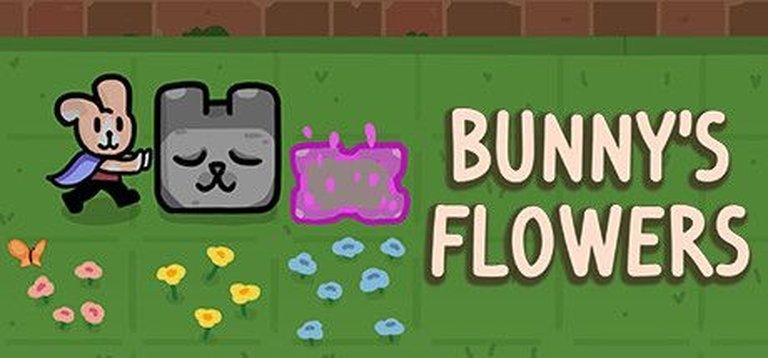
Bunny’s Flowers is a charming puzzle game where players guide an adorable rabbit on a journey to their grandma’s house. Set in a whimsical world filled with talking animal friends, the game combines Sokoban-style box-pushing mechanics with a unique magical twist, challenging players to solve puzzles using special abilities. Featuring a minimalist art style, calming soundtrack, and cozy atmosphere, it offers a wholesome experience for fans of lighthearted brain-teasers.
Where to Buy Bunny’s Flowers
PC
Bunny’s Flowers Patches & Updates
Bunny’s Flowers Reviews & Reception
steambase.io (99/100): Bunny’s Flowers has earned a Steambase Player Score of 99 / 100. This score is calculated from 74 total reviews which give it a rating of Very Positive.
store.steampowered.com (98/100): All Reviews: Very Positive (65) – 98% of the 65 user reviews for this game are positive.
Bunny’s Flowers: A Wholesome Odyssey Through Puzzle Simplicity
Introduction
In an era dominated by hyper-competitive multiplayer titles and narrative epics, Bunny’s Flowers (2021) by Zuza Games emerges as a quiet revolution. This Sokoban-inspired indie puzzler crafts an experience that prioritizes serenity over spectacle, inviting players into a world where the gentle push of a box becomes a meditative act. Thesis: While mechanically unassuming, Bunny’s Flowers carves a distinct niche in the puzzle genre through its marriage of minimalist design, pastoral charm, and thoughtfully constrained challenge—proving that sometimes, the smallest journeys leave the deepest impressions.
Development History & Context
Studio Vision Under Constraints
Developed and published by the enigmatic Zuza Games—a studio specializing in cozy, animal-centric puzzles (Bunny’s Maze, Bunny’s Ban)—Bunny’s Flowers reflects a deliberate rejection of modern gaming excess. Released on March 15, 2021, the game was built for accessibility, requiring only 512 MB RAM and compatible with Windows XP forward. Its technical spartan-ness (100 MB storage footprint, DirectX 9 support) allowed it to target aging hardware and casual audiences sidelined by AAA demands.
The Sokoban Renaissance
Arriving amid a resurgence of grid-based puzzlers (Patrick’s Parabox, Railbound), Zuza doubled down on the Sokoban blueprint’s timeless appeal. Yet unlike contemporaries experimenting with meta-mechanics, Bunny’s Flowers honed a singular focus: refining the box-pushing formula into a therapeutic ritual. The studio’s choice to release exclusively on PC (with Steam Deck compatibility added post-launch) prioritized intimate, keyboard-or-gamepad play sessions—a counterpoint to mobile’s ad-driven puzzle market.
Narrative & Thematic Deep Dive
A Fable in Four Acts
The premise is elegantly sparse: A rabbit protagonist traverses forests, lakes, and meadows to deliver flowers to their grandmother. Dialogue exists only in vignettes with anthropomorphic villagers (a sardonic squirrel, a poetic toad), who offer encouragement through dreamy non sequiturs. This narrative restraint becomes thematic strength: The journey symbolizes intergenerational connection, framed through environmental storytelling—crumbling stone paths imply forgotten visits, while vibrant meadows suggest rediscovery.
Beneath the Wholesome Veneer
Despite its Hallmark-ready aesthetics, the game quietly subverts expectations. The rabbit’s “mysterious magical power” (telekinetically pivoting stone blocks) carries subtle melancholy; puzzles often require isolating the protagonist from their goal, metaphorizing the bittersweet labor of nurturing relationships. Even achievements like “Goodnight” (completing the game) and “Chatterbox” (talking to all villagers) reinforce themes of closure and community—asking players to slow down and appreciate transient connections.
Gameplay Mechanics & Systems
The Sokoban Spine, Reimagined
At its core, Bunny’s Flowers adheres to Sokoban’s rules: Push blocks onto targets without jamming corridors. Zuza’s innovation lies in rotational manipulation—players pivot stones 90 degrees with a button press, adding spatial nuance. Early puzzles teach this gently (e.g., aligning blocks as bridges), but later stages demand Escher-like foresight, such as creating cascading barriers across chasms.
Controlled Pacing, Limited Replay
The 2.9-hour playthrough (per Niklas Notes) is segmented into discrete biomes (forest, lakes, edges), each culminating in a checkpoint-less “boss” puzzle. While the absence of alternate solutions or difficulty settings narrows replay value, it curates a curated, stress-free cadence. The UI mirrors this philosophy: unobtrusive icons, no timers, and intuitive drag-and-block mechanics via mouse or controller. Five Steam Achievements act as organic progression markers—eschewing bloated reward systems in favor of gentle positive reinforcement.
World-Building, Art & Sound
A Living Pastoral Canvas
Visuals marry the cozy austerity of Donut County with watercolor landscapes that shift from ochre sunsets to moonlit thickets. Each biome is a diorama of subtle animation: pollen motes drift in sunbeams, fireflies pulse near lanterns. The “adorable minimalist artstyle” (per Steam) avoids cloying cuteness through muted palettes, grounding the fantasy in earthy realism.
Sound as Emotional Scaffolding
Zuza’s soundtrack—built from CC-licensed tracks like Alexander Nakarada’s “Adventure”—weaves acoustic guitar melodies with ambient forest murmurs. Notably, audio feedback is diegetic: Blocks thud with weighty texture, while animal chirps contextualize puzzle elements (e.g., crickets marking impassable brush). This synergy between sight and sound transforms puzzles into sensory poetry, elevating simple mechanics into mindful ritual.
Reception & Legacy
A Stealth Cult Classic
Boasting a 98% “Very Positive” Steam rating (65 reviews), players praised its “calming soundtrack” and “satisfying puzzles” (Steam user reviews), though a minority cited occasional pathfinding bugs (as discussed in forum threads like “Carnation Level Bug?”). Despite no Metacritic critic coverage, its niche appeal secured a Player Score of 99/100 on Steambase—a testament to indie gems resonating through word-of-mouth.
Influence on the “Cozy Puzzler” Wave
While not revolutionary, Bunny’s Flowers refined design tenets adopted by later titles:
– Restrained Scope: Short runtime as artistic choice (cf. A Short Hike)
– Ambient Narrative: Environmental vignettes over exposition (cf. Lieve Oma)
– Accessibility First: Family-friendly mechanics with universal appeal
Zuza’s subsequent Bunny’s Ban (2021) directly iterated on its foundations—proving the viability of minimalist puzzle ecosystems.
Conclusion
Bunny’s Flowers is a masterclass in humble intentionality. It neither revolutionizes Sokoban nor aspires to, but within its modest frame, it crafts an experience of surprising emotional resonance. Like a well-tended garden, its beauty lies in curated boundaries: Every puzzle, every chirping cricket, every sunset palette serves the therapeutic fantasy of reconnecting with simplicity itself. While its legacy may be quieter than genre titans, it stands as essential play for those seeking refuge from gaming’s cacophony—a gentle reminder that small things, grown with care, can bloom beyond their size.