
- Release Year: 2024
- Platforms: Windows
- Publisher: Four Guys, One Burger
- Developer: Four Guys, One Burger
- Genre: Idle
- Perspective: Fixed / flip-screen
- Game Mode: Single-player
- Gameplay: Clicker, Crafting, Upgrades
- Setting: Burger restaurant
- Average Score: 74/100
Description
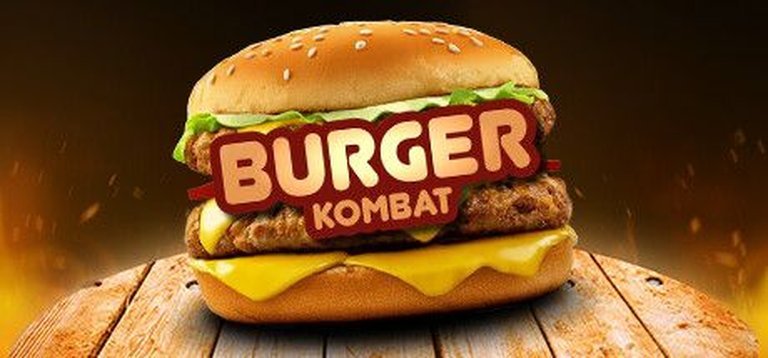
Burger Kombat is an idle clicker game where a mysterious package transforms the player’s house into a burger restaurant, allowing money to be earned by clicking on burgers or buying equipment for passive income. Players combine ingredients to create cosmetic burgers, with new tradable Steam inventory items dropping over time.
Where to Buy Burger Kombat
PC
Burger Kombat Guides & Walkthroughs
Burger Kombat Reviews & Reception
steambase.io (75/100): Mostly Positive (75/100 from 127 reviews)
store.steampowered.com (75/100): Mostly Positive (75% of 128 user reviews)
niklasnotes.com (74/100): Mostly Positive (74% from 131 reviews)
Burger Kombat: Review
Introduction
Imagine a world where your mundane kitchen counter becomes a battlefield of culinary chaos, where a single mysterious package unleashes an endless parade of absurd ingredients, turning idle clicks into a quest for burger-building supremacy. Burger Kombat, released in August 2024 by the enigmatic indie outfit Four Guys, One Burger, is the latest entrant in the idle clicker genre—a free-to-play Steam title that mashes up Cookie Clicker-style progression with burger-crafting whimsy. Despite its recency, it has already carved a niche among casual gamers, boasting a “Mostly Positive” Steam rating from 128 reviews. This review posits that Burger Kombat excels as a lighthearted, addictive diversion for short bursts of play, but its shallow mechanics and reliance on random drops reveal the limitations of modern idle games in an oversaturated market.
Development History & Context
Burger Kombat emerged from the solo or small-team efforts of Four Guys, One Burger, a developer-publisher duo (or quartet?) with no prior credits listed on platforms like MobyGames. Built in GameMaker—a staple engine for indie devs since the early 2000s due to its accessibility and 2D prowess—the game reflects the technological freedoms of 2024’s PC landscape. GameMaker’s drag-and-drop simplicity allowed for rapid prototyping of fixed-screen visuals and real-time pacing, unburdened by the hardware constraints of earlier eras like the NES or even early Steam indies.
The gaming context of mid-2024 was dominated by free-to-play idle titles on Steam, fueled by the post-pandemic surge in casual mobile ports and Steam Deck compatibility. Burger Kombat slots into this ecosystem as a zero-cost experiment, leveraging Steam’s inventory system for tradable ingredients—a clever nod to community-driven economies seen in games like Team Fortress 2 or Dota 2. Released amid a wave of food-themed indies (e.g., Godlike Burger in 2022 or Suzy Burger in 2021), it capitalizes on algorithmic discoverability via tags like “Clicker,” “Idler,” and “Cooking.” However, its use of open-source AI-generated art (disclosed transparently) underscores indie cost-cutting in an era where tools like Stable Diffusion democratize visuals but risk homogenizing aesthetics. With minimal marketing beyond Steam’s storefront and a Discord link, its development feels like a passion project, added to MobyGames in June 2025 by contributor “qwertyuiop,” highlighting its underground status.
Narrative & Thematic Deep Dive
At its core, Burger Kombat‘s “narrative” is a threadbare premise: a mysterious package arrives, instantaneously converting your house into a burger restaurant. No protagonists, no dialogue, no cutscenes—just a sudden plunge into burger-building anarchy. This setup evokes surrealist humor, reminiscent of Cookie Clicker‘s impersonal ascent from baker to god-emperor, but with a greasy twist. The player embodies an anonymous chef, mastering “EXPENSIVE burgers” over tasty ones, satirizing consumerism where value trumps flavor.
Thematically, it explores absurdity in creation: ingredients “randomly appear every couple hours” with “no logic,” forcing combinations of “absurd and incompatible products.” Rare drops as Steam inventory items introduce trading as social currency, theming around rarity and flexing (e.g., Steam discussions reference “Low-Key Flex Achievement”). Achievements like “Mayo Achievo,” “My First Hamburger,” and “Mom Get the Camera” inject ironic milestones, poking fun at idle progression tropes. Deeper reading reveals critique of grind culture—endless clicking for cosmetic burgers mirrors real-world vanity metrics—but the lack of voiced narrative or lore leaves it feeling cosmetic itself. Dialogue is absent, replaced by UI prompts, making themes emergent rather than scripted, much like Adventure Capitalist‘s silent empire-building.
Gameplay Mechanics & Systems
Burger Kombat‘s core loop is quintessential idle clicker: point-and-click interface on a fixed/flip-screen kitchen. Click the burger to earn money, invest in equipment upgrades for passive income (CPS—clicks per second, queried in forums as “whats the max cps?”), and combine hourly-dropping ingredients into burgers. Burgers are purely cosmetic, valued by expense rather than edibility, with rarity driving prestige.
Core Loops and Combat(?!)
No traditional combat despite the “Kombat” title—it’s metaphorical burger assembly “kombat.” Progression splits into active clicking (initial grind) and passive idling (upgrades). Money funds equipment, boosting CPS, while crafting unlocks visual flexes. Steam inventory integration shines: ingredients are tradable drops, enabling player economies (forum queries like “Ingredients?” and “get more ingredients”).
Character Progression and UI
No characters progress; the player avatar is static. Progression is numerical: rarer ingredients yield pricier burgers, gated by RNG drops. UI is simple—GameMaker’s clean 2D layout with scrollable upgrades—but forums lament Steam Deck scrolling issues (“Can’t scroll down to the other upgrades”) and clunky controls. Inventory management frustrates (e.g., “Inventory Management Issues” in review analysis), with unwanted drops bloating slots. Achievements (17 total) add goals, but bugs like “Savefile integrity check failed” and “Problem with Mayonnaise achievement” persist.
Innovations and Flaws
Innovative: Tradable Steam items as progression fuel, blending idlers with trading cards. Flawed: Repetitive (top complaint at ~6%), slow progression (~3%), lack of content (~4%). No multiplayer, recipes vague (“is there certain recipes?”), and purpose of money post-upgrades unclear (“What is the purpose of money?”). Estimated playthrough ~14.9 hours, but most sessions 38m-71.5h per review data.
World-Building, Art & Sound
The “world” is a single kitchen screen: fixed perspective on a table cluttered with absurd ingredients, evoking a chaotic diner. Atmosphere builds through escalating burger monstrosities—towering stacks of rarities amid AI-generated art (colorful, whimsical 2D sprites). Visuals are praised (~5% reviews) for appeal, with smooth animations suiting Steam Deck verification.
Art direction leans cartoonish absurdity: incompatible combos like exotic meats on buns, emphasizing expense over realism. Sound design is minimal—standard clicks, chimes for drops/upgrades (any sound card suffices)—lacking a soundtrack, which amplifies idling silence but misses immersion. Collectively, these forge a cozy, humorous vibe: not epic world-building like Stardew Valley, but effective for its micro-scale, contributing to addiction via satisfying “ka-ching” visuals over depth.
Reception & Legacy
Launched August 14, 2024, Burger Kombat garnered no critic reviews (MobyGames/Metacritic: n/a), but Steam’s 75% positive (96/128, as of late 2025) deems it “Mostly Positive.” Peaks in August 2024 (38/46 positive), stabilizing amid gripes. Review sentiment: addictive crafting/humor praised (~16-5%), repetition/inventory slammed (~6-3%). Forums buzz with achievement woes (e.g., Turkish “Artık malzeme düş lan”), trading queries, reflecting engaged niche.
Commercially, free-to-play success (0 Steam purchases, all external?) fits idle trends. Legacy nascent—too new for influence—but echoes Cookie Clicker in Steam integration, potentially inspiring tradable cosmetic idlers. Among burger games (Burger Shop 2007, Godlike Burger 2022), it stands as quirkiest freebie. Evolving rep: from launch novelty to steady casual staple, per playtime data.
Conclusion
Burger Kombat distills idle joy into burger form: addictive clicks, absurd crafts, and Steam-tradable flair make it a free gem for genre fans, earning its “Mostly Positive” badge through humor and accessibility. Yet, repetition, RNG gates, and sparse content cap its ambition, exposing idle pitfalls in 2024’s indie flood. As a historical footnote, it exemplifies AI-aided micro-indies—fun, fleeting, and forgettable. Verdict: Recommended for casual idlers (7.5/10), a greasy snack in gaming’s vast menu, but no gourmet feast. Play it, craft expensively, then move on.