
- Release Year: 2016
- Platforms: Macintosh, PlayStation 4, Windows
- Publisher: Brain&Brain LLC
- Genre: Compilation
- Average Score: 72/100
Description
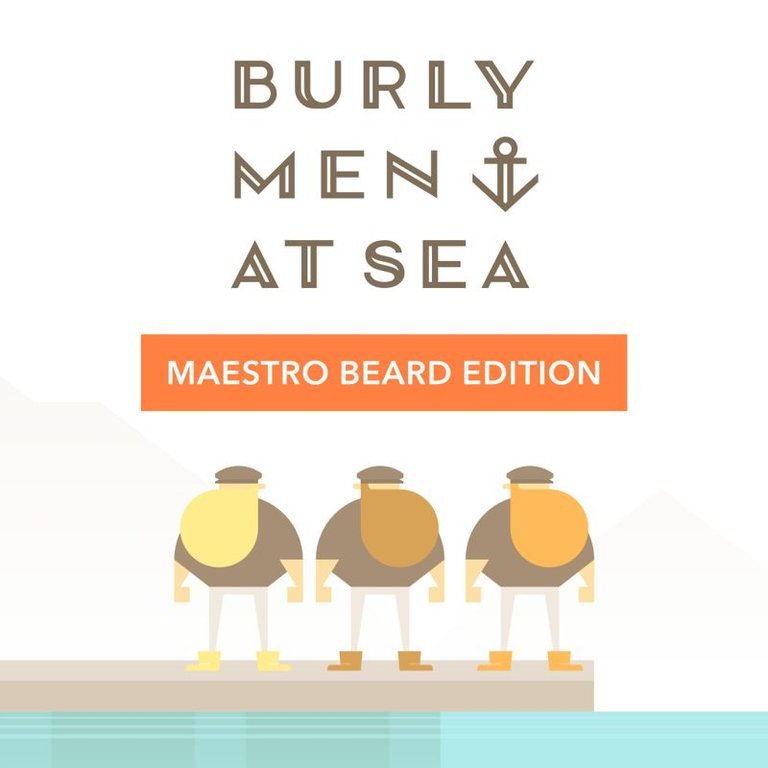
Burly Men at Sea (Maestro Beard Edition) is a whimsical indie adventure game following three bearded fishermen as they navigate treacherous waters filled with creatures from Scandinavian folklore. Players shape the branching narrative through environmental interactions, guiding the seafaring heroes through a cyclical story that blends minimalist art, playful music, and fairy-tale charm. This special edition offers a fresh take on the beloved interactive storybook experience.
Burly Men at Sea (Maestro Beard Edition) Guides & Walkthroughs
Burly Men at Sea (Maestro Beard Edition) Reviews & Reception
gamecritics.com : Each narrative thread can be enjoyed independently as its own little adventure.
## Burly Men at Sea (Maestro Beard Edition): Review
Introduction
In an era dominated by bombastic blockbusters and live-service monoliths, Burly Men at Sea (Maestro Beard Edition) emerges as a wistful echo of narrative-driven minimalism—a digital folktale spun with equal parts whimsy and Scandinavian melancholy. Originally released in 2016 by husband-and-wife indie studio Brain&Brain, the Maestro Beard Edition (2017) repackages this critically acclaimed adventure with cross-platform enhancements, enriching its already potent brew of folklore and player-driven storytelling. TIME Magazine hailed it as “the closest thing to an interactive fairy-tale,” and this definitive edition refines that vision. My thesis? Burly Men at Sea stands as a masterclass in economical storytelling, using restraint as its greatest strength—though its refusal to conform to traditional gameplay expectations may polarize players seeking mechanical depth.
Development History & Context
- Origins of Brain&Brain: Founded by Brooke and Ben Condolora in Arkansas, Brain&Brain operated as nomadic creators—developing Burly Men at Sea while working as farmhands and travelers. This itinerant lifestyle infused the game’s themes: the cyclical nature of journeys, the allure of the unknown, and the quiet heroism of ordinary folk.
- Technological Constraints: Built with Unity during indie gaming’s mid-2010s renaissance, the game prioritized scalability across mobile, PC, and consoles. Its minimalist visuals and lightweight codebase (275MB) enabled seamless ports to iOS, Android, PS4, Vita, and Switch—a necessity for a studio without AAA resources.
- Gaming Landscape at Release: The mid-2010s saw narrative experiments like Dear Esther and Firewatch redefine player agency. Burly Men at Sea arrived amid this revolution but subverted expectations by blending visual novel simplicity with branching-path storytelling—offering neither puzzles nor combat, only choices. The Maestro Beard Edition’s 2017 debut on PlayStation platforms capitalized on Sony’s “indie-friendly” era, bundling the original soundtrack and cross-buy support as value-adds.
Narrative & Thematic Deep Dive
- Plot Structure: Players guide three hirsute fishermen—Brave, Steady, and Hasty Beard—through a cyclical odyssey inspired by Scandinavian folklore. After discovering a map in a bottle, they sail into waters teeming with mythic creatures: kraken-like “Great Barnacled Ones,” trickster fossegrims, and melancholy mermaids. The narrative loops eternally—each ending returns them to their village, resetting their journey to pursue new branches.
- Branching Philosophy: Twelve distinct endings emerge from subtle player choices, often determined by when and where you interact with the environment. For example:
- The Path of Waiting: Ignoring a mermaid’s song leads to a contemplative encounter with a Norse deity.
- Vengeance Satisfied: Provoking a sea serpent dooms the brothers to a watery grave.
- Nice Day: A pacifist route transforms them into seals, frolicking under moonlight.
- Thematic Layers:
- Fatalism vs. Agency: The game questions whether destiny is mutable—or if all paths lead to the same ocean.
- Masculinity Deconstructed: The Beards’ hypermasculine appearances contrast with their childlike wonder and vulnerability.
- Oral Tradition: Through its “storyteller” framing, the game mirrors how folktales evolve with each retelling.
Gameplay Mechanics & Systems
- Core Loop: A single playthrough lasts 20-40 minutes, encouraging repeat sessions to uncover all 12 endings. Players manipulate a circular viewport—dragging it like a map—to steer the Beards toward environmental triggers (e.g., glowing objects, NPCs).
- Innovation & Flaws:
- Draggable Viewport: A novel alternative to traditional point-and-click navigation, though it feels restrictive on consoles (optimized for touchscreens).
- Branch Tracking: The game logs endings as illustrated “tales” on a virtual bookshelf. The Maestro Beard Edition’s standout feature? Players can order physical storybooks based on their endings—a meta-commentary on preserving folklore.
- Lack of Challenge: With no fail states or puzzles, some criticized the game as a “screensaver with choices.” Yet this simplicity amplifies its meditative tone.
- UI/UX: Text-free interactions and symbol-based prompts ensure accessibility, while the absence of menus preserves immersion.
World-Building, Art & Sound
- Visual Identity: Inspired by Viking tapestries and mid-century animation, the game’s aesthetic is “Scandinavian hygme meets Wes Anderson.” Characters are rotund, faceless silhouettes; environments are flat-color dioramas with parallax depth. The Maestro Beard Edition’s enhanced resolution (PS4) sharpens these details without diluting their charm.
- Atmosphere: Each tale oscillates between cozy whimsy (a pub filled with singing fishmongers) and eerie solitude (abyssal trenches where bioluminescent eyes watch silently).
- Sound Design: The soundtrack—composed by Alec K. Redfearn—uses accordions, fiddles, and wordless vocal harmonies to evoke Norse folk music. Sound effects are a cappella: crashing waves mimic “hoooooom” chants; whale songs become baritone hums. A haunting choral motif accompanies the brothers’ demise—underscoring their smallness against cosmic forces.
Reception & Legacy
- Critical Reception: Lauded for innovation, TIME gave it a rare 5/5, while The Telegraph praised its “sense of adventure.” Detractors called it repetitive (Nintendo World Report) or “style over substance” (GameCritics). The Maestro Beard Edition holds a 3.63/5 on PlayStation Store (4.1K ratings), with fans celebrating its cross-buy support.
- Awards & Recognition:
- TIME’s “Top 10 Games of 2016”
- IGF Excellence in Narrative Honorable Mention (2017)
- IndieCade E3 Selection (2017)
- Influence: It pioneered the “mini-odyssey” subgenre—short, replayable narratives seen later in A Short Hike and Journey of the Broken Circle. Its physical storybook gimmick foreshadowed Tangle Tower’s print-and-play clues.
Conclusion
Burly Men at Sea (Maestro Beard Edition) is a paradox: a game about burly fishermen that feels fragile, ephemeral, and achingly human. Its refusal to gamify the storytelling process—replacing objectives with curiosity—cements it as a cult classic, albeit one destined for niche adoration. Brain&Brain’s opus defies industry trends toward scale and spectacle, proving that the smallest stories often linger longest. While not for players craving action or complexity, it remains essential for students of game narrative—a reminder that interactivity’s power lies not in challenge, but in wonder. Final Verdict: A timeless folktale, polished to a Maestro’s luster.