
- Release Year: 2018
- Platforms: Windows
- Publisher: Brahma
- Developer: Brahma
- Genre: Action, Simulation
- Perspective: 1st-person
- Game Mode: Single-player
- Gameplay: Real-time Action, Simulation, Tank combat
- Setting: Contemporary
- Average Score: 67/100
Description
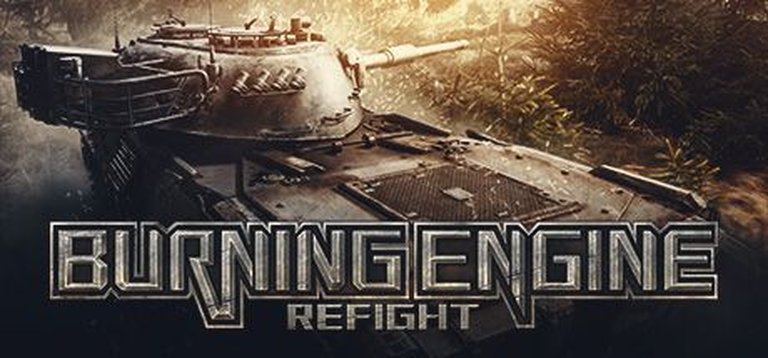
Burning Engine: Refight is a freeware military survival third-person shooter that combines vehicular combat with Battle Royale gameplay, placing players in control of tanks within a vast 6000×6000 sandbox map featuring diverse terrains like mountains, rivers, and towns. Players scavenge for resources, engage in strategic real-time battles, and fight to be the last vehicle standing to claim the title of Warlord in this contemporary setting.
Gameplay Videos
Burning Engine: Refight Guides & Walkthroughs
Burning Engine: Refight: Review
Introduction
In the crowded arena of battle royale shooters, Burning Engine: Refight emerges as a fiercely ambitious niche contender. Released on October 15, 2018, by the Chinese studio Brahma Games, this free-to-play tank combat simulator dared to merge the high-stakes, last-man-standing formula of PUBG with the meticulous, granular mechanics of armored warfare. Set on a sprawling contemporary battlefield, it tasked players piloting iconic tanks like the T55, M60, MK6, and Leopard 1 not just with survival, but with strategic mastery over armor, firepower, and terrain. While its lifespan was ultimately cut short by server closures in July 2022, Refight carved out a distinct legacy as a technically audacious, if flawed, experiment. This review examines its development, gameplay, world-building, and reception, arguing that despite its technical hiccups and eventual demise, Refight represented a bold, underappreciated fusion of genres that pushed the boundaries of vehicular combat in battle royales.
Development History & Context
Burning Engine: Refight was the flagship title of Brahma Games, a relatively small developer whose name became synonymous with this ambitious project. The game’s core vision, as articulated in its marketing, was to create a “military survival TPS” blending “Battle Royal gameplay” with “realistic and exciting vehicle battlefield[s]” powered by the Unreal Engine 4. This technological choice was significant; UE4 offered the graphical fidelity and physics capabilities necessary to render detailed tank models, complex terrain, and realistic armor penetration mechanics that were crucial to the developer’s goal. However, this ambition also presented considerable challenges, particularly in optimizing the engine for large-scale, real-time combat involving numerous highly interactive vehicles and environments, especially within the demanding constraints of free-to-play development and live service models.
The 2018 release landscape was dominated by titans like Fortnite and PlayerUnknown’s Battlegrounds (PUBG), making the saturated market a difficult environment for a newcomer. Refight arrived with a clear proposition: differentiate itself through depth and realism. While its contemporary setting and reliance on recognizable historical tanks grounded it in established tank simulator tropes (evoking comparisons to the World of Tanks series), its adoption of the battle royale format was a novel attempt to inject high-tension, unpredictable player interaction into a genre traditionally more focused on strategic, persistent progression. The freemium model, with its emphasis on loot boxes, challenges, and cosmetic skins (“cyberpunk-styled Suits,” camouflage patterns), was a necessary commercial strategy to sustain development and server costs, though it later became a point of contention among players.
Narrative & Thematic Deep Dive
Burning Engine: Refight deliberately eschews a traditional, character-driven narrative in favor of a pure, context-free survival scenario. The “plot” is distilled to its brutal essence: 50 players (or 30 in later iterations) are dropped onto a massive desert island map via skydiving. Their objective? Locate scattered supplies, upgrade their vehicles with superior armor, cannons, engines, and ammunition, and eliminate all rivals before the encroaching nuclear danger zone consumes them. The only “character” is the player’s tank, and the only “story” is their personal struggle for survival and the ultimate title of “Warlord.”
This minimalist narrative structure serves the gameplay perfectly, fostering an atmosphere of relentless paranoia and desperate resourcefulness. Dialogue is nonexistent, replaced by the visceral language of engine roars, cannon fire, and the ominous environmental warnings signaling the shrinking safe zone. The underlying themes are stark and primal: survival of the fittest, the futility of war, and the dehumanizing nature of modern combat. By stripping away individual character arcs and focusing solely on the mechanized struggle, Refight emphasizes the tank as both shield and weapon, a mobile fortress that is simultaneously a player’s only lifeline and their potential tomb. The “Combined Operations” mode introduces a factional element (“Red vs. Blue”), adding a thin layer of camaraderie and team-based objectives (“first to destroy 30 enemies”), but even here, the narrative remains secondary to the core mechanics of vehicular destruction and territorial control. The game’s world is not one of heroes or villains, but of commanders and machines locked in a brutal, impersonal dance of destruction.
Gameplay Mechanics & Systems
At its heart, Burning Engine: Refight revolves around a deeply satisfying core loop: Parachute -> Loot -> Fight -> Survive. The sheer variety and depth of its systems, particularly the vehicle customization and combat, were its greatest strengths.
- Core Battle Royale Loop: Matches began with players deploying onto the vast 6000×6000 sandbox map. The primary goal was to be the last tank standing, forced into ever-closer proximity by the deadly nuclear contamination zone. This pressure cooker environment amplified the tension inherent in looting scarce resources while constantly being aware of enemy threats.
- Vehicle Customization & Progression: The game boasted a robust system for upgrading tanks. Players could find and equip:
- External Armor: Modules with varying thickness values, angling effectiveness, and durability, realistically replicating protection mechanics.
- Weapons: Cannons with different calibers, penetration values, and rates of fire.
- Engines & Transmissions: Affecting speed, acceleration, and maneuverability.
- Internal Components: Fire control systems, optics, and even crew members. Damage to internals could cripple a tank’s performance (e.g., damaged optics reducing accuracy, destroyed tracks immobilizing the vehicle).
- Repairs & Ammo: Essential consumables found on the map.
- This depth allowed for significant strategic variation – a lightly armored, fast Leopard 1 could play hit-and-run, while a heavily armored MK6 could become a “mobile fortress,” albeit slower.
- Vehicle Roster & Balance: Starting with four distinct tanks offered clear roles:
- T55: Well-balanced, highest firepower – a versatile “Warlord” machine.
- M60: High load capacity, popular for beginners, excelled at carrying extra spare armor.
- MK6: Extremely heavy armor, slow but resilient, ideal for aggressive pushes.
- Leopard 1: Highly agile, though sometimes perceived as weaker, offered an enthrilling, high-skill playstyle.
- Later updates added vehicles like the M113-TOW (anti-tank missile carrier), expanding tactical options. Balance adjustments were a constant focus for the developers.
- Combat Mechanics: Combat was a tense exchange of fire requiring positioning, angling armor (“effective thickness”), and ammunition management. The game aimed for realism in damage calculation. Destructible environments added another layer, though the depth here was likely limited compared to dedicated simulators. The Behind View perspective gave a tactical overview.
- Combined Operations Mode: This 30-vs-30 team mode introduced different objectives: destroy 30 enemy vehicles first. The “Immortal Hero” mechanic allowed players a second chance via airdrop after death, and dying players dropped supplies (ammo, repair crates), adding risk/reward to kills.
- UI & Challenges: The interface presented information on vehicle status, inventory, minimap, and objective zones. A robust Challenge system (novice, weekly, seasonal) provided goals beyond mere survival, rewarding players with cosmetic items or in-game currency. User guides created by the community (“萌新速成攻略,” “战争领主萌新指南”) were testament to the game’s complexity and the need for external resources.
Flaws: The gameplay was not without significant issues. Performance problems, particularly server instability (“Timeout Error,” cant play anymore), plagued the experience. The freemium model often felt intrusive, with progression sometimes gated behind loot boxes or requiring significant grinding. Matchmaking could be inconsistent, and the balance between realism and accessibility was a constant struggle. The eventual shift towards monetization and reduced updates led to player frustration.
World-Building, Art & Sound
Burning Engine: Refight built its world through functional realism and environmental tension rather than deep lore. The setting was a contemporary, militarized sandbox – a vast, unnamed island featuring diverse terrain: mountains offering defensive positions, rivers creating natural barriers, and towns providing loot hotspots and urban choke points. This geography wasn’t just backdrop; it was a fundamental part of the strategic calculus. The nuclear danger zone was the most potent environmental element, a literal and metaphorical pressure cooker that forced interaction and dictated movement, creating a palpable sense of impending doom.
The visual direction, powered by Unreal Engine 4, aimed for gritty realism. Tank models were detailed, showcasing distinct visual profiles for the T55, M60, MK6, and Leopard 1. Armor modules and weapon upgrades visibly changed the vehicle’s appearance, reflecting the player’s investment. The environments, while perhaps not artistically groundbreaking, were functional and convincing, with textures conveying the desolate, war-torn feel of the island. The cyberpunk-styled Suits and camouflage skins offered a stark, contrasting visual flair, allowing players to personalize their commander despite the focus on the machine.
Sound design was crucial for immersion and gameplay. The deep rumble of tank engines, the sharp crack of cannon fire, the distinct clatter of tracks on different surfaces (dirt, rock, metal), and the metallic groans of damaged armor all contributed to the visceral experience. Environmental sounds like the distant rumble of an approaching storm or the crackle of radio warnings (presumably) reinforced the atmosphere. While specific details aren’t abundant, the emphasis was on creating a believable aural landscape of armored warfare. The art and sound worked together to immerse players in the tense, dangerous reality of commanding a tank in a battle royale, prioritizing functional authenticity over stylistic flamboyance.
Reception & Legacy
Burning Engine: Refight launched to a mixed reception, a sentiment that largely defined its lifespan on Steam. With 413 total reviews, it achieved a “Mixed” rating, with 67% positive (279) and 33% negative (134). Player feedback highlighted the game’s core strengths: the unique tank vs. tank battle royale concept, the deep vehicle customization system, the strategic depth offered by terrain and armor mechanics, and the tension of the shrinking play zone. Many positive reviews focused on the potential and the genuinely different experience it offered compared to infantry-centric shooters.
However, the negative reviews were equally vocal in pointing out significant flaws:
* Technical Issues: Server instability, connection problems (“Timeout Error”), and performance bugs were persistent complaints, hindering the core online experience.
* Monetization: The freemium model, particularly the reliance on loot boxes for progression and cosmetics, was frequently criticized as exploitative or frustrating.
* Balance & Polish: Ongoing issues with vehicle balance, matchmaking, and perceived lack of consistent, impactful updates wore on players.
* Player Base Concerns: There were worries about declining player numbers and the long-term health of the servers.
Critically, the game flew largely under the radar. Metacritic lists no critic reviews for the PC version, indicating it didn’t receive significant mainstream media attention from established outlets. Its impact was primarily within niche communities of tank simulator and battle royale enthusiasts.
Legacy and Influence: Despite its mixed reception and eventual server closure on July 23, 2022 (announced on May 23, 2022), Burning Engine: Refight holds a place as an ambitious niche pioneer. It was one of the earliest and most dedicated attempts to create a pure, tank-focused battle royale experience. Its emphasis on realistic armor mechanics, deep vehicle customization, and strategic vehicular combat offered a distinct alternative to the genre’s norm and demonstrated the potential of merging simulation depth with BR accessibility. While it didn’t spawn a direct, long-lived franchise (its DLCs like “Black Bat” and “Initiator” were minor), it stands as a notable case study in the challenges of developing and sustaining a technically demanding, niche free-to-live-service title in a competitive market. It proved there was an appetite for vehicular BRs, paving the way for subsequent, perhaps more polished, titles to explore similar concepts. Its dedicated community, evidenced by the numerous player-created guides and videos (“萌新课堂,” “Королевская битва на танках!”), underscores the niche appeal it successfully cultivated despite its flaws.
Conclusion
Burning Engine: Refight was a game of bold contrasts and unfulfilled potential. It married the high-stakes, unpredictable chaos of the battle royale genre with the intricate, methodical satisfaction of armored vehicle combat, a combination few had dared to attempt. Its core strengths – the deep and realistic vehicle customization system, the tension of the nuclear-contaminated shrinking zone, the strategic depth offered by the diverse tank roster and terrain – provided a genuinely unique and compelling experience for its niche audience. The Unreal Engine 4 visuals delivered a gritty, believable battlefield, and the core gameplay loop of loot, upgrade, fight, and survive was inherently addictive.
However, these strengths were often overshadowed by significant challenges. Persistent technical issues, particularly server instability, undermined the core online experience. The freemium model, necessary for its existence, frequently felt intrusive and detrimental to player enjoyment. Ongoing balance concerns and a perceived lack of consistent, impactful updates further eroded goodwill. While it garnered a dedicated community willing to create guides and contend with its flaws, its overall reception remained mixed, and it ultimately failed to achieve mainstream success or longevity.
Despite its demise, Burning Engine: Refight deserves recognition as a brave and innovative experiment. It proved that the battle royale genre could accommodate the slower, more methodical pace and strategic depth of vehicular combat. Its legacy lies not in revolutionizing the industry, but in carving out a memorable, if flawed, niche space and demonstrating the viability of the tank BR concept. For players seeking a different kind of survival challenge, one measured in armor thickness and shell trajectories rather than foot speed and aim, Refight offered a compelling, if flawed, glimpse into an alternative battlefield. It remains a fascinating footnote in the evolution of battle royales and a testament to the ambition of its small development team, Brahma Games.