
- Release Year: 2022
- Platforms: Windows
- Publisher: ProjectRequiem
- Developer: ProjectRequiem
- Genre: Action
- Perspective: Side view
- Game Mode: Single-player
- Gameplay: Fighting
- Setting: Fantasy
- Average Score: 75/100
Description
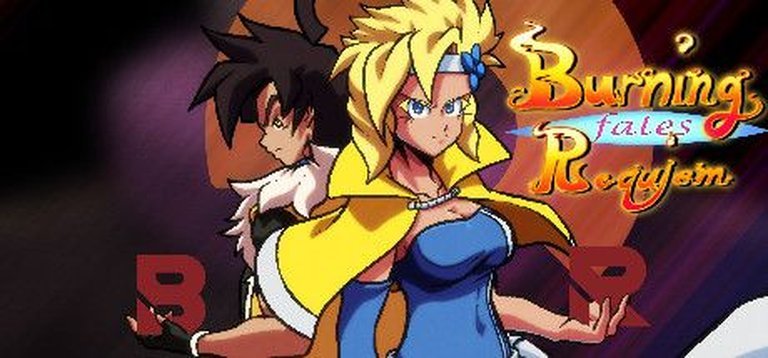
Burning Requiem: Fates is a dynamic 2-on-2 indie fighting game developed by ProjectRequiem, blending fast-paced combat with a unique tag-team mechanic. Set in a fantasy-inspired universe tied to the Burning Requiem webcomic series, the game features a diverse roster of characters, each with distinct abilities, and offers multiple modes including Arcade, Survival, and cooperative play. With its pixel-art visuals and emphasis on both PvP and PvE gameplay, it aims to refresh the fighting game genre while catering to both casual and competitive players.
Gameplay Videos
Where to Buy Burning Requiem: Fates
PC
Burning Requiem: Fates Guides & Walkthroughs
Burning Requiem: Fates Reviews & Reception
steambase.io (77/100): A triumphant return to form for the series.
store.steampowered.com (77/100): A triumphant return to form for the series.
completionist.me (69.85/100): A triumphant return to form for the series.
games-popularity.com (77.14/100): A triumphant return to form for the series.
Burning Requiem: Fates: A Bold but Flawed Experiment in Indie Fighting Games
Introduction: The Indie Fighter That Dared to Be Different
In the crowded landscape of modern fighting games, where giants like Street Fighter and Tekken dominate the scene, Burning Requiem: Fates emerges as a defiant underdog—a free-to-play, 2D indie fighter that attempts to carve its own niche. Released in July 2022 by the obscure studio ProjectRequiem, this game is more than just a fighting title; it’s a transmedia experiment, tying into a webcomic series of the same name. With its tag-team mechanics, pixel-art aesthetic, and ambitious vision, Burning Requiem: Fates promises to “shake up the fighting game formula.” But does it succeed, or does it falter under the weight of its own ambition?
This review will dissect Burning Requiem: Fates from every angle—its development history, narrative depth, gameplay mechanics, artistic direction, and legacy—ultimately determining whether it’s a hidden gem or a cautionary tale of indie overreach.
Development History & Context: The Birth of a Passion Project
The Studio Behind the Game: ProjectRequiem’s Vision
ProjectRequiem is not a household name in the gaming industry. In fact, prior to Burning Requiem: Fates, the studio had no notable releases, making this title both its debut and its most ambitious project. The game’s development was driven by a small, passionate team that sought to blend traditional fighting game mechanics with modern indie sensibilities. Their goal? To create a fighter that felt fresh yet familiar, accessible yet deep.
The studio’s decision to release the game for free on Steam was a calculated risk. By removing the financial barrier to entry, ProjectRequiem aimed to attract a broader audience, particularly within the competitive fighting game community (FGC). This approach mirrors the success of games like Divekick and Rivals of Aether, which gained traction through word-of-mouth and community engagement rather than marketing budgets.
Technological Constraints and the Indie Fighting Game Renaissance
Burning Requiem: Fates was built using a proprietary engine, a rarity in the indie space where Unity and GameMaker dominate. This choice allowed for greater customization but also introduced technical hurdles. Early reviews on Steam highlight persistent issues, such as glitchy green screens and launch failures, suggesting that the engine may not have been fully optimized for widespread release.
The game’s 2D pixel-art style is a deliberate throwback to classic fighters like Street Fighter II and The King of Fighters, but with a modern twist. The side-scrolling perspective and direct control interface are reminiscent of the golden age of arcade fighters, yet the inclusion of tag-team mechanics and moddable content reflects contemporary trends.
At the time of its release, the fighting game genre was experiencing a renaissance. Titles like Guilty Gear -Strive- and Granblue Fantasy: Versus were pushing the boundaries of visual fidelity and accessibility, while indie darlings like Them’s Fightin’ Herds and Fight of Animals proved that smaller studios could thrive by focusing on niche appeal. Burning Requiem: Fates entered this landscape as an outsider, betting on its unique blend of nostalgia and innovation to stand out.
Narrative & Thematic Deep Dive: A Story Woven into Combat
The Webcomic Connection: A Transmedia Experiment
One of the most intriguing aspects of Burning Requiem: Fates is its ties to the Burning Requiem webcomic series. The game’s roster is pulled directly from the comic, creating a symbiotic relationship between the two mediums. This approach is reminiscent of BlazBlue’s deep lore integration, where the fighting game serves as both a standalone experience and a companion to a larger narrative.
However, unlike BlazBlue, which embeds its story within the game itself through extensive visual novel-style cutscenes, Burning Requiem: Fates offers only a barebones narrative framework. The game’s Steam description mentions an “ever-expanding roster” tied to the webcomic, but the in-game storytelling is minimal. Characters lack introductory cinematics or ending sequences, leaving players who aren’t familiar with the source material in the dark.
Themes of Fate and Conflict
The title Burning Requiem: Fates suggests a grand, operatic narrative—one of destiny, sacrifice, and fiery resolution. The “Requiem” in the title evokes themes of mourning and finality, while “Fates” implies an inescapable, predetermined conflict. Yet, the game’s actual narrative delivery is underwhelming. The arcade mode, which typically serves as the primary storytelling vehicle in fighting games, offers little more than generic victory quotes and sparse dialogue.
What could have been a rich, interconnected story about warriors bound by prophecy instead feels like a missed opportunity. The characters—each with their own backstories in the webcomic—are reduced to mere avatars in the game, their personalities and motivations stripped away in favor of pure gameplay functionality.
Character Design: Style Over Substance
The roster of Burning Requiem: Fates is visually diverse, featuring a mix of fantasy archetypes and original designs. From the superhero-esque Alpha to the more grounded fighters, each character has a distinct silhouette and moveset. However, the lack of in-game lore means that players must rely on external sources (i.e., the webcomic) to understand who these characters are and why they’re fighting.
This disconnect between the game and its narrative foundation is a critical flaw. Fighting games thrive on personality—think of Street Fighter’s Ryu and Ken, or Mortal Kombat’s Scorpion and Sub-Zero. Burning Requiem: Fates has the potential for such iconic rivalries, but without proper context, the characters feel hollow.
Gameplay Mechanics & Systems: Innovation Meets Execution
Core Gameplay Loop: Tag-Team Dynamics
The defining feature of Burning Requiem: Fates is its 2-on-2 tag-team mechanics. Unlike traditional fighters where matches are one-on-one, this game encourages players to strategize around partner synergy. The tag system allows for dynamic switches mid-combo, creating opportunities for extended juggles and team-based tactics.
This mechanic is not entirely new—games like Marvel vs. Capcom and Dragon Ball FighterZ have popularized team-based combat—but Burning Requiem: Fates puts its own spin on it. The absence of a traditional “assist” system means that both characters are fully playable at all times, requiring players to master two fighters rather than one.
Combat and Movement: A Mixed Bag
The combat in Burning Requiem: Fates is fast-paced and combo-heavy, with an emphasis on aerial juggles and special moves. The controls are straightforward, with light, medium, and heavy attacks mapped to standard inputs, along with a dedicated tag button for switching characters. The game also features a “Burning Mode,” a temporary power-up that enhances a character’s abilities, adding a layer of strategic depth.
However, the execution of these mechanics is inconsistent. The hit detection can feel imprecise, and the lack of rollback netcode (a staple in modern fighters) makes online play nearly unviable. Local multiplayer, while functional, suffers from input lag and occasional frame drops, particularly during more chaotic 4-player matches.
Character Progression and Customization
One of the game’s most promising features is its moddable content. ProjectRequiem has expressed a commitment to community-driven development, allowing players to create and share custom characters, stages, and even gameplay mechanics. This modding potential is a double-edged sword—while it extends the game’s lifespan, it also highlights the base game’s lack of polish.
The progression system is similarly barebones. There are no unlockable moves, alternate costumes (beyond paid DLC), or skill trees. Players are expected to find satisfaction in mastering the existing mechanics rather than unlocking new content.
UI and Accessibility: A Work in Progress
The user interface in Burning Requiem: Fates is functional but uninspired. Menus are cluttered, and the lack of a proper tutorial means that new players are thrown into the deep end. The game’s Steam discussions reveal frustration with basic UI elements, such as the role-selection screen, which some players found confusing.
Accessibility options are minimal. There are no difficulty sliders, remappable controls are limited, and the game lacks features like colorblind modes or subtitles for its sparse dialogue. For a game aiming to “shake up the fighting game formula,” these oversights are glaring.
World-Building, Art & Sound: Aesthetic Ambitious, Technically Rough
Visual Design: Pixel Art with Personality
Burning Requiem: Fates employs a vibrant pixel-art style that blends retro aesthetics with modern flair. The character sprites are detailed and expressive, with fluid animations that make each fighter feel unique. The stages, while limited in number, are visually distinct, ranging from urban battlegrounds to fantastical arenas.
However, the art direction is not without its issues. Some character designs feel derivative, borrowing heavily from established fighters without adding enough originality. The pixel art, while charming, occasionally suffers from readability issues—certain attacks can be difficult to distinguish mid-combo, leading to frustration during fast-paced matches.
Sound Design: A Missed Opportunity
The audio experience in Burning Requiem: Fates is underwhelming. The soundtrack consists of generic electronic and rock tracks that lack memorability. Sound effects, such as punches and special moves, are serviceable but fail to deliver the satisfying “crunch” that fighting game enthusiasts crave.
Voice acting is nonexistent, which is a missed opportunity given the game’s narrative ambitions. Even simple battle cries or taunts would have added personality to the roster.
Atmosphere and Immersion
The game’s atmosphere is hindered by its technical limitations. The lack of a cohesive narrative and the sparse presentation make the world of Burning Requiem: Fates feel shallow. Without cutscenes, character interactions, or a compelling arcade mode, the game struggles to immerse players in its universe.
Reception & Legacy: A Game Caught Between Potential and Execution
Critical and Commercial Reception
Burning Requiem: Fates launched to a lukewarm reception. On Steam, it holds a “Mostly Positive” rating (77% positive from 35 reviews), but the lack of critical coverage is telling. Major gaming outlets ignored the title, and even niche fighting game communities gave it little attention.
Player feedback on Steam highlights a mix of praise and frustration. Positive reviews commend the game’s ambition, tag-team mechanics, and free-to-play model. One player wrote, “For a free game, this is surprisingly deep. The tag system is a lot of fun, and the roster has potential.” However, negative reviews focus on the game’s technical issues, lack of content, and poor online functionality. A common complaint is that the game feels “unfinished,” a sentiment echoed in the Steam discussions where players report bugs and crashes.
The Modding Community: A Lifeline?
The game’s moddable nature has kept a small but dedicated community engaged. Players have created custom characters, stages, and even gameplay tweaks, extending the game’s lifespan beyond its initial release. This modding scene is reminiscent of M.U.G.E.N’s community-driven development, where the base game serves as a framework for player creativity.
However, modding cannot compensate for the game’s fundamental flaws. Without a solid foundation, even the most creative mods struggle to elevate Burning Requiem: Fates to the level of its competitors.
Influence and Industry Impact
Burning Requiem: Fates has had little discernible impact on the fighting game genre. Its tag-team mechanics, while innovative in concept, are overshadowed by the technical and design shortcomings. The game’s failure to gain traction serves as a cautionary tale for indie developers: ambition alone is not enough to succeed in a genre dominated by polished, high-budget titles.
That said, the game’s free-to-play model and modding support offer valuable lessons. By removing financial barriers and empowering the community, ProjectRequiem created a game that, while flawed, has a dedicated niche following. Future indie fighters may look to Burning Requiem: Fates as an example of how to cultivate a grassroots audience, even if the execution leaves much to be desired.
Conclusion: A Flawed Gem with a Flicker of Potential
Burning Requiem: Fates is a game of contradictions. It is ambitious yet underdeveloped, innovative yet derivative, visually charming yet technically rough. Its tag-team mechanics and modding potential hint at a game that could have been a standout in the indie fighting scene, but its execution falls short of its vision.
The lack of narrative depth, polished gameplay, and technical stability relegates Burning Requiem: Fates to the realm of “what could have been.” It is not a bad game—far from it—but it is an incomplete one. For fighting game enthusiasts willing to overlook its flaws, there is fun to be had, particularly in local multiplayer. For everyone else, it serves as a reminder of the challenges indie developers face when tackling established genres.
Final Verdict: 6.5/10 – A Promising Experiment That Stumbles on Execution
Burning Requiem: Fates is worth a try, especially given its free-to-play model, but it is not the revolution in fighting games that ProjectRequiem envisioned. With more polish, narrative integration, and technical refinement, it could have been a contender. As it stands, it remains a curiosity—a flicker of potential in an oversaturated genre.