
- Release Year: 1996
- Platforms: Arcade, Nintendo 64, PlayStation 3, PlayStation, PS Vita, PSP, SEGA Saturn, Windows
- Publisher: Acclaim Entertainment, Inc., Empire Interactive Europe Ltd., MediaKite Distribution Inc., Natsume, Inc., Shanghai UBIsoft Computer Software Co., Ltd., Square Enix Co., Ltd., Taito Corporation
- Developer: Taito Corporation
- Genre: Puzzle
- Perspective: Side view
- Game Mode: Co-op, Single-player
- Gameplay: Tile matching puzzle
- Setting: Fantasy
- Average Score: 79/100
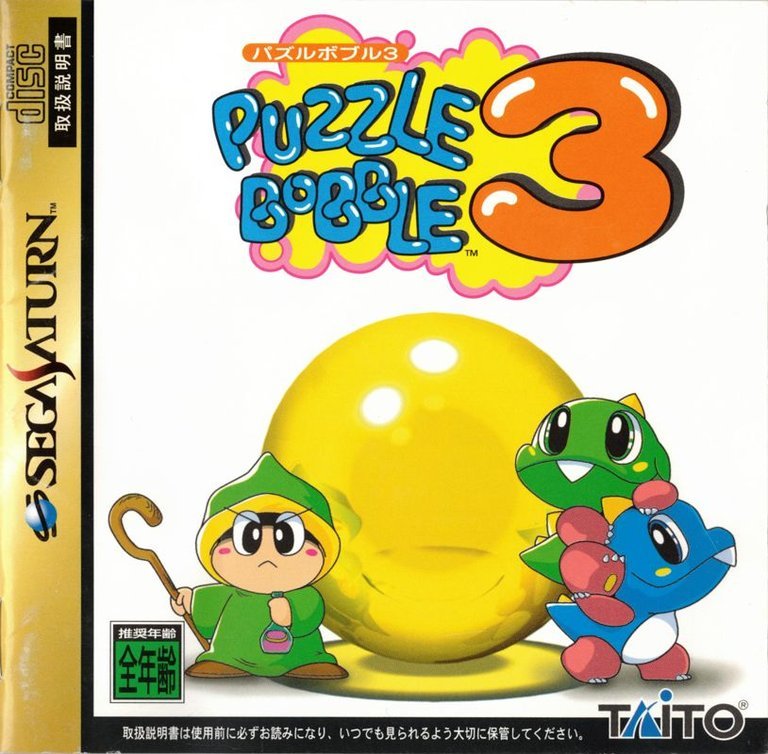
Description
Bust-A-Move 3 is a tile-matching puzzle game where players must remove bubbles by connecting three or more of the same color. The game features various modes, including Arcade, Challenge, and Edit modes, and follows the story of Dunk, a magic magician who transports eight characters to Bubble World, and it’s up to the player to bring them back home.
Gameplay Videos
Reviews & Reception
mobygames.com (79/100): In Bust-A-Move 3, you must try to remove all the bubbles in each stage by connecting three or more of the same color.
Bust-A-Move 3: Review
Introduction
Bust-A-Move 3, known in some regions as Puzzle Bobble 3, is a timeless puzzle game developed by Taito Corporation. Released in 1996 for arcades and later ported to various platforms, it continues the legacy of its predecessors with addictive gameplay and innovative features. This review will delve into the game’s development history, narrative, gameplay mechanics, world-building, and its reception, providing a comprehensive analysis of its place in video game history.
Development History & Context
Taito Corporation, renowned for their work on games like Bubble Bobble and Darius, developed Bust-A-Move 3. The game was released in September 1996 for arcades and later for consoles such as the SEGA Saturn, PlayStation, and Nintendo 64. The development team, led by designers like Seiichi Nakakuki and Takuro Saito, aimed to enhance the gameplay and features of the previous titles while maintaining the core puzzle mechanics that fans loved.
The technological constraints of the era influenced the game’s design, with developers optimizing the game for various hardware specifications. The Nintendo 64 version, for example, included a four-player mode, taking advantage of the console’s capabilities.
The gaming landscape at the time was competitive, with puzzle games like Tetris and Dr. Mario being highly popular. Bust-A-Move 3 carved out its niche by offering a unique blend of puzzle-solving and competitive multiplayer.
Narrative & Thematic Deep Dive
The narrative of Bust-A-Move 3 revolves around Dunk, a magic magician from Bubble World, who casts a spell transporting eight characters from their home worlds to Bubble World. The player’s task is to help these characters return home by clearing the bubbles in each stage.
The game’s story is straightforward, serving as a backdrop for the gameplay. The characters are diverse, and their personalities are reflected in their interactions during the game. The thematic focus is on puzzle-solving and competition, with the game’s world providing a colorful and engaging environment.
Gameplay Mechanics & Systems
Bust-A-Move 3 retains the core tile-matching puzzle gameplay of its predecessors while introducing new features. Players must shoot colored bubbles to create groups of three or more of the same color, which then disappear. The game includes various modes:
– Arcade Mode: Players progress through levels with increasing difficulty.
– Challenge Mode: The game adapts to the player’s performance.
– Win Contest Mode: Players compete against the eight characters.
– Collection Mode: Features levels created by players, with each level attributed to its designer.
– Edit Mode: Allows players to create and play their own puzzles.
The Nintendo 64 version adds two- and four-player modes, enhancing the game’s competitive aspect. The gameplay mechanics are simple yet challenging, making it accessible to new players while still engaging for veterans.
World-Building, Art & Sound
The game’s world is vibrant and fantastical, with Bubble World providing a unique setting. The art style is colorful and cartoonish, appealing to a wide audience. The characters are distinct, with their own designs and personalities.
The sound design complements the gameplay, with catchy music and sound effects that enhance the overall experience. The audio is optimized for different platforms, ensuring that the game’s atmosphere is maintained across versions.
Reception & Legacy
Bust-A-Move 3 received positive reviews across various platforms. Critics praised its addictive gameplay, new features, and competitive multiplayer modes. The game holds an average score of 80% on MobyGames, based on 29 critic reviews.
The game’s legacy is evident in its continued popularity and influence on subsequent puzzle games. It was awarded “Puzzle Game of the Year” by Electronic Gaming Monthly in 1998. The game’s success led to further developments in the Bust-A-Move/Puzzle Bobble series, with later titles building upon the foundations established by Bust-A-Move 3.
Conclusion
Bust-A-Move 3 is a landmark puzzle game that has stood the test of time. Its engaging gameplay, innovative features, and competitive modes have made it a beloved title among gamers. As a testament to its enduring appeal, it remains a significant entry in the Bust-A-Move/Puzzle Bobble series, contributing to the evolution of puzzle games as a whole. With its influence still felt in modern gaming, Bust-A-Move 3 is a classic that continues to captivate audiences, ensuring its place in video game history.