
- Release Year: 2019
- Platforms: Windows
- Publisher: magnussoft Deutschland GmbH
- Genre: Compilation
- Perspective: Not specified
- Game Mode: Single-player
- Average Score: 50/100
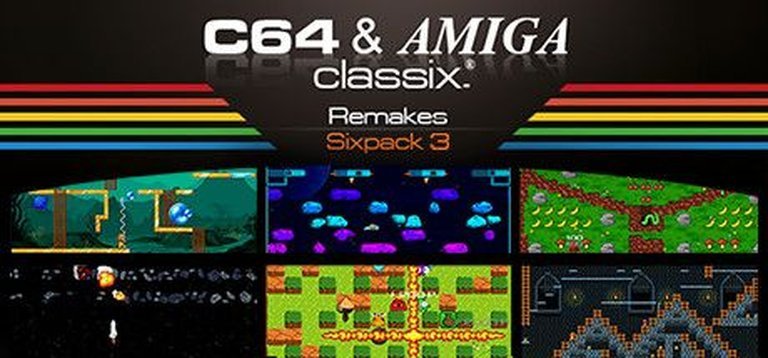
Description
C64 & AMIGA Classix Remakes Sixpack 3 is a compilation of six remade classic games from the 1980s and 1990s Commodore 64 and Amiga era, bringing nostalgic titles like Star Taxi (a Space Taxi remake), Eypx Peng, Lode Jumper, Bomberwarrior, Mos Garden, and Moon Battle to modern Windows PCs with updated graphics and gameplay.
Gameplay Videos
Where to Buy C64 & AMIGA Classix Remakes Sixpack 3
PC
C64 & AMIGA Classix Remakes Sixpack 3 Reviews & Reception
lemon64.com : the C64 versions are much better than this so-called Remake. For collection’s purpose this Pack is worth keeping.
C64 & AMIGA Classix Remakes Sixpack 3: Review
Introduction
In an era where pixel-perfect emulations and fan-made ports dominate the retro gaming revival, C64 & AMIGA Classix Remakes Sixpack 3 dares to tread a bolder path: full remakes of six obscure gems from the Commodore 64 and Amiga golden age. Released in 2019 by the ever-prolific German publisher magnussoft, this compilation promises to transport players back to the 1980s and early 1990s, recapturing the “unforgettable fun” of titles like Space Taxi through modernized interpretations. But does nostalgia alone suffice when the originals still shine brighter on authentic hardware or superior emulators? This review argues that while Sixpack 3 nobly preserves forgotten variants in an accessible package, its clunky remakes fail to honor their inspirations, rendering it a curiosity for collectors rather than a triumphant revival.
Development History & Context
magnussoft Deutschland GmbH, a studio with deep roots in retro compilations dating back to the early 2000s, helmed this project as the third installment in their “Sixpack” series (following entries in 2017). Building on predecessors like C64 Classix (2000-2005), Amiga ClassiX (2001), and earlier Sixpack volumes, magnussoft’s vision was clear: resurrect C64 and Amiga obscurities not through emulation—which they had done before—but via bespoke remakes tailored for contemporary PCs. The official blurb emphasizes “remakes of your favourite classics,” targeting fans weary of authenticity purism.
Development occurred in a post-emulation boom landscape, where platforms like Steam welcomed low-fi retro fare amid rising interest in 8-bit preservation. The 1980s originals grappled with severe hardware limits: the C64’s 64KB RAM, VIC-II graphics chip (320×200 resolution, 16 colors), and SID sound synthesizer demanded ingenious programming for puzzle-platformers and arcade clones. Amiga ports added multitasking and superior AGA chip visuals, but magnussoft’s 2019 effort—built for Windows XP-era hardware (Intel Core Duo 2.5GHz, 512MB RAM, DirectX 9)—eschewed these constraints for smoother scalability. Released exclusively via Steam on July 27, 2019, at $9.99, it featured Steam Cloud, Family Sharing, and bilingual (English/German) support, positioning it as a budget-friendly entry in the “unofficial ports” niche. Yet, sparse credits (no named designers listed on MobyGames) suggest a small-team, outsourced affair, prioritizing quantity over polish in a market flooded with Celeste-like retro homages.
Narrative & Thematic Deep Dive
As a compilation of arcade-style minigames, Sixpack 3 eschews overarching narrative for bite-sized, score-chasing romps—hallmarks of the C64/Amiga era’s pick-up-and-play ethos. Each remake distills its original’s premise into minimalist tales:
-
Star Taxi Remake (Space Taxi variant, 1984 original by Taxi Software): You pilot a nimble cab across multi-level space stations, ferrying eccentric aliens to glowing pads amid laser traps and moving platforms. Themes of precarious service jobs echo real-world taxi hustle, with “customers” fleeing if delayed, underscoring urgency and failure’s sting.
-
Eypx Peng Remake (Mr. Do variant): A cherry-munching penguin digs tunnels, battles bad guys, and triggers apple drops in garden mazes. Playful absurdity reigns—penguins as everyman heroes against cherry-hoarding foes—exploring gluttony and territoriality through whimsical, wordless antics.
-
Lode Jumper Remake (Lode Runner clone): Command a thief navigating brick-filled screens, digging holes to bury enemies while collecting gold. Moral ambiguity thrives: you’re a robber outsmarting guards, thematizing clever predation in a Darwinian puzzle world.
-
Bomberwarrior Remake (Dynablaster/Bomberman variant): Deploy bombs in labyrinths to trap foes and snag power-ups. Multiplayer undertones (implied hot-seat) evoke gladiatorial combat, where strategic destruction mirrors Cold War-era paranoia.
-
Mos Garden Remake (Pang/Buster Balloons variant): Harpoon rising orbs in verdant enclosures, splitting them hierarchically. Themes of cosmic infestation and precarious balance highlight humanity’s futile stand against multiplying threats.
-
Moon Battle Remake (arcade shooter variant): Defend lunar bases from descending aliens in a vertical scroller. Stark survivalism prevails—no dialogue, just escalating waves symbolizing endless cosmic war.
Dialogue is absent; themes emerge via environmental storytelling and mechanics. Collectively, they romanticize 80s escapism: solitary ingenuity against impersonal machines, free of modern cutscenes or lore dumps. Yet remakes’ slowed pacing dilutes this purity, transforming tense vignettes into languid echoes.
Gameplay Mechanics & Systems
At its core, Sixpack 3 loops through six self-contained arcade cycles: navigate, collect, evade, score, repeat. UI is spartan—a main menu launcher with pixel-art thumbnails, fullscreen toggles, and basic controls (arrow keys/WASD, space/ctrl for actions)—evoking DOS-era simplicity but lacking modern conveniences like rewind or leaderboards.
-
Star Taxi: Momentum-based platforming demands pixel-perfect jumps and taxi flips. Progression unlocks levels; flaws include sluggish physics versus the original’s snappy VIC-II responsiveness.
-
Eypx Peng: Dig, drop fruits, lasso foes. Chain combos reward risk, but input lag hampers the Mr. Do-inspired fluidity.
-
Lode Jumper: 150+ screens of hole-digging puzzles. Copy/paste level design shines in complexity (fill holes, avoid falls), but remakes’ auto-climb feels “less responsive,” per Steam feedback.
-
Bomberwarrior: Grid-based bombing with blast radii and kick mechanics. Power-ups (speed, range) enable combos, yet AI pathing is predictable, muting Bomberman’s chaos.
-
Mos Garden: Angle-based harpooning splits bubbles (large → medium → small). Physics simulation innovates on Pang, but collision detection falters.
-
Moon Battle: Wave-shooter with weapon pickups. Dodging patterns tests reflexes, marred by floaty controls.
Progression is endless high-score chasing—no metasave, just per-game resets. Flaws abound: universal slowdown (blamed in Lemon64 forums), unresponsive menus, and absent multiplayer. Innovations? Scalable graphics for modern rigs, but at fidelity’s expense—originals’ tight loops feel bloated here.
World-Building, Art & Sound
Settings span sci-fi depots (Star Taxi), cherry orchards (Eypx Peng), brick citadels (Lode Jumper), explosive mazes (Bomberwarrior), balloon-infested gardens (Mos Garden), and starry voids (Moon Battle). Atmosphere evokes 80s cartridge grit: blocky sprites, garish palettes (16-32 colors), parallax scrolls nodding to Amiga blitter chips.
Visuals upscale originals with smoothed pixels and optional filters, but retain chunky aesthetics—taxis somersaulting over chasms, penguins burrowing candy landscapes. No dynamic lighting or particle effects; it’s faithful facsimile minus SID sparkle.
Sound design recycles beeps and chiptunes: bouncy SID-esque leads for pickups, tinny explosions, loopable ambiences. Onboard soundcards suffice (no advanced audio), fostering nostalgia but lacking punch—remakes’ MIDI-like tracks pale against authentic C64 rips. Collectively, these craft intimate, toy-like worlds: confined screens amplify claustrophobia, chiptune hooks embed muscle memory. Yet muted effects undermine immersion, contributing to “slower” critiques.
Reception & Legacy
Launch reception was muted: Steam’s 2 user reviews split 1-1 (50/100 score), decrying inferior controls and luster loss. MobyGames lists no critic scores; Lemon64 forums echo disappointment—”C64 versions much better,” “less impressive than originals.” Commercial footprint is niche—collected by 1 MobyGames user, low Steam concurrency—overshadowed by free emulators like VICE or C64 Forever.
Legacy endures in preservation: as unofficial ports of variants (Space Taxi et al.), it spotlights forgotten titles amid Bomberman/Lode Runner clones. Influences ripple subtly—paving for modern retro packs like Blazing Chrome—but magnussoft’s series (10+ entries) cements their role in democratizing Amiga/C64 arcades. Evolving rep? A collector’s footnote, critiqued for botching remakes but valued for accessibility in 2025’s hardware-challenged scene.
Conclusion
C64 & AMIGA Classix Remakes Sixpack 3 embodies retro gaming’s dual soul: heartfelt tribute clashing with execution woes. Its six remakes faithfully nod to 80s ingenuity—puzzle ferrying, bomb duels, bubble-busting—yet sluggish mechanics and visual dilution betray the source magic. For historians, it’s a vital archive of C64/Amiga variants; for players, originals or emulators prevail. Verdict: Recommended for die-hard collectors (7/10), but skip unless $5 sales beckon—true classix demand authentic bite, not softened echoes. In video game history, it occupies a quirky mid-tier: preservation win, revival flop.